
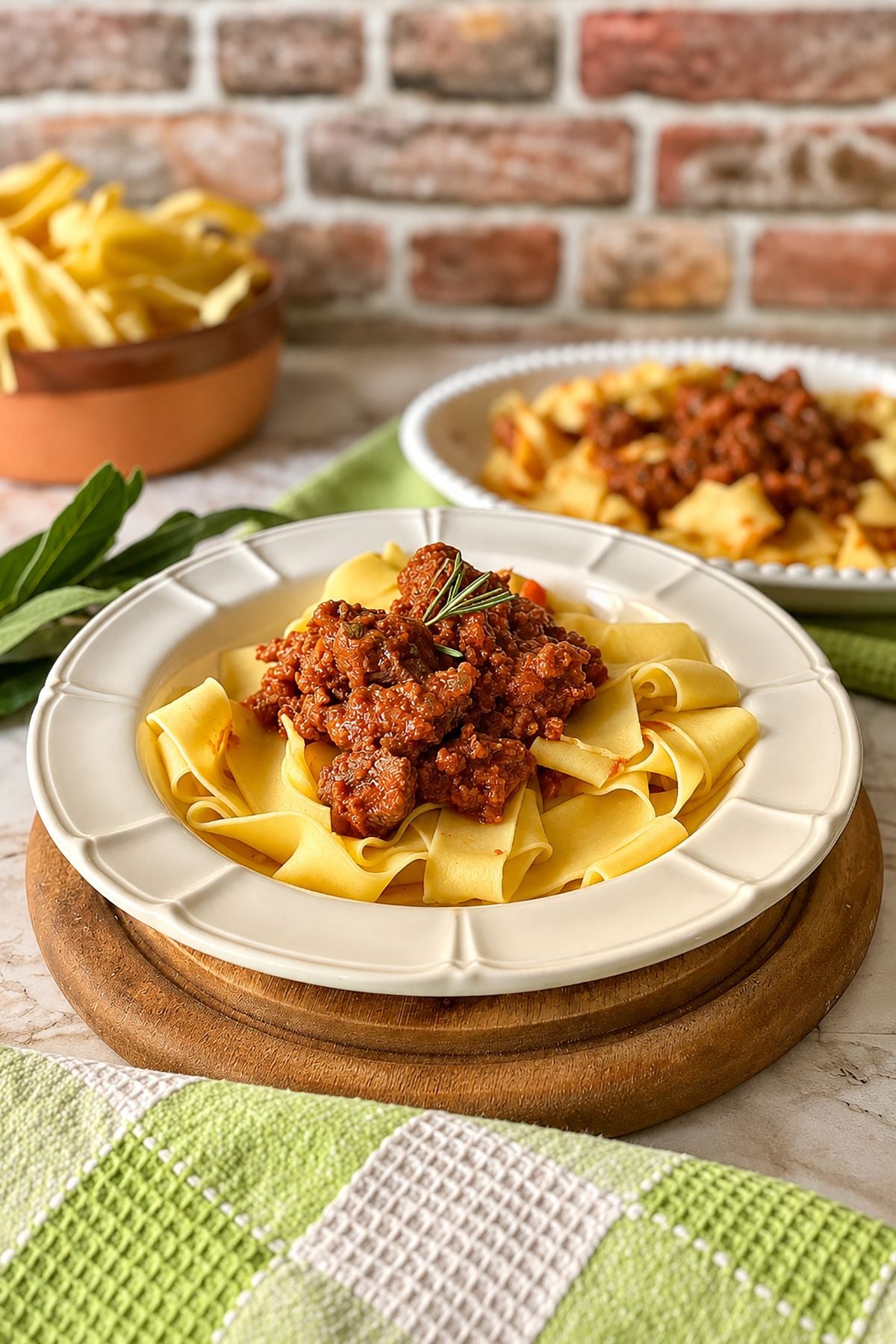
Pappardelle al Cinghiale is a traditional Tuscan pasta dish made with a rich, flavorful wild boar ragu. Popular throughout central Italy, it's a rustic, comforting recipe, perfect for Sunday family lunches and special occasions.
The wide ribbons of fresh pappardelle are ideal for holding the thick, aromatic sauce, made with tender pieces of wild boar slowly simmered with red wine, tomatoes, vegetables, and herbs.
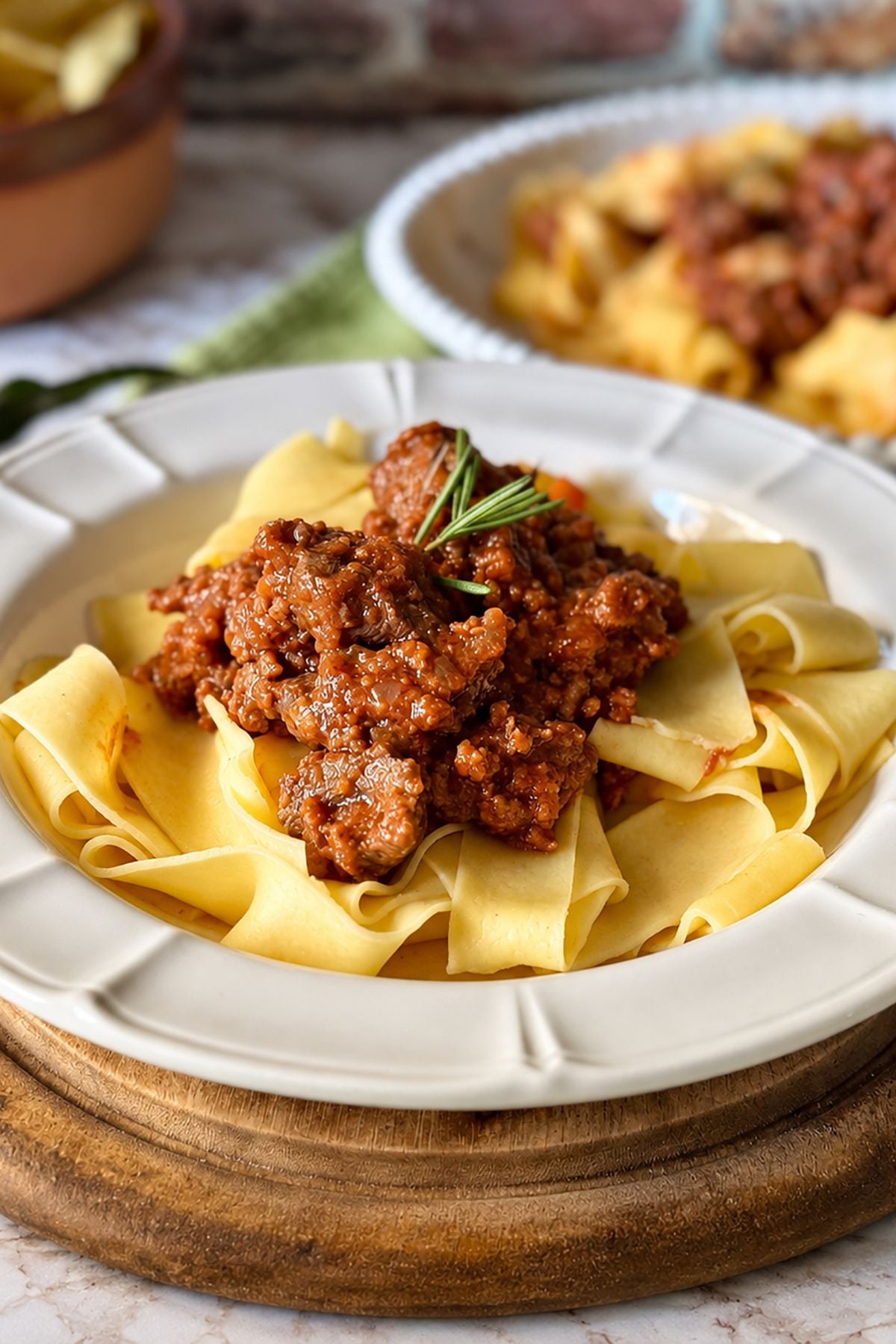
The secret to a delicious wild boar ragu is patience: the meat marinates in red wine for 12 hours before cooking slowly for about 3 hours, until wonderfully tender. I also like to add a little dark chocolate at the end, an old family trick that helps balance the strong, gamey flavor of the meat.
The result is a hearty, authentic Italian pasta dish that's well worth the wait!
Jump to:
Ingredients
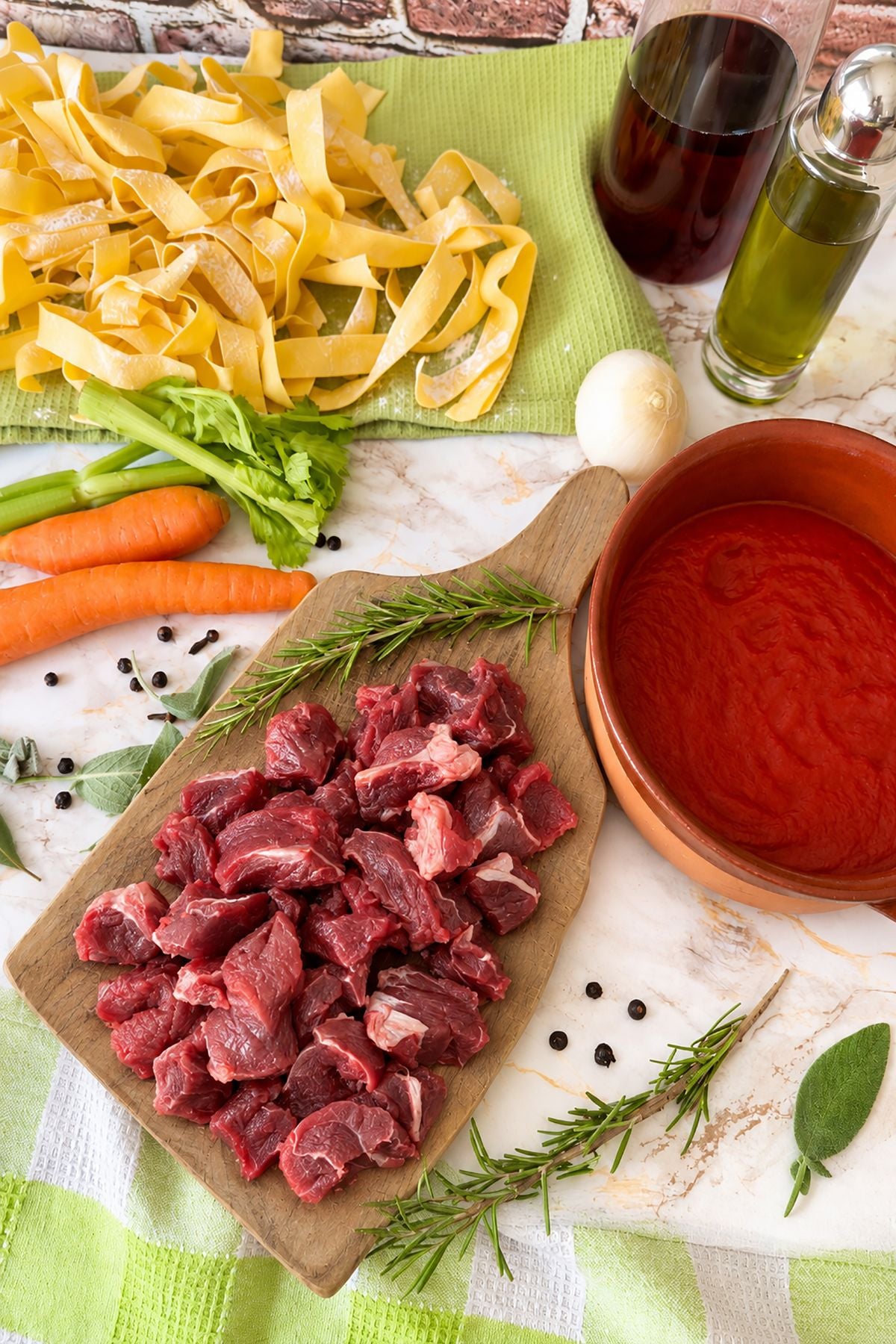
Prep Time: 20 Min | Marinating Time: 12 hours | Cook Time: 3 hours | Servings: 4
For the Marinade
- ½ medium carrot
- ½ medium onion
- 1 celery stalk
- 1 bay leaf
- 3–4 juniper berries
- 1 fresh sage leaf
- 1 sprig of fresh rosemary
- 500 ml (about 2 cups + 2 tablespoons) red wine
For the Wild Boar Ragu
- 500 g (about 1 lb) boneless wild boar meat
- ½ medium onion
- 1 medium carrot
- 1 celery stalk
- 1 garlic clove
- 2 fresh sage leaves
- 1 sprig of fresh rosemary
- 4 juniper berries
- 4 whole cloves
- 1 bay leaf
- 100 ml (about ⅓ cup + 1 tablespoon) red wine
- 400 g (14 oz) tomato passata (strained tomatoes)
- 10 g (⅓ oz) dark chocolate (at least 80% cocoa) or 1 teaspoon unsweetened cocoa powder (optional)
- Extra virgin olive oil, as needed
- Fine salt, to taste
- Freshly ground black pepper, to taste
For the Pasta
- 400 g (14 oz) fresh pappardelle
- Grated Parmigiano Reggiano, for serving (optional)
How to Make Pappardelle al Cinghiale
Marinate the Wild Boar
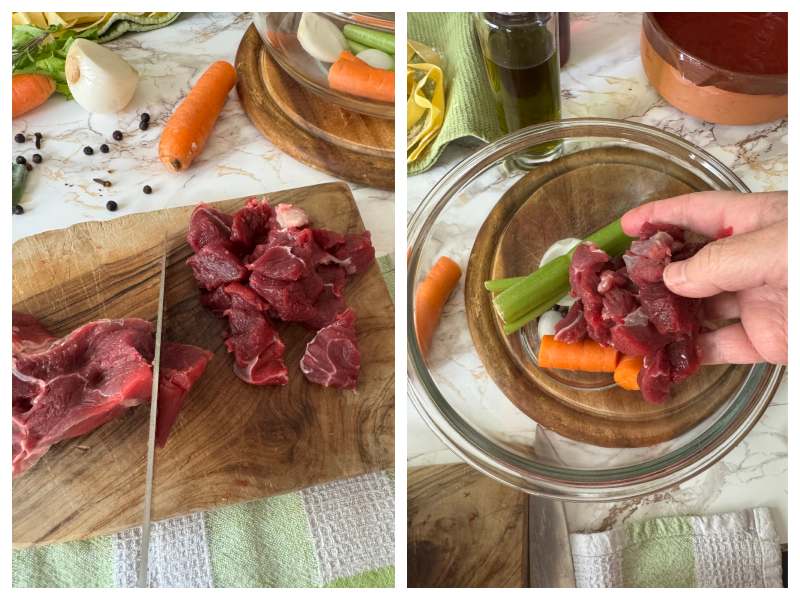
Step 1) - Start by preparing the marinade. Cut half an onion, half a carrot, and one celery stalk into large pieces.
Cut the wild boar meat into small chunks and place them in a large bowl with the vegetables.
Tip: Don't cut the meat into pieces that are too large. During the long, slow cooking process, the smaller chunks will become very tender and begin to fall apart, creating the perfect texture for a pasta sauce.
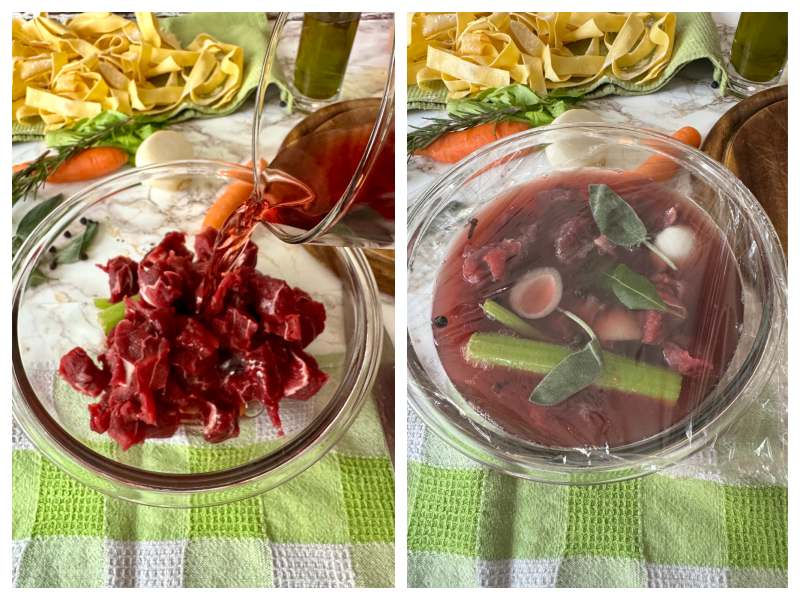
Step 2) - Add the bay leaf, juniper berries, sage leaf, and rosemary sprig.
Pour in 500 ml (about 2 cups + 2 tablespoons) of red wine, making sure the meat is completely submerged. If necessary, use a smaller, deeper container.
Cover with plastic wrap and refrigerate for about 12 hours, preferably overnight. The wine and aromatic herbs will help flavor the meat and mellow its strong, gamey taste.
Make the Wild Boar Ragu
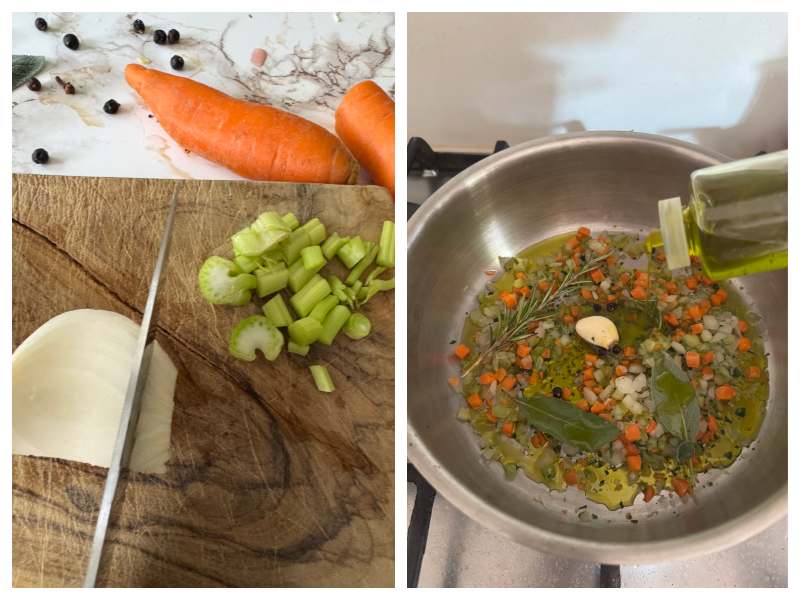
Step 3) - Once the marinating time is over, prepare the vegetables for the sauce.
Finely chop the onion, carrot, and celery. You can also use a food processor for a finer texture.
Heat a generous drizzle of extra virgin olive oil in a large, heavy-bottomed pot. Add the chopped vegetables, garlic clove, sage leaves, rosemary sprig, juniper berries, whole cloves, and bay leaf.
Sauté over medium heat for 2–3 minutes, stirring occasionally to release their aromas.
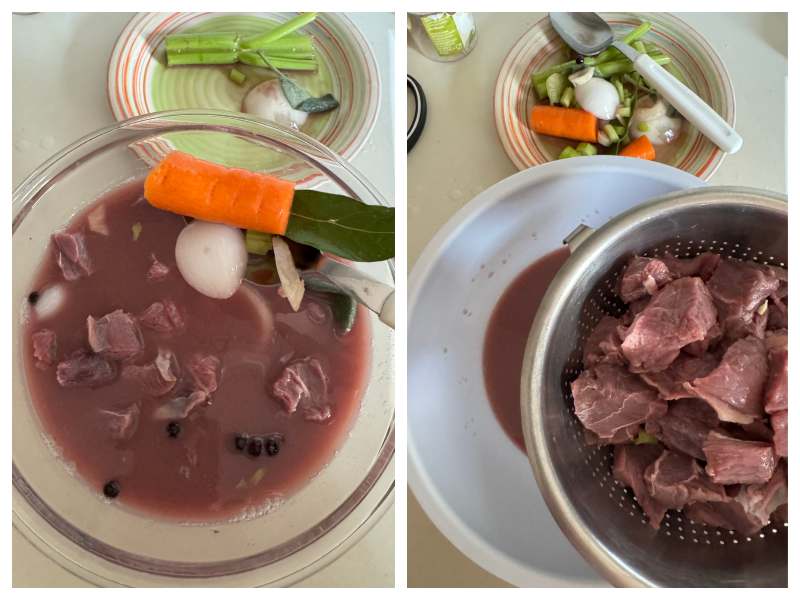
Step 4) - Meanwhile, remove the vegetables and herbs from the marinade and discard them.
Drain the wild boar meat thoroughly and gently pat it dry with paper towels.
Note: Discard the marinade liquid. It has already served its purpose of flavoring the meat and mellowing its gamey taste. In this recipe, we use fresh red wine for cooking the ragù.
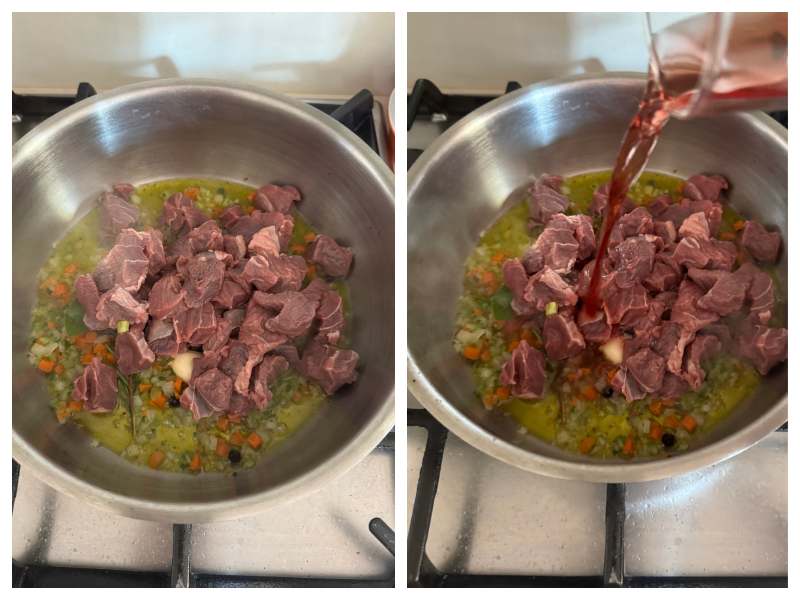
Step 5) - Add the meat to the pot and brown over medium-high heat, stirring occasionally, until it changes color on all sides.
Pour in 100 ml (about ⅓ cup + 1 tablespoon) of red wine to deglaze the pot.
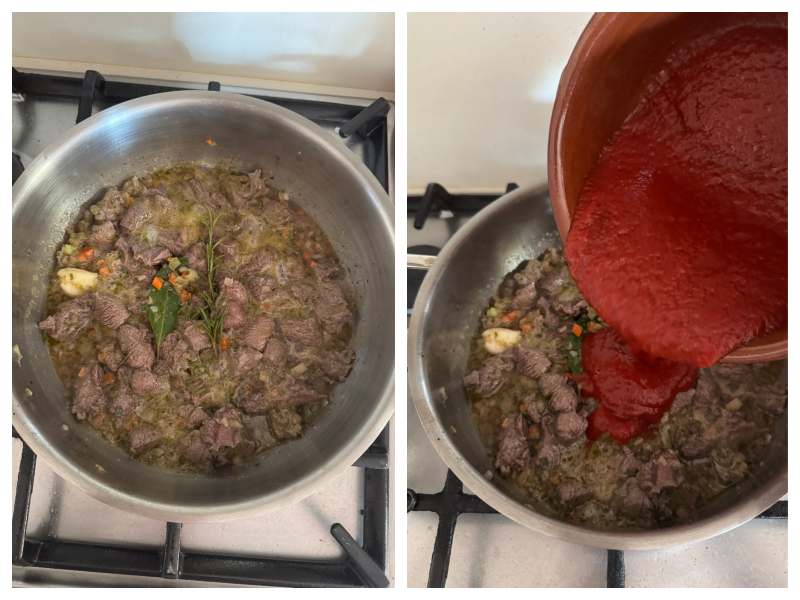
Step 6) - Let the wine simmer uncovered for a few minutes, stirring and scraping the bottom of the pot to release all the flavorful browned bits.
Continue cooking until the wine has reduced and its sharp alcoholic aroma has mellowed.
Add the tomato passata and stir well to combine.
Simmer the Ragu
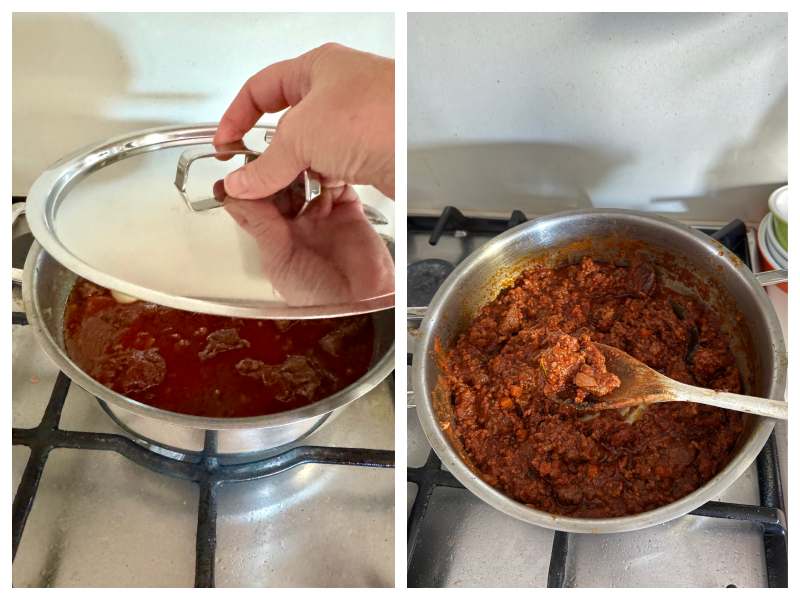
Step 7) - Reduce the heat to low, cover the pot, and let the ragù simmer gently for about 3 hours, stirring occasionally.
Season with salt and freshly ground black pepper to taste. If the sauce becomes too dry during cooking, add a little hot water.
The ragù is ready when the wild boar is extremely tender and the meat begins to fall apart. The sauce should be rich and thick, but still moist enough to coat the pasta.
Remove the rosemary sprig, bay leaf, and any visible whole spices before serving.
Optional: At the end of cooking, add 10 g (⅓ oz) of dark chocolate or 1 teaspoon of unsweetened cocoa powder. Stir until completely incorporated. This little addition helps balance the strong flavor of the wild boar and rounds out the acidity of the tomato sauce, without making the ragù taste sweet.
Cook the Pappardelle, Toss, and Serve
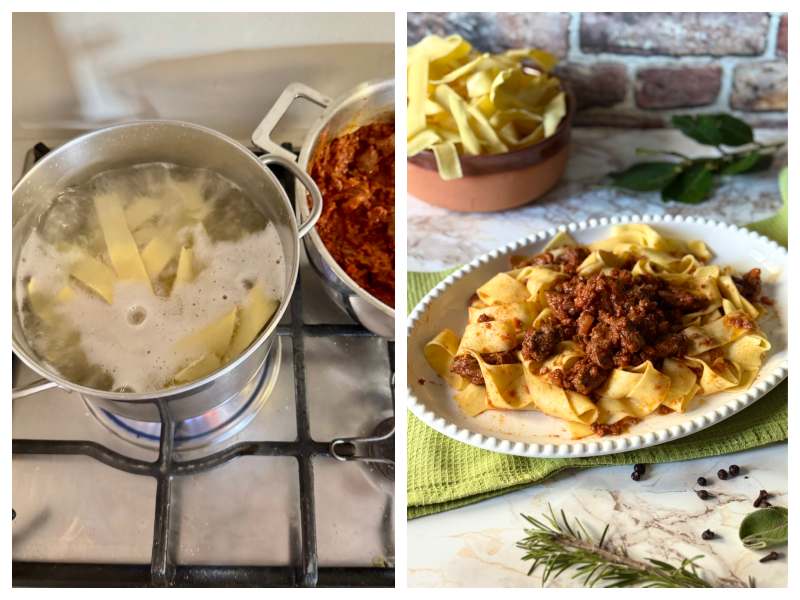
Step 8) - Bring a large pot of salted water to a boil. Add the fresh pappardelle and cook until al dente, following the cooking time appropriate for their thickness. For more tips, see our guide on How to Cook Fresh Pasta.
Before draining, reserve a little pasta cooking water.
Transfer the drained pappardelle to the pot with the hot wild boar ragù and toss gently until the pasta is evenly coated with the sauce.
If necessary, add a splash of the reserved pasta water to loosen the ragù and help it coat the pappardelle.
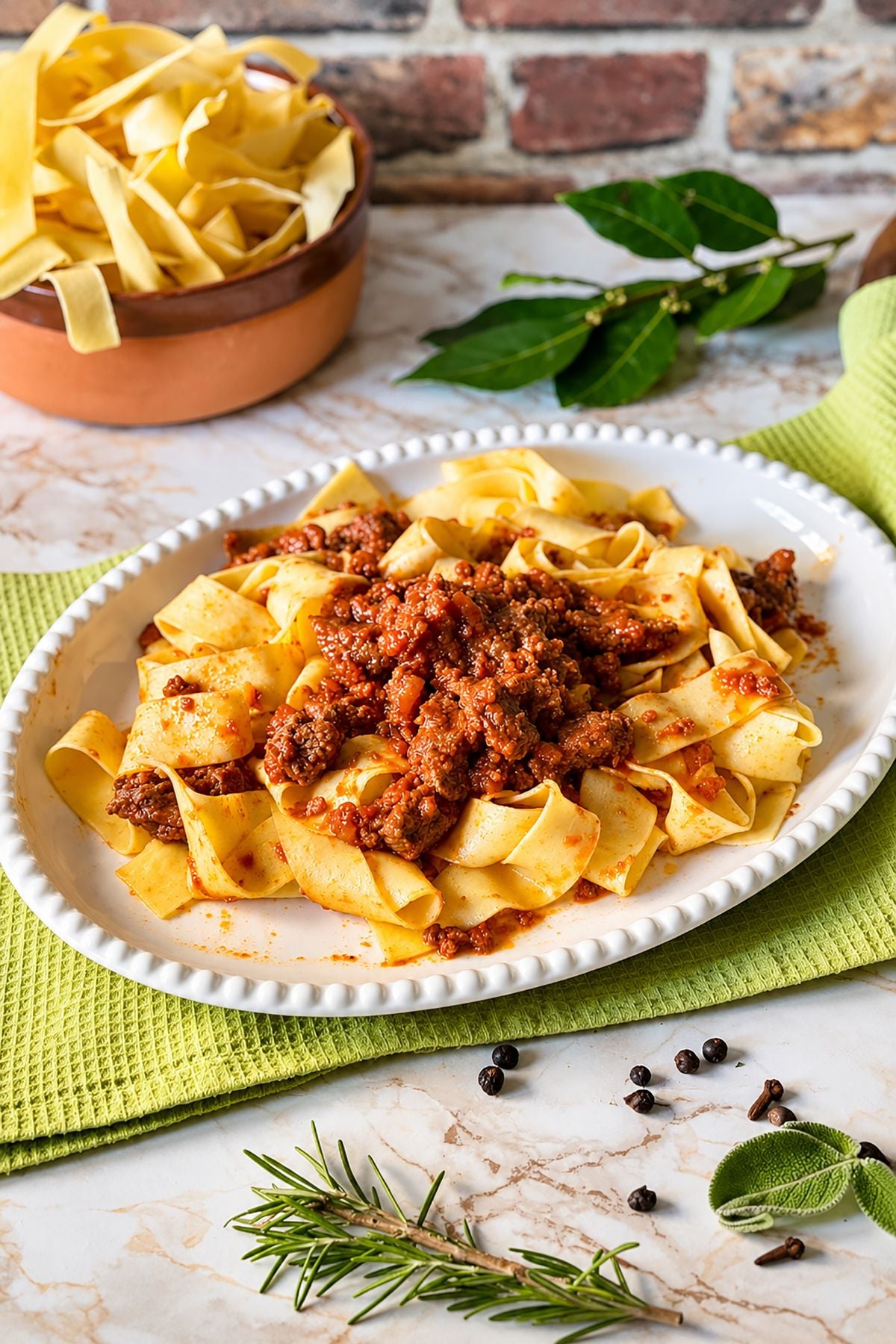
Serve immediately, with a drizzle of extra virgin olive oil and, if you like, a sprinkle of freshly grated Parmigiano Reggiano.
Tips for the Best Wild Boar Ragu
Choose the right cut of meat. Wild boar shoulder or leg are excellent choices for this recipe. These cuts are flavorful and become wonderfully tender with slow cooking. Cut the meat into small chunks rather than grinding it, so the ragù has a rustic, hearty texture.
Use a good dry red wine. A full-bodied red wine, such as Chianti or another Sangiovese-based wine, works particularly well with wild boar. You don't need an expensive bottle, but choose a wine you'd enjoy drinking. Avoid sweet wines, which can alter the flavor of the sauce.
Don't skip the marinade. Wild boar has a stronger, more distinctive flavor than domestic pork. Marinating it in red wine, vegetables, and aromatic herbs helps flavor the meat and mellow its gamey taste. Keep it refrigerated throughout the marinating time.
Brown the meat properly. After marinating, drain the wild boar thoroughly and pat it dry before adding it to the pot. This helps the meat brown rather than steam. If necessary, brown it in batches to avoid overcrowding the pot.
Cook low and slow. Wild boar needs time to become tender, especially when using cuts with connective tissue. Keep the ragù at a gentle simmer, avoiding a vigorous boil. Three hours is a good guideline, but the meat may need a little longer depending on the cut.
Adjust the consistency of the sauce. The finished ragù should be thick and rich, but not dry. If it reduces too much during cooking, add a little hot water. The sauce should be moist enough to coat the wide pappardelle without becoming watery.
Why Add Dark Chocolate to Wild Boar Ragu?
Here's a little family trick that makes wild boar ragù even more delicious: add a small piece of dark chocolate or a teaspoon of unsweetened cocoa powder.
When I was a child, my mother always added a little unsweetened cocoa powder when preparing game, especially hare in salmì, a traditional Italian game stew. I remember finding this very strange at the time. Now I understand why she did it!
Wild boar has a strong, distinctive flavor, sometimes with slightly metallic or gamey notes. The subtle bitterness of dark chocolate helps mellow these flavors, adding depth and making the sauce taste richer and more balanced. It can also soften the perceived sharpness of the tomatoes.
For this recipe, 10 g (⅓ oz) of dark chocolate with at least 80% cocoa or 1 teaspoon of unsweetened cocoa powder is enough. Add it during the last 10–15 minutes of cooking, stirring until completely incorporated.
The chocolate won't make the ragù taste sweet or chocolatey. It's entirely optional, but I highly recommend trying it!
Fresh or Dried Pappardelle?
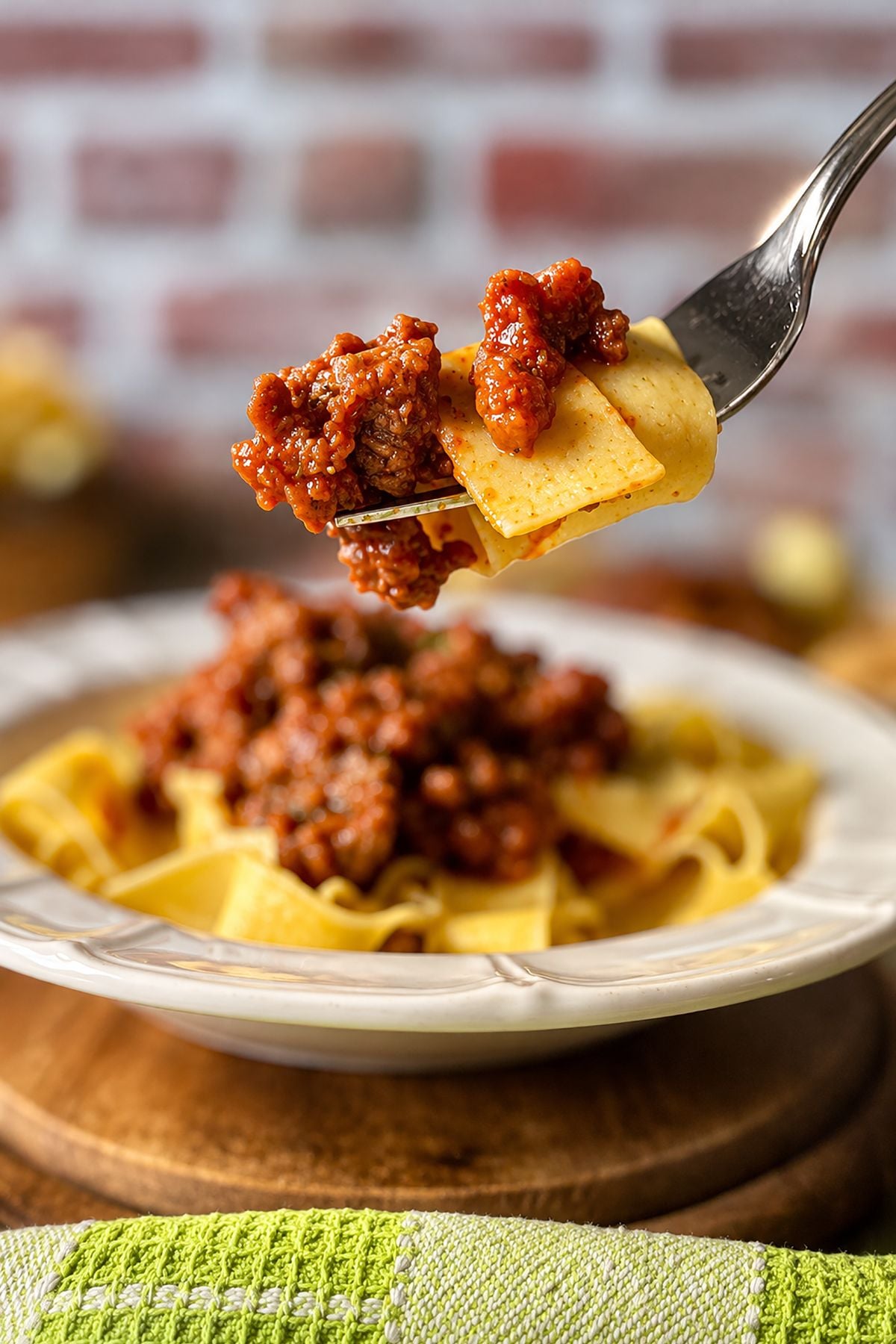
Pappardelle are wide, flat ribbons of egg pasta, traditionally associated with Tuscany. Their broad shape makes them perfect for rich, hearty sauces like wild boar ragù, allowing the tender pieces of meat and thick sauce to cling to the pasta.
Fresh pappardelle are my first choice for this recipe. Their delicate texture pairs beautifully with the rich, slow-cooked ragù. You can buy them ready-made or prepare them from scratch using my Homemade Italian Pasta Recipe, which also explains how to cut the dough into pappardelle.
However, dried pappardelle work well too, especially if you prefer a firmer texture or can't find fresh pasta.
For 4 servings, use 400 g (14 oz) of fresh pappardelle or approximately 320 g (11 oz) of dried pappardelle. Just remember that cooking times will vary depending on the type and thickness of the pasta.
Variations and Substitutions
White Wild Boar Ragu. For a tomato-free version, omit the passata and let the meat simmer slowly with the sautéed vegetables, wine, herbs, and spices. Add a little hot water or broth as needed to keep the sauce moist. Browning the meat well is especially important in this variation, as it gives the ragù a deeper color and richer flavor.
With Porcini Mushrooms. For an earthy, autumn-inspired variation, add some fresh, sliced porcini mushrooms during the last 15–20 minutes of cooking. Their rich, woodsy flavor pairs beautifully with wild boar and juniper berries.
Add Pancetta or Sausage. Wild boar is relatively lean, so adding a little pork fat can make the ragù richer. Try adding 50 g (about 2 oz) of diced pancetta to the soffritto, or the same amount of Italian pork sausage when browning the meat.
Try Different Pasta Shapes. Although pappardelle are the traditional choice, this wild boar ragù also works beautifully with tagliatelle, pici, or even short pasta such as rigatoni.
Serve with Polenta or Make Lasagna. Wild boar ragù isn't just for pasta! It's also delicious spooned over creamy, steaming polenta or used as a filling for a rich, comforting lasagna.
You can even prepare a larger batch of ragù and use it for different dishes throughout the week!
How to Store and Reheat Pappardelle al Cinghiale
Storing Wild Boar Ragu. The ragù can be prepared in advance and stored in an airtight container in the refrigerator for up to 3–4 days. Refrigerate it promptly in shallow containers to allow it to cool quickly. In fact, the flavors often become even richer the next day, making this an excellent make-ahead recipe.
Freezing Wild Boar Ragu. The sauce freezes very well! Divide it into portions and store in freezer-safe containers for up to 2–3 months for the best quality. Thaw overnight in the refrigerator before reheating.
Reheating. Warm the ragù in a saucepan over medium-low heat, stirring occasionally until thoroughly heated. Add a splash of water if the sauce has thickened too much. Reheat it to 165°F (74°C).
Storing Leftover Pappardelle. If the pasta has already been tossed with the ragù, store any leftovers in an airtight container in the refrigerator and enjoy within 1–2 days for the best texture. Reheat thoroughly in a skillet with a little water to keep the pasta from drying out.
For the best results, I recommend storing the ragù separately and cooking fresh pappardelle just before serving.
Pappardelle al Cinghiale FAQs
Yes! If wild boar isn't available, you can use venison or other game meats, such as roe deer or fallow deer. A mixture of beef and pork is another option, although the result will be a different, milder ragù. Keep in mind that marinating and cooking times may vary depending on the meat you choose.
Yes, I recommend removing the whole juniper berries, cloves, bay leaf, and rosemary sprig before serving. These ingredients release their wonderful aromas during cooking, but they aren't pleasant to bite into. The garlic clove can stay in the sauce if it has become soft enough to blend into the ragù.
Don't worry! Wild boar can take longer to become tender, depending on the cut and the age of the animal. Add a little hot water if needed, cover the pot, and continue cooking at a gentle simmer for another 30–60 minutes, checking the meat occasionally.
Avoid turning up the heat. Slow, gentle cooking allows the connective tissue to soften, giving the ragù its characteristic tender texture.
A strong wine flavor can result from using a very tannic red wine or not reducing the wine sufficiently before adding the tomato passata.
To prevent this, let the wine reduce uncovered after deglazing the meat.
If the finished ragù tastes too sharp, try adding a little water or broth to dilute the intensity and a drizzle of extra virgin olive oil to round out the flavor. If the sauce is already thick, avoid reducing it further, as this may concentrate the acidity.
More Italian Fresh Pasta Recipes
If you love pappardelle al cinghiale, here are some more traditional Italian pasta dishes to try, featuring fresh egg pasta and delicious sauces.
- Tagliatelle with Porcini Mushrooms – Fresh tagliatelle with aromatic porcini mushrooms, garlic, and parsley.
- Authentic Tagliatelle Bolognese – A classic from Emilia-Romagna, featuring fresh egg pasta and a rich, slow-cooked meat ragù.
- Fettuccine alla Papalina – A traditional Roman pasta dish with prosciutto, eggs, Parmigiano Reggiano, and a creamy sauce.
- Authentic Fettuccine Alfredo – The original Roman recipe with butter and Parmigiano Reggiano, without cream.
Recipe Card
Pappardelle al Cinghiale (Tuscan Wild Boar Ragu)

Ingredients
For the Marinade
- ½ medium carrot
- ½ medium onion
- 1 stalk celery
- 1 bay leaf
- 4 juniper berries
- 1 fresh sage leaf
- 1 sprig fresh rosemary
- 500 ml red wine - about 2 cups + 2 tablespoons
For the Wild Boar Ragu
- 500 g boneless wild boar - about 1 lb
- ½ medium onion
- 1 medium carrot
- 1 stalk celery
- 1 clove garlic
- 2 fresh sage leaves
- 1 sprig fresh rosemary
- 4 juniper berries
- 4 whole cloves
- 1 bay leaf
- 100 ml red wine - about ⅓ cup + 1 tablespoon
- 400 g tomato passata (strained tomatoes) - 14 oz
- 10 g dark chocolate (at least 80% cocoa) or 1 teaspoon unsweetened cocoa powder - ⅓ oz, optional
- extra virgin olive oil - as needed
- fine salt - to taste
- freshly ground black pepper - to taste
For the Pasta
- 400 g fresh pappardelle - 14 oz
- grated Parmigiano Reggiano - for serving (optional)
Instructions
Marinate the Wild Boar
- Start by preparing the marinade. Cut half an onion, half a carrot, and one celery stalk into large pieces.
- Cut the wild boar meat into small chunks and place them in a large bowl with the vegetables.
- Add the bay leaf, juniper berries, sage leaf, and rosemary sprig.
- Pour in 500 ml (about 2 cups + 2 tablespoons) of red wine, making sure the meat is completely submerged. If necessary, use a smaller, deeper container.
- Cover with plastic wrap and refrigerate for about 12 hours, preferably overnight. The wine and aromatic herbs will help flavor the meat and mellow its strong, gamey taste.
Make the Wild Boar Ragu
- Once the marinating time is over, prepare the vegetables for the sauce. Finely chop the onion, carrot, and celery. You can also use a food processor for a finer texture.
- Heat a generous drizzle of extra virgin olive oil in a large, heavy-bottomed pot. Add the chopped vegetables, garlic clove, sage leaves, rosemary sprig, juniper berries, whole cloves, and bay leaf. Sauté over medium heat for 2–3 minutes, stirring occasionally to release their aromas.
- Meanwhile, remove the vegetables and herbs from the marinade and discard them.
- Drain the wild boar meat thoroughly and gently pat it dry with paper towels.
- Add the meat to the pot and brown over medium-high heat, stirring occasionally, until it changes color on all sides.
- Pour in 100 ml (about ⅓ cup + 1 tablespoon) of red wine to deglaze the pot.
- Let the wine simmer uncovered for a few minutes, stirring and scraping the bottom of the pot to release all the flavorful browned bits. Continue cooking until the wine has reduced and its sharp alcoholic aroma has mellowed.
- Add the tomato passata and stir well to combine.
Simmer the Ragu
- Reduce the heat to low, cover the pot, and let the ragù simmer gently for about 3 hours, stirring occasionally.
- Season with salt and freshly ground black pepper to taste. If the sauce becomes too dry during cooking, add a little hot water.The ragù is ready when the wild boar is extremely tender and the meat begins to fall apart. The sauce should be rich and thick, but still moist enough to coat the pasta.
- Remove the rosemary sprig, bay leaf, and any visible whole spices before serving.
- Optional: At the end of cooking, add 10 g (⅓ oz) of dark chocolate or 1 teaspoon of unsweetened cocoa powder. Stir until completely incorporated. This little addition helps balance the strong flavor of the wild boar and rounds out the acidity of the tomato sauce, without making the ragù taste sweet.
Cook the Pappardelle, Toss, and Serve
- Bring a large pot of salted water to a boil. Add the fresh pappardelle and cook until al dente, following the cooking time appropriate for their thickness.
- Before draining, reserve a little pasta cooking water.
- Transfer the drained pappardelle to the pot with the hot wild boar ragù and toss gently until the pasta is evenly coated with the sauce.
- If necessary, add a splash of the reserved pasta water to loosen the ragù and help it coat the pappardelle.
- Serve immediately, with a drizzle of extra virgin olive oil and, if you like, a sprinkle of freshly grated Parmigiano Reggiano.
Leave a Reply