
Fettuccine Alfredo is a classic Roman pasta dish made with just a few simple ingredients: fettuccine, butter, and Parmigiano Reggiano. When those ingredients are of excellent quality and combined with the right technique, they create an incredibly rich, silky, and flavorful pasta—without a drop of cream.
Although Fettuccine Alfredo was born in Rome, today it is far more famous in the United States than in Italy. In Italian homes, pasta simply dressed with butter and Parmigiano is commonly known as pasta al burro or pasta in bianco. Alfredo’s version, however, became famous as a richer preparation made with fettuccine and generous amounts of butter and Parmigiano.
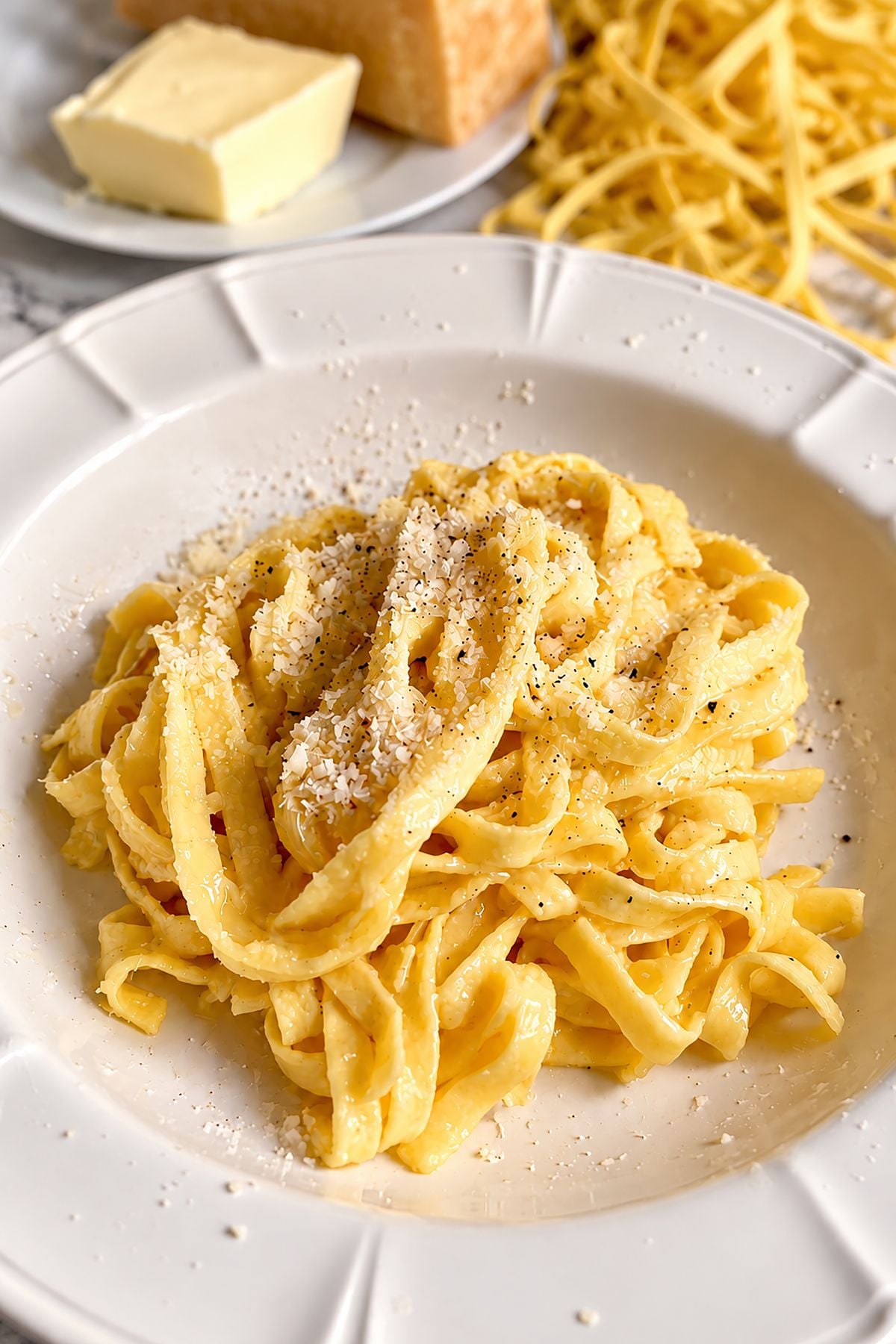
The name comes from Roman restaurateur Alfredo Di Lelio, whose fettuccine became internationally famous in the early 20th century. We’ll look at the fascinating story behind the dish later in the recipe.
Authentic Fettuccine Alfredo contains no heavy cream. Its creamy texture comes from emulsifying butter and finely grated Parmigiano Reggiano with a little starchy pasta cooking water—the same basic principle that helps create the creamy texture of Cacio e Pepe.
The most important rule is to make and serve Fettuccine Alfredo immediately. As the pasta cools, the butter and cheese begin to firm up and the sauce loses its silky texture.
It takes only a few minutes to prepare, but this is one pasta dish that should never be kept waiting.
Jump to:
- Ingredients
- How to Make Authentic Fettuccine Alfredo
- Does Authentic Fettuccine Alfredo Have Cream?
- Fresh or Dried Fettuccine: Which Is Better?
- Italian Fettuccine Alfredo vs American Alfredo
- Fettuccine Alfredo and Italian Pasta in Bianco
- Tips for Perfect Fettuccine Alfredo
- Storage and How to Use Leftovers
- The History of Fettuccine Alfredo
- More Traditional Roman Pasta Recipes
- Recipe Card
Ingredients
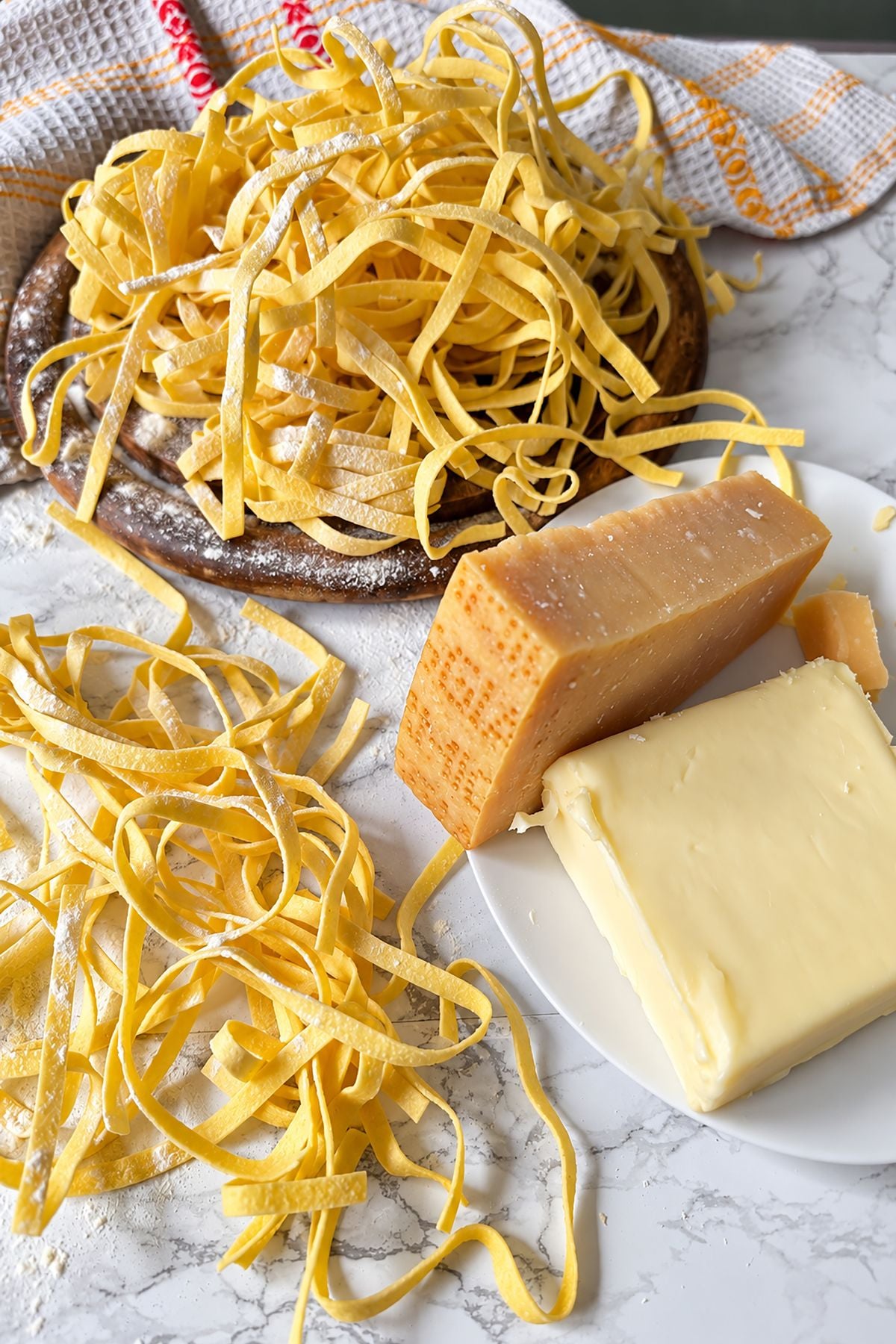
Prep Time: 10 Min | Cook Time: 5 Min | Servings: 4
- 500 g (1.1 lb) fresh egg fettuccine, or 320 g (11.3 oz) dried fettuccine. Want to make them from scratch? Follow our step-by-step recipe for Homemade Fettuccine Pasta
- 200 g (7 oz) 24-month aged Parmigiano Reggiano DOP, finely grated, plus more for serving
- 150 g (5.3 oz) unsalted butter, softened at room temperature, divided
- Freshly ground black pepper, optional
How to Make Authentic Fettuccine Alfredo
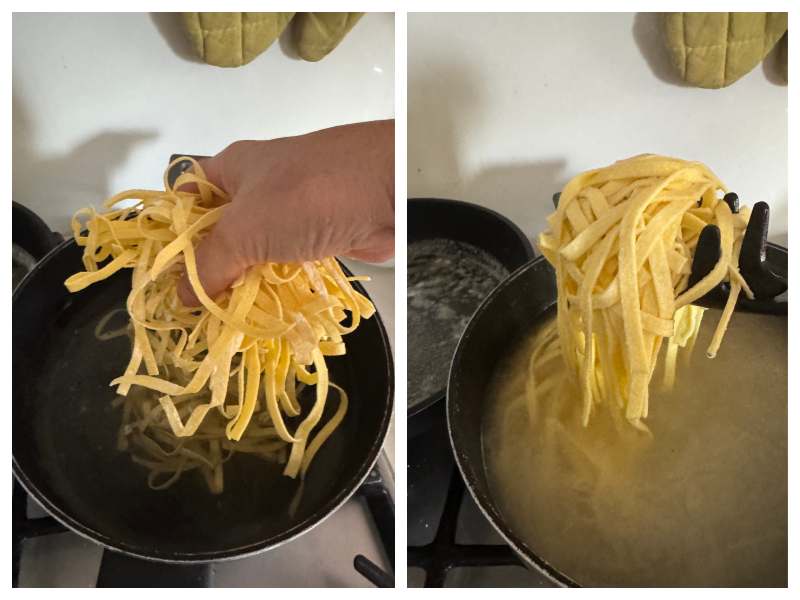
Step 1) - Bring a large pot of lightly salted water to a boil. Add the fresh fettuccine and cook for about 1 minute.
Fresh homemade fettuccine cook very quickly and will continue to soften slightly while you toss them with the butter and Parmigiano.
If using dried fettuccine, cook them until just shy of al dente, following the package directions.
Before draining, reserve about 1 cup of the pasta cooking water.
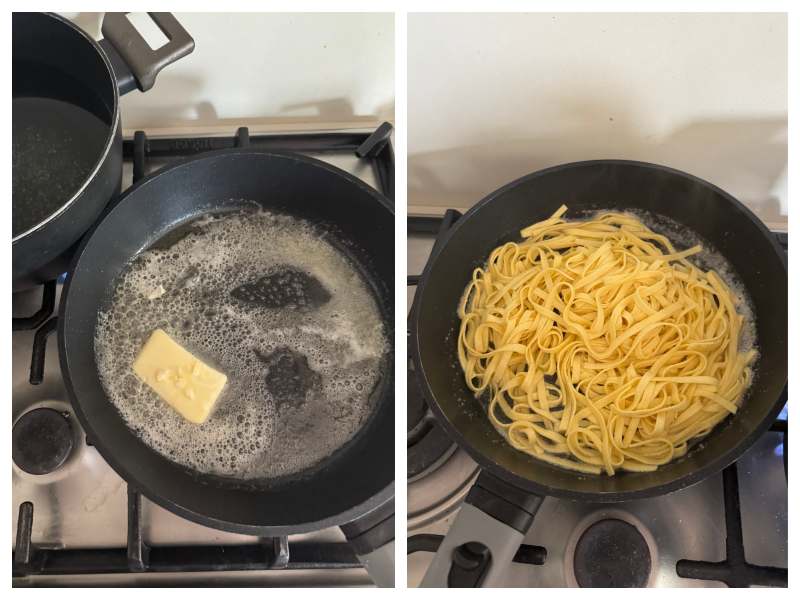
Step 2) - Meanwhile, place most of the butter in a large pan and melt it gently over low heat. As soon as it has melted, turn off the heat. Keep the remaining butter aside.
Transfer the fettuccine directly to the pan with the melted butter. Toss very gently, preferably using tongs or a pasta fork, taking care not to break them.
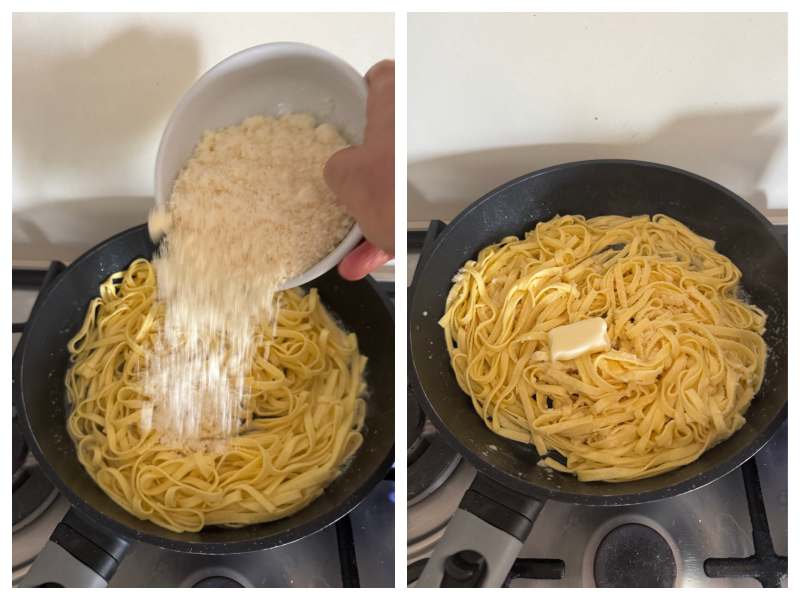
Step 3) - With the heat still off, add the finely grated Parmigiano Reggiano a little at a time, tossing continuously. Add the remaining butter and continue mixing.
The residual heat of the pasta should be enough to melt the butter and cheese.
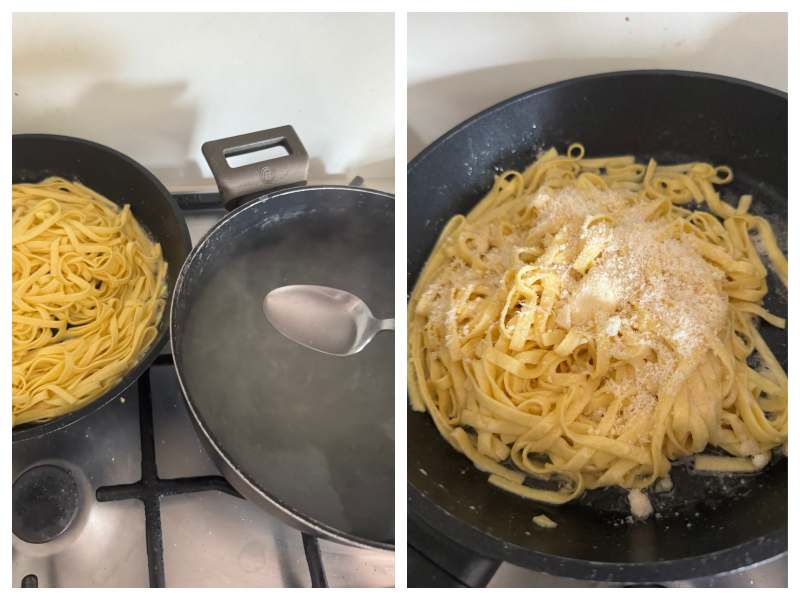
Step 4) - Add a little hot pasta cooking water, one tablespoon at a time, and continue tossing until the butter, Parmigiano, and starchy water come together into a smooth, creamy sauce that coats the fettuccine.
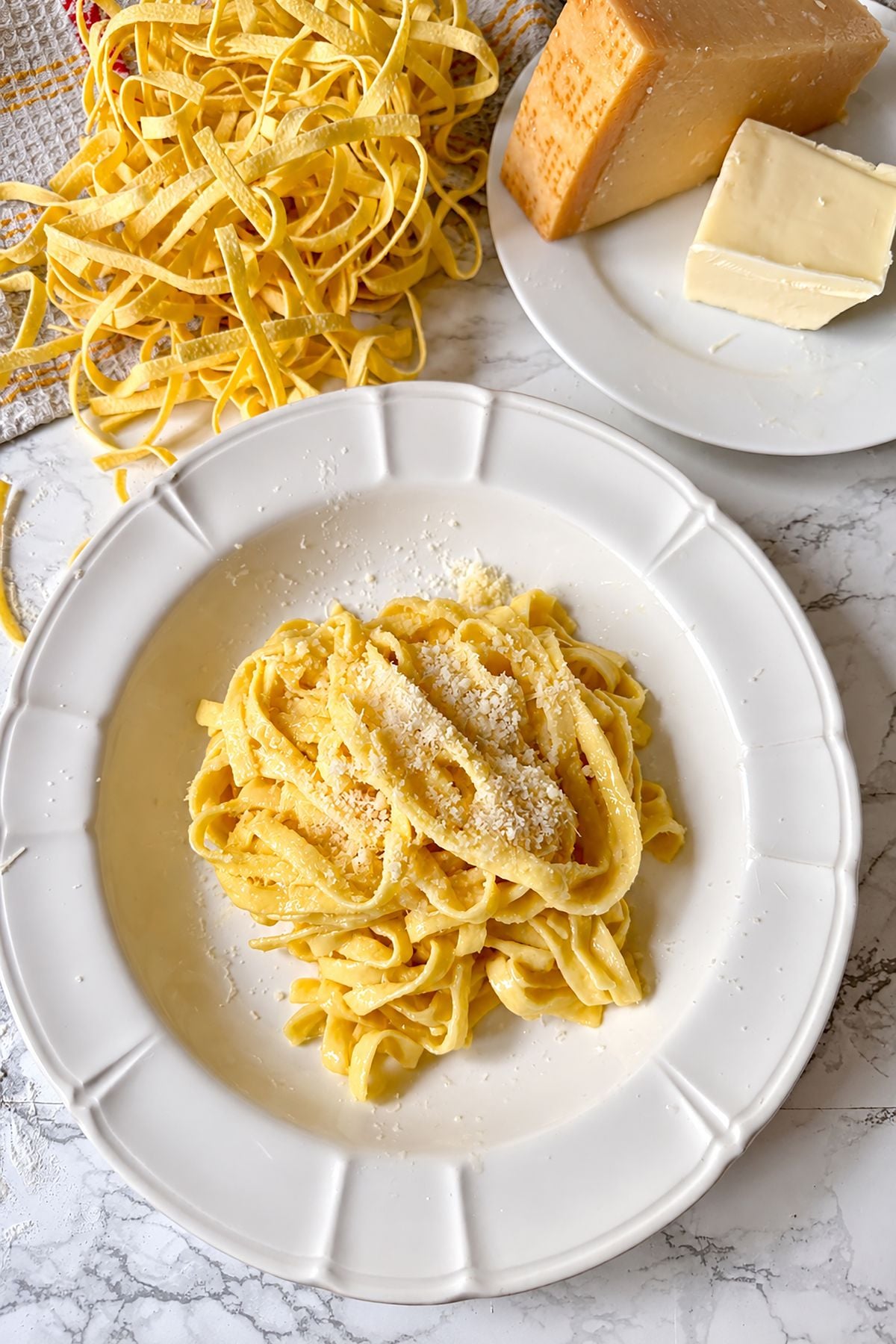
Serve the Fettuccine Alfredo immediately, with a little extra Parmigiano Reggiano and freshly ground black pepper, if desired.
Does Authentic Fettuccine Alfredo Have Cream?
No. Authentic Fettuccine Alfredo does not contain heavy cream.
The traditional Roman recipe is made with just a few simple ingredients: fettuccine, butter, Parmigiano Reggiano, and a little pasta cooking water.
The creamy texture comes from the way the butter, finely grated cheese, and starchy pasta water are mixed together. When properly emulsified, they create a smooth, silky sauce that coats the fettuccine without the need for cream.
Heavy cream became common in many American versions of Alfredo, where it's often used to create a richer, more stable sauce. The original Italian version, however, relies entirely on butter, Parmigiano Reggiano, and technique.
Fresh or Dried Fettuccine: Which Is Better?
For the most traditional result, fresh egg fettuccine are the best choice. Their soft, delicate texture pairs especially well with the rich butter and Parmigiano sauce and allows the sauce to cling beautifully to the pasta.
Fresh fettuccine also cook very quickly—usually in just a minute or two—so they’re ideal for a recipe like this, where everything comes together almost instantly.
That said, dried fettuccine also work well and are a perfectly good option if fresh pasta isn’t available. Just use a smaller amount—about 320 g (11.3 oz) dried pasta instead of 500 g (1.1 lb) fresh pasta—and cook it until just shy of al dente before tossing it with the sauce.
Italian Fettuccine Alfredo vs American Alfredo
Although they share the same name, Italian Fettuccine Alfredo and American Alfredo are quite different dishes.
The original Roman version is extremely simple. It is made with fettuccine, butter, Parmigiano Reggiano, and a little pasta cooking water. Its creamy texture comes from the emulsification of the butter, cheese, and starchy water rather than from cream.
In the United States, Alfredo evolved into a richer and more sauce-based preparation. American versions commonly include heavy cream and may also contain garlic, additional seasonings, or other cheeses. The sauce is often prepared separately and then combined with the pasta.
Both versions are creamy and comforting, but the Italian recipe is more minimalist and depends much more on the quality of the ingredients and on the technique used to bring them together.
For this recipe, I’m following the traditional Roman style: no cream, just butter, Parmigiano Reggiano, and pasta water.
Fettuccine Alfredo and Italian Pasta in Bianco
In Italy, Fettuccine Alfredo feels both familiar and unusual at the same time. The name “Alfredo” is not commonly used at home, but the basic idea behind the dish is something many Italians grow up eating: pasta in bianco, pasta simply dressed with butter and Parmigiano (bianco means white).
In my family, for example, this is the kind of pasta we often make when someone has an upset stomach or simply wants something comforting and easy to eat. My father still prepares it in the simplest possible way: he puts a few pieces of butter directly into his plate while the pasta cooks (usually spaghetti), finely grates the Parmigiano, then drains the pasta without drying it completely. He adds it to the plate while it is still very hot, covers it generously with Parmigiano, and mixes everything quickly.
The little bit of pasta water clinging to the spaghetti combines with the butter and cheese and creates a creamy coating—essentially the same principle used in Fettuccine Alfredo.
Pasta in bianco is also one of the classic comfort foods of Italian childhood. When my children were little, I often made it for them with short pasta such as penne, plenty of Parmigiano, and a little cooking water to keep it soft and creamy. They loved it.
This is why the story of Alfredo preparing butter-and-Parmesan fettuccine for his wife Ines after she had given birth feels so recognizable to an Italian family. Alfredo did not invent the idea of dressing pasta with butter and cheese; what made his dish special was the generous proportions, the use of fresh fettuccine, and the technique that transformed an everyday combination into the famous restaurant dish we now know as Fettuccine Alfredo.
Tips for Perfect Fettuccine Alfredo
Use 24-Month Aged Parmigiano Reggiano
For authentic Fettuccine Alfredo, use good-quality Parmigiano Reggiano aged for about 24 months. At this stage of aging, the cheese has plenty of flavor while still melting well enough to create a smooth sauce.
Grate it as finely as possible. The finer the cheese, the more easily and evenly it will melt when mixed with the hot pasta and cooking water.
For the best result, grate the Parmigiano just before using it rather than buying it pre-grated. Pre-grated cheese tends to be drier and may not melt as smoothly.
Parmigiano Reggiano or Grana Padano?
For the traditional recipe, Parmigiano Reggiano is the right choice.
Grana Padano is also a hard Italian cheese and can technically be used in a similar way, but it has a different flavor and is not the cheese traditionally associated with Fettuccine Alfredo.
If you want the authentic Roman-style result, stick with Parmigiano Reggiano.
Use Good-Quality Butter
Butter is one of only a few ingredients in this recipe, so its quality really matters.
Use good-quality unsalted butter with a rich, clean flavor. Avoid margarine or butter substitutes, which will not give the sauce the same taste or texture.
Let the butter soften at room temperature before starting the recipe so that it melts gently and incorporates easily with the pasta.
Keep the Heat Low — or Turn It Off Completely
Temperature is probably the most important part of making a smooth Alfredo sauce.
When you add the Parmigiano, the pan should be warm but not sitting over direct heat. Too much heat can cause the cheese proteins to tighten and clump instead of melting into a creamy sauce.
I recommend removing the pan from the stove before adding the cheese. This is especially important with induction cooktops, where the pan may remain very hot even after the heat has been reduced.
The residual heat of the pasta is enough to melt the Parmigiano and butter.
Add Pasta Water a Little at a Time
Reserve some pasta cooking water before draining the fettuccine.
Add it one or two tablespoons at a time, tossing continuously, until the butter and Parmigiano form a smooth, creamy coating around the pasta.
The water should be hot, but it does not need to be boiling. Adding too much water—or adding it all at once—can make the sauce thin and harder to control.
Grate the Parmigiano Very Finely
This deserves emphasizing: finely grated Parmigiano melts much more easily than coarse shreds.
For an especially smooth sauce, you can even pass the grated cheese through a fine sieve before adding it to the pasta. This helps eliminate larger pieces that may not melt evenly.
Serve Immediately
Fettuccine Alfredo is at its best the moment it is ready.
As it cools, the butter and cheese begin to firm up and the sauce loses its silky consistency. Have the plates ready and serve the pasta as soon as it is fully coated.
Storage and How to Use Leftovers
Fettuccine Alfredo are best eaten immediately, while they’re still hot, creamy, and silky.
If you have leftovers, store them in an airtight container in the refrigerator for up to 1 day. They can be reheated, but they will inevitably lose much of their original creaminess and delicate texture.
Rather than simply reheating them, I like to turn leftover Fettuccine Alfredo into a baked pasta dish.
Butter a baking dish, then combine the leftover fettuccine with diced ham and small pieces of mozzarella. Transfer everything to the dish and spoon some béchamel sauce over the top. Finish with grated Parmigiano Reggiano and a few small pats of butter.
Bake at 180°C (350°F) for about 20 minutes, or until heated through and a golden, crispy crust forms on top.
The History of Fettuccine Alfredo
The History of Fettuccine Alfredo: From Rome to America
According to the Di Lelio family story, Fettuccine Alfredo was created in Rome in 1908 by Alfredo Di Lelio, who at the time was working in his mother Angelina’s small trattoria in Piazza Rosa, where the Galleria Alberto Sordi stands today.
After the birth of their first child, Alfredo’s wife, Ines, was weak and had little appetite. Hoping to prepare something simple, nourishing, and appealing for her, Alfredo made fresh fettuccine and dressed them generously with butter and Parmigiano. Ines enjoyed the dish so much that she reportedly encouraged him to put it on the restaurant menu.
In 1914, Alfredo opened his own restaurant in Via della Scrofa in Rome, where the fettuccine became his signature dish. Part of their appeal was also the way Alfredo prepared them, vigorously tossing the pasta with butter and Parmigiano until a rich, creamy coating formed.
How Fettuccine Alfredo Became Famous in America
The international fame of Fettuccine Alfredo is closely linked to Hollywood stars Mary Pickford and Douglas Fairbanks. During their European honeymoon in 1920, the newly married couple visited Rome and tasted Alfredo’s fettuccine.
They were apparently so impressed by the dish that Alfredo's restaurant soon became famous among American travelers and celebrities. In 1927, Pickford and Fairbanks honored Alfredo with a golden fork and spoon bearing the dedication “To Alfredo, the King of the Noodles.”
As its popularity grew in the United States, Fettuccine Alfredo gradually evolved into the dish commonly served in American Italian restaurants today. The American version typically includes heavy cream and may also contain garlic, additional cheeses, chicken, broccoli, or other ingredients.
The original Roman recipe, however, remains remarkably simple: fettuccine, butter, Parmigiano Reggiano, and pasta cooking water, with the creaminess created entirely through the tossing and emulsifying technique.
Today, Fettuccine Alfredo is far better known in the United States than in Italy and has become one of the dishes most strongly associated with Italian food abroad. Its American popularity is such that February 7 is celebrated as National Fettuccine Alfredo Day.
More Traditional Roman Pasta Recipes
If you love the simplicity of Fettuccine Alfredo, try some of these other traditional Roman pasta recipes. They’re all made with just a few ingredients and rely on technique to create incredible flavor.
Recipe Card
Authentic Fettuccine Alfredo Recipe (No Cream)

Ingredients
- 500 g fresh egg fettuccine - 1.1 lb, or 320 g (11.3 oz) dried fettuccine
- 200 g 24-month aged Parmigiano Reggiano DOP - 7 oz, finely grated, plus more for serving
- 150 g unsalted butter - 5.3 oz, softened at room temperature, divided
- freshly ground black pepper - optional
Instructions
- Bring a large pot of lightly salted water to a boil. Add the fresh fettuccine and cook for about 1 minute.Fresh homemade fettuccine cook very quickly and will continue to soften slightly while you toss them with the butter and Parmigiano.If using dried fettuccine, cook them until just shy of al dente, following the package directions.
- Before draining, reserve about 1 cup of the pasta cooking water.
- Meanwhile, place most of the butter in a large pan and melt it gently over low heat. As soon as it has melted, turn off the heat. Keep the remaining butter aside.
- Transfer the fettuccine directly to the pan with the melted butter. Toss very gently, preferably using tongs or a pasta fork, taking care not to break them.
- With the heat still off, add the finely grated Parmigiano Reggiano a little at a time, tossing continuously. Add the remaining butter and continue mixing.The residual heat of the pasta should be enough to melt the butter and cheese.
- Add a little hot pasta cooking water, one tablespoon at a time, and continue tossing until the butter, Parmigiano, and starchy water come together into a smooth, creamy sauce that coats the fettuccine.
- Serve the Fettuccine Alfredo immediately, with a little extra Parmigiano Reggiano and freshly ground black pepper, if desired.
Leave a Reply