STEP BY STEP PHOTOS ABOVE!Have a look at my step-by-step photo instructions, variations and tips. That way, you can get it perfect the first time you try it!
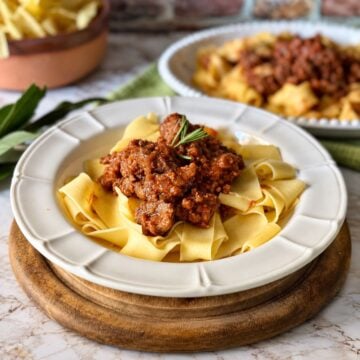
Pappardelle al Cinghiale (Tuscan Wild Boar Ragu)

Pappardelle al Cinghiale is a traditional Tuscan pasta dish made with a rich, flavorful wild boar ragu. Popular throughout central Italy, it's a rustic, comforting recipe, perfect for Sunday family lunches and special occasions.The wide ribbons of fresh pappardelle are ideal for holding the thick, aromatic sauce, made with tender pieces of wild boar slowly simmered with red wine, tomatoes, vegetables, and herbs.
Ingredients
For the Marinade
- ½ medium carrot
- ½ medium onion
- 1 stalk celery
- 1 bay leaf
- 4 juniper berries
- 1 fresh sage leaf
- 1 sprig fresh rosemary
- 500 ml red wine - about 2 cups + 2 tablespoons
For the Wild Boar Ragu
- 500 g boneless wild boar - about 1 lb
- ½ medium onion
- 1 medium carrot
- 1 stalk celery
- 1 clove garlic
- 2 fresh sage leaves
- 1 sprig fresh rosemary
- 4 juniper berries
- 4 whole cloves
- 1 bay leaf
- 100 ml red wine - about ⅓ cup + 1 tablespoon
- 400 g tomato passata (strained tomatoes) - 14 oz
- 10 g dark chocolate (at least 80% cocoa) or 1 teaspoon unsweetened cocoa powder - ⅓ oz, optional
- extra virgin olive oil - as needed
- fine salt - to taste
- freshly ground black pepper - to taste
For the Pasta
- 400 g fresh pappardelle - 14 oz
- grated Parmigiano Reggiano - for serving (optional)
Instructions
Marinate the Wild Boar
- Start by preparing the marinade. Cut half an onion, half a carrot, and one celery stalk into large pieces.
- Cut the wild boar meat into small chunks and place them in a large bowl with the vegetables.
- Add the bay leaf, juniper berries, sage leaf, and rosemary sprig.
- Pour in 500 ml (about 2 cups + 2 tablespoons) of red wine, making sure the meat is completely submerged. If necessary, use a smaller, deeper container.
- Cover with plastic wrap and refrigerate for about 12 hours, preferably overnight. The wine and aromatic herbs will help flavor the meat and mellow its strong, gamey taste.
Don't cut the meat into pieces that are too large. During the long, slow cooking process, the smaller chunks will become very tender and begin to fall apart, creating the perfect texture for a pasta sauce.
Make the Wild Boar Ragu
- Once the marinating time is over, prepare the vegetables for the sauce. Finely chop the onion, carrot, and celery. You can also use a food processor for a finer texture.
- Heat a generous drizzle of extra virgin olive oil in a large, heavy-bottomed pot. Add the chopped vegetables, garlic clove, sage leaves, rosemary sprig, juniper berries, whole cloves, and bay leaf. Sauté over medium heat for 2–3 minutes, stirring occasionally to release their aromas.
- Meanwhile, remove the vegetables and herbs from the marinade and discard them.
- Drain the wild boar meat thoroughly and gently pat it dry with paper towels.
- Add the meat to the pot and brown over medium-high heat, stirring occasionally, until it changes color on all sides.
- Pour in 100 ml (about ⅓ cup + 1 tablespoon) of red wine to deglaze the pot.
- Let the wine simmer uncovered for a few minutes, stirring and scraping the bottom of the pot to release all the flavorful browned bits. Continue cooking until the wine has reduced and its sharp alcoholic aroma has mellowed.
- Add the tomato passata and stir well to combine.
Discard the marinade liquid. It has already served its purpose of flavoring the meat and mellowing its gamey taste. In this recipe, we use fresh red wine for cooking the ragù.
Simmer the Ragu
- Reduce the heat to low, cover the pot, and let the ragù simmer gently for about 3 hours, stirring occasionally.
- Season with salt and freshly ground black pepper to taste. If the sauce becomes too dry during cooking, add a little hot water.The ragù is ready when the wild boar is extremely tender and the meat begins to fall apart. The sauce should be rich and thick, but still moist enough to coat the pasta.
- Remove the rosemary sprig, bay leaf, and any visible whole spices before serving.
- Optional: At the end of cooking, add 10 g (⅓ oz) of dark chocolate or 1 teaspoon of unsweetened cocoa powder. Stir until completely incorporated. This little addition helps balance the strong flavor of the wild boar and rounds out the acidity of the tomato sauce, without making the ragù taste sweet.
Cook the Pappardelle, Toss, and Serve
- Bring a large pot of salted water to a boil. Add the fresh pappardelle and cook until al dente, following the cooking time appropriate for their thickness.
- Before draining, reserve a little pasta cooking water.
- Transfer the drained pappardelle to the pot with the hot wild boar ragù and toss gently until the pasta is evenly coated with the sauce.
- If necessary, add a splash of the reserved pasta water to loosen the ragù and help it coat the pappardelle.
- Serve immediately, with a drizzle of extra virgin olive oil and, if you like, a sprinkle of freshly grated Parmigiano Reggiano.
Nutrition
Serving: 100gCalories: 682kcalCarbohydrates: 85gProtein: 41gFat: 6gSaturated Fat: 2gPolyunsaturated Fat: 1gMonounsaturated Fat: 1gTrans Fat: 0.01gCholesterol: 80mgSodium: 183mgPotassium: 1043mgFiber: 5gSugar: 7gVitamin A: 3916IUVitamin C: 6mgCalcium: 63mgIron: 3mg
Tried this recipe?Mention @recipesfromitaly or tag #recipesfromitaly!