
Wondering how to roast chestnuts in the oven so they're easy to peel, soft, and delicious? With a few simple tricks, you can make perfect oven-roasted chestnuts at home, with tender flesh and shells that come off easily.
Roasting chestnuts at home is easier than you might think, but getting them just right can be tricky. I've tried this method with excellent results: the chestnuts turned out beautifully roasted, tender inside, and surprisingly easy to peel. I'll show you how to get the same results, step by step.
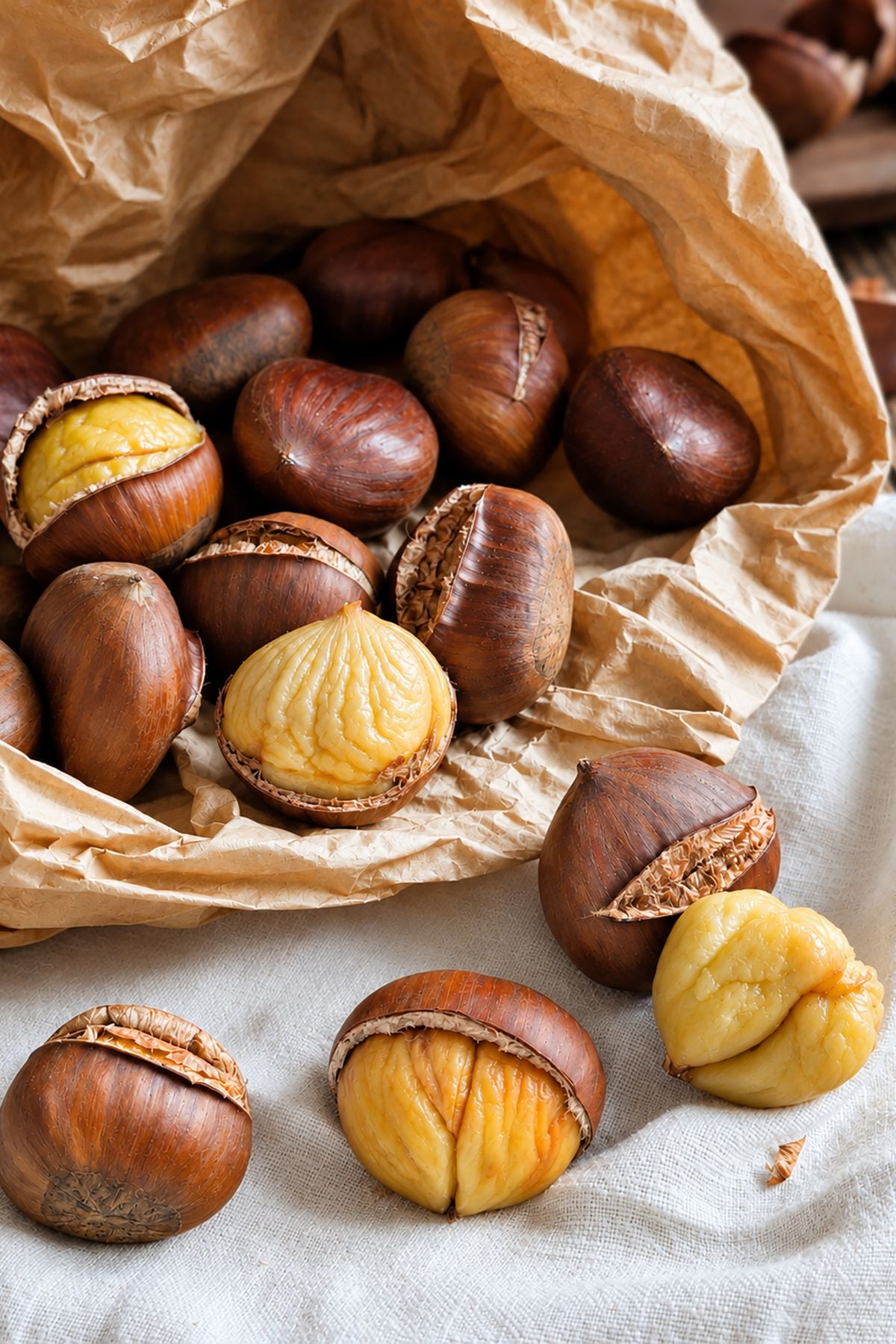
In Italy, roasted chestnuts are known as caldarroste. During autumn, you'll often find street vendors selling them in paper cones, filling the air with their irresistible aroma. Making them at home is a lovely way to enjoy this Italian tradition, especially on chilly fall days. And the best part? You don't need a fireplace or a special roasting pan. A regular oven is all you need!
Jump to:
Ingredients
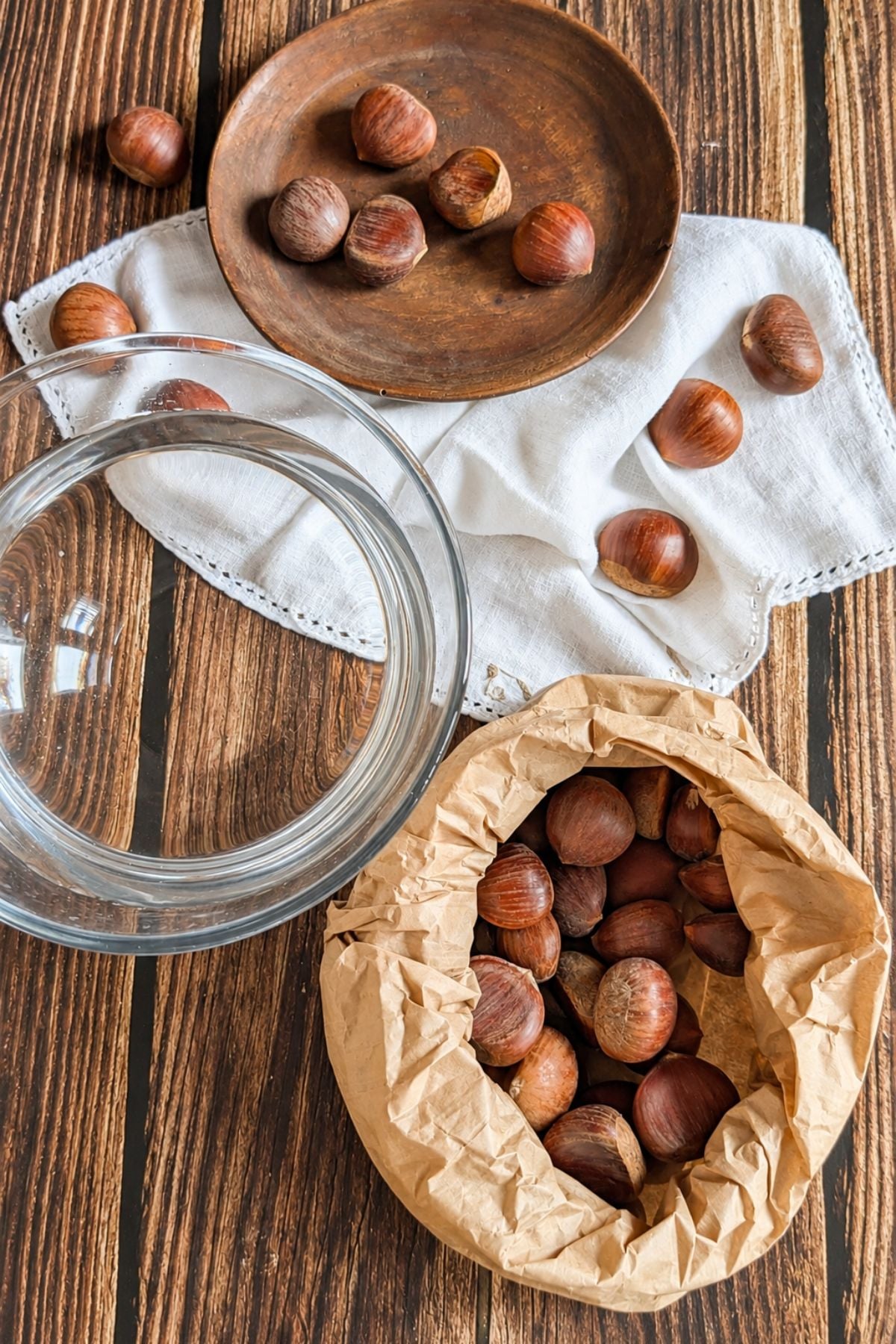
Prep Time: 15 Min | Soaking Time: 1 Hour | Resting Time: 15 Min | Cook Time: 20–35 Min | Servings: 4
- 500 g (about 1.1 lb) fresh chestnuts
- Water, as needed for soaking
Useful Tools for Roasting Chestnuts
You don't need any special equipment to roast chestnuts in the oven. The most important tool is a small, sharp paring knife to score the shells. This is what I used, and it worked perfectly, although scoring each chestnut takes a little patience!
Alternatively, you can use a chestnut cutter, a handy kitchen tool designed specifically for scoring chestnut shells. It may be worth considering if you roast chestnuts often, although I haven't personally tested one.
You'll also need a large bowl for soaking, a baking sheet, and a clean kitchen towel to wrap the chestnuts after roasting.
How to Roast Chestnuts in the Oven (Easy to Peel)
BEFORE YOU START: Choose chestnuts that are roughly the same size so they cook evenly. Check them one by one and discard any with visible mold, small holes in the shell, or other signs of damage. These may indicate that the chestnut inside is spoiled.
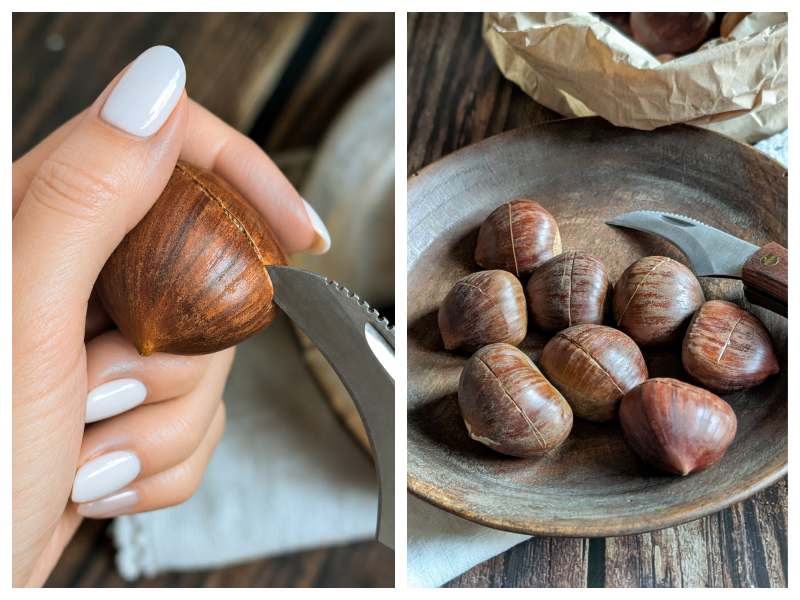
Step 1) - Using a small, sharp knife, make a horizontal cut across the rounded side of each chestnut. Try to cut through the outer shell without cutting into the flesh.
This is easier said than done! It's almost impossible not to nick the flesh a little, but don't worry if you do. Just avoid cutting too deeply, as the exposed flesh can dry out during roasting.
Some people make an X-shaped cut, but I prefer a single cut. It's quicker, easier, and works perfectly well!
Scoring the chestnuts allows steam to escape during roasting, preventing them from bursting in the oven.
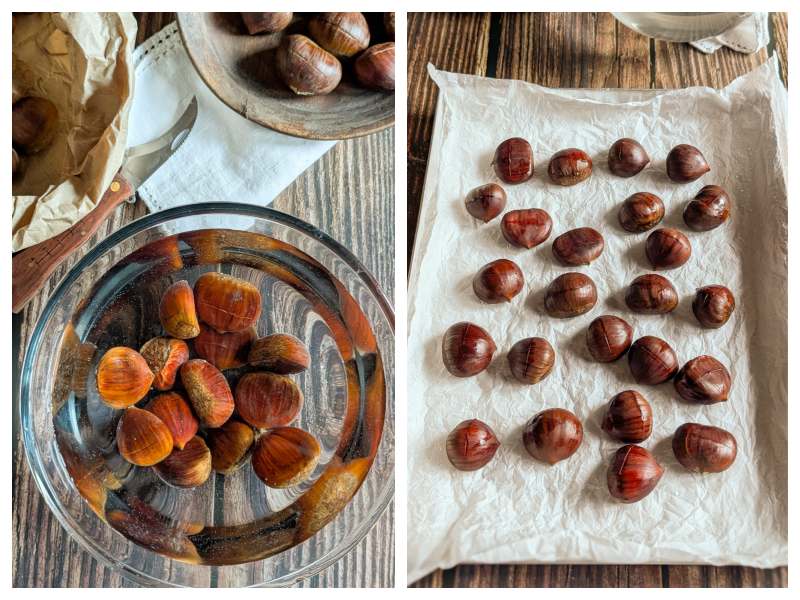
Step 2) - As you score the chestnuts, place them in a large bowl filled with cold water. Make sure they are completely submerged and let them soak for at least 1 hour.
This is one of my favorite tricks for making roasted chestnuts easy to peel! Soaking helps soften the shells and makes it easier to remove the thin, slightly bitter skin underneath after roasting.
Most chestnuts will sink to the bottom, while some may float. I generally check the floating ones carefully, as they may be dried out or damaged. However, floating alone doesn't necessarily mean a chestnut is spoiled.
After soaking, drain the chestnuts and pat them thoroughly dry with a clean kitchen towel.
Arrange them on a baking sheet in a single layer, with the scored side facing up. Leave a little space between them so they roast evenly.
How Long to Roast Chestnuts in the Oven
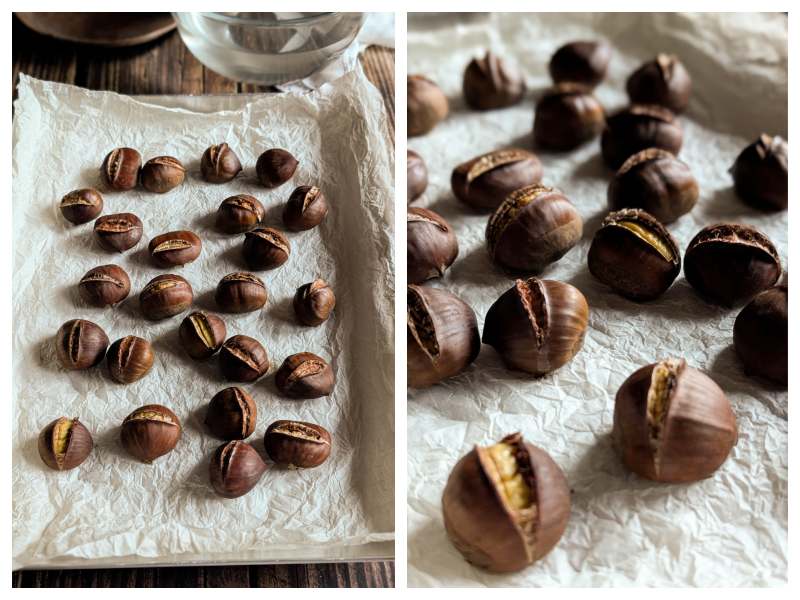
Step 3) - Preheat the oven to 180°C (350°F) in conventional mode or 160°C (320°F) in fan-assisted mode.
Place the baking sheet on the middle rack and roast according to the size of the chestnuts:
- Large chestnuts: 30–35 minutes.
- Small chestnuts: 20–25 minutes.
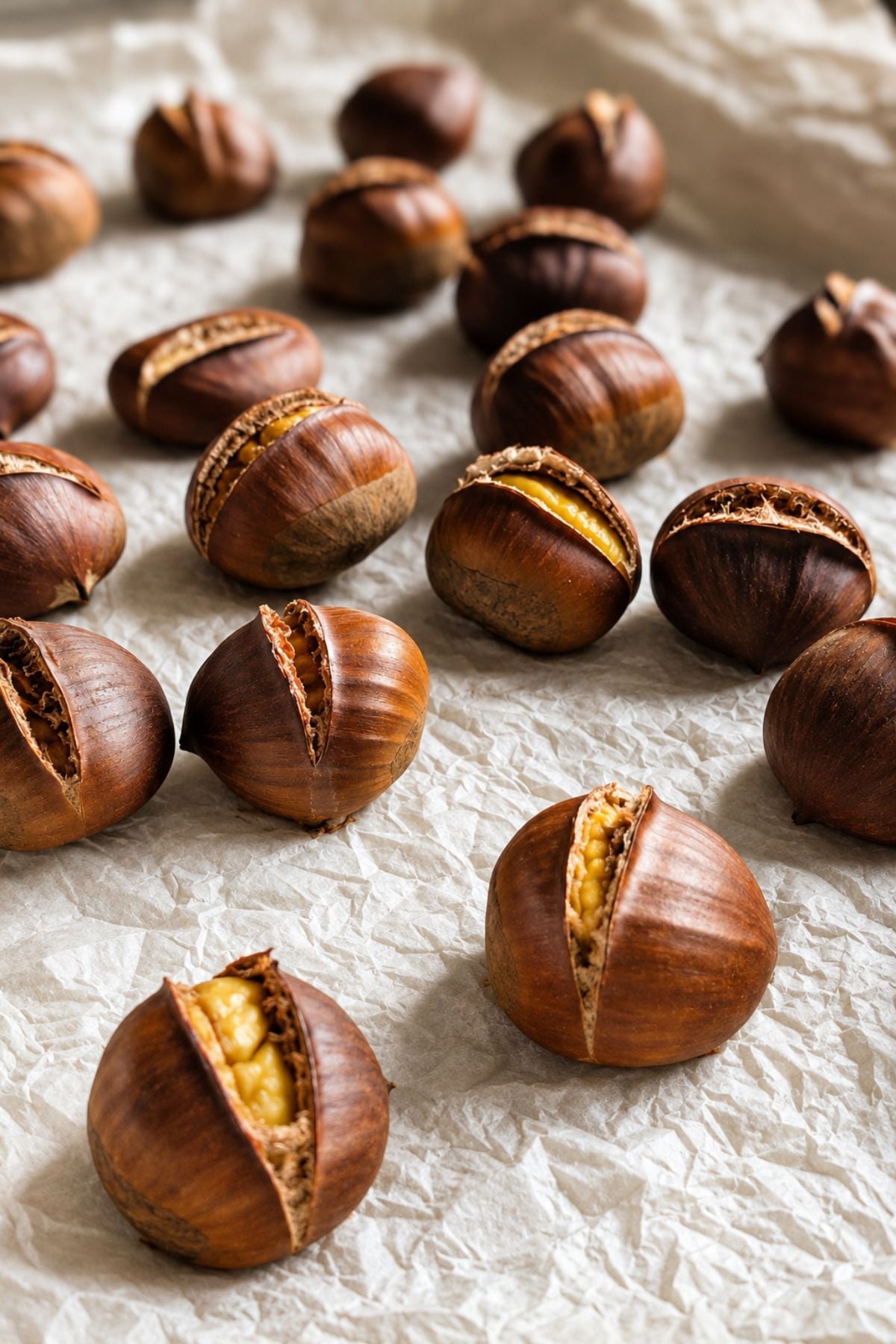
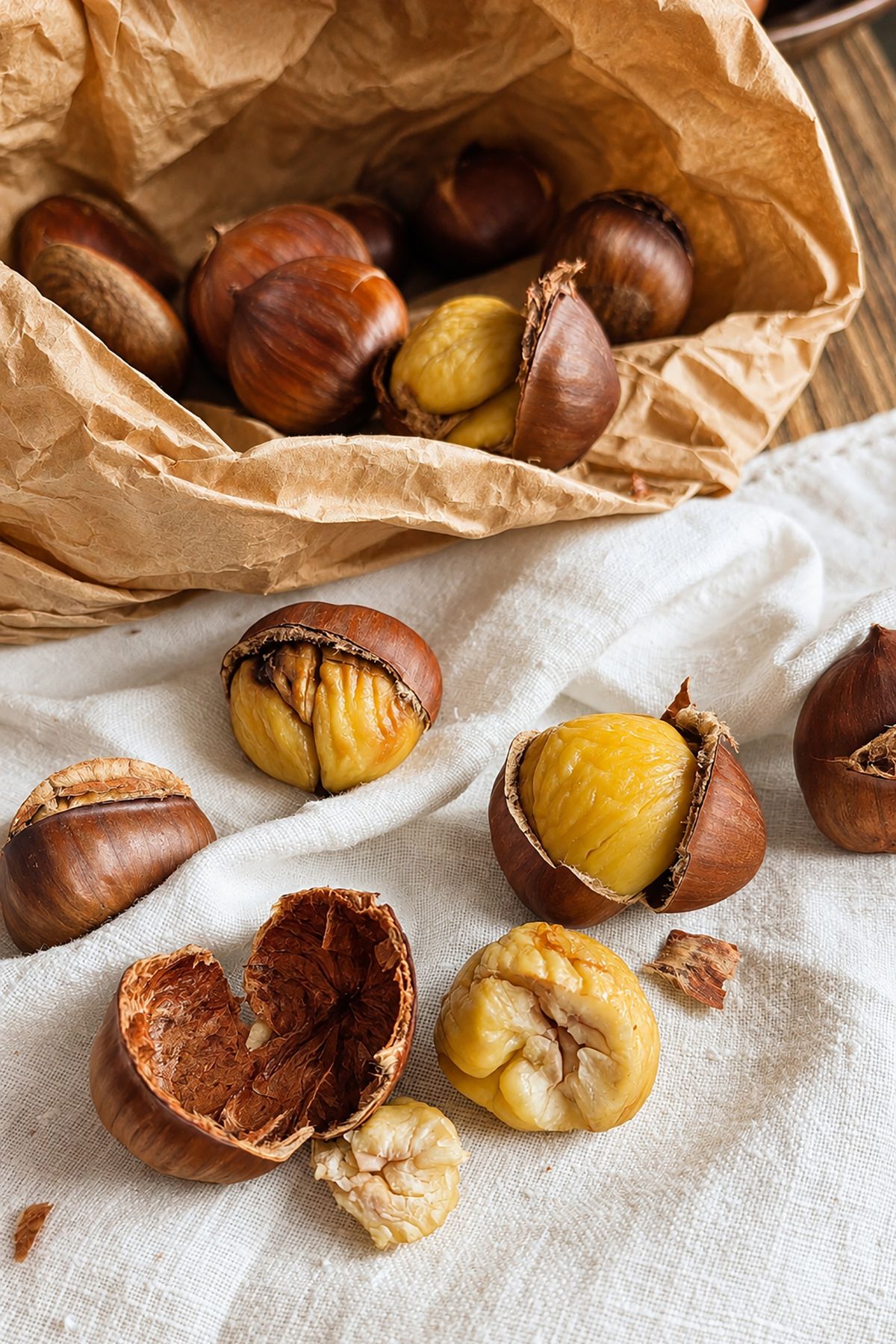
You'll know the chestnuts are nearly ready when the cuts open up, the shells begin to curl away from the flesh, and your kitchen fills with that wonderful roasted chestnut aroma.
But the best way to check is to open one!
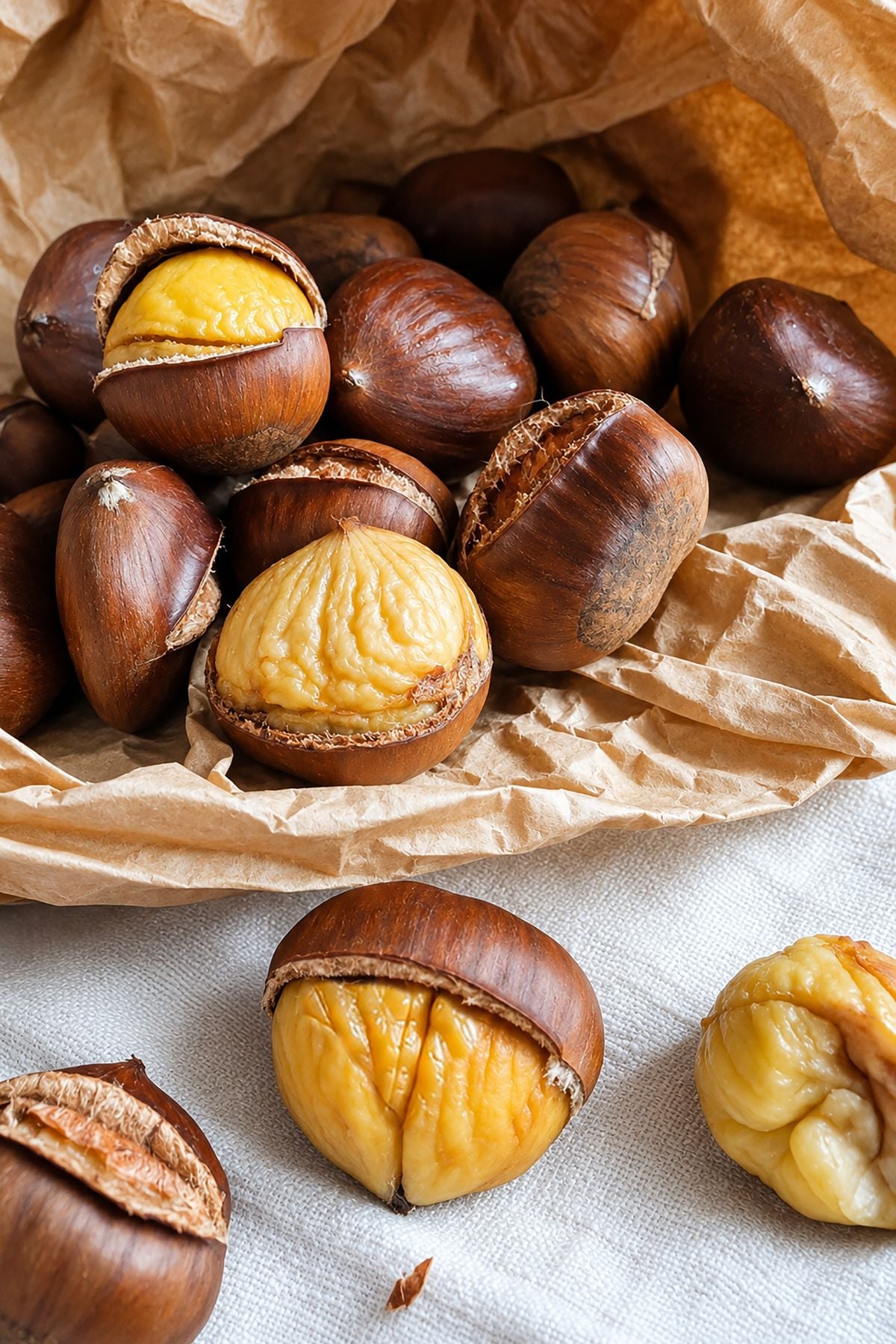
The flesh should be tender all the way through, soft, and slightly crumbly, never hard or chalky in the center.
If it's still firm, return the chestnuts to the oven for another 5 minutes and check again.
How to Peel Roasted Chestnuts Easily
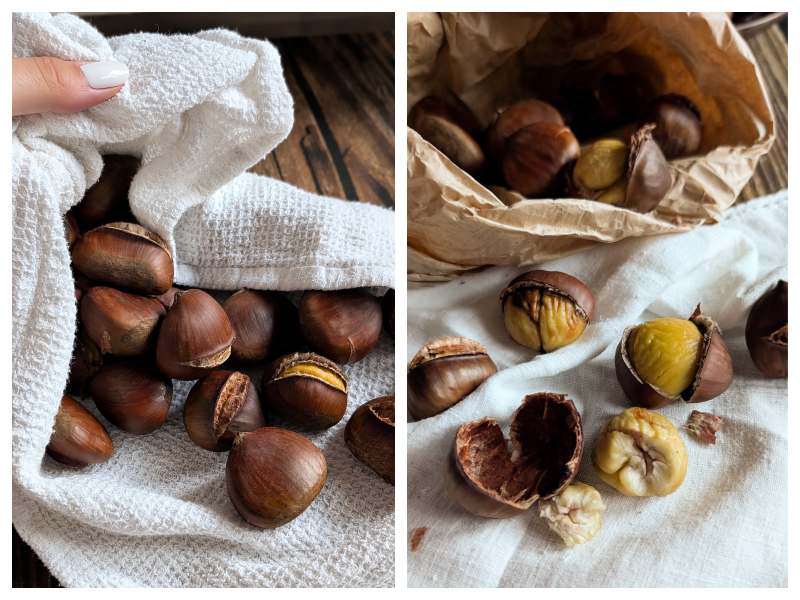
Step 4) - As soon as the chestnuts come out of the oven, transfer them to a clean kitchen towel and wrap them up into a little bundle.
The trapped heat and steam help loosen the shells and the thin inner skins, making the chestnuts much easier to peel.
Let them rest closed in the kitchen towel for about 15 minutes, or until they are warm enough to handle without burning your fingers.
Then peel them a few at a time, keeping the remaining chestnuts covered so they stay warm.
This is exactly how I like to serve them: still warm, right at the table, peeling them as we eat!
One last tip: Don't wait until the chestnuts are completely cold to peel them. As they cool, the inner skin tends to stick to the flesh again, making peeling much more difficult.
Enjoy your homemade roasted chestnuts while they're still warm, soft, and delicious!
Tips for Perfect Oven-Roasted Chestnuts
- Choose fresh chestnuts: Look for chestnuts that feel firm, heavy for their size, and have smooth, shiny shells. Avoid any with holes, mold or visible damage. Try to choose chestnuts of similar size so they roast evenly.
- Don't cut too deeply: Ideally, you should score only the shell without cutting into the flesh. This isn't always easy and a small nick won't hurt. However, a deep cut can cause the exposed flesh to dry out during roasting.
- Use a conventional oven if possible: I roasted my chestnuts at 180°C (350°F) in a conventional oven, and they turned out perfectly. You can also use a fan-assisted oven at approximately 160°C (320°F), but keep an eye on them, as cooking times may vary.
- Adjust the cooking time to the size: Large chestnuts generally need longer than small ones. Don't rely on the timer alone! Open one chestnut to check that the flesh is tender all the way through. Overcooking can make chestnuts dry and hard.
- Peel them while they're still warm: This makes a big difference! Once the chestnuts have rested in the kitchen towel, peel them a few at a time, keeping the others covered. The inner skin becomes more difficult to remove as the chestnuts cool.
Frequently Asked Questions
Yes, you can roast chestnuts without soaking them first. However, the thin inner skin may be more difficult to remove. I prefer soaking them for at least one hour before roasting, as this method gave me excellent results and made peeling much easier.
One common reason is that they've cooled down too much. The thin inner skin can become harder to remove as the chestnuts cool. They may also be undercooked or not scored deeply enough through the shell. For the best results, keep them wrapped in a kitchen towel and peel them while they're still warm.
Overcooking is one possible cause, especially with smaller chestnuts. Older chestnuts may also have lost some of their natural moisture. Another common mistake is scoring too deeply into the flesh, which can cause the exposed area to dry out during roasting. Choose fresh chestnuts, avoid deep cuts, and check the cooking time carefully.
How to Store Roasted Chestnuts
Roasted chestnuts are best enjoyed freshly made, while they're still warm and soft. However, if you have leftovers, peel them while they're still warm, let them cool, and store them in an airtight container in the refrigerator for up to 3–4 days.
You can also freeze roasted chestnuts for up to 3 months. Remove both the outer shell and the thin inner skin, let them cool completely, and place them in a freezer-safe bag or container.
To enjoy them again, gently reheat the chestnuts in the oven at a low temperature until warmed through. Avoid overheating them, as they can quickly become dry and hard.
More Italian Chestnut Recipes
Chestnuts are a beloved ingredient in traditional Italian cooking, especially during fall. If you love their naturally sweet, nutty flavor, here are a few more delicious Italian chestnut recipes to try:
- Castagnaccio (Tuscan Chestnut Flour Cake) – A rustic Tuscan cake made with chestnut flour, raisins, pine nuts, walnuts, and rosemary.
- Tuscan Chestnut Pancakes (Necci) – Traditional thin pancakes made with chestnut flour, delicious with ricotta and honey.
- Chestnut Gelato – A rich, creamy Italian gelato with the delicate sweetness of chestnuts.
- Italian Speck Wrapped Chestnuts – A delicious sweet-and-savory appetizer made with cooked chestnuts wrapped in smoky Italian speck.
Recipe Card
How to Roast Chestnuts in the Oven So They're Easy to Peel

Ingredients
- 500 g fresh chestnuts - about 1.1 lb
- water - as needed for soaking
Instructions
- Using a small, sharp knife, make a horizontal cut across the rounded side of each chestnut. Try to cut through the outer shell without cutting into the flesh.Scoring the chestnuts allows steam to escape during roasting, preventing them from bursting in the oven.
- As you score the chestnuts, place them in a large bowl filled with cold water. Make sure they are completely submerged and let them soak for at least 1 hour.
- Most chestnuts will sink to the bottom, while some may float. I generally check the floating ones carefully, as they may be dried out or damaged. However, floating alone doesn't necessarily mean a chestnut is spoiled.
- After soaking, drain the chestnuts and pat them thoroughly dry with a clean kitchen towel.
- Arrange them on a baking sheet in a single layer, with the scored side facing up. Leave a little space between them so they roast evenly.
How Long to Roast Chestnuts in the Oven
- Preheat the oven to 180°C (350°F) in conventional mode or 160°C (320°F) in fan-assisted mode.Place the baking sheet on the middle rack and roast according to the size of the chestnuts:Large chestnuts: 30–35 minutes.Small chestnuts: 20–25 minutes.
- You'll know the chestnuts are nearly ready when the cuts open up, the shells begin to curl away from the flesh, and your kitchen fills with that wonderful roasted chestnut aroma.But the best way to check is to open one!The flesh should be tender all the way through, soft, and slightly crumbly, never hard or chalky in the center.
How to Peel Roasted Chestnuts Easily
- As soon as the chestnuts come out of the oven, transfer them to a clean kitchen towel and wrap them up into a little bundle.The trapped heat and steam help loosen the shells and the thin inner skins, making the chestnuts much easier to peel.Let them rest closed in the kitchen towel for about 15 minutes, or until they are warm enough to handle without burning your fingers.
- Then peel them a few at a time, keeping the remaining chestnuts covered so they stay warm.This is exactly how I like to serve them: still warm, right at the table, peeling them as we eat!
- Enjoy your homemade roasted chestnuts while they're still warm, soft, and delicious!
Leave a Reply