
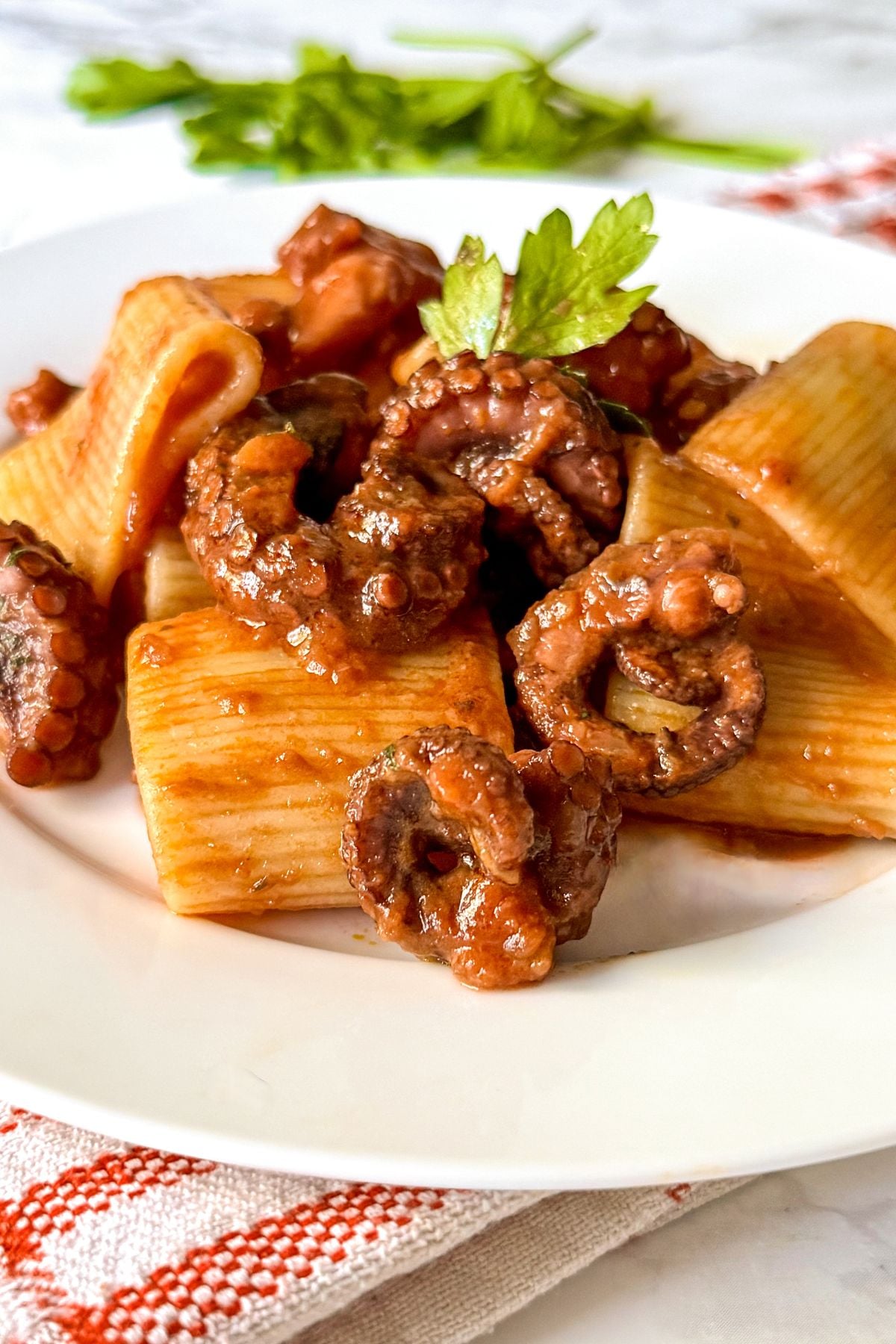
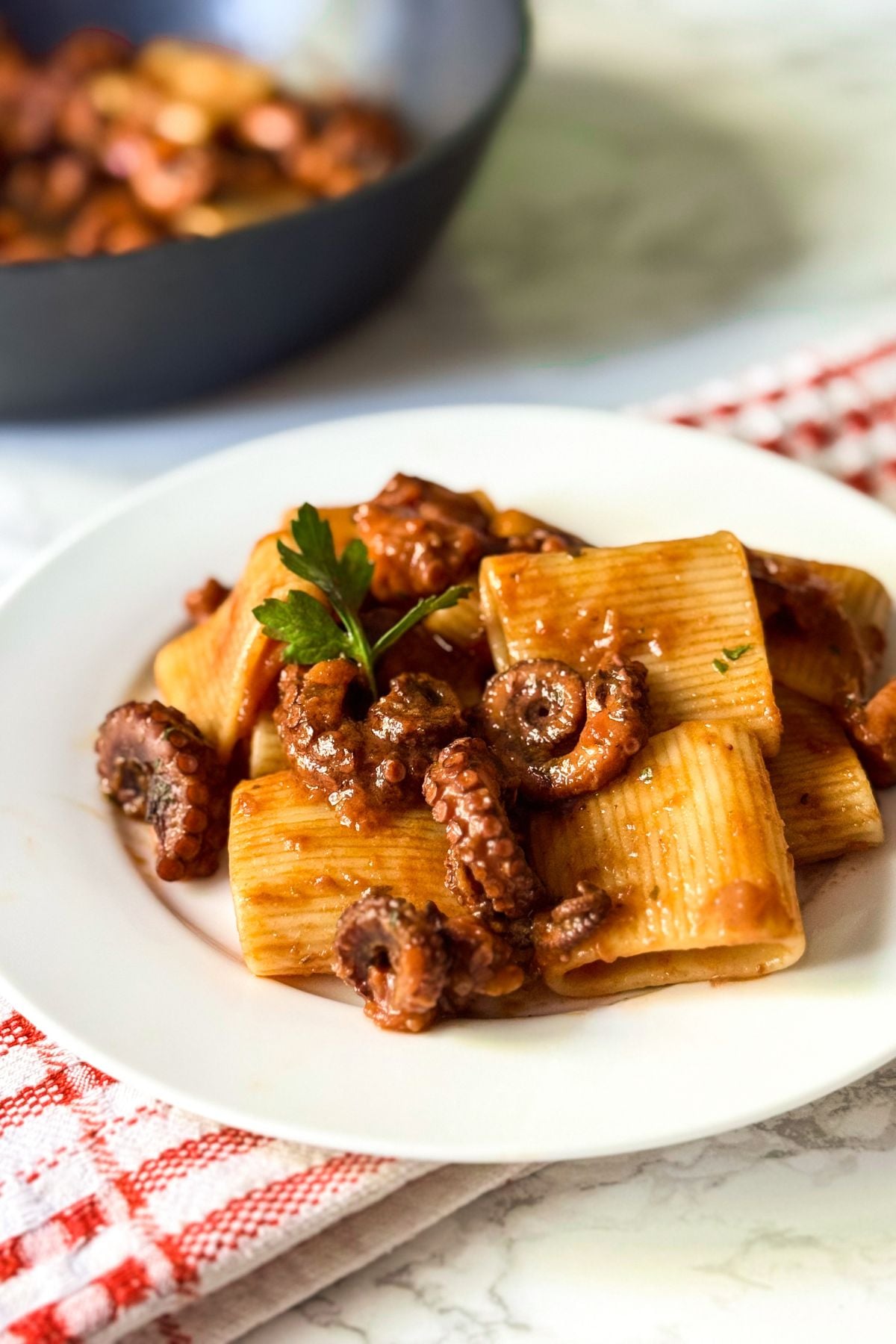
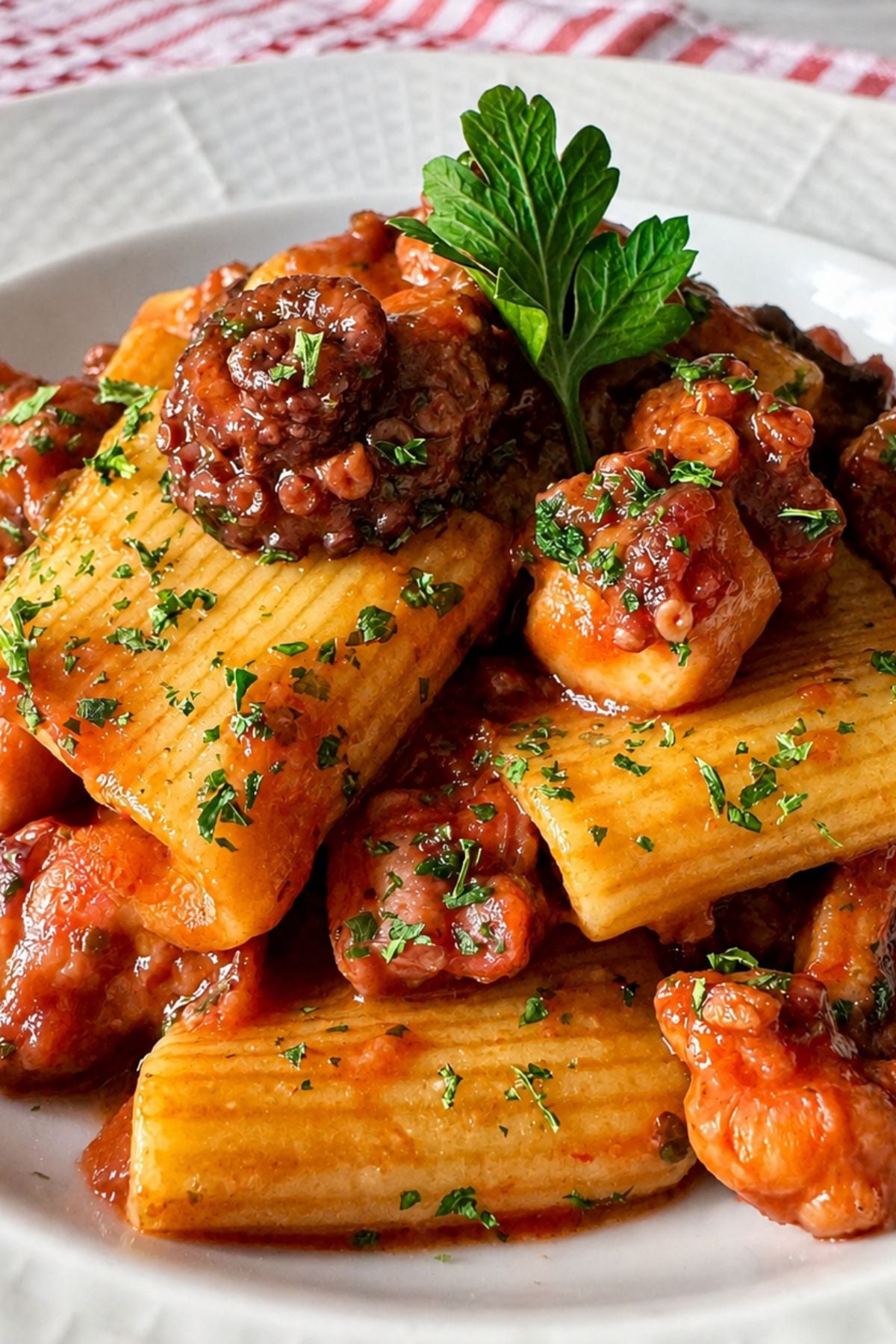
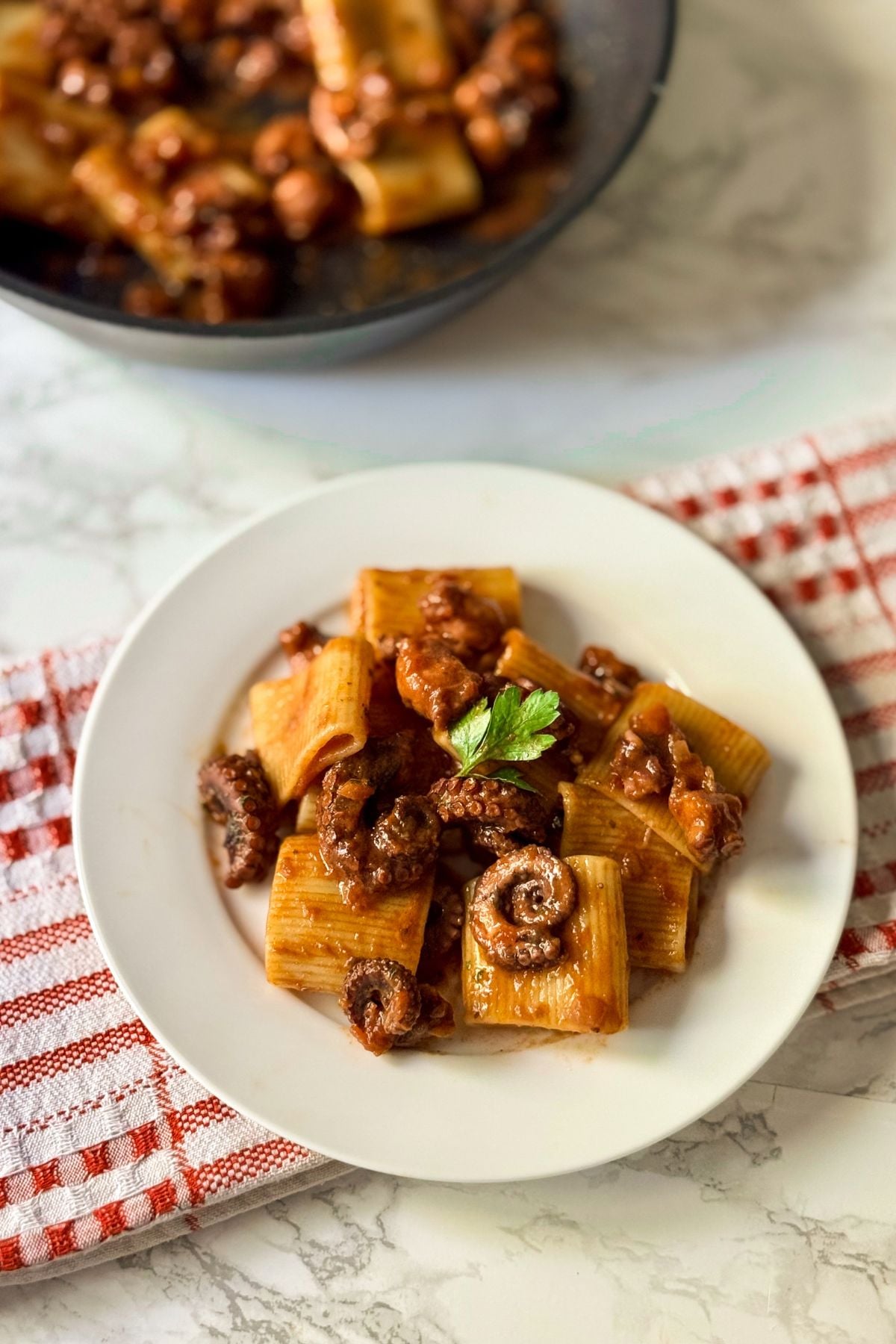
Paccheri with Octopus Ragù is a rich and flavorful Italian seafood pasta made with tender octopus slowly cooked in a tomato and red wine sauce.
You can think of it as a seafood version of a traditional meat ragù. The recipe starts with a classic soffritto of onion, carrot, and celery, then small pieces of octopus are added and deglazed with red wine. Tomato paste and strained tomatoes complete the sauce, which simmers gently until thick, fragrant, and full of flavor.
Octopus is a popular ingredient in Italian seafood cooking and can be prepared in many different ways. For a simple and fresh dish, try my Octopus and Potato Salad. If you prefer octopus slowly cooked in a rich tomato sauce, Polpo alla Luciana is another traditional Italian recipe worth trying.
I chose paccheri because their large tubular shape holds the octopus ragù beautifully, but you can also use other short pasta shapes such as mezzi paccheri, rigatoni or calamarata.
This Italian octopus pasta is an excellent choice for a special dinner, a Sunday lunch, or a festive seafood menu.
Jump to:
Ingredients
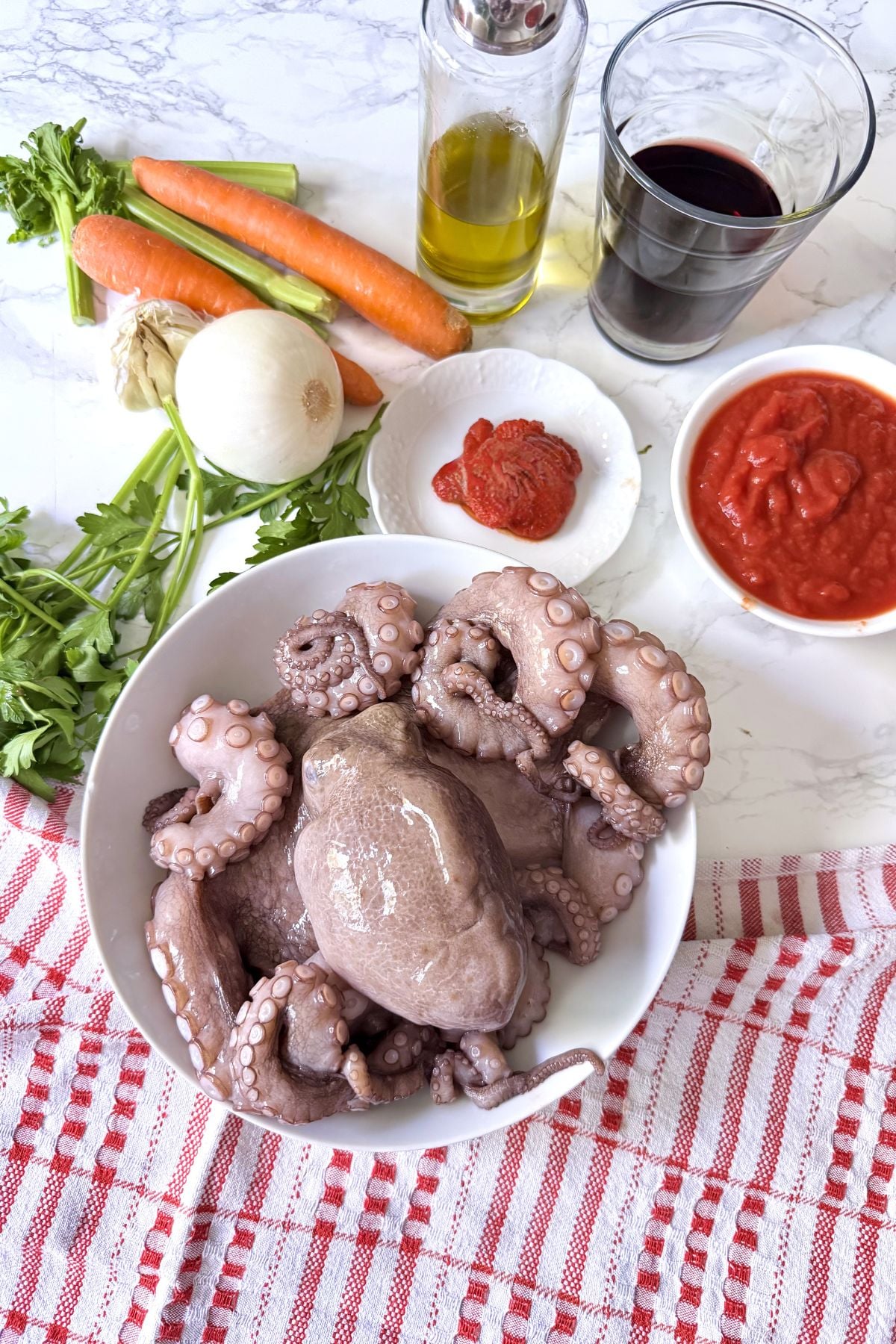
Prep Time: 30 Min | Cook Time: 1 Hour | Servings: 4
- 340 g (12 oz) paccheri pasta
- 700 g (1.5 lb) cleaned octopus
- 1 medium carrot
- 1 small onion
- 1 celery stalk
- 2 garlic cloves
- 3 tablespoons extra virgin olive oil, plus more for serving
- 2 tablespoons tomato paste
- 200 g (7 oz) tomato passata (strained tomatoes)
- 100 ml (scant ½ cup) dry red wine
- Fresh parsley, finely chopped, to taste
- Fine salt, as needed
How to Make Paccheri with Octopus Ragù
BEFORE YOU START
If your fishmonger has already cleaned the octopus, you can simply rinse it and cut it into pieces.
If you need to clean it yourself, turn the octopus over and remove the innards from the mantle. Then remove the hard beak located in the center of the tentacles and cut away the eyes with kitchen scissors.
Rinse the octopus thoroughly under cold running water, paying particular attention to the suction cups to remove any traces of sand. Once cleaned, pat it dry and proceed with the recipe.
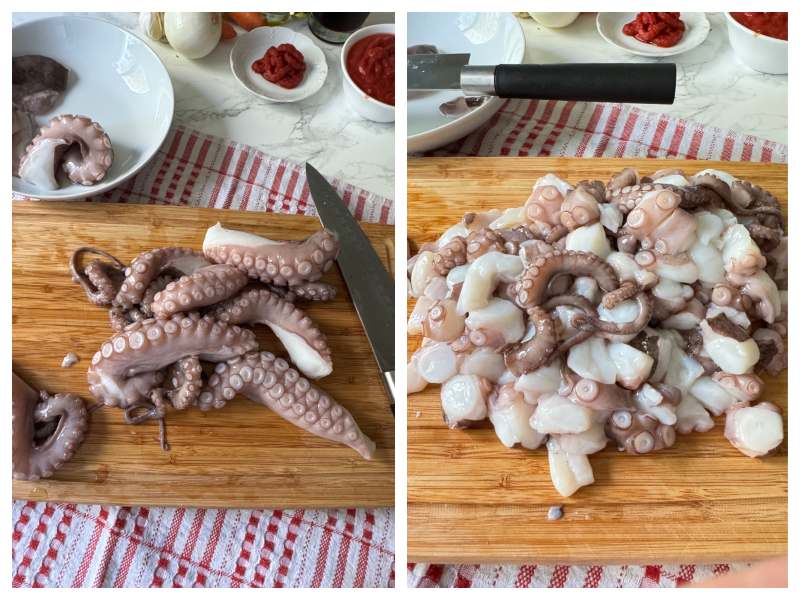
Step 1) - Separate the tentacles from the mantle. Leave the thinner ends of the tentacles whole and cut the thicker sections in half lengthwise if necessary.
Cut the mantle and tentacles into small pieces, about ¾ inch (2 cm) or slightly smaller.
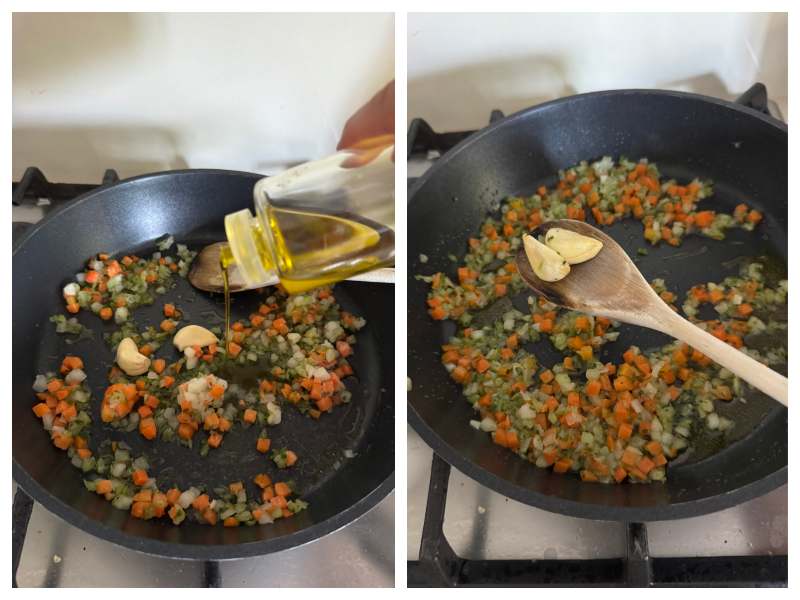
Step 2) - Heat the extra virgin olive oil in a large saucepan or deep skillet, preferably stainless steel or aluminum.
Add the finely chopped onion, carrot, and celery, along with the peeled garlic cloves.
Cook over medium heat for a few minutes, stirring often, until the vegetables begin to soften. Remove the garlic.
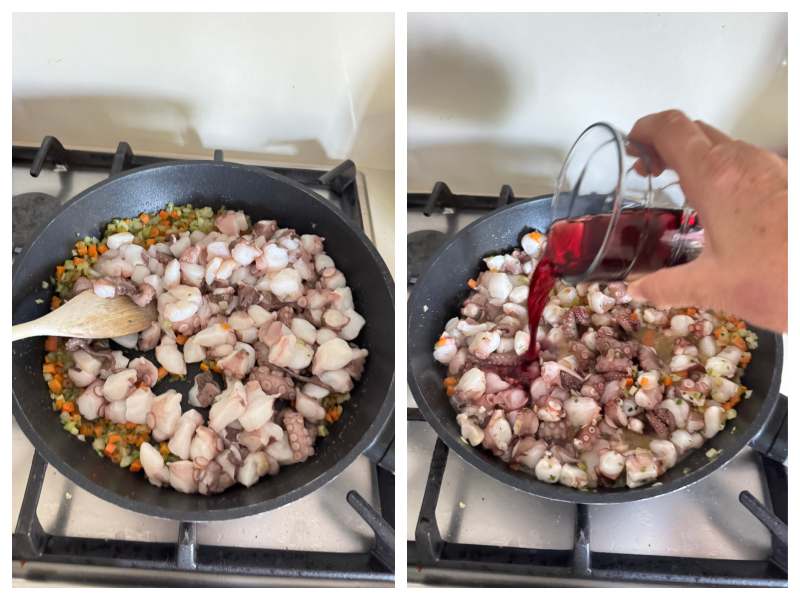
Step 3) - Add the chopped octopus and cook over medium-high heat for a few minutes. The octopus will begin to release some of its natural liquid. Stir well so that it combines with the soffritto.
After about 2–3 minutes, pour in the red wine. Let it simmer until the alcohol has evaporated.
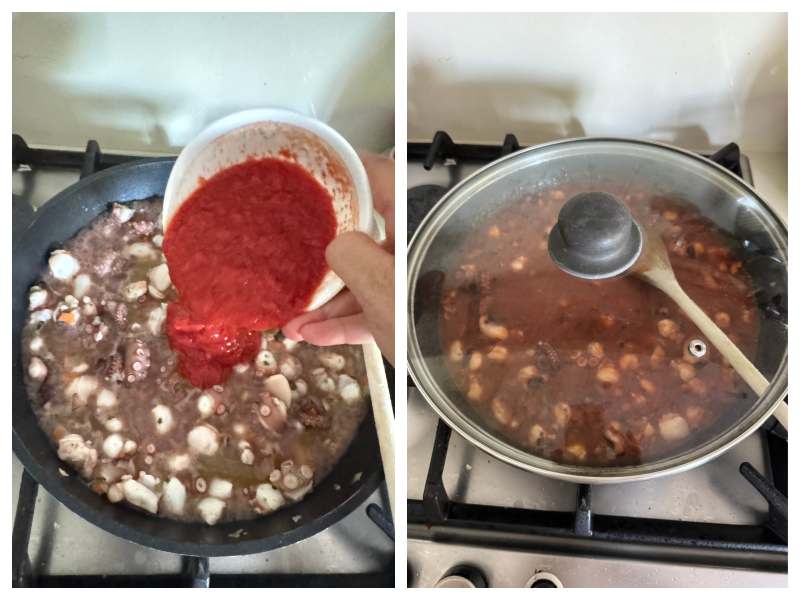
Step 4) - Stir in the tomato paste and strained tomatoes (passata). Lower the heat, cover partially, and let the octopus ragù simmer gently for about 1 hour, or until the octopus is tender and the sauce is thick and well reduced.
If the sauce becomes too dry during cooking, add a little hot water as needed.
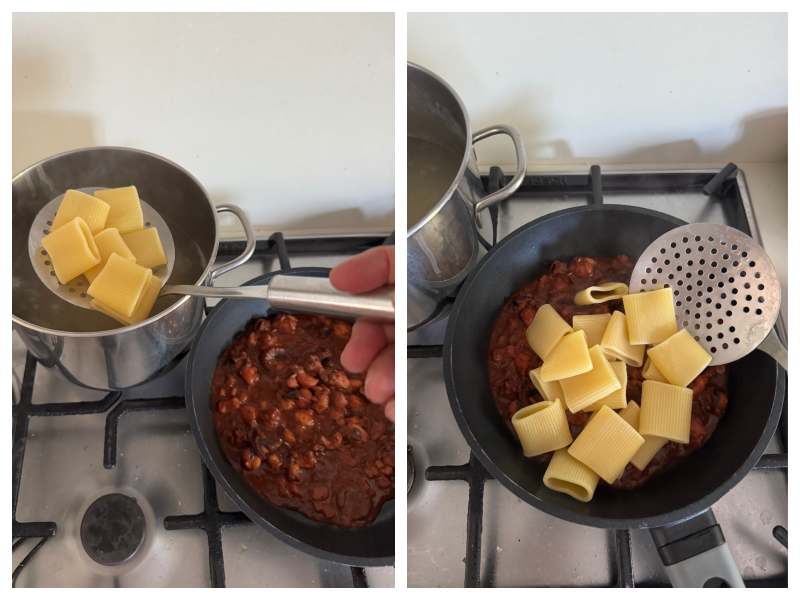
Step 5) - When the octopus ragù is almost ready, bring a large pot of salted water to a boil and cook the paccheri for about 3 minutes less than the package instructions.
Drain the pasta, reserving some of the cooking water, and transfer the paccheri directly to the pan with the octopus ragù.
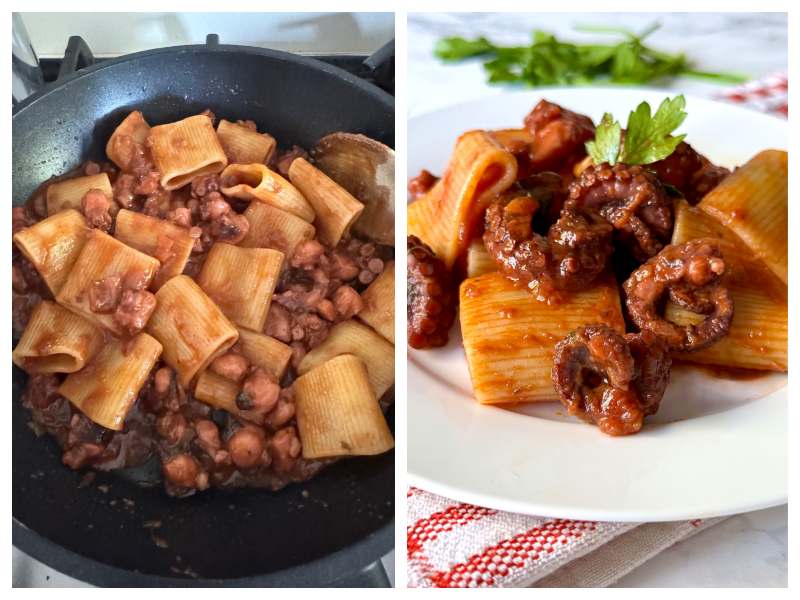
Step 6) - Add a ladleful of pasta cooking water and toss gently. Finish cooking the paccheri in the sauce over medium-high heat until al dente and well coated with the ragù.
Turn off the heat and add the chopped fresh parsley and a drizzle of extra virgin olive oil.
Toss gently, divide the paccheri among the plates, spoon some extra octopus ragù over the top, and serve immediately.
Tips for the Best Paccheri with Octopus Ragù
Choose a good-quality octopus. If you’re buying fresh octopus, look for firm, glossy flesh, a bright color, and a clean, mild sea scent. Avoid octopus with a strong or unpleasant smell.
Choose rock octopus if possible. In Italy, polpo verace is particularly appreciated for its delicate flavor and tender texture. You can recognize it by the two rows of suction cups along each tentacle.
Cut the octopus into small, even pieces. Pieces about ¾ inch (2 cm) cook evenly and are the perfect size for a pasta ragù. You can leave them slightly larger if you prefer a chunkier sauce, but they may need a little more time to become tender.
Frozen octopus works well too. If fresh octopus isn’t available, good-quality frozen octopus is an excellent alternative. Thaw it completely in the refrigerator before using it, then drain and pat it dry before cutting.
Don’t rush the cooking time. Octopus needs gentle cooking to become tender. Keep the ragù at a low simmer and check the texture before turning off the heat. Depending on the size and type of octopus, it may need a little more than 1 hour.
Variations and Substitutions
Make it spicy. Add a small fresh chili pepper or a pinch of dried red pepper flakes along with the tomatoes. You can also sprinkle a little extra chili over the pasta just before serving.
Try a fortified wine. For a slightly sweeter, more aromatic flavor, replace the dry red wine with about 100 ml (scant ½ cup) of dry Marsala. Port can also work, although it will give the ragù a noticeably sweeter flavor.
Change the herbs. Fresh parsley is the most delicate choice, but you can replace it with fresh basil. A small amount of oregano also works well, especially if you enjoy a more Mediterranean flavor.
For a richer tomato flavor. You can make the sauce with about 4 tablespoons of tomato paste instead of passata. Dilute it with a little hot water during cooking so the ragù remains saucy and the tomato paste does not become too concentrated.
Use fresh tomatoes. For a lighter and fresher version, replace the passata with about 250 g (9 oz) cherry tomatoes, cut into halves or small pieces.
Try a different pasta shape. Paccheri are particularly well suited to octopus ragù because their large tubular shape catches both the sauce and the small pieces of octopus. Other good choices include mezzi paccheri, rigatoni, calamarata, or thick spaghetti.
Storage
Paccheri with octopus ragù are best served immediately, while the pasta is still al dente and the sauce is hot and creamy.
The octopus ragù can be made one day ahead and stored in an airtight container in the refrigerator. It will keep well for up to 2 days. Reheat it gently in a saucepan before adding the freshly cooked pasta.
You can also freeze the octopus ragù for up to 1 month. Let it cool completely, transfer it to a freezer-safe container, and thaw it overnight in the refrigerator before reheating.
I don’t recommend freezing the paccheri already mixed with the sauce, as the pasta will lose its texture.
More Italian Seafood Pasta Recipes
- Paccheri with Swordfish, Eggplant and Tomato – A Sicilian pasta recipe with tender swordfish, fried eggplant, and a light tomato sauce.
- Spaghetti allo Scoglio – A classic Italian seafood pasta with mussels, clams, shrimp, and squid in a light cherry tomato sauce.
- Fregola ai Frutti di Mare – A traditional Sardinian pasta with clams, mussels, shrimp, and squid, cooked risotto-style in a flavorful seafood broth.
- Linguine with Tuna and Lemon – A quick and lighter seafood pasta made with tuna, fresh lemon, garlic, and parsley.
Recipe Card
Paccheri with Octopus Ragù (Italian Octopus Pasta)

Ingredients
- 340 g paccheri pasta - 12 oz
- 700 g cleaned octopus - 1.5 lb
- 1 medium carrot
- 1 small onion
- 1 stalk celery
- 2 cloves garlic
- 3 tablespoons extra virgin olive oil - plus more for serving
- 2 tablespoons tomato paste
- 200 g tomato passata (strained tomatoes) - 7 oz
- 100 ml dry red wine - scant ½ cup
- fresh parsley - finely chopped, to taste
- fine salt - as needed
Instructions
- If your fishmonger has already cleaned the octopus, you can simply rinse it and cut it into pieces.If you need to clean it yourself, turn the octopus over and remove the innards from the mantle. Then remove the hard beak located in the center of the tentacles and cut away the eyes with kitchen scissors.Rinse the octopus thoroughly under cold running water, paying particular attention to the suction cups to remove any traces of sand. Once cleaned, pat it dry and proceed with the recipe.
- Separate the tentacles from the mantle. Leave the thinner ends of the tentacles whole and cut the thicker sections in half lengthwise if necessary.Cut the mantle and tentacles into small pieces, about ¾ inch (2 cm) or slightly smaller.
- Heat the extra virgin olive oil in a large saucepan or deep skillet, preferably stainless steel or aluminum.Add the finely chopped onion, carrot, and celery, along with the peeled garlic cloves.Cook over medium heat for a few minutes, stirring often, until the vegetables begin to soften. Remove the garlic.
- Add the chopped octopus and cook over medium-high heat for a few minutes. The octopus will begin to release some of its natural liquid. Stir well so that it combines with the soffritto.
- After about 2–3 minutes, pour in the red wine. Let it simmer until the alcohol has evaporated.
- Stir in the tomato paste and strained tomatoes (passata). Lower the heat, cover partially, and let the octopus ragù simmer gently for about 1 hour, or until the octopus is tender and the sauce is thick and well reduced.If the sauce becomes too dry during cooking, add a little hot water as needed.
- When the octopus ragù is almost ready, bring a large pot of salted water to a boil and cook the paccheri for about 3 minutes less than the package instructions.
- Drain the pasta, reserving some of the cooking water, and transfer the paccheri directly to the pan with the octopus ragù.
- Add a ladleful of pasta cooking water and toss gently. Finish cooking the paccheri in the sauce over medium-high heat until al dente and well coated with the ragù.
- Turn off the heat and add the chopped fresh parsley and a drizzle of extra virgin olive oil.
- Toss gently, divide the paccheri among the plates, spoon some extra octopus ragù over the top, and serve immediately.
Leave a Reply