
Fresh porcini mushrooms are one of the most prized ingredients in Italian cooking, but they need to be cleaned carefully before use. Because of their delicate, porous texture, the goal is to remove soil and debris without soaking them in water or damaging the flesh.
Cleaning porcini mushrooms is actually very simple once you know the right method. All you need is a small knife, a soft mushroom brush, and, if necessary, a slightly damp cloth.
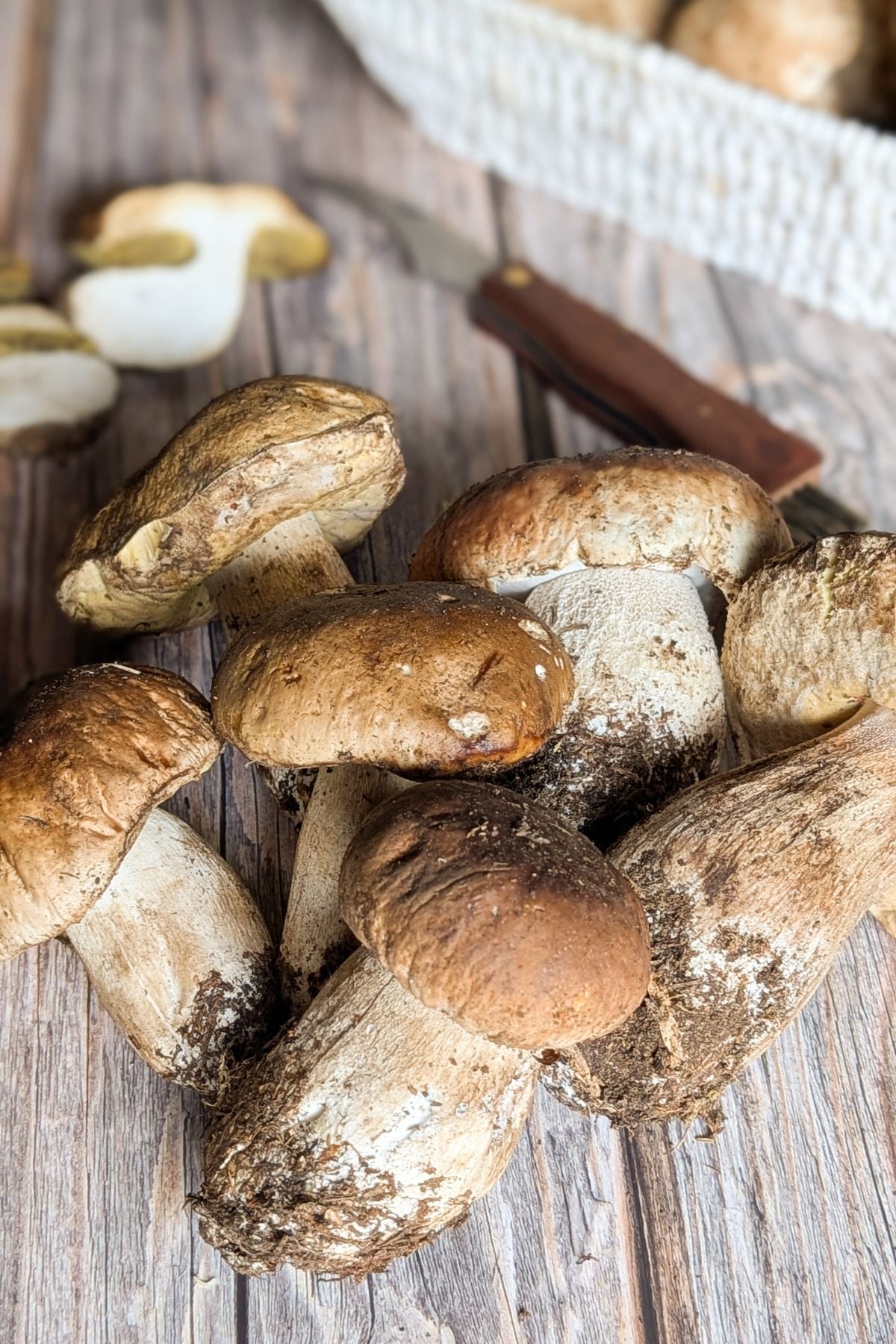
In this guide, I’ll show you how to clean porcini mushrooms step by step, from trimming the earthy base to brushing the cap and stem, checking them carefully, and getting them ready to slice and cook.
Once cleaned, porcini are perfect for many traditional Italian recipes, from tagliatelle with porcini mushrooms to risotto, polenta, and simple sautéed mushrooms.
Jump to:
What You Need to Clean Porcini Mushrooms
You only need a few simple tools to clean fresh porcini mushrooms properly:
- A small sharp knife: to trim the earthy base of the stem and gently scrape away any stubborn dirt.
- A soft mushroom brush: ideal for removing soil from the stem, cap, and underside without damaging the mushroom.
- A clean, slightly damp cloth or paper towel: useful for wiping away any remaining traces of dirt after brushing.
- A cutting board: for trimming, checking, and slicing the mushrooms once they are clean.
Avoid soaking porcini mushrooms in water, as their porous texture can absorb moisture quickly. If necessary, we’ll see below when and how a very quick rinse can be used.
How to Clean Porcini Mushrooms Step by Step
Trim the Base and Clean the Stem
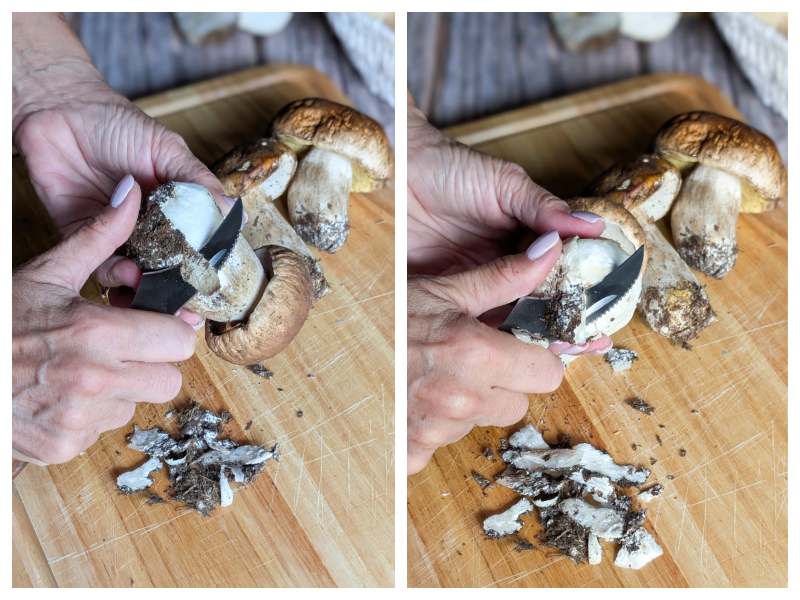
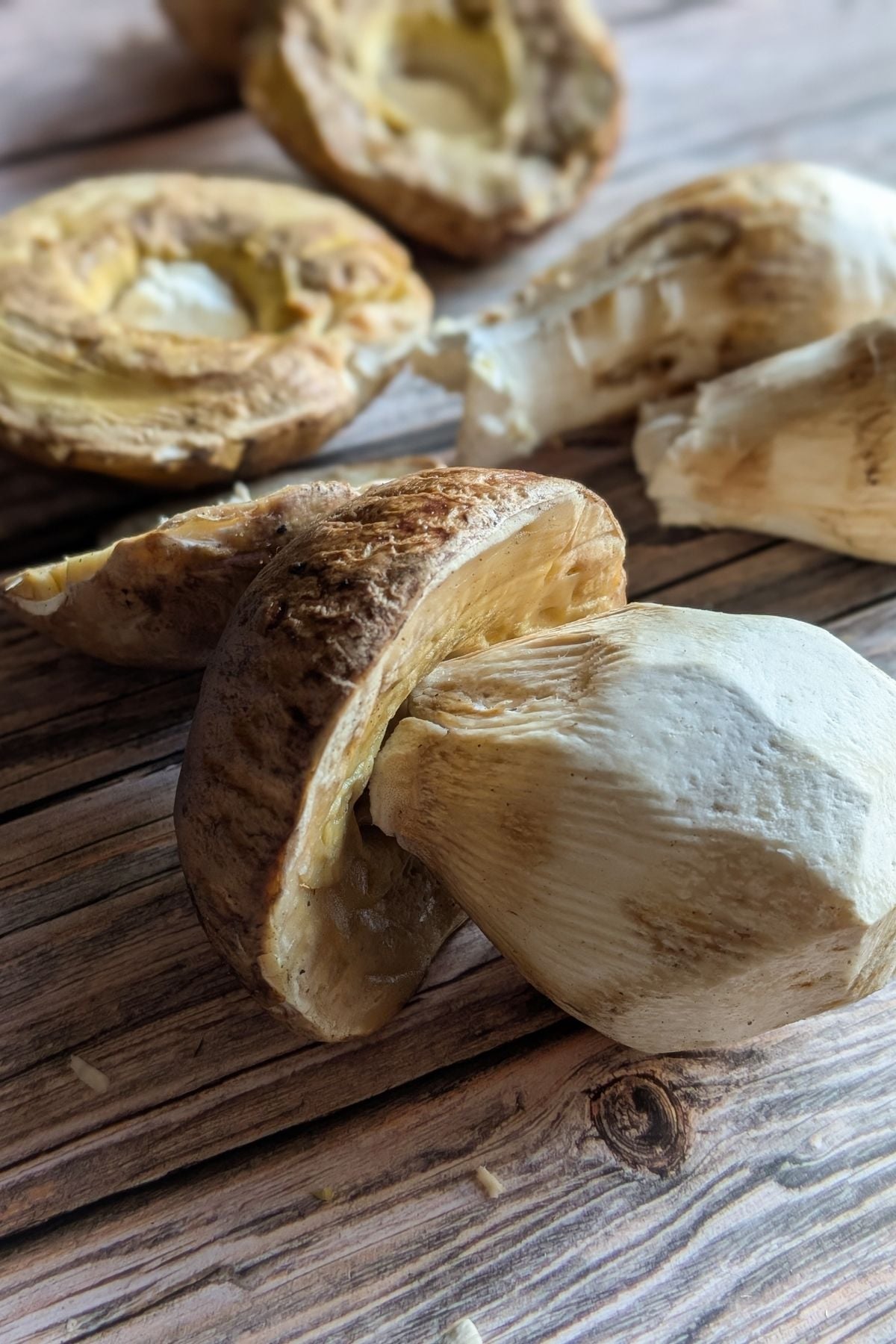
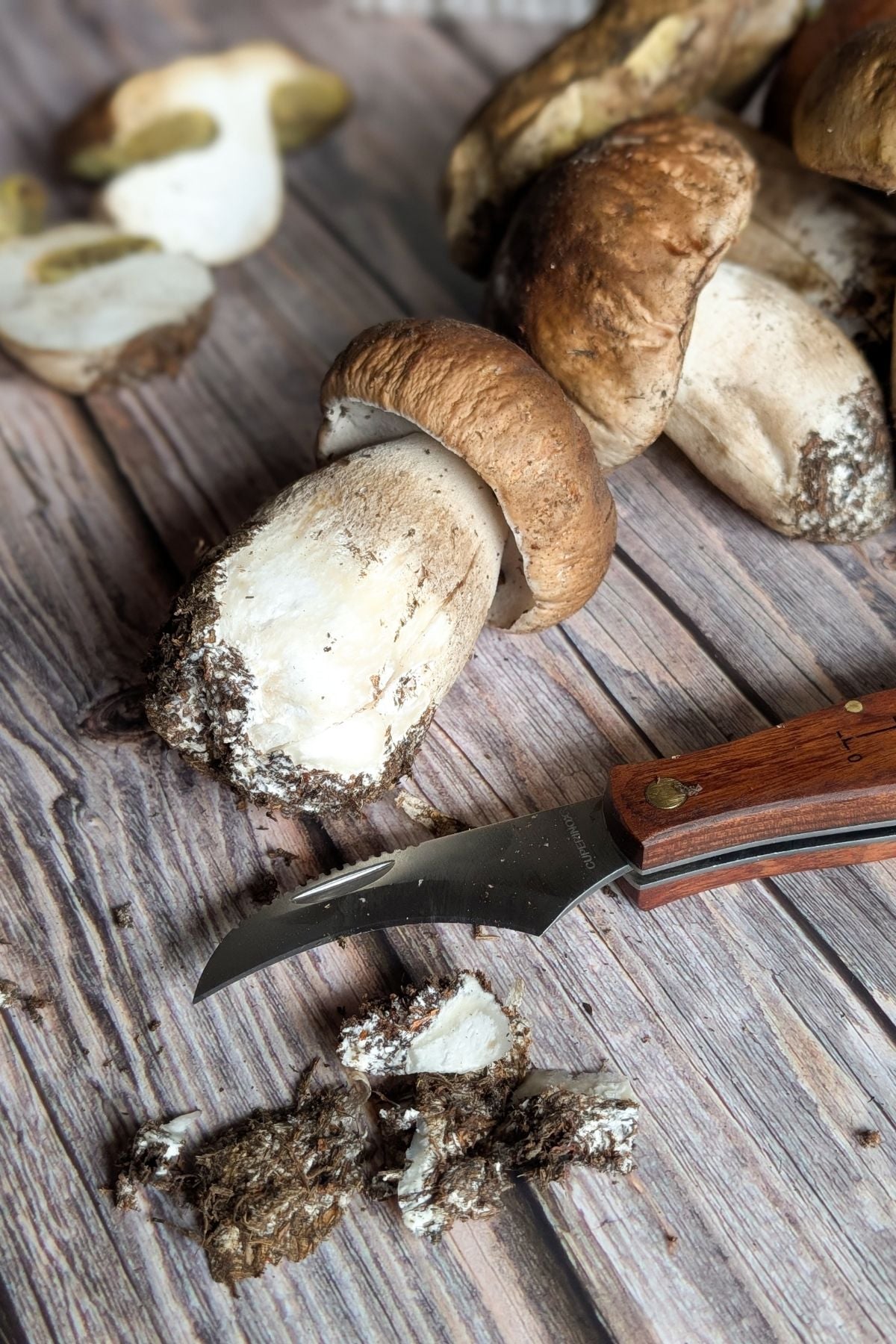
Step 1) - Start by cutting off the very bottom of the stem, where most of the soil tends to collect. Remove only the dirty part, avoiding unnecessary waste.
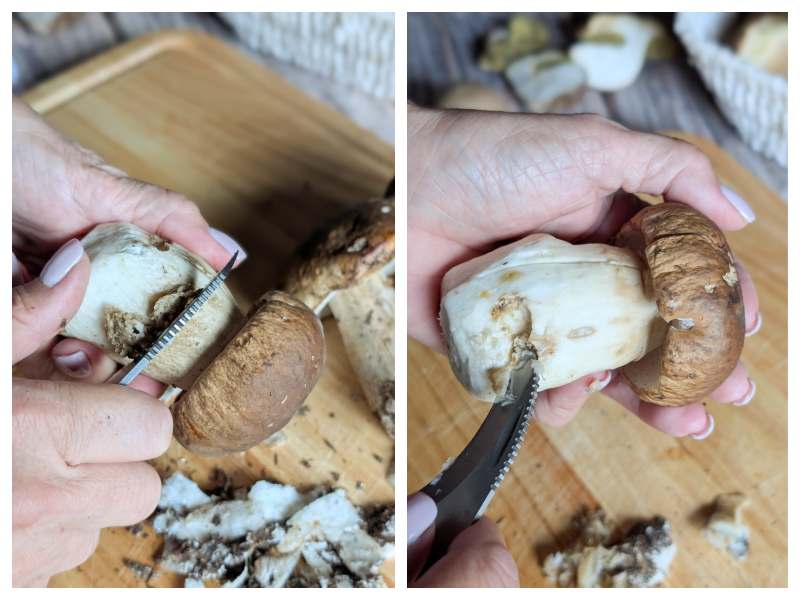
Step 2) - Using the tip or the back of a small knife, gently scrape the surface of the stem to remove any remaining soil or darker, damaged areas. Work delicately so you don't remove too much of the flesh.
Brush the Cap and Stem
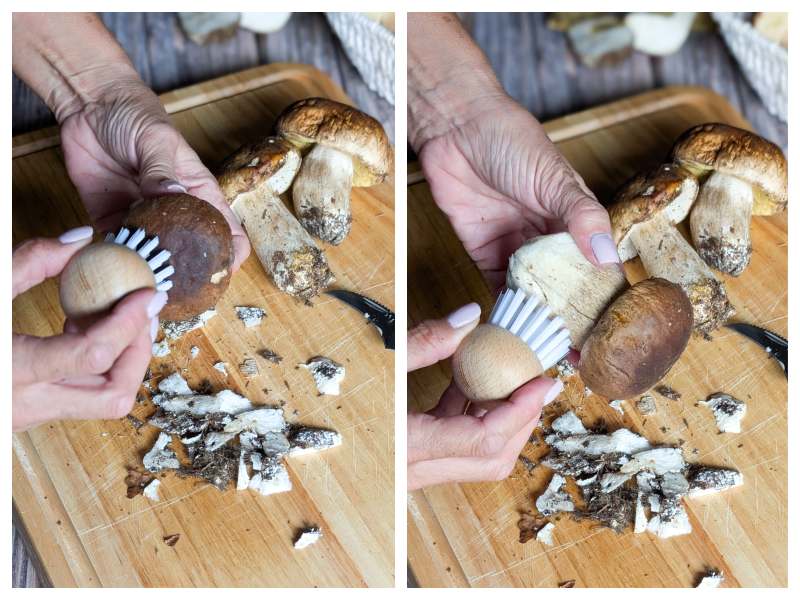
Step 3) - Use a soft mushroom brush to remove any loose dirt from the stem and the top of the cap. Brush gently, especially if the porcini are very fresh and firm.
Turn the mushroom over and carefully brush the underside of the cap as well. The spongy surface is delicate, so avoid pressing too hard.
Remove Any Remaining Dirt
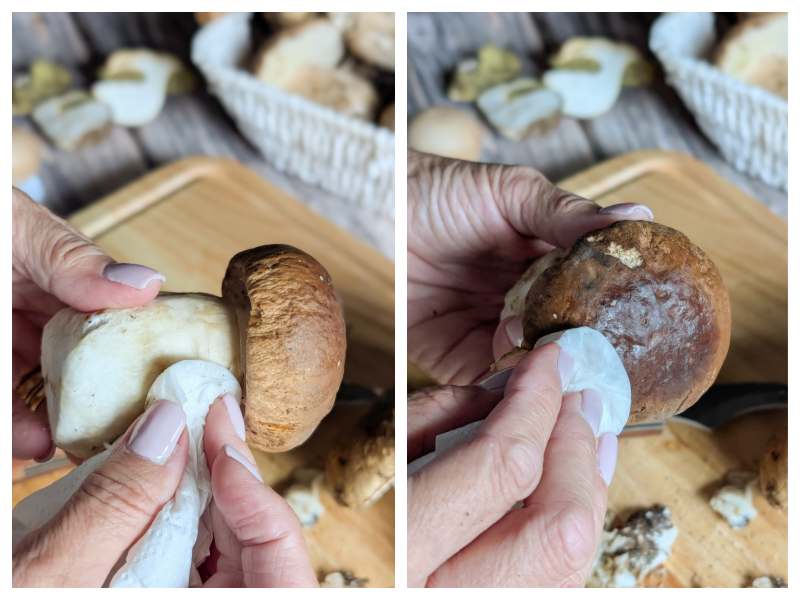
Step 5) - If some dirt remains after brushing, wipe the mushroom gently with a slightly damp cloth or paper towel. Avoid getting it unnecessarily wet.
NOTE: If the mushroom is very large or there is dirt trapped where the cap meets the stem, you can gently separate the cap from the stem to clean the area more easily.
The porcini mushrooms are now clean and ready to be checked, sliced, and cooked.
Should You Wash Porcini Mushrooms?
Fresh porcini mushrooms should generally not be soaked in water. Their flesh is quite porous and can absorb moisture, which may make them softer and reduce their flavor during cooking.
In most cases, a mushroom brush, a small knife, and a slightly damp cloth are enough to remove soil and debris.
If the porcini are exceptionally dirty and brushing is not sufficient, you can rinse them very quickly under cold running water. Do not leave them submerged. Dry them immediately and thoroughly with a clean kitchen towel or paper towels before slicing or cooking.
The important thing is to use as little water as possible and never leave porcini mushrooms wet.
How to Check Porcini Mushrooms for Worms
Fresh porcini mushrooms can sometimes contain small larvae, especially in the stem. Before cooking them, inspect each mushroom carefully for tiny holes, soft spots, or small tunnels in the flesh.
If you notice suspicious holes, cut the porcino lengthwise through the stem and cap to check the inside. A few small damaged areas can simply be trimmed away with a sharp knife, as long as the rest of the mushroom is firm, fresh, and in good condition.
If, however, the flesh contains numerous tunnels, many larvae, or large soft and deteriorated areas, it's best to discard the mushroom.
Pay particular attention to the base of the stem, where signs of larvae are often easiest to spot.
Tip: When buying fresh porcini, choose mushrooms that feel firm and compact and check the stem carefully for small holes before purchasing.
How to Cut Porcini Mushrooms
Once the porcini are clean, the way you cut them depends on their size and on the recipe you are preparing.
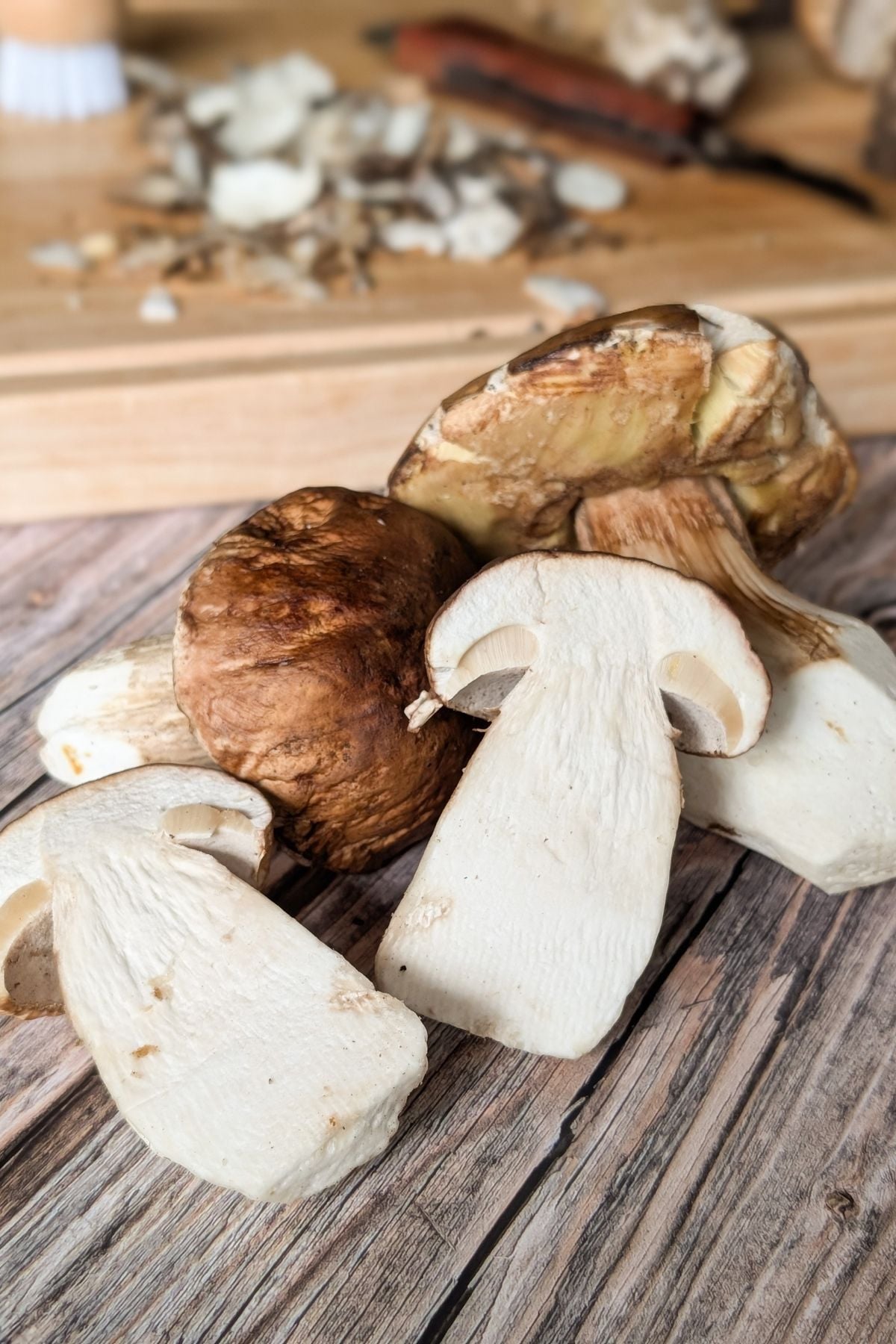
Small, firm porcini can usually be sliced lengthwise, keeping the cap and stem together. This gives you beautiful slices that clearly show the characteristic shape of the mushroom.
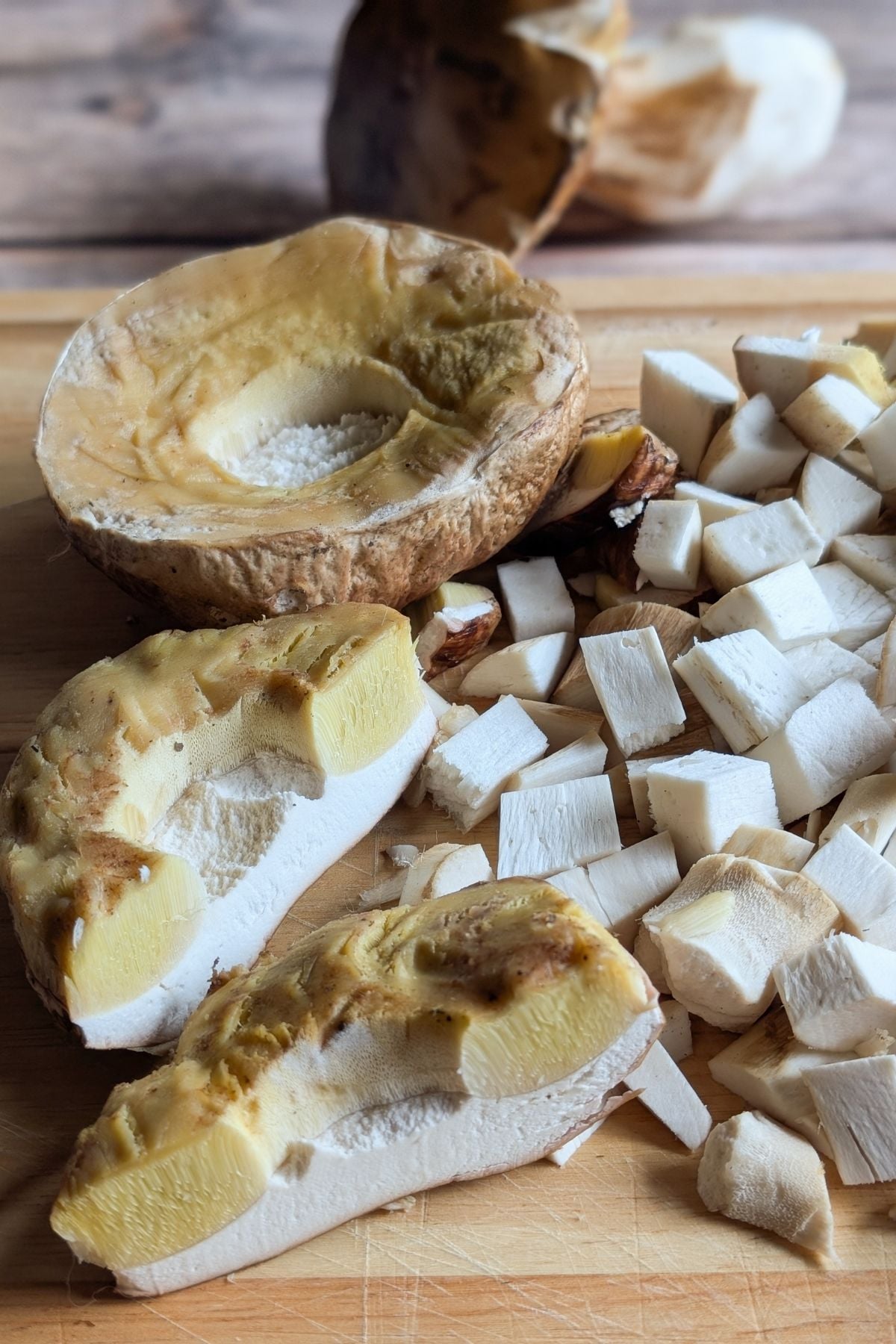
For larger porcini, it's often easier to separate the cap from the stem. Slice the cap into even pieces, then cut the stem separately into rounds or lengthwise slices.
Try to keep the pieces fairly uniform in thickness so they cook evenly. Avoid cutting them too thin, especially if you plan to sauté them, as porcini can shrink considerably during cooking.
For pasta dishes such as Tagliatelle with Porcini Mushrooms, medium slices work especially well because they remain visible and meaty after cooking. For polenta or sautéed porcini, you can leave the pieces slightly thicker for a more substantial texture.
Tip: Cut porcini mushrooms only shortly before cooking them. Once sliced, they can darken and lose moisture more quickly.
Common Mistakes When Cleaning Porcini Mushrooms
Cleaning porcini is simple, but a few common mistakes can affect their texture, flavor, and appearance.
- Soaking them in water: porcini absorb moisture easily, so never leave them submerged. Use a brush and damp cloth whenever possible. If rinsing is necessary, keep it very quick and dry the mushrooms immediately.
- Scrubbing too hard: the cap and especially the spongy underside are delicate. Brush gently to avoid damaging the surface.
- Removing too much of the stem: usually only the very bottom and any damaged or dirty parts need to be trimmed away.
- Cleaning them too far in advance: porcini are best cleaned shortly before cooking, as they can lose moisture and deteriorate quickly once handled.
- Skipping the inside check: if you notice small holes in the stem, cut the mushroom open and check for larvae before cooking.
- Cutting them too thin: very thin slices can become fragile and shrink too much during cooking, especially in sautéed dishes.
The key is to handle porcini gently and remove only what is necessary, preserving as much of their firm flesh and natural flavor as possible.
How to Store Fresh Porcini Mushrooms
Fresh porcini mushrooms are quite delicate, so it is best to use them as soon as possible after buying or picking them.
Store them in the refrigerator for up to about 2 days. Keep them whole and, ideally, clean them only shortly before cooking. Place them in a container or on a plate and cover them loosely with a clean cloth rather than sealing them while still damp.
Avoid storing porcini when they are wet. Excess moisture can make them deteriorate more quickly, so if you have rinsed them briefly, dry them thoroughly before refrigerating.
If you have already cleaned and sliced the mushrooms, use them as soon as possible for the best texture and flavor.
Can You Freeze Fresh Porcini Mushrooms?
Yes. Fresh porcini can also be frozen, especially if you have more than you can use within a couple of days. Clean them carefully, cut them as needed, and freeze them in a single layer before transferring them to a freezer-safe bag or container.
Recipes with Porcini Mushrooms
Porcini mushrooms are incredibly versatile and can be used in many traditional Italian dishes, from pasta to polenta and simple side dishes.
Try them in these recipes:
- Tagliatelle with Porcini Mushrooms – A classic Italian pasta dish where porcini are the star of the sauce.
- Polenta with Mushrooms – Creamy polenta topped with flavorful sautéed mushrooms, perfect for fall and winter.
- Funghi Trifolati – A simple Italian side dish made with mushrooms, garlic, parsley, and extra virgin olive oil.


Leave a Reply