
Amatriciana is one of the most famous Italian pasta recipes served in Roman trattorias and restaurants. Although many associate it with Rome, the authentic Amatriciana recipe originates from Amatrice, a small town in the Rieti area of central Italy.
This classic dish features spaghetti or bucatini tossed in a rich Amatriciana sauce made with peeled tomatoes, guanciale, chili pepper, and Pecorino Romano cheese.
No garlic or onion - ingredients sometimes found in the Roman version - are used in the original Amatriciana recipe from Amatrice. Another key difference? The traditional recipe calls for spaghetti, while the Roman adaptation often uses bucatini.

To stay true to the authentic pasta all’Amatriciana, this recipe uses only spaghetti, guanciale, Pecorino Romano, chili pepper, and peeled tomatoes.
The perfect balance of ingredients is crucial: the traditional ratio is one-fourth guanciale to pasta - so for 500 g (1.1 pound) of pasta, you’ll need 125 g (4.4 oz) of guanciale.
Some variations include a splash of white wine when cooking the guanciale, but this is optional. Whether you add it or not, the bold flavors of amatriciana pasta shine through.
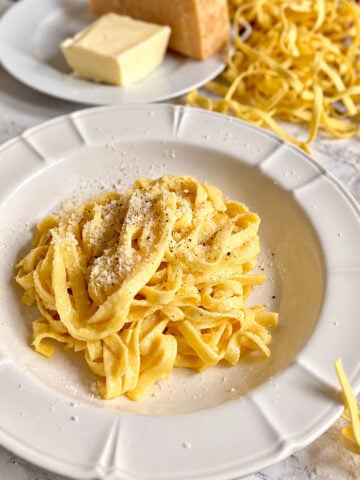
Alongside authentic Cacio e Pepe, Carbonara, and Pasta alla Gricia, Amatriciana is one of the four classic Roman pasta dishes and a true staple of Roman cuisine.
Jump to:
Ingredients

Prep Time: 20 Min | Cook Time: 10 Min | Servings: 6
- 125 g (4.4 oz) guanciale
- 400 g (about 2 cups) canned San Marzano tomatoes
- 50 ml (about 3 tablespoons) dry white wine (optional)
- 500 g (1.1 pound) spaghetti or bucatini
- 80 g (⅔ cup) finely grated Pecorino Romano DOP
- 1 small fresh or dried chili pepper
- Salt, to taste
Instructions
How to Make Authentic Amatriciana Sauce

Step 1) - To start, take a large frying pan, preferably a heavy-bottomed one, to ensure even cooking.
Begin by cutting the guanciale into thin strips, making sure to keep both the lean and fatty parts. Do not discard the dark outer layer—it’s rich in pepper and spices, adding incredible depth of flavor to the sauce.
Place the pan over medium heat and add the chili pepper along with the guanciale strips. No oil is needed—as the guanciale cooks, it will release its own flavorful fat, which is key to achieving the authentic taste of Amatriciana sauce.
Note: If you’re using pancetta instead of guanciale (which is leaner), add a tablespoon of olive oil to compensate for the missing fat.

Step 2) - Sauté the guanciale over medium heat, stirring frequently with a wooden spoon. Let it cook until the fat becomes translucent and turns a golden color—this should take about 5 minutes.
At this stage, you can choose to add white wine (optional). If using it, pour it in while keeping the heat high, allowing the alcohol to evaporate completely before moving to the next step.

Step 3) - While the guanciale is cooking, prepare the peeled tomatoes. There are many types of canned tomatoes available, but for the best flavor, San Marzano tomatoes are the top choice for Amatriciana sauce.
Pour the peeled tomatoes along with their juice into the pan with the guanciale.

Step 4) - Using a fork, gently crush the tomatoes to break them down into a more pulpy consistency. Stir well to combine all the ingredients, then season with a small pinch of fine salt (remember, Pecorino Romano is quite salty, so don’t overdo it).
Let the sauce simmer on medium heat for about 10 minutes, stirring occasionally. The sauce should slightly thicken while still remaining juicy.
Once done, remove the chili pepper and discard it. Your Amatriciana sauce is ready! Now, let's move on to the pasta.
Cook the Pasta

Step 5) - Bring a large pot of salted water to a rolling boil. Add the spaghetti or bucatini and cook it until al dente, following the cooking time indicated on the package.
Before draining, reserve a small cup of pasta water—this can help adjust the sauce consistency later if needed.
Drain the pasta and immediately transfer it into the pan with the Amatriciana sauce.

Step 6) - Over low heat, toss the pasta in the sauce, stirring well so that every strand is evenly coated.
Sprinkle in grated Pecorino Romano cheese, stirring quickly to allow the cheese to melt and bind everything together. If the sauce looks too thick, add a splash of the reserved pasta water to loosen it up.
Serve immediately, piping hot, with an extra dusting of Pecorino Romano on top. You can read more about the differences in Pecorino Romano vs Parmigiano Reggiano
Buon appetito.

Storage
You can store Amatriciana sauce in an airtight container in the refrigerator for 3 to 4 days or freeze it for up to 1 month. To use, thaw at room temperature and reheat in a pan or microwave.
Pasta all’Amatriciana can be refrigerated for up to 1 day but is not suitable for freezing. Reheat it in a pan with a little oil or in the microwave.
For a delicious twist, place it in a baking dish, top with grated Pecorino Romano, and broil until golden and crispy.
Tips for Perfect Amatriciana
- GUANCIALE: Use authentic guanciale. The fat rendered from this cured pork jowl is essential to the depth and richness of the sauce. Cook it slowly so the fat melts gently without burning.
- NO OIL NEEDED: Guanciale releases enough fat on its own. Adding olive oil will make the sauce greasy and unbalanced.
- SAN MARZANO TOMATOES: Choose high-quality peeled tomatoes with good acidity. Amatriciana should taste bright and balanced, not sweet or overly thick.
- BALANCE THE SALT: Pecorino Romano and guanciale are naturally salty. Season the sauce lightly and always salt the pasta water carefully.
- PASTA WATER: If the sauce looks too dry after adding the pasta, a small splash of starchy pasta water will help bind everything together without diluting the flavor.
- REMOVE THE CHILI: Remove the fresh or dried chili before tossing the pasta so the heat stays balanced and does not overpower the sauce.
Variations from the Original Amatriciana
Like many traditional Italian dishes, pasta all’Amatriciana has evolved over time, with regional adaptations and personal preferences influencing the recipe. Here are the most common variations:
Pasta alla Gricia – The Tomato-Free Predecessor
Before tomatoes were introduced to Italian cuisine, the sauce we now call Amatriciana did not exist. The earlier version, known as Pasta alla Gricia, is made with guanciale, Pecorino Romano, and black pepper, without tomatoes. It takes its name from Grisciano, a village near Amatrice.
Bucatini all’Amatriciana
The authentic recipe from Amatrice traditionally uses spaghetti. In Rome, however, bucatini became popular and is now widely associated with the dish. Both versions are common today.
Parmigiano Instead of Pecorino Romano
Pecorino Romano is the traditional cheese of Amatriciana and gives the dish its characteristic sharp flavor. Parmigiano Reggiano can be used for a milder taste, but this results in a variation rather than the original version.
Pancetta Instead of Guanciale
Guanciale is the key ingredient, but pancetta is often used as a substitute, especially outside Italy, where guanciale can be harder to find. Since pancetta is leaner, add a tablespoon of olive oil when sautéing it to balance the flavors.
Garlic or Onion
The original Amatriciana from Amatrice does not include garlic or onion. In some Roman versions, one or the other may be added when cooking the guanciale.

More Roman Pasta Recipes to Try
Origins of Amatriciana
Originally, Pasta Amatriciana was made without tomatoes. It wasn’t until the 1600s, when tomatoes arrived from the Americas, that they were incorporated into Italian cuisine. The original "white" version of this dish is now known as Pasta alla Gricia, named after the town of Grisciano, near Amatrice.
Centuries ago, shepherds from Amatrice carried the essential ingredients in their saddlebags: guanciale, Pecorino Romano, chili pepper, and dried pasta. The key to a perfect Amatriciana sauce lies in the guanciale’s fat, which gives the dish its distinctive richness.
Highly valued across Italy, Amatriciana—or Matriciana, as it's called in Rome—is recognized as a Traditional Food Product (PAT) of Lazio. While there are several variations, the authentic recipe has been officially defined by the municipality of Amatrice under a Denominazione Comunale d’Origine (De.C.O.) designation.
In 2015, Amatrice also began the process of securing Traditional Specialty Guaranteed (TSG) status, a certification that protects traditional food products and ensures their authenticity.
FAQS
Although closely associated with Rome, Amatriciana originated in Amatrice, in the Lazio region. It later became one of the four classic Roman pasta dishes.
The authentic recipe from Amatrice uses spaghetti. In Rome, bucatini became popular and is now widely associated with the dish. Both are commonly used today.
Amatriciana is made with guanciale, Pecorino Romano, chili pepper, and tomatoes. Arrabbiata, on the other hand, does not include cured pork or cheese and focuses mainly on tomatoes, garlic, and chili. Amatriciana has a richer, more savory flavor.
Guanciale is the traditional ingredient and gives Amatriciana its distinctive flavor. You can use pancetta if guanciale is unavailable, but the result will differ, especially if the pancetta is smoked.
Recipe Card

Authentic Amatriciana Recipe (Pasta all'Amatriciana)

Ingredients
- 500 g spaghetti or bucatini - 1.1 pound
- 125 g guanciale - 4.4 oz
- 80 g finely grated Pecorino Romano DOP - ⅔ cup
- 400 g canned San Marzano tomatoes - about 2 cups
- 1 fresh or dried chili pepper
- 50 ml dry white wine - ¼ cup (optional)
- salt - to taste
Instructions
How to Make the Amatriciana Sauce
- Begin by cutting the guanciale into thin strips, making sure to keep both the lean and fatty parts. Do not discard the dark outer layer—it’s rich in pepper and spices, adding incredible depth of flavor to the sauce.
- Place the pan over medium heat and add the chili pepper along with the guanciale strips. No oil is needed—as the guanciale cooks, it will release its own flavorful fat, which is key to achieving the authentic taste of Amatriciana sauce.
- Sauté the guanciale over medium heat, stirring frequently with a wooden spoon. Let it cook until the fat becomes translucent and turns a golden color—this should take about 5 minutes.
- At this stage, you can choose to add white wine (optional). If using it, pour it in while keeping the heat high, allowing the alcohol to evaporate completely before moving to the next step.
- While the guanciale is cooking, prepare the peeled tomatoes. There are many types of canned tomatoes available, but for the best flavor, San Marzano tomatoes are the top choice for Amatriciana sauce. Pour the peeled tomatoes along with their juice into the pan with the guanciale.
- Using a fork, gently crush the tomatoes to break them down into a more pulpy consistency. Stir well to combine all the ingredients, then season with a small pinch of fine salt (remember, Pecorino Romano is quite salty, so don’t overdo it).
- Let the sauce simmer on medium heat for about 10 minutes, stirring occasionally. The sauce should slightly thicken while still remaining juicy.
- Once done, remove the chili pepper and discard it. Your Amatriciana sauce is ready! Now, let's move on to the pasta.
Cook the Pasta
- Bring a large pot of salted water to a rolling boil. Add the spaghetti or bucatini and cook it until al dente, following the cooking time indicated on the package.Before draining, reserve a small cup of pasta water—this can help adjust the sauce consistency later if needed.
- Drain the pasta and immediately transfer it into the pan with the Amatriciana sauce.
- Over low heat, toss the pasta in the sauce, stirring well so that every strand is evenly coated.
- Sprinkle in grated Pecorino Romano cheese, stirring quickly to allow the cheese to melt and bind everything together. If the sauce looks too thick, add a splash of the reserved pasta water to loosen it up. Serve immediately, piping hot, with an extra dusting of Pecorino Romano on top.
Annette Calcamuggi says
One and only real Amatriciana with bucatini.
KL says
I’ve never had any luck finding guanciale in the states.
Barbara Felicità Lucchini says
You're not alone—guanciale can be surprisingly difficult to find in many parts of the U.S.
If you have an Italian specialty market nearby, it's definitely worth checking there, or you may be able to order it online. If you still can't find it, pancetta is the best substitute. The flavor will be a little different, but you'll still end up with a delicious pasta dish.
I hope you get a chance to try it!
James Rogerson says
I made this and we loved it. By the way, I bought two books; one for me and one for my daughter who lived in Sicily for three years. Great job Ladies!!!
Barbara Felicità Lucchini says
Thank you so much James for your lovely comment and for supporting our work! We’re so happy you enjoyed the recipe. Your kind words truly mean a lot to us!
ross tallarida says
if you want to keep the guanciale for longer put it in a proper plastic bag and use a vacuum food sealer and stored in the fridge
Ellen knoud says
I just returned from Rome, and I had this dish,it was amazing but they used rigatoni. It was really good. I plan on using your recipe but the place that sells guanciale sells it in a larger package than I would need for one recipe. Can I freeze it? If so should I cut it up or freeze whole?
Barbara says
Hi Ellen!
Sure you can freeze it but first cut it up
Paolo says
I went original with spaghetti, guanciale, chili pepper, and tomato. It was so simple yet delicious. I also added a drizzle of Roma olive oil, it was a nice finisher. I wanted an authentic Italian amatriciana and this delivered, ty.
Jan says
Is it just 14 oz canned peeled tomatoes, not 28 oz?
Barbara says
Yes, for 6 people use just half a tin of peeled tomatoes.
Brad says
Thanks for setting us right!
I have been curing guanciale and using this recipe and techniques for quite a while...simple, perfect, and utterly satisfying should be enough!
Tom says
Looking forward to trying this amatriciana recipe. Do you have a recommendation for the type of red pepper/chilli to cook it with? Thanks!