
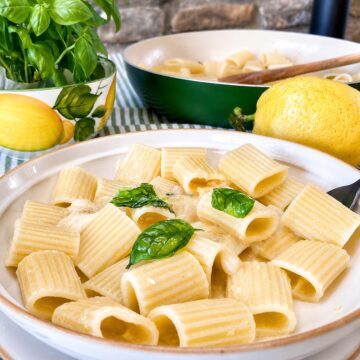
Pasta with Pecorino Cream, Lemon and Basil is a creamy and fragrant Italian pasta recipe with a fresh Mediterranean flavor. It’s made with Pecorino Romano, lemon zest, fresh basil, and a little pasta cooking water, without cream, butter, or heavy sauces.
The idea is simple but very effective. The Pecorino Romano melts with the starchy pasta water to create a smooth and savory cheese cream, similar to the technique used for Cacio e Pepe. Lemon zest adds brightness, while basil gives the dish a fresh, aromatic note that makes it especially perfect for spring and summer.
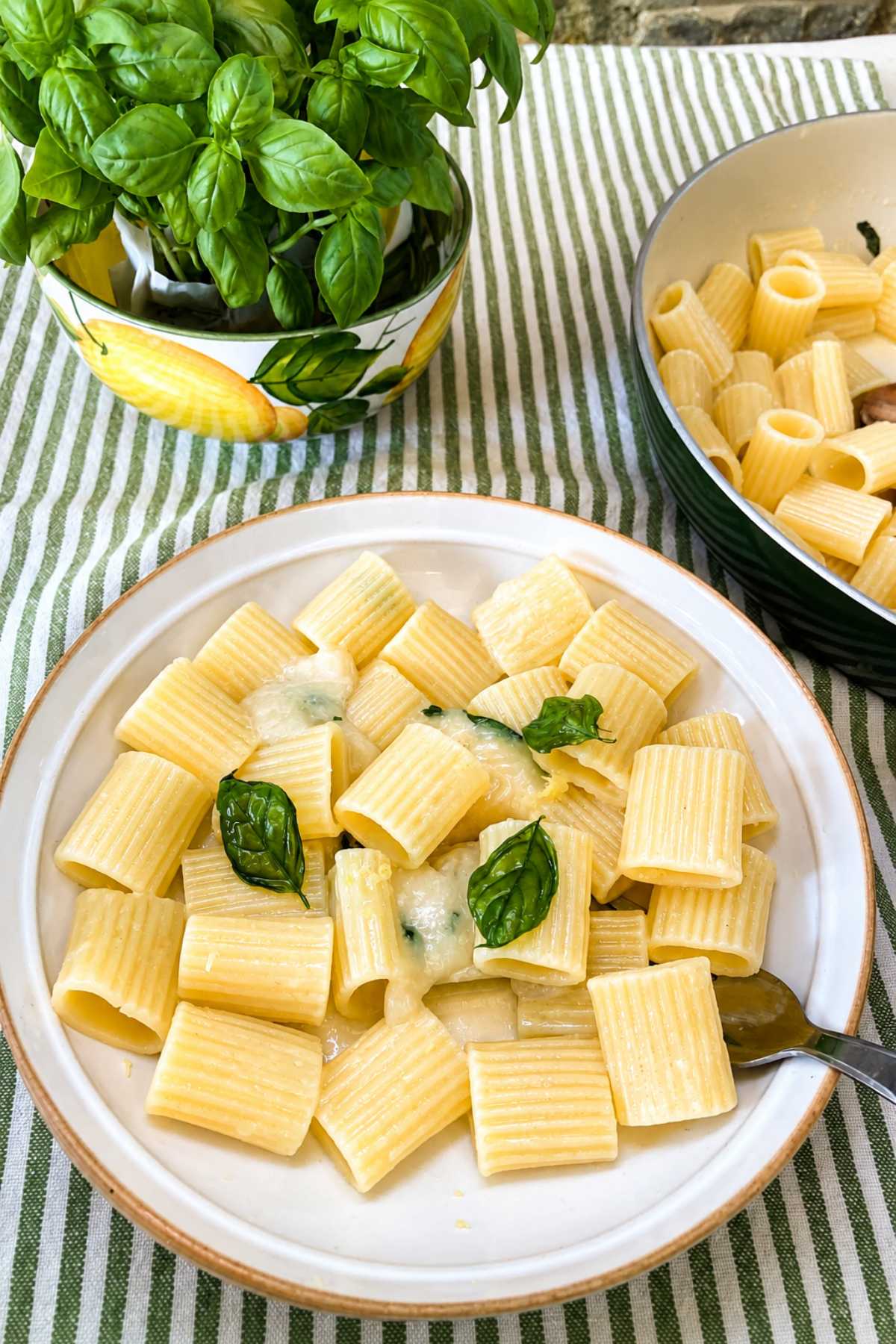
For this recipe, I used mezze maniche rigate, a short durum wheat pasta that holds the pecorino cream beautifully. Rigatoni, paccheri, or penne are also excellent choices. Short pasta is ideal if you want to serve the dish warm or at room temperature, while spaghetti or other long pasta shapes work well if you prefer to enjoy it hot and freshly tossed.
The flavor is rich but balanced. Pecorino Romano has an intense, salty taste, so the lemon and basil help make the sauce lighter, fresher, and more elegant. For the best result, use an organic lemon with untreated zest and finely grated Pecorino Romano, which melts more easily into the sauce.
This creamy pecorino lemon pasta is quick enough for an everyday meal, but refined enough for a summer dinner with friends. You can also add fried basil leaves on top for a crispy, decorative touch.
Now let’s see how to make Pasta with Pecorino Cream, Lemon and Basil, with all the steps and tips for a smooth, creamy sauce.
Jump to:
Ingredients
Prep Time: 10 Min | Cook Time: 10-12 Min (the time to cook the pasta) | Servings: 4
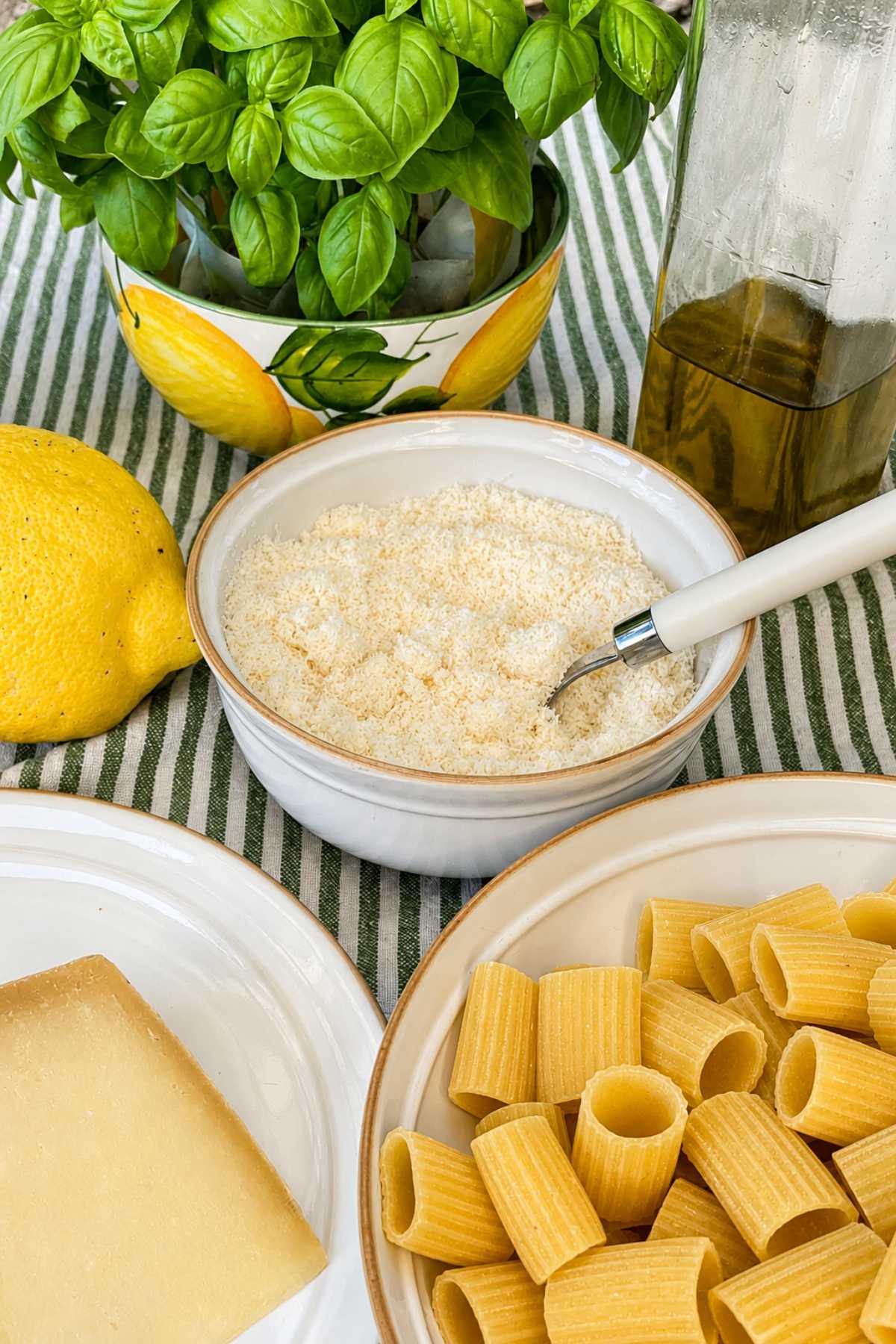
- 350 g (12 oz) mezze maniche rigate, or another short pasta such as rigatoni, paccheri, or penne
- 200 g (about 2 cups) Pecorino Romano, finely grated
- 1 large organic lemon, zest only
- 4 tablespoons extra virgin olive oil
- About 20 fresh basil leaves
- 1.5 liters (6 ⅓ cups) water, for cooking the pasta
- ½ tablespoon coarse salt
NOTE: For the best result, use finely grated Pecorino Romano, not coarsely shredded cheese. A fine texture helps the cheese melt more easily with the hot pasta cooking water and creates a smoother cream.
How to Make Pasta with Pecorino Cream, Lemon and Basil

Step 1) - Bring the water to a boil in a large pot.
For this recipe, it's important to use less water than usual. Normally, the rule is to use about 1 liter (4 cups) of water for every 100 g (3.5 oz) of pasta. In this case, use about ½ liter (2 cups) of water for every 100 g of pasta. This way, the cooking water will be richer in starch and will help create a creamy pecorino sauce.
Salt the water lightly. Half a tablespoon of coarse salt is enough, because Pecorino Romano is already very salty.
While the water is heating, grate the lemon zest. Be careful to grate only the yellow part of the peel, because the white part underneath can taste bitter.

Step 2) - Finely grate the Pecorino Romano and set it aside.
Remove the basil leaves from the stems, then wash and dry them very well with paper towels. Chop most of the basil leaves on a cutting board, but keep 5 or 6 leaves whole for the final garnish.

Step 3) - When the water comes to a boil, add the pasta and cook it until al dente, following the cooking time on the package.
While the pasta is cooking, place the grated Pecorino Romano and the extra virgin olive oil in a large non-stick pan. Keep the heat very low. The cheese must warm gently, not cook.

Step 4) - Add about half a ladle of the hot pasta cooking water to the Pecorino Romano and start stirring immediately. The starch in the water will help the cheese turn into a smooth cream.
After about one minute, turn off the heat and continue stirring. If the cream looks too thick, add a little more cooking water, one spoonful at a time. The sauce should be creamy, soft, and smooth, not dry or sticky.

Step 5) - When the pasta is al dente, drain it and add it directly to the pan with the pecorino cream.
Keep the heat off and toss the pasta well until it's evenly coated. Add the chopped basil and lemon zest, then mix again. If necessary, add a little more hot cooking water to loosen the sauce and make it creamy.
Serve immediately, hot or warm. You can also let the pasta come to room temperature, but in that case it's best to add a small drizzle of extra virgin olive oil before serving.
If you like, finish each plate with a little extra lemon zest and grated Pecorino Romano.
How to Make Crispy Basil Leaves to Garnish

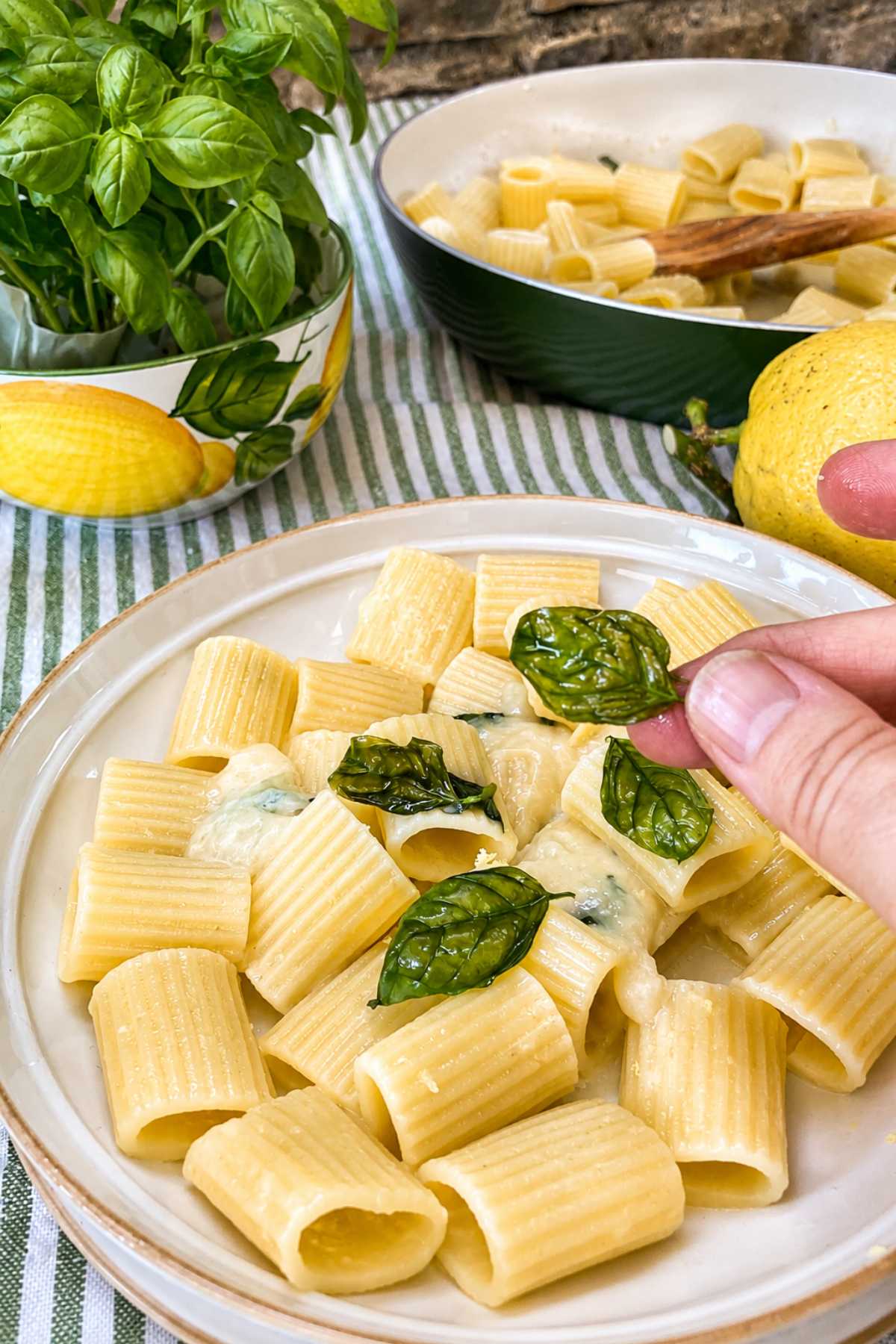
Step 6) - If you like, garnish the pasta with a few crispy basil leaves. This step is optional, but it gives the dish a more elegant look and adds a pleasant crunchy touch.
To make them, choose fresh basil leaves that are not too large. Rinse them gently and dry them very well with paper towels. They must be completely dry before frying.
Pour a thin layer of vegetable oil into a non-stick pan and heat it over medium heat. When the oil is hot, add a few basil leaves at a time and fry them for about 20 to 30 seconds, just until crisp.
Remove them with a slotted spoon and place them on paper towels to drain the excess oil. Do not fry them for too long, or they will lose their bright color and delicate flavor.
Use the crispy basil leaves to decorate the pasta just before serving.
Storage
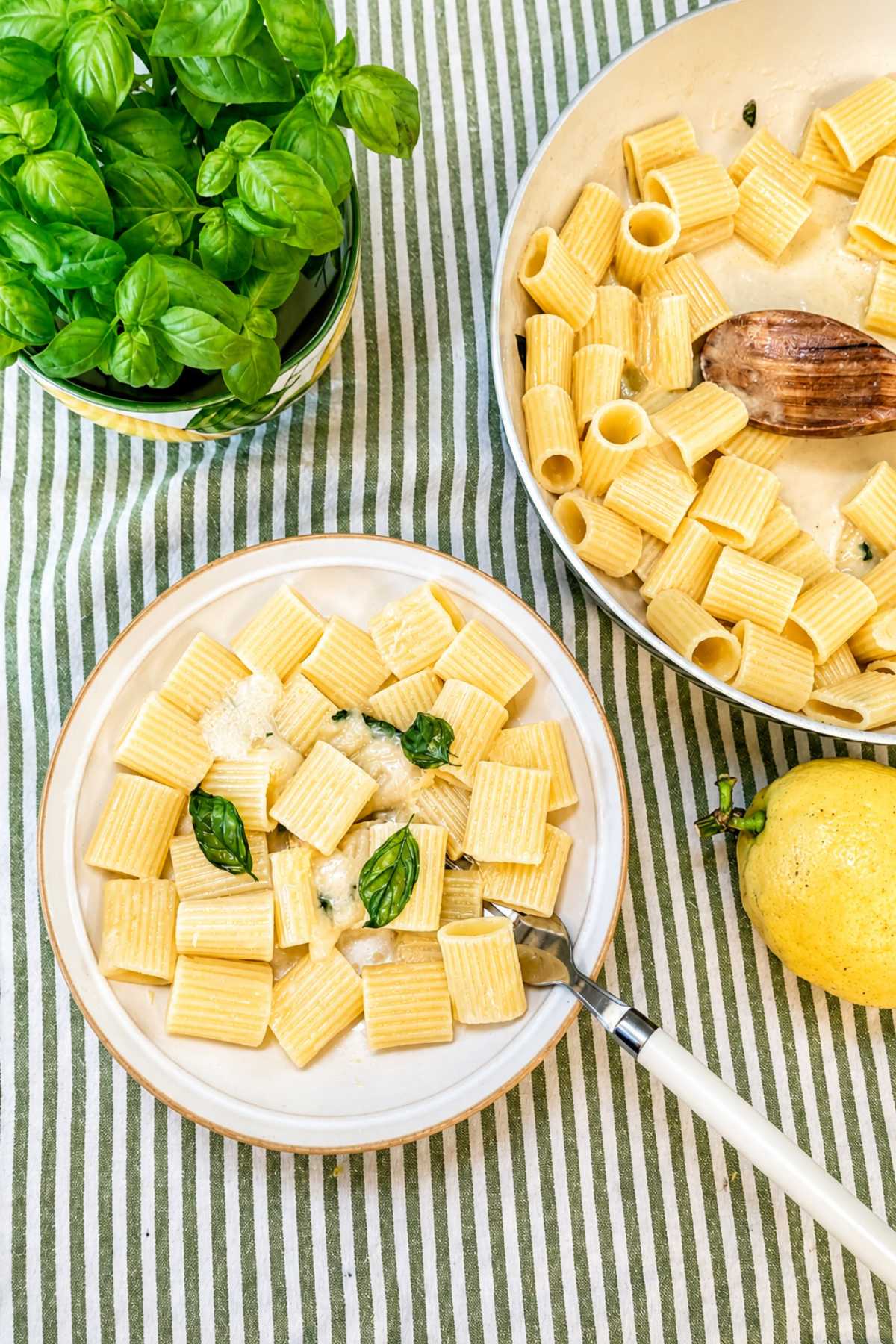
Pasta with Pecorino Cream, Lemon and Basil is best served as soon as it's ready, while the pecorino sauce is still creamy and smooth.
You can also serve it warm or at room temperature, especially if you are using a short pasta shape such as mezze maniche, rigatoni, paccheri, or penne. In this case, it is best to enjoy it within about 1 hour of preparation.
Over time, the pecorino cream tends to thicken and lose its smooth texture. The lemon zest and basil may also become less fresh in flavor.
For this reason, refrigeration and freezing are not recommended. This is a quick pasta dish meant to be prepared and served fresh.
How to Make a Smooth Pecorino Cream
The most important part of this recipe is the pecorino cream.
To get a smooth and creamy sauce, use finely grated, well-aged Pecorino Romano. Avoid coarsely grated cheese, because it does not melt as easily and can make the sauce grainy.
The pasta cooking water is also essential. Since it is rich in starch, it helps bind the cheese and turn it into a creamy sauce without adding cream, butter, or other fats.
Add the hot pasta water gradually to the grated Pecorino Romano and stir continuously. The heat must be very gentle. If the pan is too hot, the cheese may clump instead of becoming creamy.
For this reason, it's best to turn off the heat before adding the pasta to the pecorino cream. Then toss everything together, adding a little more hot cooking water if needed, until the sauce becomes smooth and coats the pasta well.
The final texture should be creamy and soft, not dry or sticky. Serve the pasta right away, while the pecorino sauce is still at its best.
Variations
PECORINO ROMANO - For the best flavor and texture, use well-aged Pecorino Romano, finely grated. Pecorino Romano has a strong, salty, and slightly tangy flavor, which pairs beautifully with lemon zest and basil.
PARMIGIANO REGGIANO - If you prefer a milder flavor, you can replace part of the Pecorino Romano with Parmigiano Reggiano. Use half Pecorino Romano and half Parmigiano Reggiano for a softer, less salty sauce. The flavor will be more delicate, but still creamy and delicious.
LEMON OR ORANGE ZEST - Instead of lemon zest, you can use orange zest for a sweeter and more delicate citrus note. You can also use a mix of lemon and orange zest. Both pair very well with basil and help balance the strong flavor of the Pecorino Romano.
PASTA SHAPE - You can use different pasta shapes for this recipe. Short pasta such as mezze maniche, rigatoni, paccheri, or penne is ideal if you want to serve the dish warm or at room temperature. Long pasta such as spaghetti or bucatini works better if you plan to serve it hot, immediately after tossing.
In any case, choose good-quality durum wheat semolina pasta. Fresh egg pasta is not suitable for this recipe, because it is too delicate and does not hold the pecorino cream in the same way.
More Italian Lemon Recipes
If you love the fresh flavor of lemon in Italian recipes, here are a few more dishes you may want to try.
- Lemon spaghetti
- Pasta with Lemon and Ricotta
- Savory Ricotta Flan with Lemon and Basil
- Spaghetti with Butter, Anchovies and Lemon
Recipe Card
Pasta with Pecorino Cream, Lemon and Basil

Ingredients
- 350 g mezze maniche rigate, or another short pasta such as rigatoni, paccheri, or penne - 12 oz
- 200 g Pecorino Romano, finely grated - about 2 cups
- 1 large organic lemon, zest only
- 4 tablespoons extra virgin olive oil
- 20 leaves fresh basil
- 1.5 liters water - 6 ⅓ cups
- ½ tablespoon coarse salt
Instructions
- Bring the water to a boil in a large pot.For this recipe, it's important to use less water than usual. Normally, the rule is to use about 1 liter (4 cups) of water for every 100 g (3.5 oz) of pasta. In this case, use about ½ liter (2 cups) of water for every 100 g of pasta. This way, the cooking water will be richer in starch and will help create a creamy pecorino sauce.
- Salt the water lightly. Half a tablespoon of coarse salt is enough, because Pecorino Romano is already very salty.
- While the water is heating, grate the lemon zest. Be careful to grate only the yellow part of the peel, because the white part underneath can taste bitter.
- Finely grate the Pecorino Romano and set it aside.
- Remove the basil leaves from the stems, then wash and dry them very well with paper towels. Chop most of the basil leaves on a cutting board, but keep 5 or 6 leaves whole for the final garnish.
- When the water comes to a boil, add the pasta and cook it until al dente, following the cooking time on the package.
- While the pasta is cooking, place the grated Pecorino Romano and the extra virgin olive oil in a large non-stick pan. Keep the heat very low. The cheese must warm gently, not cook.
- Add about half a ladle of the hot pasta cooking water to the Pecorino Romano and start stirring immediately. The starch in the water will help the cheese turn into a smooth cream.
- After about one minute, turn off the heat and continue stirring. If the cream looks too thick, add a little more cooking water, one spoonful at a time. The sauce should be creamy, soft, and smooth, not dry or sticky.
- When the pasta is al dente, drain it and add it directly to the pan with the pecorino cream.
- Keep the heat off and toss the pasta well until it's evenly coated. Add the chopped basil and lemon zest, then mix again. If necessary, add a little more hot cooking water to loosen the sauce and make it creamy.
- Serve immediately, hot or warm. You can also let the pasta come to room temperature, but in that case it's best to add a small drizzle of extra virgin olive oil before serving.If you like, finish each plate with a little extra lemon zest and grated Pecorino Romano.
How to Make Crispy Basil Leaves to Garnish
- If you like, garnish the pasta with a few crispy basil leaves. This step is optional, but it gives the dish a more elegant look and adds a pleasant crunchy touch.To make them, choose fresh basil leaves that are not too large. Rinse them gently and dry them very well with paper towels. They must be completely dry before frying.Pour a thin layer of vegetable oil into a non-stick pan and heat it over medium heat. When the oil is hot, add a few basil leaves at a time and fry them for about 20 to 30 seconds, just until crisp.Remove them with a slotted spoon and place them on paper towels to drain the excess oil. Do not fry them for too long, or they will lose their bright color and delicate flavor.Use the crispy basil leaves to decorate the pasta just before serving.
Leave a Reply