
Authentic Cacio e Pepe is one of the four classic Roman pasta dishes and is made with only three simple ingredients: Pecorino Romano cheese, freshly ground black pepper and pasta.
In Rome, no butter, oil or cream are ever used. The creamy texture of this iconic dish comes only from the perfect balance between finely grated Pecorino Romano and starchy pasta water.
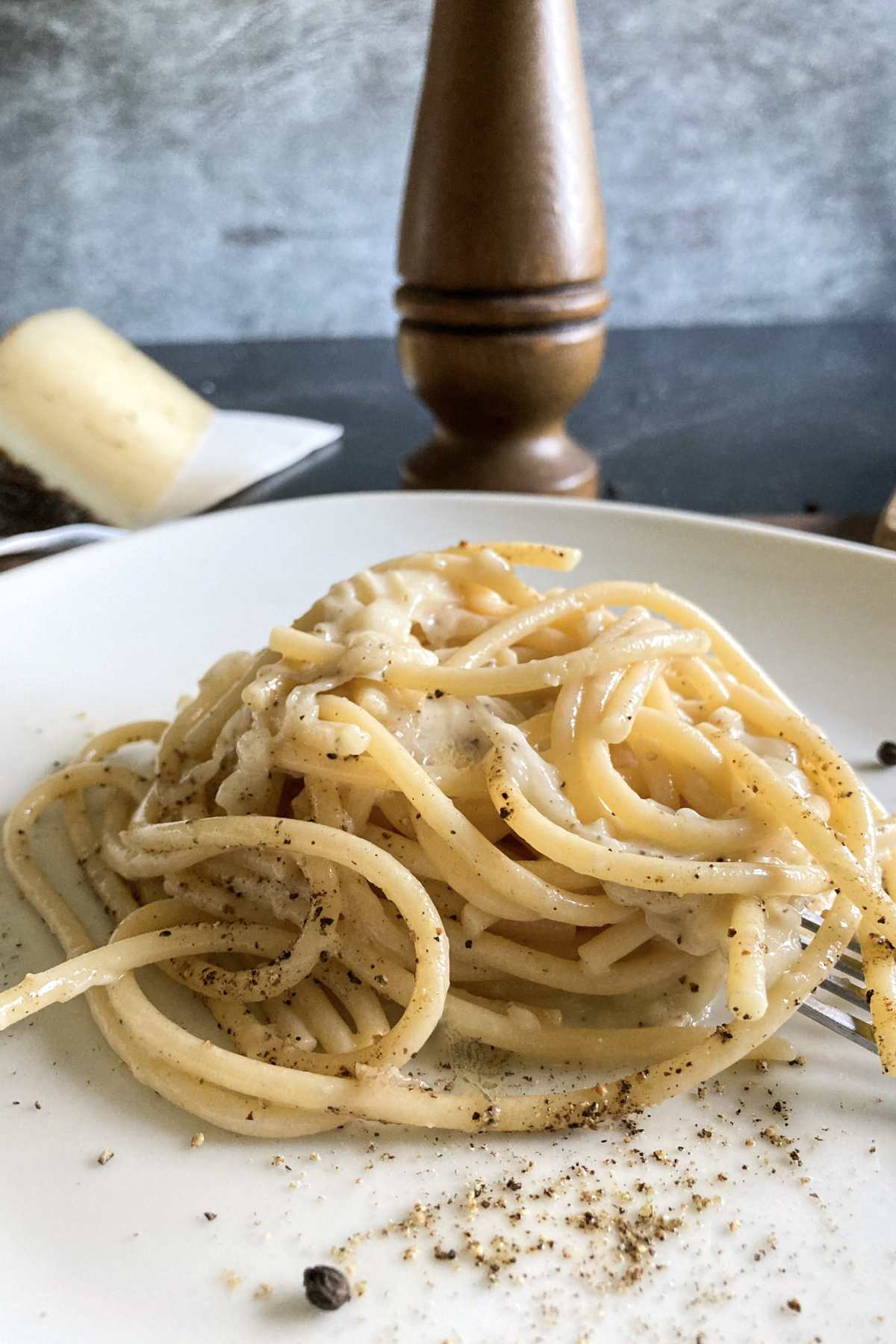
Beloved throughout Italy and beyond, Cacio e Pepe is considered a true institution in Rome, alongside Carbonara, Amatriciana and Pasta alla Gricia.
Although it looks simple, this is a technical recipe. With just two ingredients besides pasta, the real challenge lies in preventing the cheese from clumping and achieving a smooth, velvety sauce.
In this step-by-step recipe, you will learn the traditional Roman method to make authentic Cacio e Pepe perfectly creamy every time.
Jump to:
Ingredients
Prep Time: 10 Min | Cook Time: 10 Min | Servings: 4
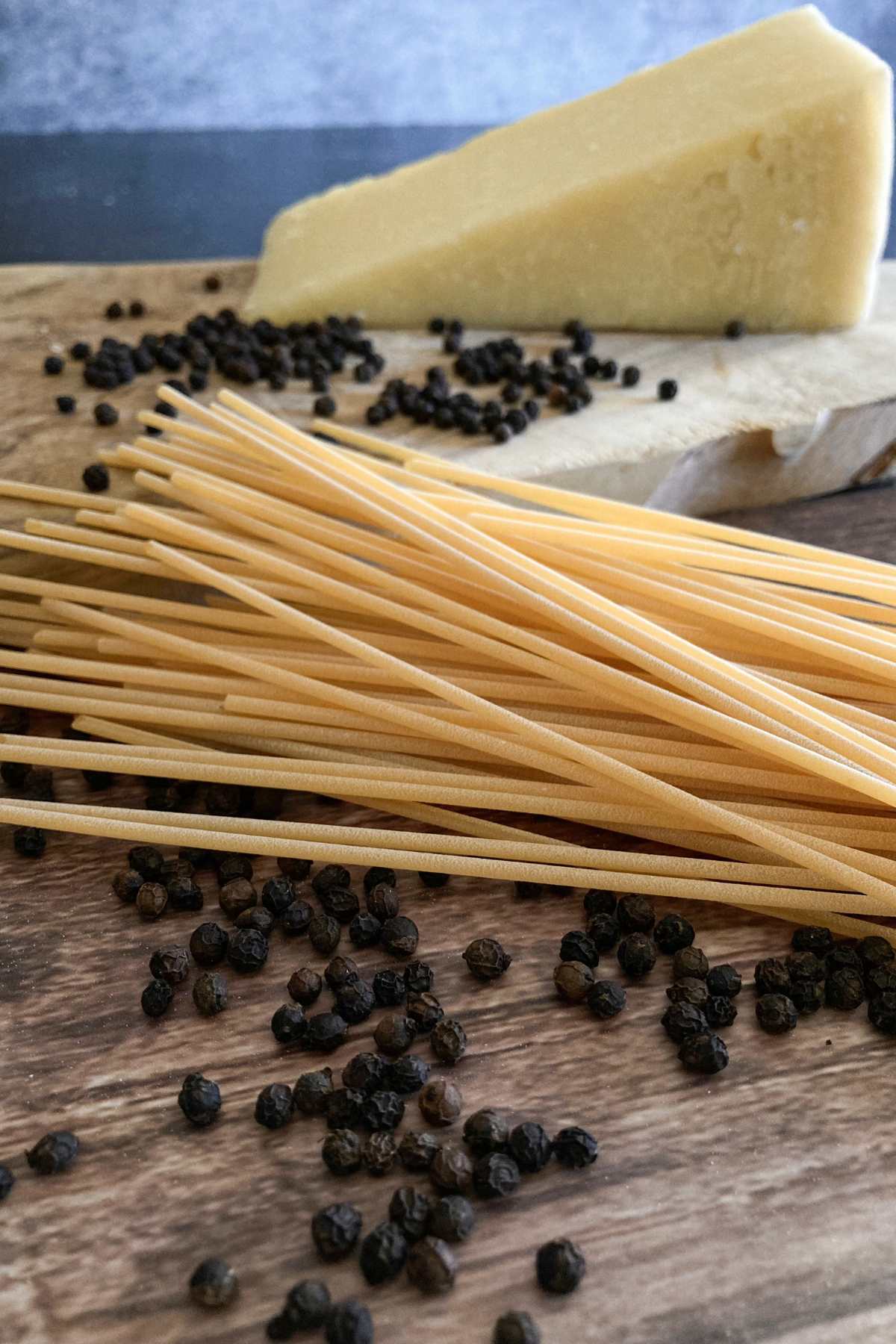
- 350 g (12 oz) spaghetti, bucatini or tonnarelli (traditional Roman pasta shapes)
- 220 g (2 cups) finely grated Pecorino Romano DOP
- 6-8 g (1-1 ½ tablespoons) whole black peppercorns, freshly ground (preferably Tellicherry), plus more to taste
- 1 ¾ liters (7 ½ cups) water (use less water than usual to increase starch concentration)
- ½ tablespoon coarse salt (very little, as Pecorino is naturally salty)
Kitchen Tools and Equipment
- Essential is a tool to grind the peppercorns. The black pepper should not be a powder but crushed coarsely. Ideal for this is a pestle mortar or a Stainless Steel Meat Pounder with a chopping board.
- You can also use a pepper grinder, but it has to be an adjustable grinder, for a medium grind. This Pepper Grinder from Oxo has a rotating tab to adjust the pepper grinder setting from fine to coarse.
- Then you need a grater for Pecorino Romano cheese. There are various types and models. Have a look to the classic hand grater or this rotary Cheese Grater with stainless steel drum for grating hard cheeses.
- The electric graters are also very useful. These appliances have various attachments that are useful for slicing/chopping vegetables or other ingredients and for grating aged cheese.
- The pan used to finish cooking the pasta is also important. It should be a Stainless Steel pan, large enough for the pasta to mix well.
Instructions

Step 1) - First start by grating the Pecorino Romano. When ready, set aside in a bowl.
Then grind the black peppercorns. For this you can use a pestle, a meat pounder or a pepper grinder adjusted so that it doesn't grind too finely. The black pepper should not be a powder.

Step 2) - Toast the ground pepper in a large skillet over medium heat. Stir occasionally and check to make sure it doesn't burn. It will take 2 to 3 minutes and you will smell the intense aroma of the pepper. Set aside.

Step 3) - Now boil the water with very little coarse salt (maximum ½ tablespoon) to cook the pasta. Respect the quantity of water indicated in the ingredients. This in fact, as you will learn, is essential for the success of the recipe.
When the water boils, put in the pasta of your choice. Let the pasta cook for about 5 minutes.

Step 4) - Meanwhile add 1 cup of pasta cooking water to the toasted black pepper and turn the heat under the skillet to low.

Step 5) - After the first 5 minutes of cooking, now is the time to transfer the pasta from the pot to the skillet. The pasta should FINISH COOKING IN THE SKILLET with the pepper.

Step 6) - Check the cooking time on the pasta package. Add another ½ cup of pasta water if needed and stir to get even cooking.
SAVE THE COOKING WATER. The pasta cooking water is rich in starch which is used to make the pasta creamy. You need it also to make the Pecorino cream (read the paragraph below "How do You Keep Cheese from Clumping in Cacio e Pepe?").

Step 7) - While the pasta is cooking, make the Pecorino cream. Pour 1 cup of the starchy cooking water over the grated pecorino cheese and stir quickly. You'll get a creamy consistency similar to ricotta.

Step 8) - Once the pasta is cooked, turn off the heat completely before adding the Pecorino cream. If the pan is too hot, the cheese will seize and form lumps. Wait about half a minute and then add the pecorino cream a little at a time. Stir in the pasta evenly. Authentic cacio e pepe recipe is ready!
If you like, add more grated pecorino just before serving and another sprinkle of pepper for garnish. Serve pasta Cacio e Pepe immediately and strictly hot.
How to Prevent Cacio e Pepe from Clumping
In authentic Cacio e Pepe, pasta cooking water is not just for boiling pasta – it is a key ingredient.
To obtain enough starch, use less water than usual. Instead of the classic 1 liter (4 cups) of water for every 100 g (3.5 oz) of pasta, use about ½ liter (2 cups). This creates a more concentrated, starch-rich liquid.
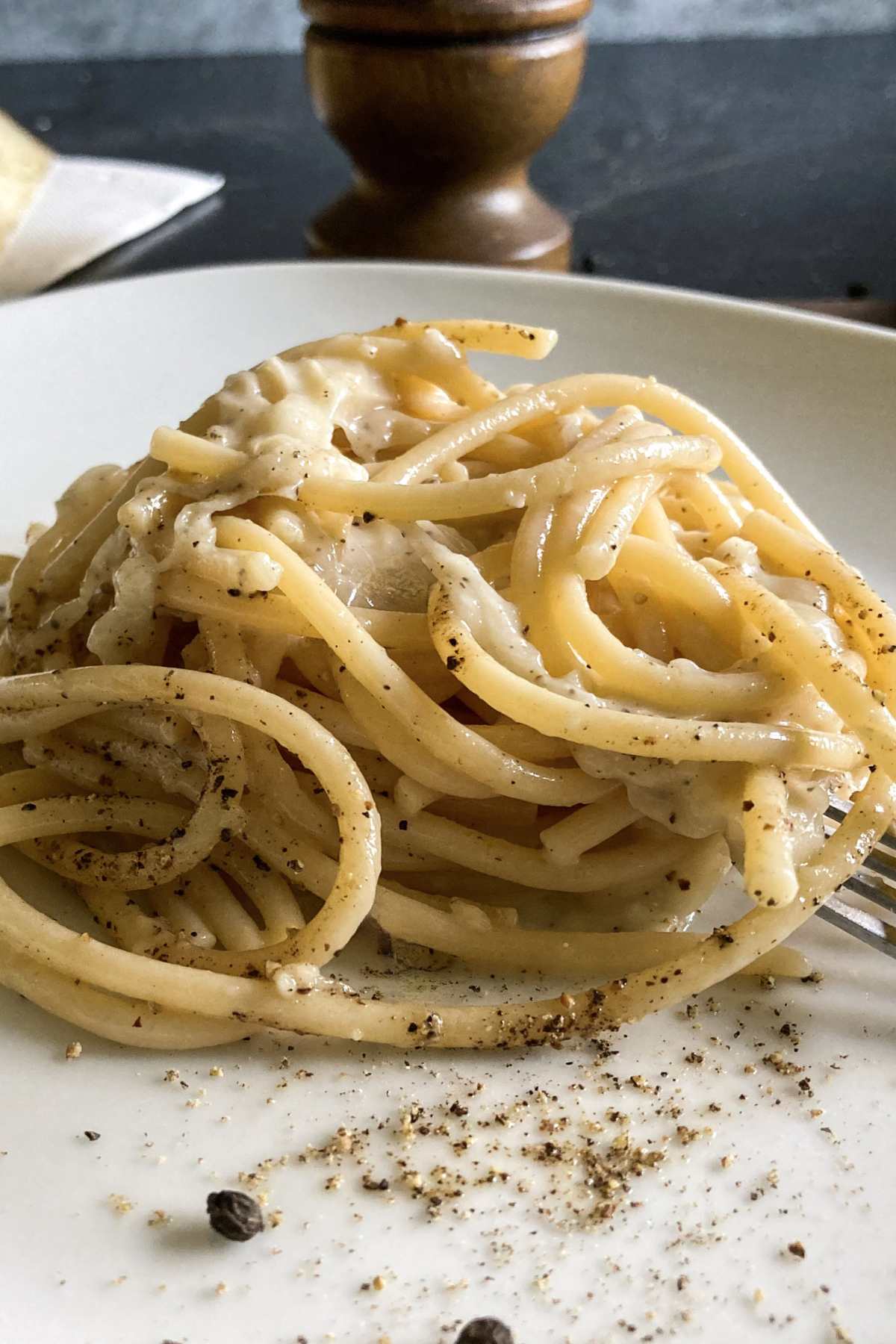
Starch-rich water is essential because it stabilizes the Pecorino Romano when mixed with heat. The starch prevents the cheese proteins from coagulating too quickly, which would cause lumps or a dense, grainy texture.
Another crucial step is temperature control. Always turn off the heat before adding the Pecorino cream. If the pan is too hot, the cheese will seize instead of forming a smooth, creamy sauce.
When properly emulsified with starchy water, Pecorino Romano becomes the natural creamy element of this traditional Roman pasta.
Storage
Authentic Cacio e Pepe should be served and eaten immediately. This Roman pasta does not contain butter or cream, so the sauce thickens quickly as it cools and loses its creamy texture.
Reheating is not recommended, as the Pecorino may seize and become grainy. For the best result, prepare and enjoy it fresh and hot.
The Four Classic Roman Pasta Dishes
Cacio e Pepe is one of the four traditional Roman pasta dishes that define the cuisine of Rome.
- CARBONARA: A creamy Roman pasta made with guanciale, eggs and Pecorino Romano. Despite many variations abroad, the authentic version contains no cream.
- AMATRICIANA: A traditional Roman sauce prepared with guanciale, tomato and Pecorino Romano, originally from Amatrice but now considered a cornerstone of Roman cuisine.
- PASTA ALLA GRICIA: Often described as the “white Amatriciana”, this simple Roman pasta combines guanciale and Pecorino Romano without tomato.
Tips
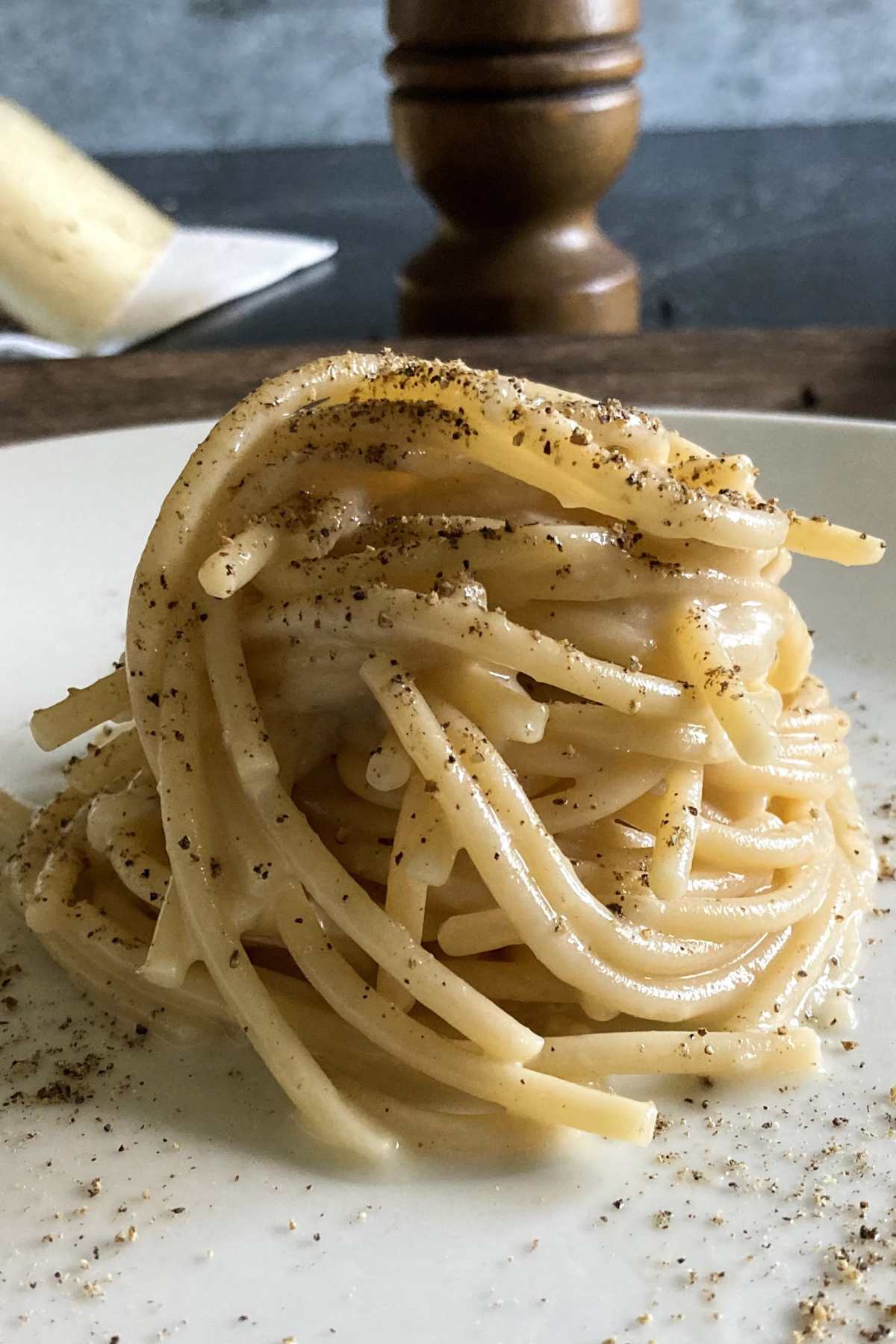
- PECORINO ROMANO: In authentic Roman Cacio e Pepe, only Pecorino Romano DOP is used. Other cheeses will not produce the same texture or flavor (learn more in our guide to Pecorino Romano vs Parmigiano Reggiano). Choose a medium-aged Pecorino. If it's too young, it will not grate properly. If it's too aged, the dish may become excessively salty. Because Pecorino Romano is naturally salty, always reduce the amount of salt in the pasta water.
- GRATE VERY FINELY: The cheese must be grated as finely as possible. A very fine texture allows it to melt evenly when mixed with warm pasta water. Coarsely grated cheese increases the risk of lumps and a grainy sauce.
- BLACK PEPPER: Black pepper is not a garnish in this dish. It is one of the main ingredients. Use whole black peppercorns and grind them freshly before cooking. A coarse grind is essential to release the full aroma and create the characteristic spicy depth of traditional Cacio e Pepe. Lightly toasting the pepper enhances its fragrance and intensifies the flavor.
- ADD CHEESE OFF THE HEAT: Always turn off the heat before incorporating the Pecorino cream. Excessive heat causes the cheese proteins to coagulate too quickly, resulting in a clumpy or stringy texture instead of a smooth emulsion.
- USE A WIDE SKILLET: Finishing the pasta in a wide pan allows better control over the emulsion and helps the starch-rich water combine evenly with the cheese. Proper surface contact makes the sauce creamier and more stable.
- WORK QUICKLY: Cacio e Pepe thickens rapidly as it cools. Mix decisively and serve immediately to preserve its naturally creamy consistency.
Origins
Cacio e Pepe is one of the oldest dishes of Roman cuisine and reflects centuries of culinary tradition.
Until the 18th century, cheese was one of the most common condiments for pasta. In his “Journey in Italy”, Goethe noted that macaroni were often served simply with grated cheese, which acted both as fat and seasoning.
Cacio e Pepe belongs to the Italian cucina povera and originated among the shepherds of the Roman countryside during transhumance. Pecorino, black pepper and dried pasta were durable, easy to transport and highly nourishing ingredients.
Over time, this humble combination became a cornerstone of Roman taverns and remains today one of the four classic Roman pasta dishes.
Authentic Cacio e Pepe Recipe: FAQS
“Cacio e Pepe” literally means “cheese and pepper.” In Roman dialect, “cacio” refers to Pecorino Romano, the only cheese traditionally used in this authentic Roman pasta.
The secret to authentic Cacio e Pepe is controlling heat and starch. The cheese must be mixed with warm, starch-rich pasta water off the heat to create a smooth emulsion. Excessive heat or insufficient starch will cause the sauce to clump.
Authentic Roman Cacio e Pepe is made with only three ingredients: pasta, Pecorino Romano and freshly ground black pepper. No butter, oil or cream are part of the traditional recipe.
The most common mistakes are adding the cheese while the pan is too hot, using too much pasta water, grating the Pecorino too coarsely, or oversalting the water. All of these prevent the proper emulsion that gives the sauce its creamy texture.
More Classic Roman Dishes
- Saltimbocca alla Romana (Roman-Style Veal Scallops)
- Roman Style Artichokes (Carciofi alla Romana)
- Roman-Style Chicken (Pollo alla Romana)
- Pasta alla Checca (Roman Fresh Tomato Pasta)
- Penne all'Arrabbiata (Italian Spicy Tomato Pasta)
Recipe Card

Authentic Cacio e Pepe - The Real Roman Method

Ingredients
- 350 g spaghetti, bucatini or tonnarelli (traditional Roman pasta shapes) - 12 oz
- 220 g finely grated Pecorino Romano DOP - 2 cups
- 6-8 g whole black peppercorns - 1-1 ½ tablespoons, freshly ground (preferably Tellicherry), plus more to taste
- 1 ¾ liters water - 7 ½ cups (use less water than usual to increase starch concentration)
- ½ tablespoon coarse salt - very little, as Pecorino is naturally salty
Instructions
- First start by grating the Pecorino Romano. When ready, set aside in a bowl.
- Then grind the black peppercorns. For this you can use a pestle, a meat pounder or a pepper grinder adjusted so that it doesn't grind too finely. The black pepper should not be a powder.
- Toast the ground pepper in a large skillet over medium heat. Stir occasionally and check to make sure it doesn't burn. It will take 2 to 3 minutes and you will smell the intense aroma of the pepper. Set aside.
- Now boil the water with very little coarse salt (maximum ½ tablespoon) to cook the pasta. Respect the quantity of water indicated in the ingredients. This in fact, as you will learn, is essential for the success of the recipe.
- When the water boils, put in the pasta of your choice. Let it cook for about 5 minutes.
- Meanwhile add 1 cup of pasta cooking water to the toasted black pepper and turn the heat under the skillet to low.
- After the first 5 minutes of cooking, now is the time to transfer the pasta from the pot to the skillet. The pasta should FINISH COOKING IN THE SKILLET with the pepper.
- Check the cooking time on the pasta package. Add another ½ cup of pasta water if needed and stir to get even cooking.SAVE THE COOKING WATER. The pasta cooking water is rich in starch which is used to make the pasta creamy. You need it also to make the Pecorino cream.
- While the pasta is cooking, make the Pecorino cream. Pour 1 cup of the starchy cooking water over the grated pecorino cheese and stir quickly. You'll get a creamy consistency similar to ricotta.
- Once the pasta is cooked, turn off the heat completely before adding the Pecorino cream. If the pan is too hot, the cheese will seize and form lumps. Wait about half a minute and then add the pecorino cream a little at a time. Stir in the pasta evenly. Authentic cacio e pepe recipe is ready!
- If you like, add more grated pecorino just before serving and another sprinkle of pepper for garnish. Serve Cacio e Pepe immediately and strictly hot.
Boaz Tepper says
This tasted amazing! The pecorino for me as a Dutchman did not taste at all too spicy for me, the pepper was not overpowering and the end result was creamy deliciousness. Definitely a great recipe!
katia says
I also really liked this recipe! Just like the one I had in Rome!
FRANCO MARIUS BUSELLI says
The traditional addition of BUTTER (absent in this recipe) is essential in making this a world class dish.
Silvana Nava says
The traditional Roman recipe for Cacio e Pepe does not include the addition of butter.
This is a dish of peasant origins and the simplicity of its ingredients is the main feature of this dish: pasta, Pecorino Romano cheese, and black pepper. Nothing else. The starchy cooking water is a fourth ingredient that serves to make the pasta creamy.
Paul Scoles says
Go Silvana! Adding butter to cacio e pepe is just as bad as adding cream to pasta Al Alfredo or making pasta carbonara with Spam.
Cecelia Barrett says
I made this dish several times without success. This time it was perfect. The secret is the pecorino was grated so fine it looked like flour! It turned into a pecorino cream as soon as I stirred in the pasta water! Turned out great.
Mrandi says
This was delicious! I like the roasting of the pepper to bring out greater flavor. Using as little water as possible made the water nice and starchy, and mixing the “grated” cheese with the water in a bowl first made it nice and creamy. Wanted it a little more creamy than ricotta so whisked it a bit. Flavors were well balanced and the pepper was not over powering and just built in your mouth as you ate. Will make again and again!
Kathryn Occhipinti says
I've been trying literally for years to make this dish with a creamy sauce, the way it is supposed to be, but the cheese clumps every time! Grazie mille for the most detailed recipe I have ever read that has ALL the answers to my questions about how to make this famous dish!
Cheryl says
Made this three times so far. The first was an absolute failure and the next were good but not great. Searching for that primo balance!
Cheryl says
Simple, elegant and authentic.