
Pasta frolla is the classic Italian sweet shortcrust pastry used to make crostata, tart shells, tartlets, cookies and many traditional Italian desserts.
It's made with a few simple ingredients: flour, butter, sugar, eggs and flavorings such as lemon zest or vanilla. Once mixed and chilled, the dough becomes easy to roll and bakes into a crumbly, buttery pastry with the perfect balance between tenderness and structure.
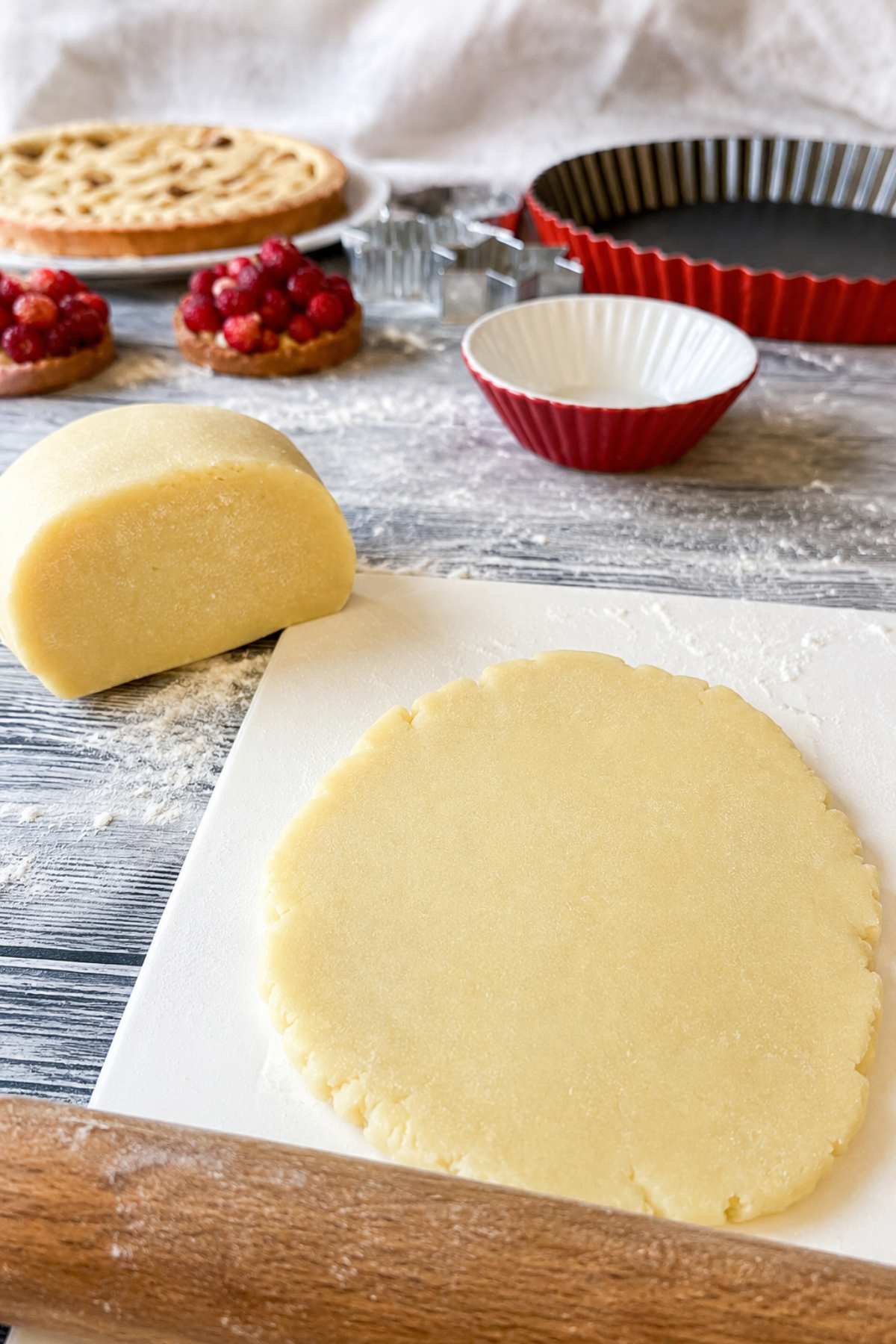
There is not just one way to make pasta frolla. In Italian pastry, the method changes depending on the result you want. The classic method is the most versatile and works beautifully for crostata and tart shells. The sablé method gives a more delicate, sandy texture, perfect for cookies and very crumbly pastry. The whipped method, called pasta frolla montata in Italian, is softer and used for piped cookies and small pastries.
In this recipe, I’ll show you the traditional pasta frolla recipe I use for Italian crostata, plus the two other methods so you can choose the right dough for the dessert you want to make.
Jump to:
What Is Pasta Frolla?
Pasta frolla is the classic Italian sweet shortcrust pastry used to make crostata, tart shells, tartlets, cookies and many traditional Italian desserts.
It's made with flour, butter, sugar, eggs and flavorings such as lemon zest or vanilla. Once baked, pasta frolla has a crumbly, buttery texture that is firm enough to hold a filling but delicate enough to melt in your mouth.
Although it is often compared to shortcrust pastry, Italian pasta frolla is usually sweeter, richer and more fragrant. It's one of the most important basic recipes in Italian baking, especially for making crostata, the traditional Italian jam tart.
Why This Pasta Frolla Recipe Works
This pasta frolla recipe is simple, traditional and reliable. It gives you a dough that is easy to roll out, firm enough to hold a filling and crumbly once baked.
The balance between flour, butter, sugar and eggs is what makes the texture right. The butter gives richness and flavor, the sugar makes the pastry sweet and delicate, while the eggs help bind the dough and make it easier to work with.
This is the basic pasta frolla I use for Italian crostata, tart shells and simple cookies. It is not too soft and not too dry, so it works well as an all-purpose Italian sweet shortcrust pastry.
Ingredients
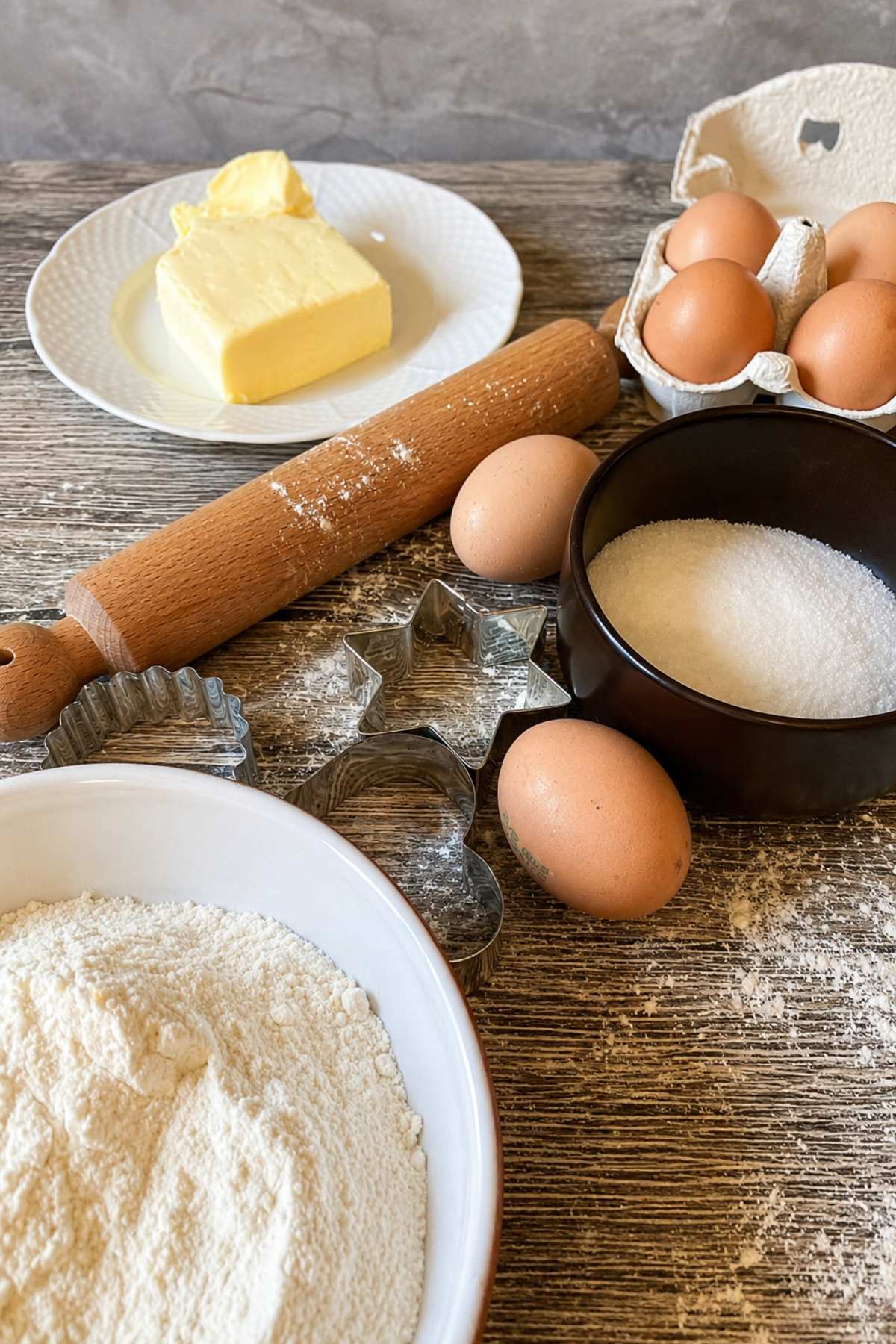
Prep Time: 15 Min | Chilling Time: 1 Hour | Cook Time: 0 Min | Servings: about 500 g (1.1 lb) pasta frolla - Enough for: one 9-inch tart shell or about 30 cookies
- 250 g (about 2 cups) Italian “00” flour
- 100 g (½ cup) granulated sugar
- 120 g (about 1 stick) cold unsalted butter, cut into small pieces
- 1 whole medium egg, at room temperature
- 1 medium egg yolk, at room temperature
- a pinch of fine salt
- grated zest of ½ organic lemon, optional
NOTE: you can use powdered sugar for a finer, more delicate texture.
How to Make Pasta Frolla

Step 1) - Place the flour on a work surface or pastry board and make a well in the center. Add the sugar, the grated lemon zest if using, the salt, the whole egg and the egg yolk.

Step 2) - Add the cold butter, cut into small pieces. Start mixing the ingredients quickly with your fingertips, working the butter into the flour, sugar and eggs without warming it too much.
The secret to good pasta frolla is to keep the butter cold and to work the dough as little as possible. If the butter melts too much, the pastry can lose its crumbly texture and become greasy or tough after baking.
Knead quickly, just until the ingredients come together and form a smooth, compact dough. Do not overwork it. You don't need to make the dough elastic, as you would with bread or fresh pasta.
If your hands are very warm, rinse them under cold water and dry them well before kneading. A marble or stainless steel pastry board can also help keep the dough cool.
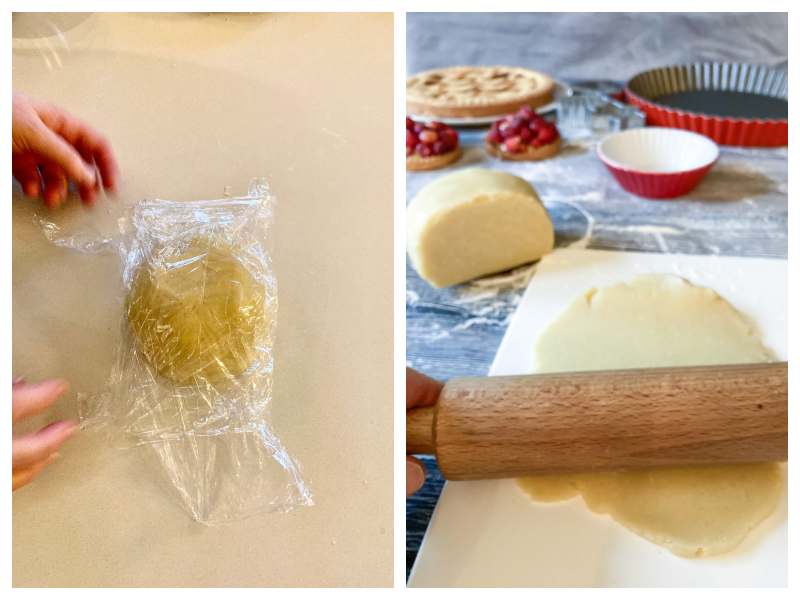
Step 4) - Shape the dough into a ball, wrap it in plastic wrap and let it rest in the refrigerator for at least 1 hour.
This resting time is important because it allows the butter to firm up again and makes the pasta frolla easier to roll out. It also helps prevent the dough from shrinking too much during baking.
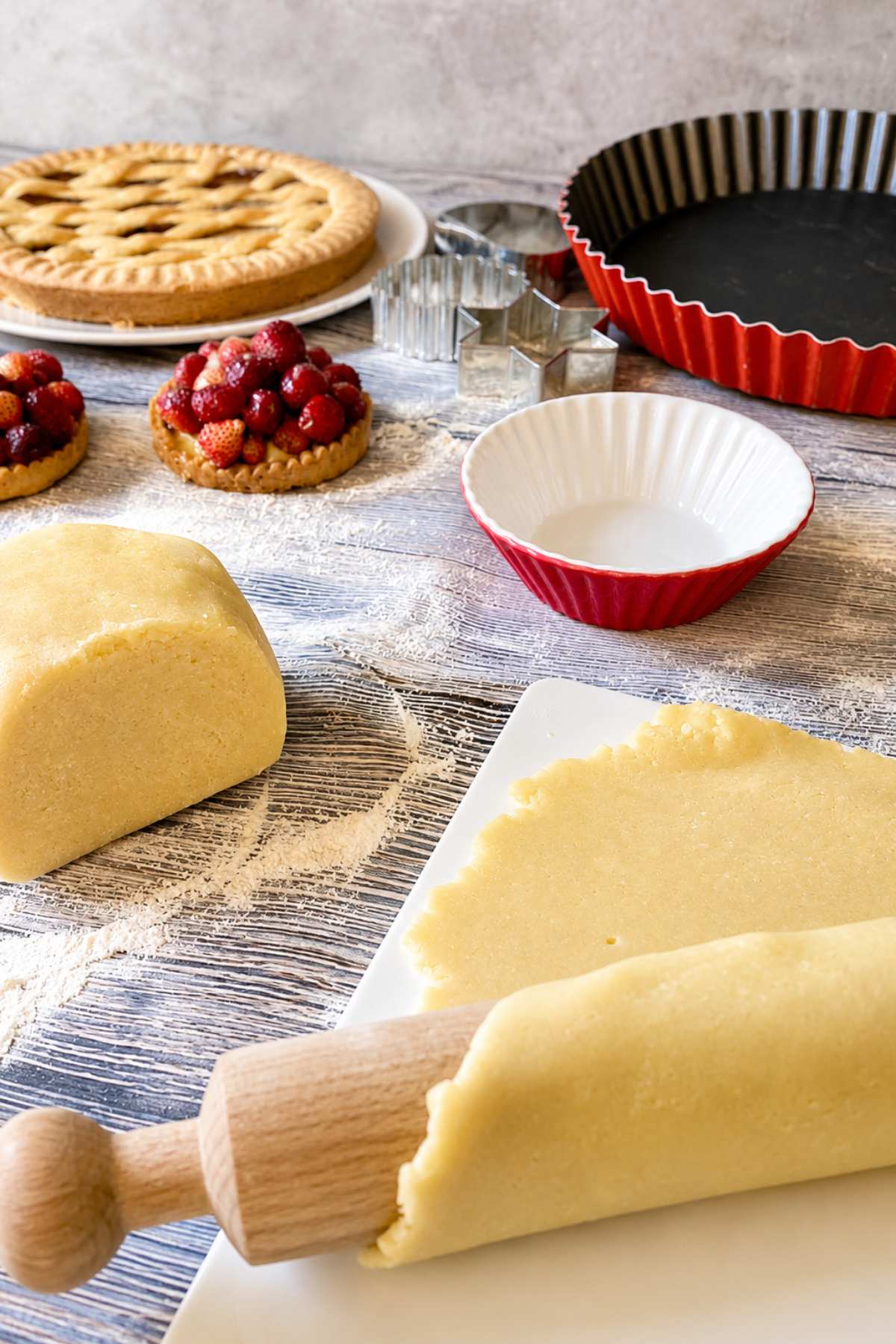
After chilling, place the dough on a lightly floured work surface and roll it out with a rolling pin. For a crostata or tart shell, roll it to about 4 mm thick, about ⅙ inch. For cookies, you can roll it slightly thicker, depending on the shape and size.
At this point, your pasta frolla is ready to use for crostata, tart shells, tartlets or cookies.
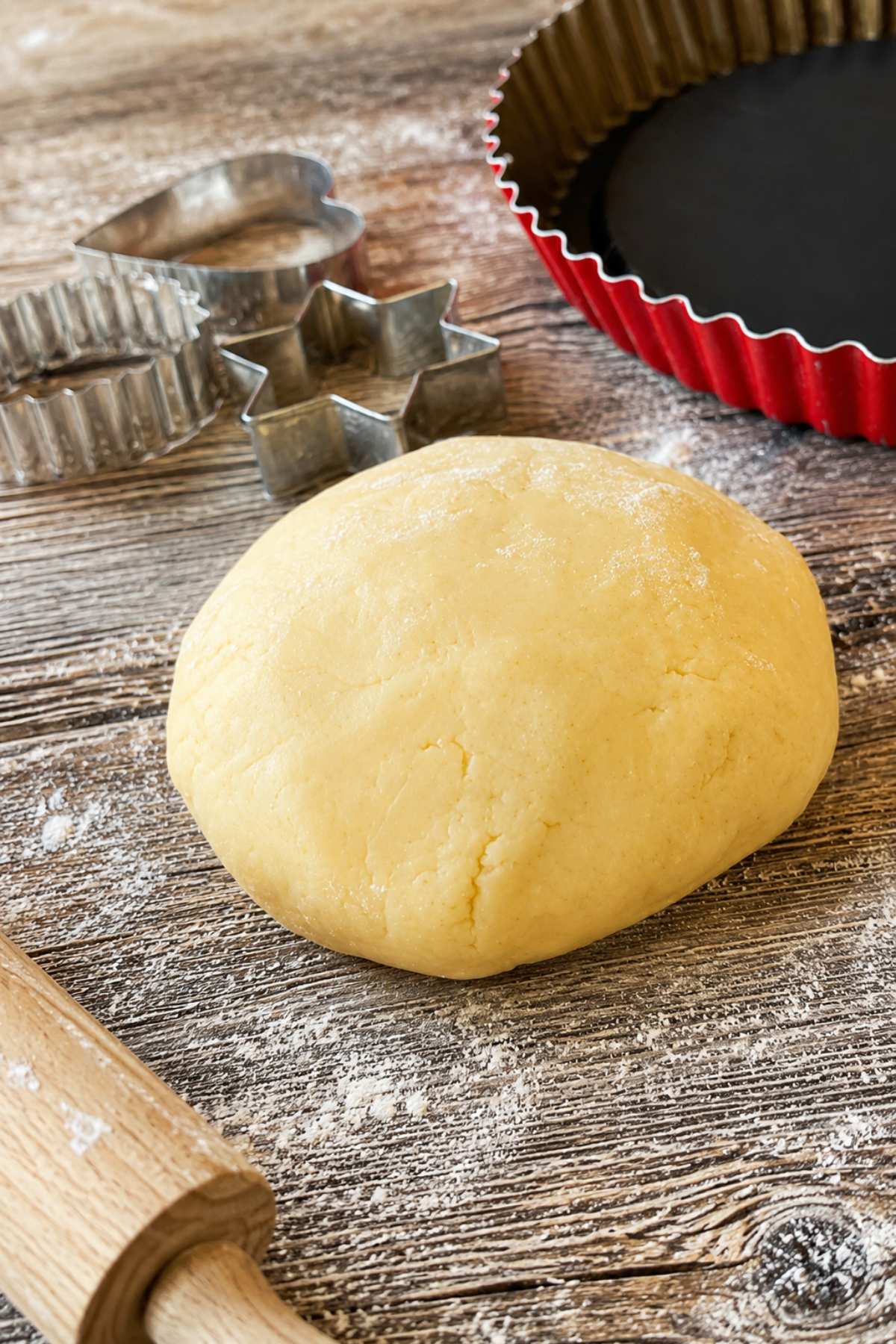
3 Methods for Making Pasta Frolla
There are different ways to make pasta frolla, depending on the texture you want and the dessert you are preparing. The ingredients are often very similar, but the order in which you combine them can change the final result.
Classic Method
This is the method used in the recipe above. The flour is placed on the work surface, then sugar, eggs, flavorings and cold butter are added. The ingredients are worked quickly by hand until they come together into a smooth, compact dough.
The classic method is the most versatile. It gives you a pasta frolla that is crumbly but still easy to roll out, perfect for crostata, tart shells, tartlets and simple cookies.
Sablé Method
In the sablé method, the cold butter is first worked into the flour until the mixture looks sandy. Only after this step are the sugar, eggs and flavorings added.
This method helps coat the flour with butter before the liquids are added, giving the pastry a more crumbly and delicate texture. It's especially good for cookies and very friable tart crusts.
Soft Butter Method
In this method, the butter is used soft, at room temperature. It's mixed with the sugar until creamy, then the eggs are added, followed by the flour.
The dough is softer than classic pasta frolla and needs to chill well before rolling. This method is useful when you want a more tender pastry shell, especially for traditional Italian desserts with a rich or moist filling, such as Pastiera Napoletana.
This is different from pasta frolla montata, which is a much softer whipped shortcrust pastry usually shaped with a piping bag for cookies and small pastries.
How to Use Pasta Frolla
Pasta frolla is one of the most versatile basic recipes in Italian baking. Once chilled, you can roll it out and use it in many different ways.
The most classic use is crostata, the traditional Italian jam tart. Pasta frolla is also perfect for tart shells, tartlets, fruit tarts, chocolate tarts and simple Italian cookies.
For a crostata or tart shell, roll the dough to about 4 mm thick, about ⅙ inch, then place it in the tart pan and fill it according to the recipe. For cookies, you can roll the dough slightly thicker and cut it into your favorite shapes.
You can also use pasta frolla for richer traditional Italian desserts, such as Pastiera Napoletana, or for small pastries filled with jam, pastry cream, chocolate or ricotta.
How to Bake Pasta Frolla
The baking time for pasta frolla depends on how you use it. The dough itself does not have a fixed baking time, because a crostata, a tart shell and cookies all bake differently.
For best results, bake pasta frolla in a preheated conventional oven at 180°C (350°F), on the middle rack. If using a convection oven, reduce the temperature to 160°C (320°F) and check the pastry a few minutes earlier, as it tends to brown faster.
For a classic crostata filled with jam, pastry cream or another filling, bake the pasta frolla in a preheated oven at 180°C (350°F) for about 30 to 35 minutes, or until the edges are lightly golden and the filling is set.
For an empty tart shell, blind bake the pasta frolla. Line the dough with parchment paper, fill it with pie weights or dried beans and bake at 180°C (350°F) for about 15 minutes. Then remove the weights and parchment paper and bake for another 8 to 10 minutes, until the shell is lightly golden.
For cookies, roll out the dough slightly thicker and bake at 180°C (350°F) for about 10 to 12 minutes, depending on their size. The cookies should be pale golden, not too dark.
Pasta frolla is rich in butter and sugar, so it can brown quickly. Keep an eye on it during the last few minutes of baking and remove it from the oven as soon as the edges begin to turn golden.
How to Store Pasta Frolla
You can store pasta frolla in the refrigerator for up to 2 days. Wrap the dough tightly in plastic wrap and keep it in the coldest part of the fridge.
Before using it, let the dough sit at room temperature for about 10 to 15 minutes, just until it becomes easier to roll out. Do not let it get too soft, or the butter will warm up and the dough may become sticky.
You can also freeze pasta frolla. Shape it into a flat disk, wrap it well in plastic wrap, then place it in a freezer bag or airtight container. It will keep well in the freezer for up to 2 months.
To use frozen pasta frolla, let it thaw overnight in the refrigerator. Once thawed, roll it out on a lightly floured surface and use it as usual.
Baked pasta frolla cookies or tart shells can be stored in an airtight container at room temperature for 4 to 5 days. If the crostata has a fresh cream, ricotta or custard filling, store it in the refrigerator according to the specific recipe.
Tips for Perfect Pasta Frolla
USE COLD BUTTER: Always use cold butter, cut into small pieces. Cold butter helps give pasta frolla its classic crumbly texture. If the butter becomes too soft while you are working the dough, the pastry may turn greasy and difficult to handle.
DO NOT OVERWORK THE DOUGH: Pasta frolla should not be kneaded like bread or fresh pasta. When flour comes into contact with liquid and is worked for too long, gluten begins to develop. This is useful for bread, pizza or fresh pasta, but not for pasta frolla. Too much gluten makes the pastry elastic and tough, while good pasta frolla should be tender, crumbly and delicate. Mix the ingredients only until they come together into a smooth, compact dough.
CHILL THE DOUGH: Do not skip the resting time. Chilling the dough for at least 1 hour makes it firmer, easier to roll out and less likely to shrink during baking.
LET IT SOFTEN SLIGHTLY BEFORE ROLLING: If the dough is too hard after chilling, let it sit at room temperature for 10 to 15 minutes before rolling it out. It should be firm but not rock hard.
FIX SMALL CRACKS WITH YOUR FINGERS: If the dough cracks while rolling, wait a few minutes and gently press it back together with your fingers. A few small cracks are normal and easy to fix.
USE VERY LITTLE FLOUR: Use only a small amount of flour when rolling out the dough. Too much flour can make the pastry dry and tough. Lightly flour the work surface and the rolling pin, then add more only if necessary.
ROLL IT EVENLY: For a crostata or tart shell, a thickness of about 4 mm, about ⅙ inch, is ideal. For cookies, you can roll the dough slightly thicker.
CHILL AGAIN BEFORE BAKING: For a cleaner edge and a more regular shape, chill the rolled dough again before baking, especially when making tart shells or cookies. This helps the pasta frolla keep its shape in the oven.
PRICK THE BOTTOM FOR TART SHELLS: If using pasta frolla for a tart shell, prick the bottom with a fork before baking. This helps prevent the dough from puffing up too much.
Variations
POWDERED SUGAR INSTEAD OF GRANULATED SUGAR: You can replace granulated sugar with powdered sugar for a finer and more delicate texture. Pasta frolla made with powdered sugar is smoother and more refined, while granulated sugar gives a slightly more rustic texture.
BAKING POWDER FOR A SOFTER TEXTURE: Traditional pasta frolla is usually made without baking powder, especially when you want a crisp and crumbly pastry shell. However, you can add ½ teaspoon of baking powder if you prefer a softer texture. This is especially useful for crostate with a thick, moist or rich filling.
LEMON ZEST, ORANGE ZEST OR VANILLA: Lemon zest is one of the most classic flavorings for Italian pasta frolla, especially for crostata. You can replace it with orange zest, vanilla extract, vanilla bean paste or a pinch of cinnamon, depending on the dessert you are making.
COCOA PASTA FROLLA: For a chocolate version, replace part of the flour with unsweetened cocoa powder. Cocoa pasta frolla is perfect for chocolate tarts, cookies and desserts filled with ricotta, pastry cream or jam.
ALMOND FLOUR: You can replace a small amount of flour with finely ground almond flour for a richer flavor and a more delicate texture. This version works especially well for cookies and tart shells.
PASTA FROLLA WITH OLIVE OIL: Some recipes use olive oil instead of butter. The result is different from classic butter-based pasta frolla, but it can be useful if you want a dairy-free version. The texture is usually less buttery and more crisp.
PASTA FROLLA FOR RICH FILLINGS: For desserts with a very moist or rich filling, such as ricotta tarts or Pastiera Napoletana, you can use a slightly softer pasta frolla. In this case, the dough should still be chilled well before rolling so it becomes firm enough to handle.
Recipes You Can Make with Pasta Frolla
Once your pasta frolla is ready, you can use it to make many classic Italian desserts. The most traditional one is Italian crostata, but this dough is also perfect for fruit tarts, chocolate tarts and small tartlets.
Here are some recipes you can try:
FAQ
Pasta frolla is made with flour, butter, sugar, eggs and flavorings such as lemon zest or vanilla. Some recipes use only egg yolks, while others use whole eggs or a combination of both.
Pasta frolla is similar to shortcrust pastry, but it's the Italian version used mainly for sweet recipes. It's usually richer, sweeter and more fragrant, thanks to the use of eggs, sugar and flavorings such as lemon zest or vanilla.
Pasta frolla can break if it's too cold or too dry. Let it sit at room temperature for a few minutes, then gently press the cracks back together with your fingers. A few small cracks are normal and easy to fix.
Pasta frolla can become tough if the dough is worked too long. Overworking develops too much gluten, which makes the pastry elastic instead of tender and crumbly. Mix the ingredients only until they come together.
Yes. Powdered sugar gives pasta frolla a finer and more delicate texture. Granulated sugar gives a slightly more rustic texture, which is also traditional and works very well for crostata and cookies.
Recipe Card
Pasta Frolla Recipe (Italian Sweet Shortcrust Pastry)

Ingredients
- 250 g Italian "00" flour - about 2 cups
- 100 g granulated sugar - ½ cup
- 120 g cold unsalted butter - about 1 stick, cut into small pieces
- 1 medium egg - at room temperature
- 1 egg yolk - at room temperature
- 1 pinch salt
- ½ lemon zest - optional
Instructions
- Place the flour on a work surface or pastry board and make a well in the center. Add the sugar, the grated lemon zest if using, the salt, the whole egg and the egg yolk.
- Add the cold butter, cut into small pieces.
- Start mixing the ingredients quickly with your fingertips, working the butter into the flour, sugar and eggs without warming it too much.The secret to good pasta frolla is to keep the butter cold and to work the dough as little as possible. If the butter melts too much, the pastry can lose its crumbly texture and become greasy or tough after baking.Knead quickly, just until the ingredients come together and form a smooth, compact dough. Do not overwork it. You don't need to make the dough elastic, as you would with bread or fresh pasta.If your hands are very warm, rinse them under cold water and dry them well before kneading. A marble or stainless steel pastry board can also help keep the dough cool.
- Shape the dough into a ball, wrap it in plastic wrap and let it rest in the refrigerator for at least 1 hour.This resting time is important because it allows the butter to firm up again and makes the pasta frolla easier to roll out. It also helps prevent the dough from shrinking too much during baking.
- After chilling, place the dough on a lightly floured work surface and roll it out with a rolling pin. For a crostata or tart shell, roll it to about 4 mm thick, about ⅙ inch. For cookies, you can roll it slightly thicker, depending on the shape and size.At this point, your pasta frolla is ready to use for crostata, tart shells, tartlets or cookies.


Adrian Soimu says
Buongiorno, Signore!
Let me tell you that in the Imperial system of units the sizes smaller than an inch are given in fractions of an inch, and not as decimals. This means that a quarter of an inch is shortened as ¼ inch and not 0.25 inch, a half-inch is noted as ½ inch and not as 0.5 inch, and three-quarters of an inch are noted as ¾ inch and not as 0.75 inch. Besides this, at art. 6 of the instructions it is said that `the thickness of about 4 mm (0,5 inch) for a tart`. Or 4 mm are certainly not ½ inch, but more like a ⅙ inch, as 1 inch = 25.4 cm...