
Trofie are a traditional type of Italian pasta made with durum wheat semolina flour, water, and a pinch of salt. They have a distinctive elongated, twisted shape and come from Liguria, especially the province of Genoa and the town of Sori. Today, they are considered one of the most iconic specialties of eastern Liguria, and they are also popular in some areas of Piedmont.
They are one of the many shapes featured in our collection of fresh pasta recipes, and you can find them both fresh and dried. Trofie can be served in many different ways, although tradition pairs them with classic Genovese pesto, as in Trofie al Pesto. Their twisted shape is designed to catch sauce beautifully, especially rich and creamy ones.

Trofie are also delicious with a simple tomato sauce and a generous sprinkling of grated Parmigiano.
This homemade trofie pasta recipe is not difficult, but it does require a little patience and some practice. The goal is to shape each piece into its typical twisted form, with thinner ends and a slightly thicker center. At first, the movement may feel a bit awkward, and your trofie may not look perfect right away.
Don’t worry. Once you get used to the motion, shaping trofie becomes quick, natural, and surprisingly satisfying.
Their unique shape helps them hold sauce very well. They are also a great choice for children and for anyone following an egg-free diet.
Here’s how to make homemade trofie pasta step by step. It’s a simple traditional recipe that brings a real taste of Liguria to your kitchen and gives plenty of satisfaction.
Jump to:
Ingredients
Prep Time: 40 Min | Resting Time: 30 Min | Cook Time: 5-7 Min | Servings: 4
- 400 g (2 ⅔ cups) durum wheat semolina flour
- 200 ml (¾ cup) water
- ⅓ teaspoon salt
Instructions

Step 1) - Place the flour on your work surface. Then make a hole in the center. Add the fine salt and pour the water, a little at a time, in order to use what is needed to make an elastic and homogeneous mixture.
The amount of water is indicative. It depends a lot on the type of flour and the temperature of the water (see the paragraph below "Tips and Tricks"). For this reason it's always better not to pour it all at once but a little bit at a time.

Step 2) - Knead with your hands vigorously for 5-10 minutes. If the dough is too soft, add more flour. If you are not able to work it because it's too hard then wet your hands with water - or add very little water - and keep kneading.
The dough must be compact and must not stick to your hands. Then form a loaf and let it rest at room temperature for about 30 minutes covered with a cotton cloth.

Step 3) - Then remove a few pieces of dough and make very small balls, as big as a hazelnut. Keep the rest of the dough covered to prevent it from drying out. Roll the dough balls under the palm of your hand on the pastry board.
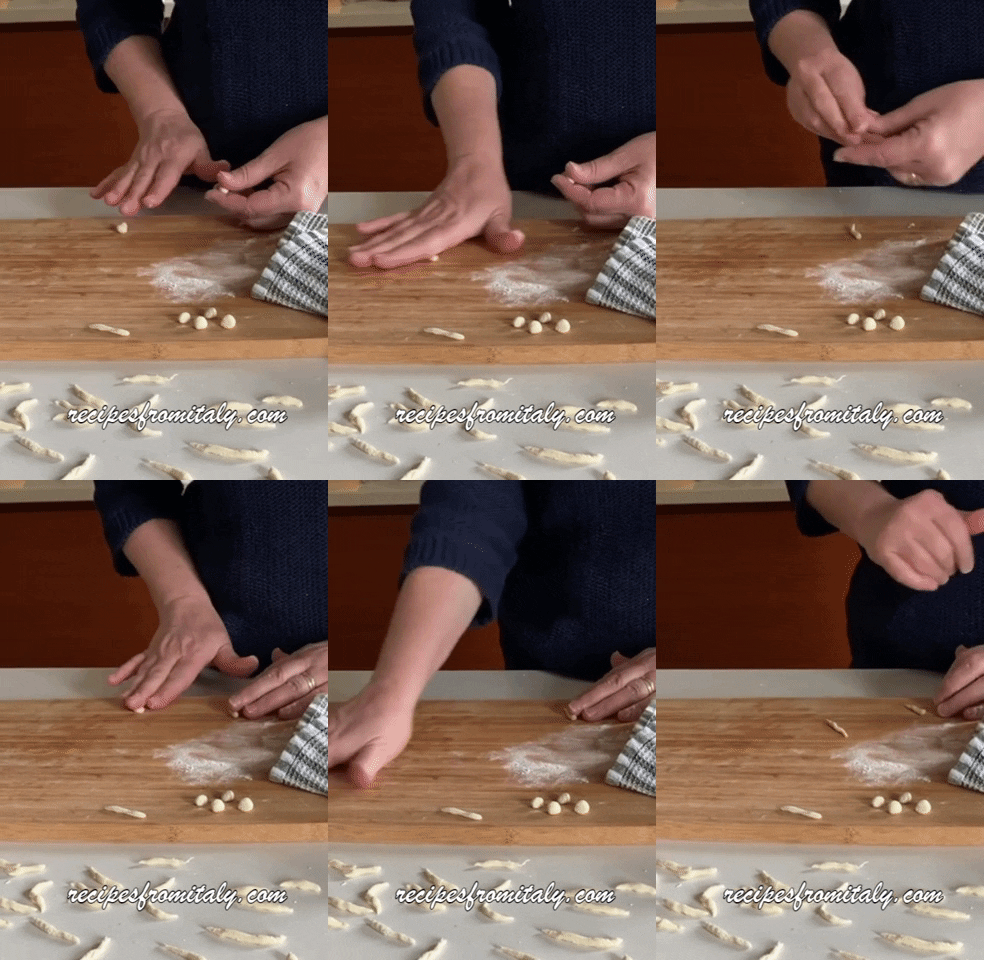
The movement must take place obliquely or diagonally and not in a straight line. This will give the Trofie the classic twisted shape, with the ends being thinner than the central part which is thicker.
Do the same thing until you have finished all the dough. When you see that the Trofie pasta are struggling to roll up, pass a damp napkin on the pastry board or moisten your hands with water.
Tips
How to Cook Fresh Homemade Trofie Pasta
Put the water in a large pot. Remember: one liter of water for every 100 g / 3.50 oz of pasta and 15 g / 0.50 oz of coarse salt per liter of water. When the water boils, add the salt and reduce the heat to low.
Then pour in the fresh homemade trofie pasta a little at a time, mix and raise the heat. Cook them for about 5 minutes.
How to Season Trofie Pasta
Drain them, leaving aside a little of the cooking water. Season with basil pesto, tomato sauce or just unsulted butter and Parmigiano cheese.
With Trofie al pesto you can add potatoes and green beans to make the famous Italian recipe Trofie alla Genovese.
If necessary, add 1 or 2 tablespoons of cooking water to make the sauces even more creamy.

Storage
You can dry Trofie pasta on a wooden tray, well spaced to prevent them from sticking. Store them for up to 2 days out of the fridge.
You can even freeze Trofie. Place them well spaced on a tray then freeze them. After about 1 day, collect and place them in a food bag. In this way you can always have them available when you want to make a terrific recipe with trofie pasta.
So take them out of the freezer and put them still frozen in plenty of boiling salted water. Cook for about 5 minutes and season to taste.

Tricks
In Italy some prefer to make Trofie pasta with wheat flour or with a mix of wheat flour and wholemeal flour. So if you want to use a mixture of flours, for 4 people you can use 300 g/10 oz of wheat flour and 100 g/ 3,5 oz of wholemeal flour. Trofie made with this flours have a less rustic texture and are less paler.
The amount of water needed for the preparation of homemade trofie recipe can vary according to the type of flour used. For this reason, the tip is to add water a little at a time, so as to manage the quantity perfectly.
A "trick" to make the starch absorb better, is to pour hot water. It will help you to make the dough more homogeneous and to work better the dough with your hands.
To make trofie in the best way, the little balls of dough must be a little moist, but not sticky. DO NOT flour the pastry board, otherwise Trofie will turn without slipping and will be elongated but not curled.

Variations
Let's see 2 typical Italian variants of the homemade trofie pasta recipe.
"Trofie Bastarde"
In addition to the classic version of trofie pasta made with durum wheat semolina flour, there are Trofie made with a mix of chestnut flour and wholemeal flour. They are called "bastarde" in the popular language.
They are famous in Italy, especially in the Ligurian traditional cousine. Trofie Bastarde have a sweet and delicate flavor and are often seasoned with walnut sauce.
Black Trofie
A variant of the traditional Trofie pasta is the one made with cuttlefish black ink. You can use fresh cuttlefish black ink or the packaged one, which is easier to find.
Add 12 g /0.4 oz of black ink to the flour, then add the water slowly. The dough must be very consistent. The only flaw of this type of pasta is that you get your hands very "dirty". If you can, it wouldn't hurt to use gloves...
So knead the dough until it's homogeneous in color. Don't worry if it seems more gray than black: it shines and darkens during cooking. These trofie are perfect with fish-based sauces.

Origins, History and Curiosities
It's said that Trofie pasta was born at the time of the Crusades, in the area overlooking Golfo Paradiso. That is between the towns of Sori, Recco and Camogli, in the province of Genoa.
Trofie recipe was as a family product. They made them at home, until about fifty years ago, some traders in the area decided to expand their business. Trofie recipe spread quickly and was very successful.
The word "trofie" in the Ligurian dialect, before the spread of this type of pasta, had always and only indicated gnocchi.
The name of the trofie has uncertain origins: according to some, it could come from the Genoese dialect "strufuggiâ" which means "to rub", to indicate the movement necessary to give the pasta its classic rolled shape.
According to others, however, the name "trofie" could come from Greek words such as "trophe", which means "to twist".
Since 1985, every August in the town of Sori (Genoa) there is a festival dedicated to the Trofie pasta and their most famous condiment: the basil Pesto.
More Semolina Pasta Recipes to Try
Recipe Card

How to Make Homemade Trofie Pasta

Ingredients
- 400 g semolina flour 2 ⅔ cups
- 200 ml water ¾ cup
- ⅓ teaspoon salt
Instructions
- Place the flour on your work surface. Then make a hole in the center. Add the fine salt and pour the water, a little at a time, in order to use what is needed to make an elastic and homogeneous mixture.
- Knead with your hands vigorously for 5-10 minutes. If the dough is too soft, add more flour. If you are not able to work it because it's too hard then wet your hands with water - or add very little water - and keep kneading.
- The dough must be compact and must not stick to your hands. Then form a loaf and let it rest at room temperature for about 30 minutes covered with a cotton cloth.
- Then remove a few pieces of dough and make very small balls, as big as a hazelnut. Keep the rest of the dough covered to prevent it from drying out. Roll the dough balls under the palm of your hand on the pastry board. The movement must take place obliquely or diagonally and not in a straight line. This will give the Trofie the classic twisted shape, with the ends being thinner than the central part which is thicker.
- Do the same thing until you have finished all the dough. When you see that the Trofie pasta are struggling to roll up, pass a damp napkin on the pastry board or moisten your hands with water.
Leave a Reply