
Pecorino Romano and Parmigiano Reggiano are two of the most famous Italian cheeses, and people often confuse them. Both are hard cheeses used grated over pasta, but they differ in important ways.
The main difference lies in the type of milk. Pecorino Romano is made from sheep’s milk, while Parmigiano Reggiano comes from cow’s milk. This gives them very different flavors, textures, and uses in cooking.
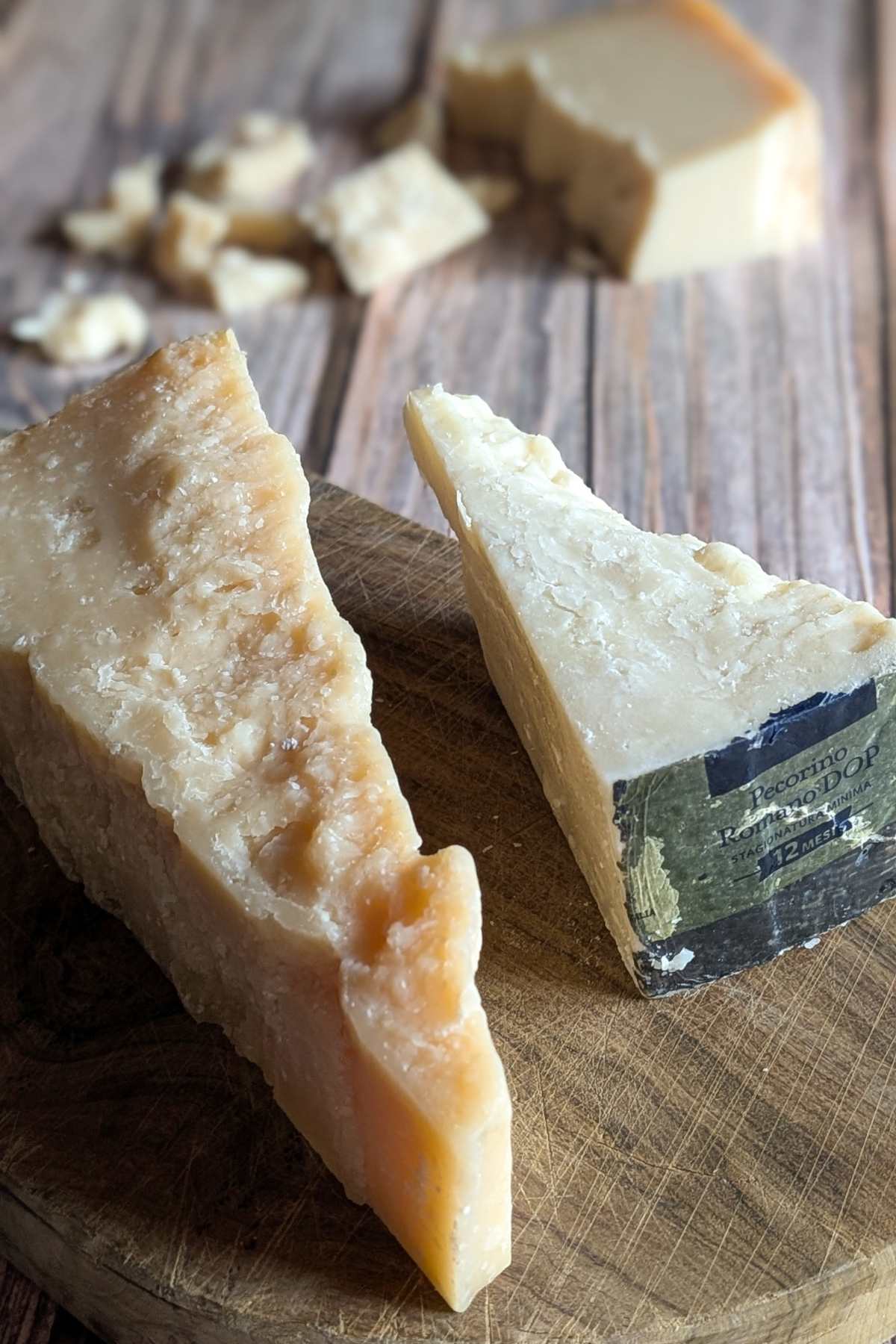
In Italian cuisine, cooks use these cheeses in different ways. Pecorino Romano plays a key role in traditional Roman pasta recipes such as Carbonara and Cacio e Pepe, while Parmigiano Reggiano appears more often in dishes from northern Italy.
Understanding the difference between these two cheeses helps you choose the right ingredient and achieve authentic flavor in your recipes.
Jump to:
Key Differences at a Glance
Pecorino Romano vs Parmigiano Reggiano is a common comparison in Italian cooking, especially when choosing the right cheese for pasta dishes.
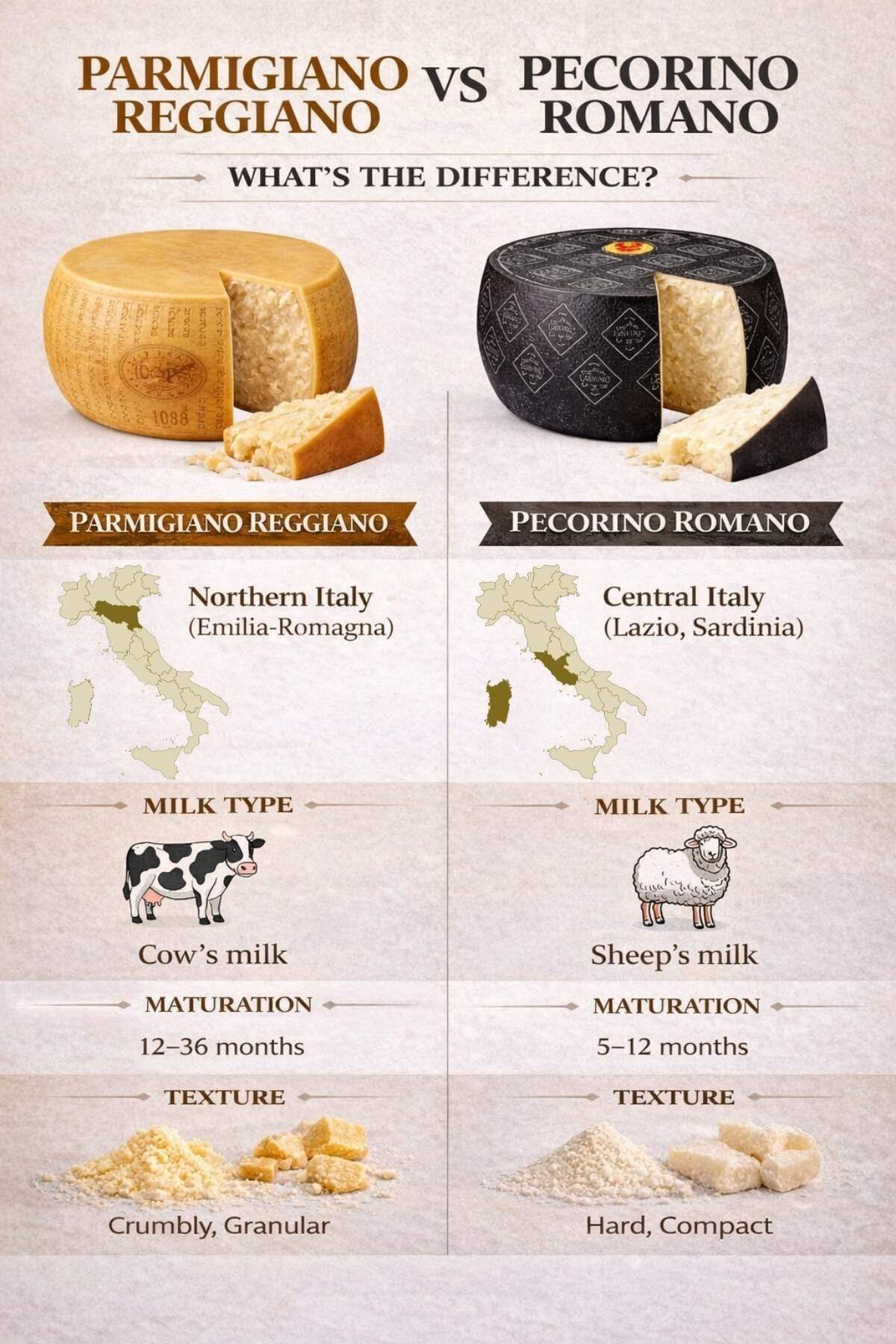
Pecorino Romano and Parmigiano Reggiano differ in several key aspects, including the type of milk, flavor, aging process, and geographic origin.
The table below summarizes the main differences between these two iconic Italian cheeses. Pecorino Romano has a stronger and saltier taste, while Parmigiano Reggiano offers a milder and more balanced flavor.
Cooks typically use Pecorino Romano in traditional Roman pasta recipes such as Cacio e Pepe and Carbonara. Parmigiano Reggiano appears more often in dishes from northern Italy, where its milder flavor complements a wider range of ingredients.
Pecorino Romano vs Parmigiano Reggiano: Key Differences
| FEATURE | PECORINO ROMANO | PARMIGIANO REGGIANO |
| Milk | Sheep’s milk | Cow’s milk |
| Origin | Central Italy (Lazio, Sardinia) | Northern Italy (Emilia-Romagna) |
| Flavor | Strong, salty, sharp | Milder, nutty, balanced |
| Aging | 5–12 months | 12–36 months |
| Texture | Hard, compact | Crumbly, granular |
| Typical Use | Roman pasta dishes | Pasta, risotto, vegetables |
While both cheeses are excellent, each one plays a different role in Italian cooking.
Origin and Production
Parmigiano Reggiano and Pecorino Romano come from different parts of Italy and follow distinct production traditions.
Producers make Parmigiano Reggiano only in a specific area of northern Italy, including the provinces of Parma, Reggio Emilia, Modena, and parts of Bologna and Mantua. They use cow’s milk from local farms and follow a traditional process that dates back to the Middle Ages. The cheese must age for at least 12 months, but many wheels mature for much longer.
Pecorino Romano comes from central Italy. Today, most of its production takes place in Sardinia, with smaller quantities made in Lazio and in the province of Grosseto in Tuscany. Producers use whole sheep’s milk and lamb rennet, following traditional methods such as dry salting. The minimum aging period is about 5 months.
Both cheeses are protected by the DOP (Protected Designation of Origin) certification. This label guarantees that producers follow strict rules regarding origin, ingredients, and production methods.
These differences in origin and production play a key role in shaping the flavor and character of each cheese.
Flavor and Texture
Pecorino Romano and Parmigiano Reggiano differ greatly in both flavor and texture.
Pecorino Romano has a strong, salty, and sharp taste. As it ages, the flavor becomes more intense and slightly spicy. This bold character makes it ideal for simple dishes where the cheese plays a central role.
Parmigiano Reggiano has a milder and more balanced flavor. It often develops nutty notes, with hints of butter and dried fruit, especially in longer-aged versions. Its taste is complex but less aggressive than Pecorino Romano.
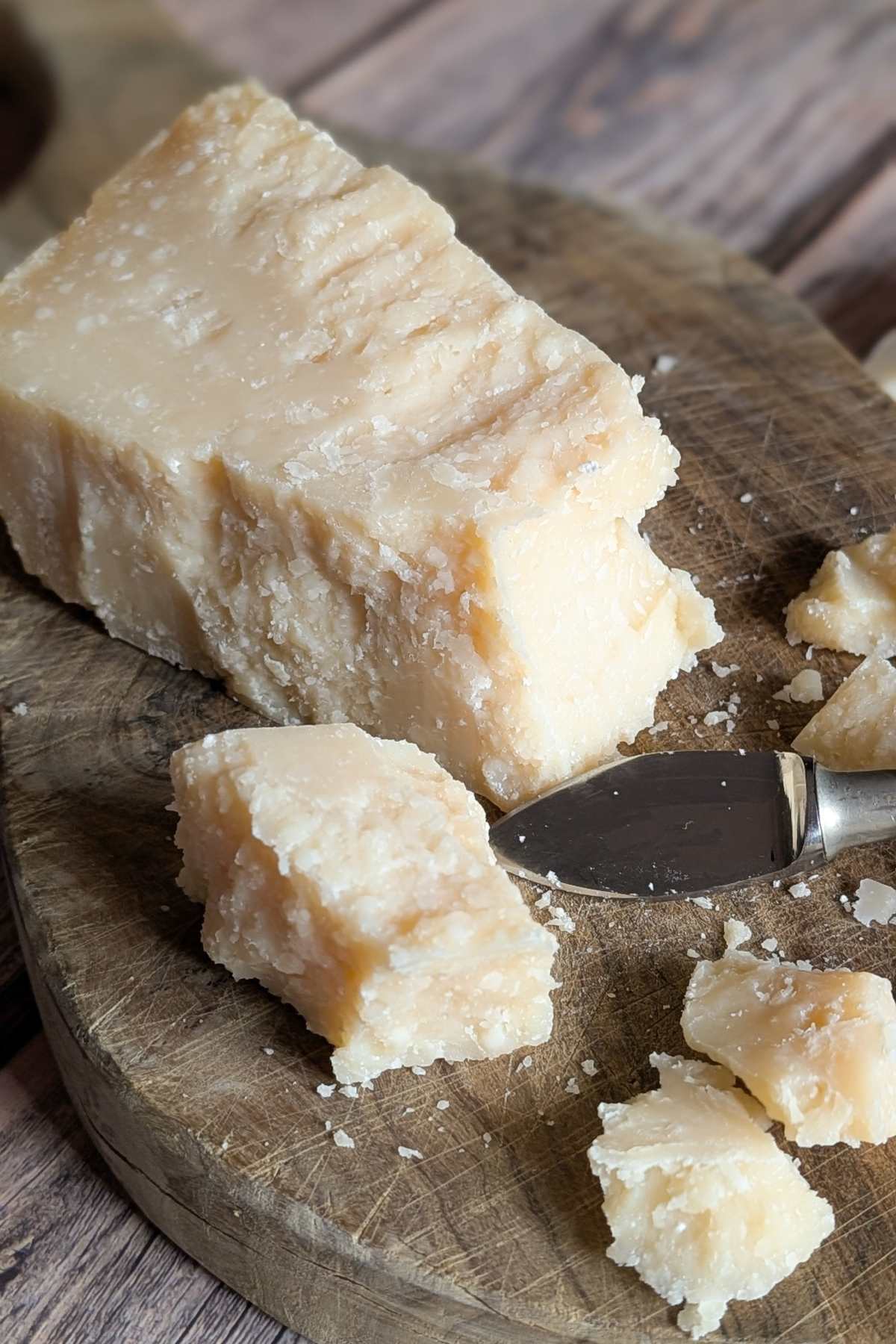
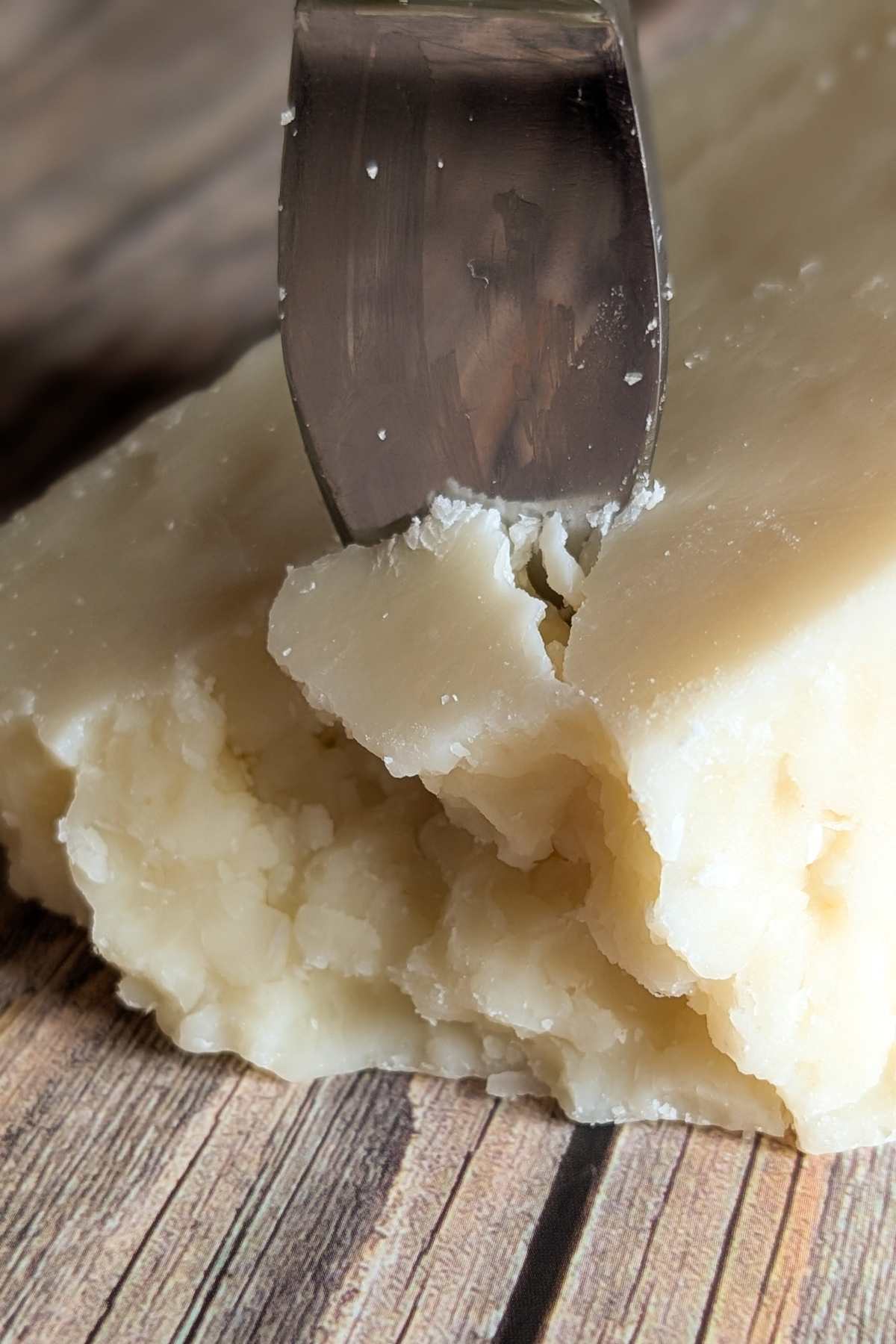
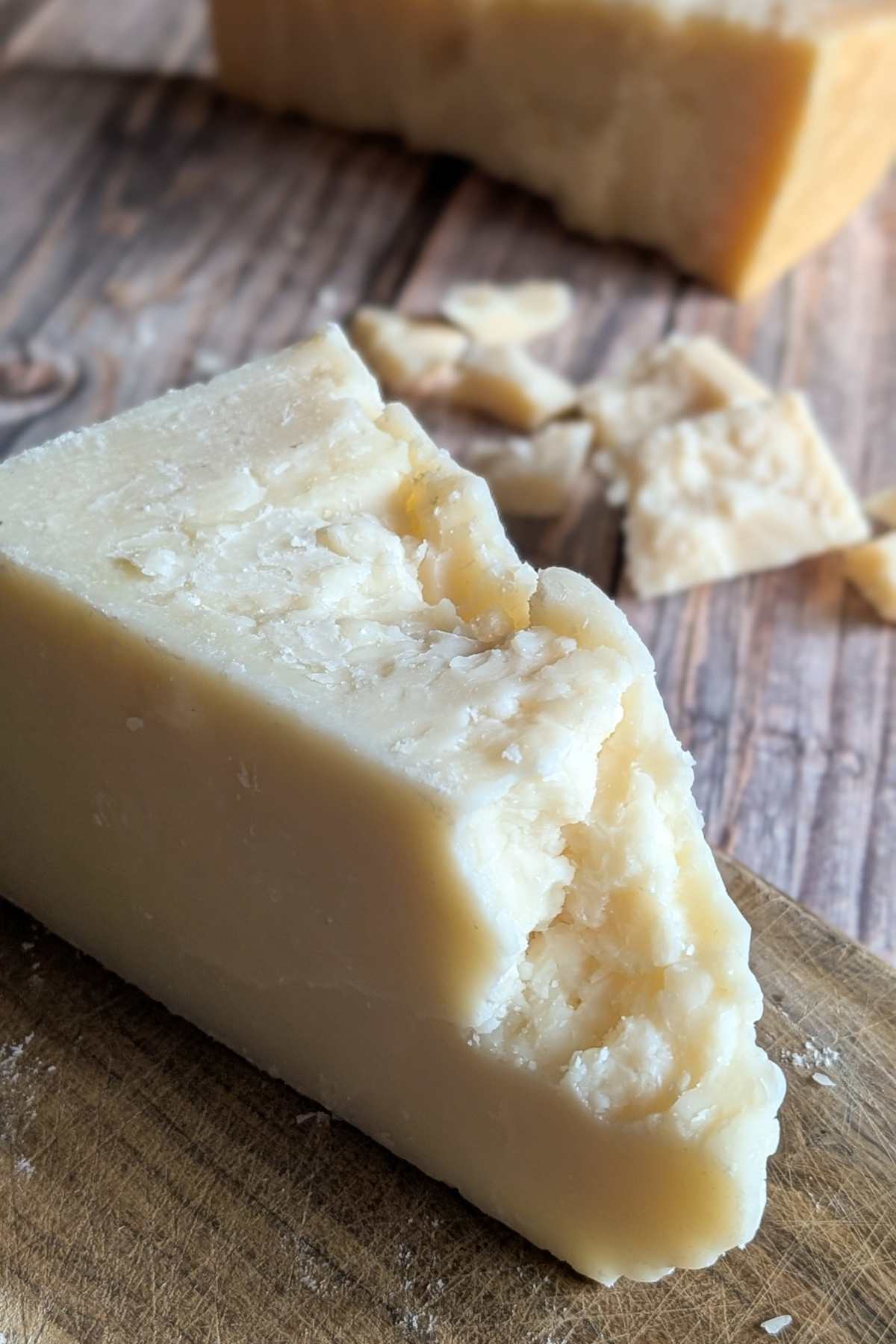
The texture also differs. Pecorino Romano is hard and compact, which makes it perfect for fine grating. Parmigiano Reggiano has a more crumbly and granular texture, often with small crystals that form during aging.
Because of these differences, the two cheeses behave differently in cooking. Pecorino Romano melts quickly and adds a strong savory flavor, while Parmigiano Reggiano blends more gently into a dish.
How They Are Used in Cooking
Cooks use Pecorino Romano and Parmigiano Reggiano in different ways, depending on the dish and the flavor they want to achieve.
Pecorino Romano plays a central role in traditional Roman pasta recipes. Dishes such as Cacio e Pepe, Carbonara, Gricia and Amatriciana rely on its strong and salty flavor. In these recipes, the cheese melts with hot pasta and cooking water to create creamy sauces without adding butter or cream.
Parmigiano Reggiano is more versatile. Cooks use it in a wide range of dishes, from pasta and risotto to soups and vegetables. Its milder flavor blends easily with other ingredients and enhances a dish without overpowering it.
Because of its intensity, Pecorino Romano works best in simple recipes with few ingredients. Parmigiano Reggiano, on the other hand, adapts well to both simple and more complex preparations.
Choosing the right cheese depends on the recipe and on the balance of flavors you want to create.
Nutritional Differences
Pecorino Romano and Parmigiano Reggiano both provide high-quality protein, calcium, and essential nutrients.
Pecorino Romano usually contains more salt and slightly more fat, which contributes to its stronger and more intense flavor. For this reason, even a small amount can add a lot of taste to a dish.
Parmigiano Reggiano offers a more balanced nutritional profile. Its flavor feels milder, and many people find it easier to use in larger quantities without overpowering the dish.
Both cheeses are naturally lactose-free, thanks to their long aging process. During maturation, lactose breaks down into simpler compounds, making these cheeses suitable for most people with lactose intolerance.
When consumed in moderation, both Pecorino Romano and Parmigiano Reggiano can be part of a balanced diet.
Can You Substitute Pecorino Romano with Parmigiano Reggiano?
You can substitute Pecorino Romano with Parmigiano Reggiano, but the result will not be the same.
Pecorino Romano has a stronger and saltier flavor, while Parmigiano Reggiano is milder and more balanced. When you replace Pecorino Romano, the dish often tastes less intense and slightly sweeter.
In some recipes, the substitution works quite well. For example, in simple pasta dishes or vegetable-based recipes, Parmigiano Reggiano can provide a pleasant and balanced flavor.
However, in traditional Roman pasta recipes, Pecorino Romano plays a key role. Its sharp taste and ability to melt into a creamy sauce are essential to the final result.
If you want a closer match, you can mix the two cheeses. A blend of Pecorino Romano and Parmigiano Reggiano creates a more balanced flavor while keeping some of the intensity.
In general, use Pecorino Romano for authentic Roman dishes, and choose Parmigiano Reggiano when you want a milder and more versatile flavor.

Leave a Reply