
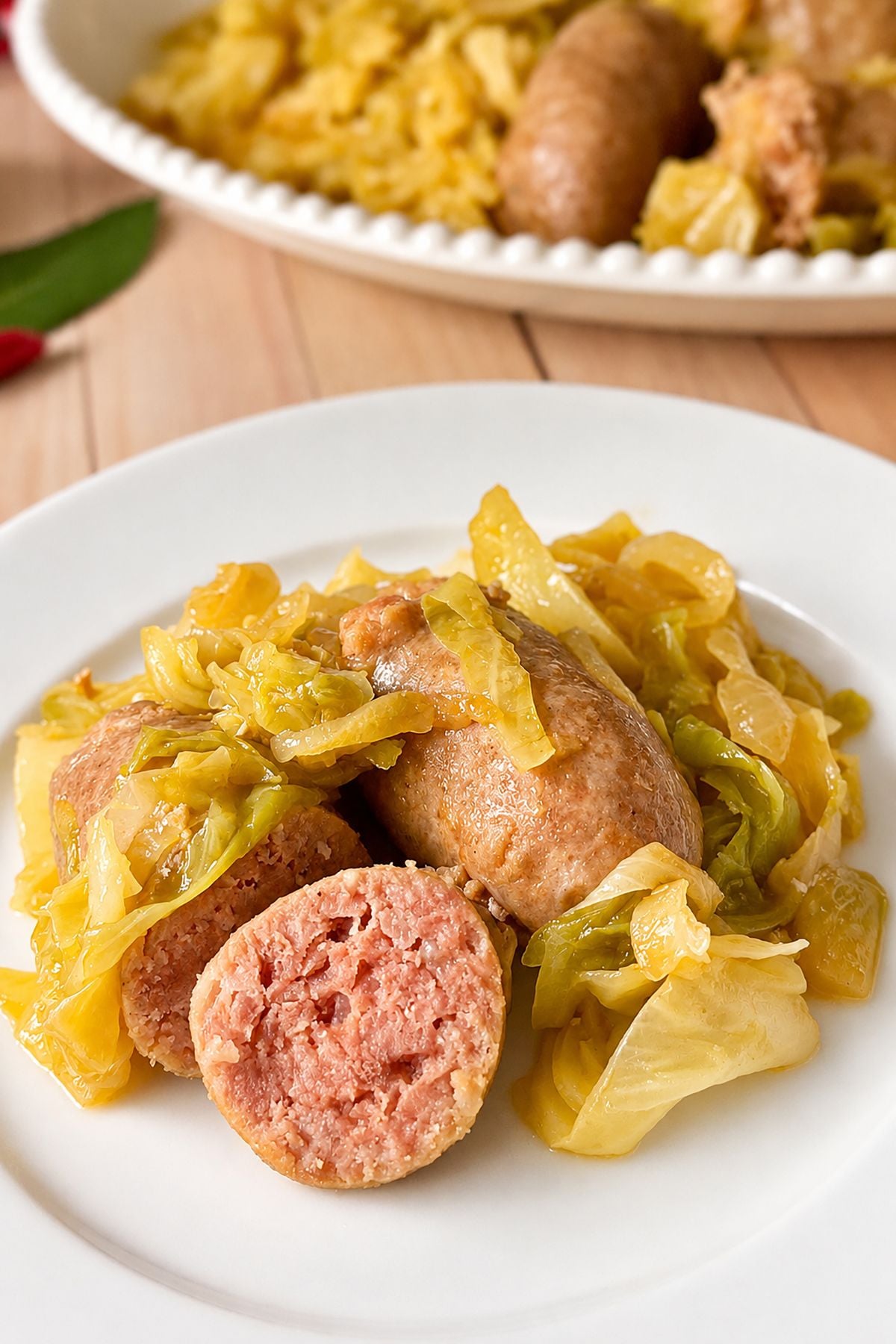
Italian Sausage and Cabbage is a rustic, comforting winter dish from Northern Italy. This Mantuan-style recipe combines fresh pork sausages with tender Savoy cabbage, gently braised with white wine and aromatic spices.
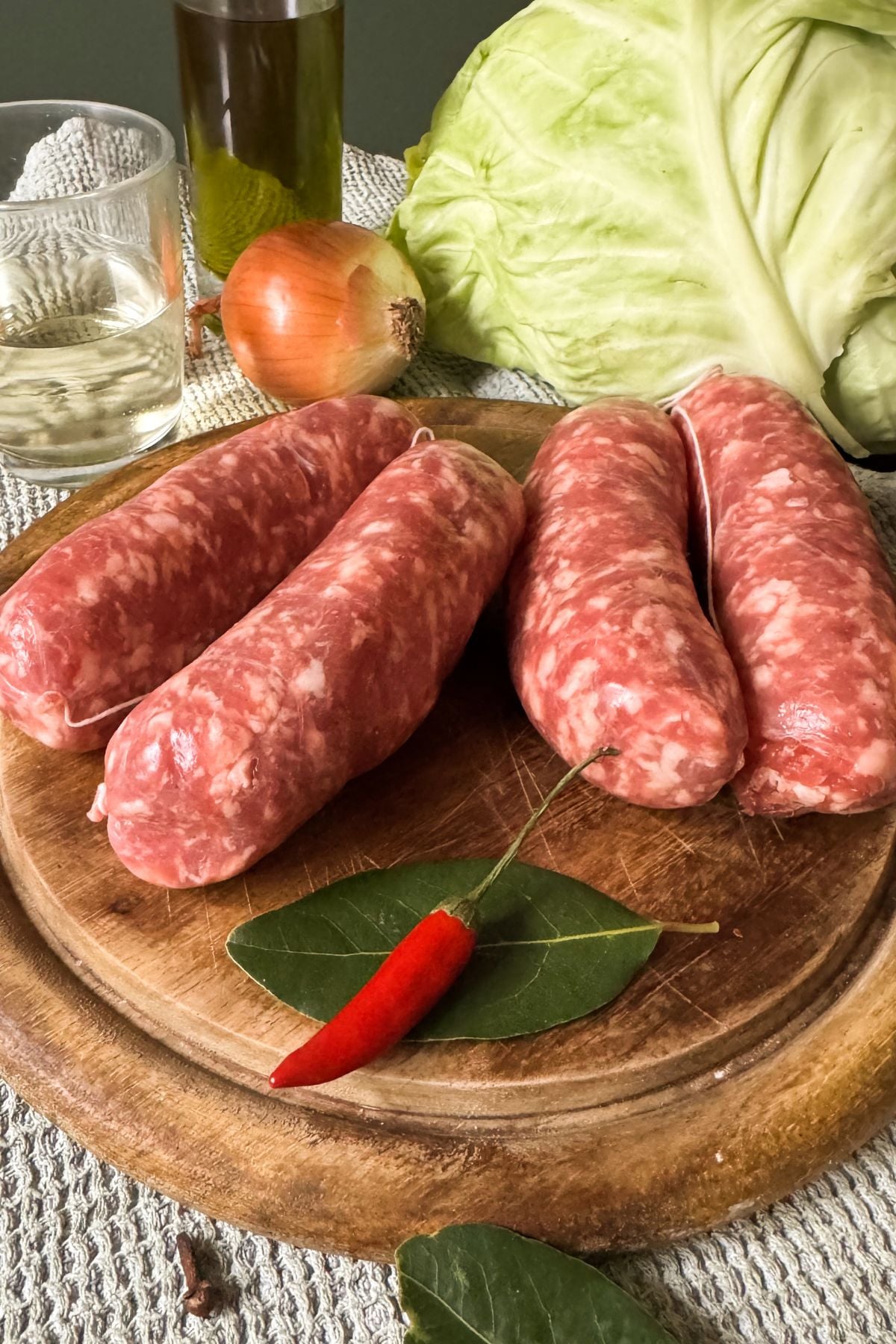
For this recipe, I use Mantuan salamella, a traditional fresh pork sausage from Lombardy, seasoned with garlic and black pepper. It has a distinctive, savory flavor that pairs beautifully with the delicate sweetness of cooked cabbage. If you can't find it, you can easily use another type of fresh Italian sausage.
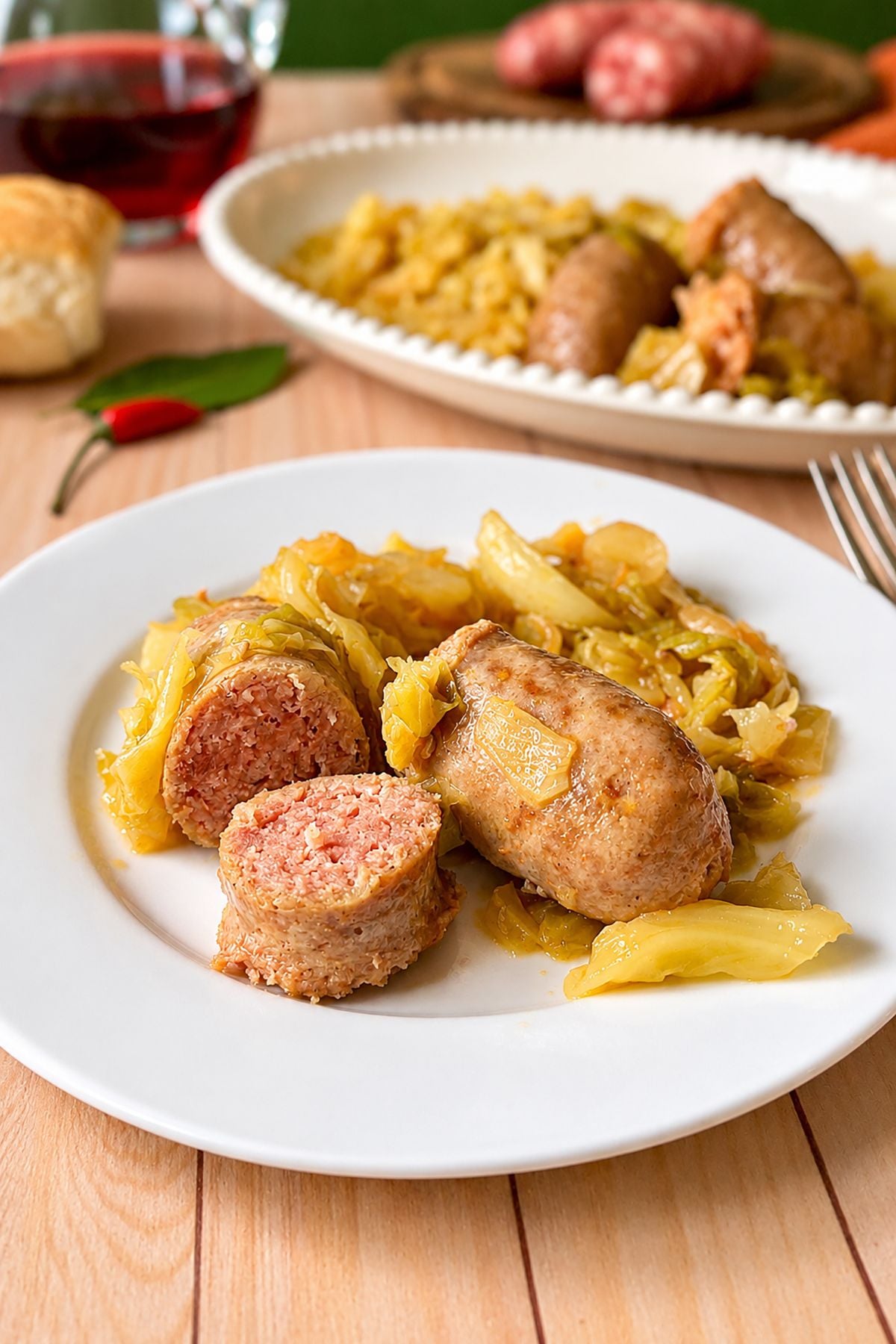
What makes this dish so special is its simplicity. With just a handful of ingredients and very little preparation, you can create a flavorful, satisfying meal inspired by the home cooking traditions of Mantua.
As the cabbage slowly softens, it absorbs the delicious juices released by the sausages, becoming tender and full of flavor. The result is a rich, hearty dish that's especially welcome during the colder months.
Serve this Italian sausage and cabbage hot, accompanied by creamy polenta or crusty bread to soak up the flavorful cooking juices. It's a wonderful choice for a cozy family lunch or a relaxed winter dinner.
Jump to:
Ingredients
Prep Time: 15 Min | Cook Time: 40 Min | Servings: 4
- 1 head Savoy cabbage (about 800 g / 1¾ lb)
- 4 Mantuan salamella sausages (see below for details and suitable substitutes)
- 1 medium white onion
- 1 fresh red chili pepper
- 1 bay leaf
- 2 whole cloves
- 150 ml (about ⅔ cup) dry white wine
- 1 tablespoon tomato paste (optional)
- 100 ml (about ⅓ cup plus 1 tablespoon) hot water
- 4 tablespoons extra virgin olive oil
- Salt, to taste
- Freshly ground black pepper, to taste
What Is Mantuan Salamella and What Can You Use Instead?
Mantuan salamella (salamella mantovana) is a traditional fresh pork sausage from the province of Mantua, in Lombardy, Northern Italy.
It's made from ground pork, typically lean shoulder meat and fatty trimmings from pork belly and ham, seasoned with salt, garlic, and black pepper, then stuffed into natural casings.
Mantuan salamelle are usually about 6–8 inches (15–20 cm) long and have a soft texture, a reddish color, and a delicate, savory flavor with a subtle hint of garlic. Unlike cured salami, salamella is always cooked before eating.
Pork has been an important part of Mantuan food culture for centuries. Archaeological discoveries at Forcello, an ancient Etruscan settlement near Mantua, show that pork was consumed in the area more than 2,500 years ago. Later, during the Renaissance, pork and cured meats were also part of the culinary traditions of the Gonzaga court.
Today, salamella remains a beloved specialty of Mantuan cuisine. It's traditionally grilled, cooked in a skillet with wine and herbs, or crumbled and used to prepare the famous riso alla pilota, a traditional Mantuan rice dish.
It's also delicious when slowly cooked with seasonal vegetables, as in this recipe with Savoy cabbage.
What Can You Use Instead of Mantuan Salamella?
If you live outside Italy, authentic Mantuan salamella may be difficult to find.
The closest substitute is fresh pork sausage seasoned with garlic and black pepper, preferably without fennel, to preserve the traditional flavor.
You can also use mild (sweet) Italian sausage, which is widely available in many grocery stores. Just keep in mind that Italian sausages often contain fennel or anise, giving them a slightly different flavor.
For this recipe, choose fresh, uncooked sausages rather than smoked or cured varieties. You can use them whole, just like traditional Mantuan salamelle.
Instructions
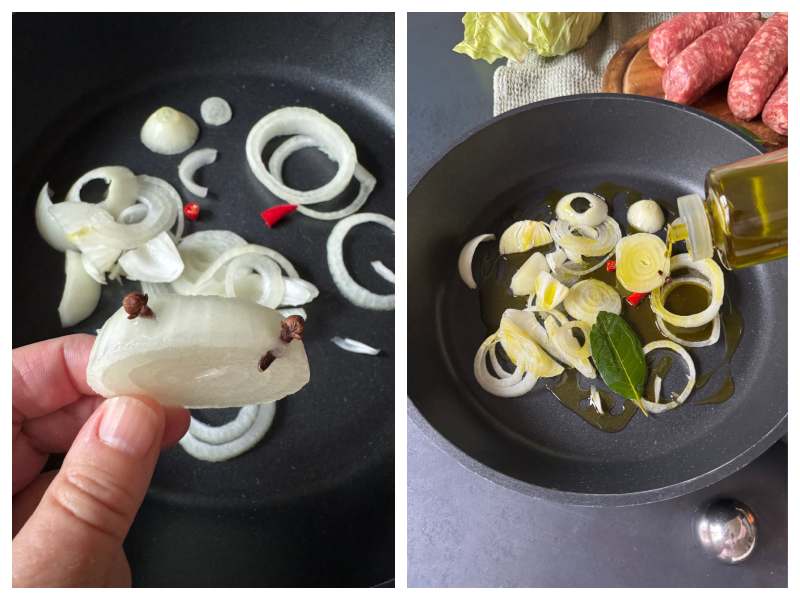
Step 1) - Peel the onion and cut it into thin slices. Reserve a small piece of onion and insert the two cloves into it.
This simple trick makes it easier to remove the cloves later.
Heat the extra virgin olive oil in a large, deep skillet over low heat. Add the sliced onion, the piece of onion with the cloves, the bay leaf, and the whole red chili pepper.
Sauté gently for a few minutes, until the onion begins to soften and the oil becomes fragrant.
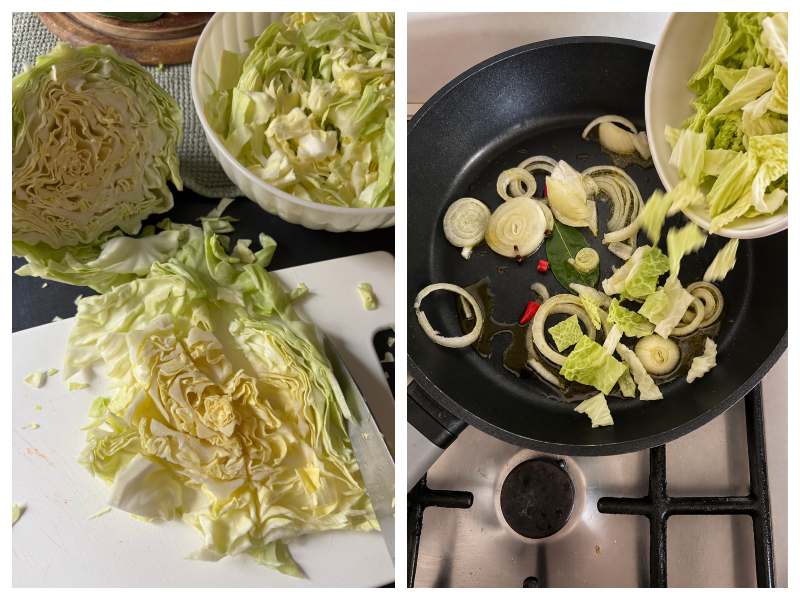
Step 2) - Meanwhile, remove any damaged outer leaves from the cabbage, rinse it, and cut it into thin strips, removing the tough core.
Add the sliced cabbage to the skillet with the onion and aromatics. Stir well to combine.
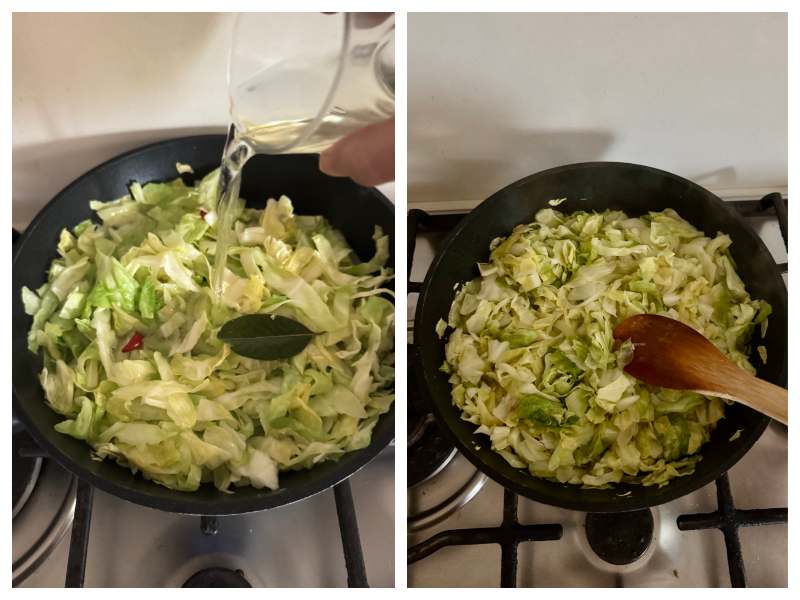
Step 3) - Increase the heat slightly and pour in the dry white wine. Stir and let the wine simmer for a few minutes, allowing most of the alcohol to evaporate.
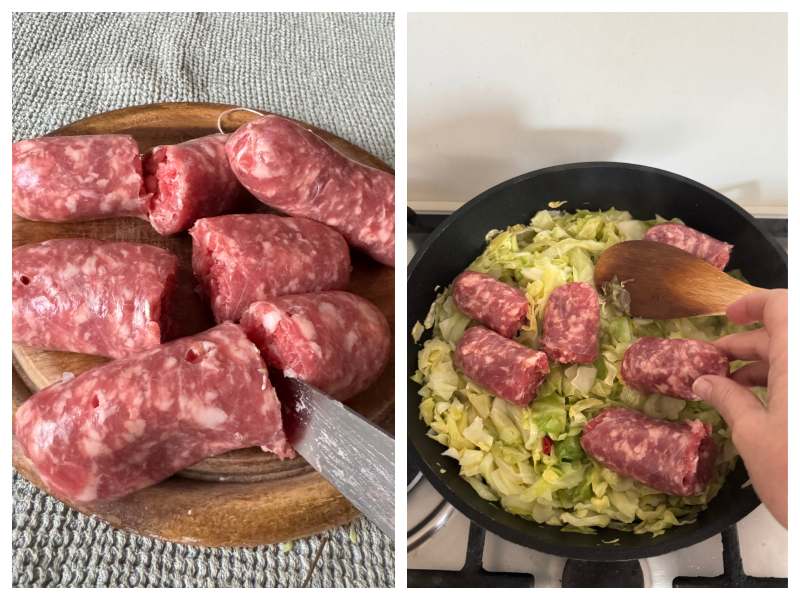
Step 4) - Remove any string or twine from the salamelle. Using the tip of a sharp knife or a fork, prick the casings a few times.
Note: If the sausages are particularly large, you can cut them in half or into smaller pieces before cooking.
Nestle the sausages among the cabbage.
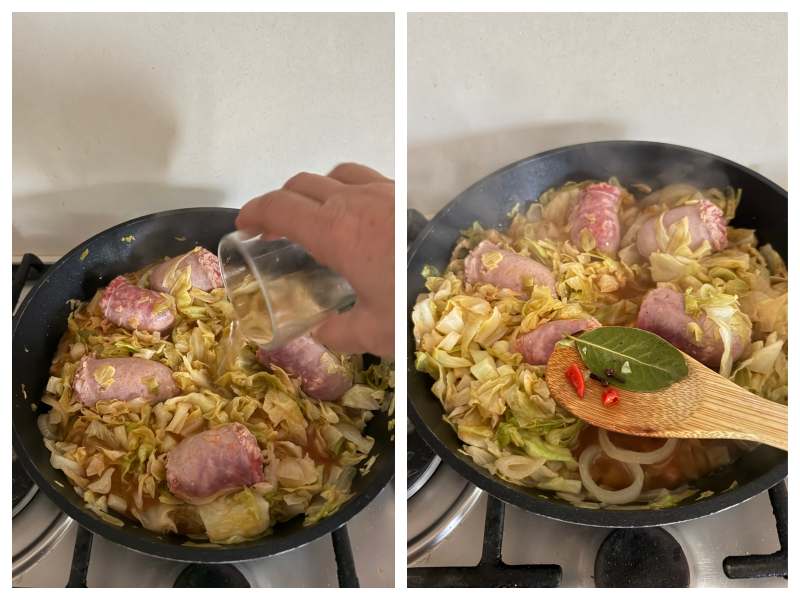
Step 5) - Pour in about 100 ml (⅓ cup plus 1 tablespoon) of hot water.
For a slightly richer flavor and a touch of color, you can also stir in 1 tablespoon of tomato paste.
Remove the bay leaf, chili pepper, and the piece of onion containing the cloves. Season lightly with salt and freshly ground black pepper, keeping in mind that the sausages are already seasoned.
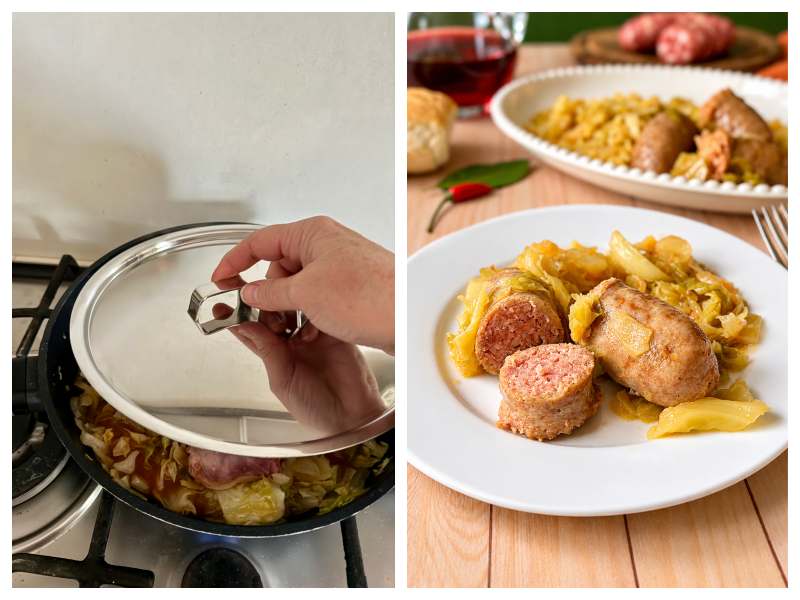
Step 6) - Cover the skillet with a lid and simmer over low heat for about 30 minutes, stirring occasionally and turning the sausages as needed.
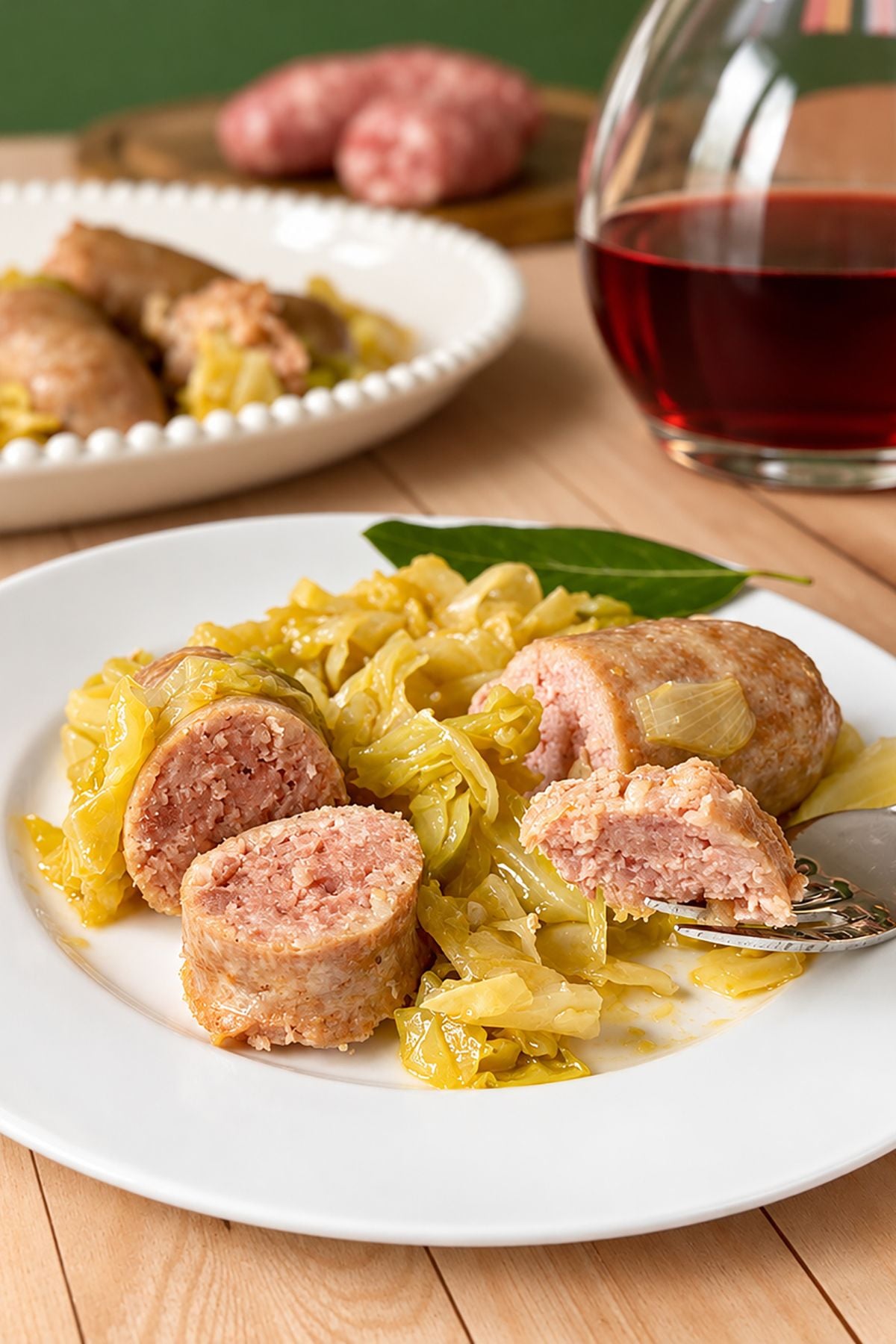
The dish is ready when the cabbage is soft and tender, the liquid has mostly reduced, and the sausages are fully cooked through.
Transfer the Italian sausage and cabbage to a serving platter and serve immediately, while still hot.
Tips for Making Italian Sausage and Cabbage
- Cut the Savoy cabbage into thin, even strips. Remove the tough central core before slicing. Thinly sliced cabbage cooks more evenly and becomes tender, absorbing the flavorful juices released by the sausages.
- Cook gently over low heat. This dish is best when the cabbage has time to soften slowly alongside the sausages. Avoid cooking over high heat, which can cause the cabbage to stick to the pan or dry out before it becomes tender.
- Don't add too much water. Savoy cabbage releases moisture as it cooks, so you only need a small amount of additional liquid. The finished dish should be moist and tender, not soupy. If necessary, add a splash of hot water during cooking.
- Use the spices sparingly. Bay leaf, cloves, and chili pepper add a lovely aromatic touch, but they shouldn't overpower the delicate flavor of the salamella. Two whole cloves are enough to perfume the entire dish.
- Be careful with the salt. Fresh Italian sausages are already seasoned, so it's best to start with a little salt and adjust the seasoning toward the end of cooking.
- Let any excess liquid evaporate. If the cabbage is tender but there's still too much liquid in the skillet, remove the lid for the last few minutes. This allows the cooking juices to reduce and concentrate their flavor.
Variations and Substitutions
This traditional Italian sausage and cabbage recipe is easy to customize depending on your preferences and the ingredients you have available.
- Green cabbage instead of Savoy cabbage: If you can't find Savoy cabbage, regular green cabbage works well too. It has a firmer texture and may need a little extra cooking time to become tender.
- With tomato: For a richer flavor and a slightly reddish sauce, add 1 tablespoon of tomato paste, as suggested in the original recipe. Alternatively, use a few tablespoons of tomato passata for a more pronounced tomato flavor.
- Spicy or mild: Adjust the amount of red chili pepper to your taste. For a milder version, leave it out entirely. If you enjoy spicy food, add a pinch of crushed red pepper flakes.
- With potatoes: For an even heartier one-pan meal, add one or two potatoes, peeled and cut into small cubes. Add them with the cabbage and a little extra water, making sure they become tender before serving. If you love this combination, try my Italian Sausage and Potatoes, a delicious oven-baked recipe with rosemary and garlic.
How to Serve Italian Sausage and Cabbage
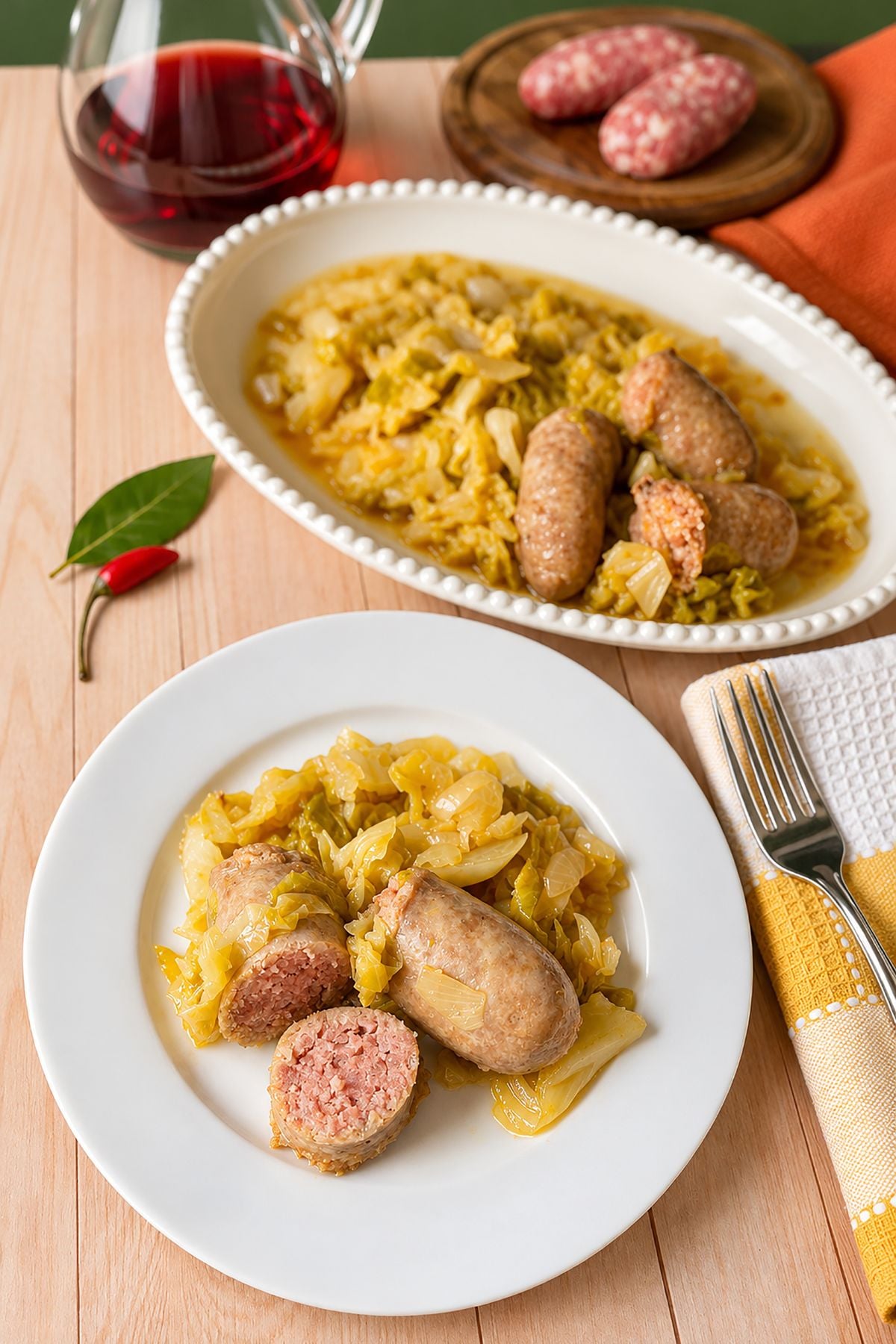
Italian sausage and cabbage is a hearty, satisfying dish that's best served hot, straight from the skillet. It makes a wonderful main course, especially during the colder months.
For a traditional Northern Italian meal, serve it with creamy polenta. Its soft, delicate texture pairs beautifully with the savory sausages and tender Savoy cabbage, soaking up all the flavorful cooking juices.
Another delicious option is homemade crusty Italian bread, perfect for making scarpetta, the Italian tradition of using bread to mop up the delicious juices left on your plate.
You can also enjoy this dish on its own, since the combination of sausage and cabbage is already quite filling.
Storage
Italian sausage and cabbage is best enjoyed freshly cooked, while the sausages are hot and the Savoy cabbage is tender and flavorful.
If you have leftovers, let them cool slightly and transfer them to an airtight container. Store in the refrigerator for up to 2 days.
To reheat, place the sausage and cabbage in a skillet with a tablespoon or two of water or broth. Cover and warm gently over low heat, stirring occasionally, until everything is heated through. Add a little more liquid if necessary to prevent the cabbage from drying out.
More Italian Sausage Recipes
If you enjoy the rich, savory flavor of Italian sausage, here are some more traditional Italian recipes to try, from comforting pasta dishes to rustic family favorites.
- Italian Stuffed Cabbage Rolls – Tender Savoy cabbage leaves filled with Italian sausage and mashed potatoes, then baked until deliciously flavorful.
- Italian Saffron Risotto with Sausage (Risotto alla Monzese) – A creamy Lombard risotto made with saffron and traditional pork sausage.
- Creamy Tagliatelle with Pumpkin, Sausage and Mushrooms – Fresh pasta with a creamy pumpkin and ricotta sauce, savory sausage, and mushrooms.
- Italian Sausage Stuffed Mushrooms – Baked mushrooms filled with sausage, Parmigiano Reggiano, and herbs, perfect as an appetizer or a small main course.
Recipe Card
Italian Sausage and Cabbage (Mantuan-Style)

Ingredients
- 1 head Savoy cabbage - about 800 g / 1¾ lb
- 4 Mantuan salamella sausages - see below for details and suitable substitutes
- 1 medium white onion
- 1 fresh red chili pepper
- 1 bay leaf
- 2 whole cloves
- 150 ml dry white wine - about ⅔ cup
- 1 tablespoon tomato paste - optional
- 100 ml hot water - about ⅓ cup plus 1 tablespoon
- 4 tablespoons extra virgin olive oil
- salt - to taste
- freshly ground black pepper - to taste
Instructions
- Peel the onion and cut it into thin slices. Reserve a small piece of onion and insert the two cloves into it.
- Heat the extra virgin olive oil in a large, deep skillet over low heat. Add the sliced onion, the piece of onion with the cloves, the bay leaf, and the whole red chili pepper.Sauté gently for a few minutes, until the onion begins to soften and the oil becomes fragrant.
- Meanwhile, remove any damaged outer leaves from the cabbage, rinse it, and cut it into thin strips, removing the tough core.
- Add the sliced cabbage to the skillet with the onion and aromatics. Stir well to combine.
- Increase the heat slightly and pour in the dry white wine. Stir and let the wine simmer for a few minutes, allowing most of the alcohol to evaporate.
- Remove any string or twine from the salamelle. Using the tip of a sharp knife or a fork, prick the casings a few times.Nestle the sausages among the cabbage.
- Pour in about 100 ml (⅓ cup plus 1 tablespoon) of hot water.
- Remove the bay leaf, chili pepper, and the piece of onion containing the cloves. Season lightly with salt and freshly ground black pepper, keeping in mind that the sausages are already seasoned.
- Cover the skillet with a lid and simmer over low heat for about 30 minutes, stirring occasionally and turning the sausages as needed.The dish is ready when the cabbage is soft and tender, the liquid has mostly reduced, and the sausages are fully cooked through.
- Transfer the Italian sausage and cabbage to a serving platter and serve immediately, while still hot.


Leave a Reply