
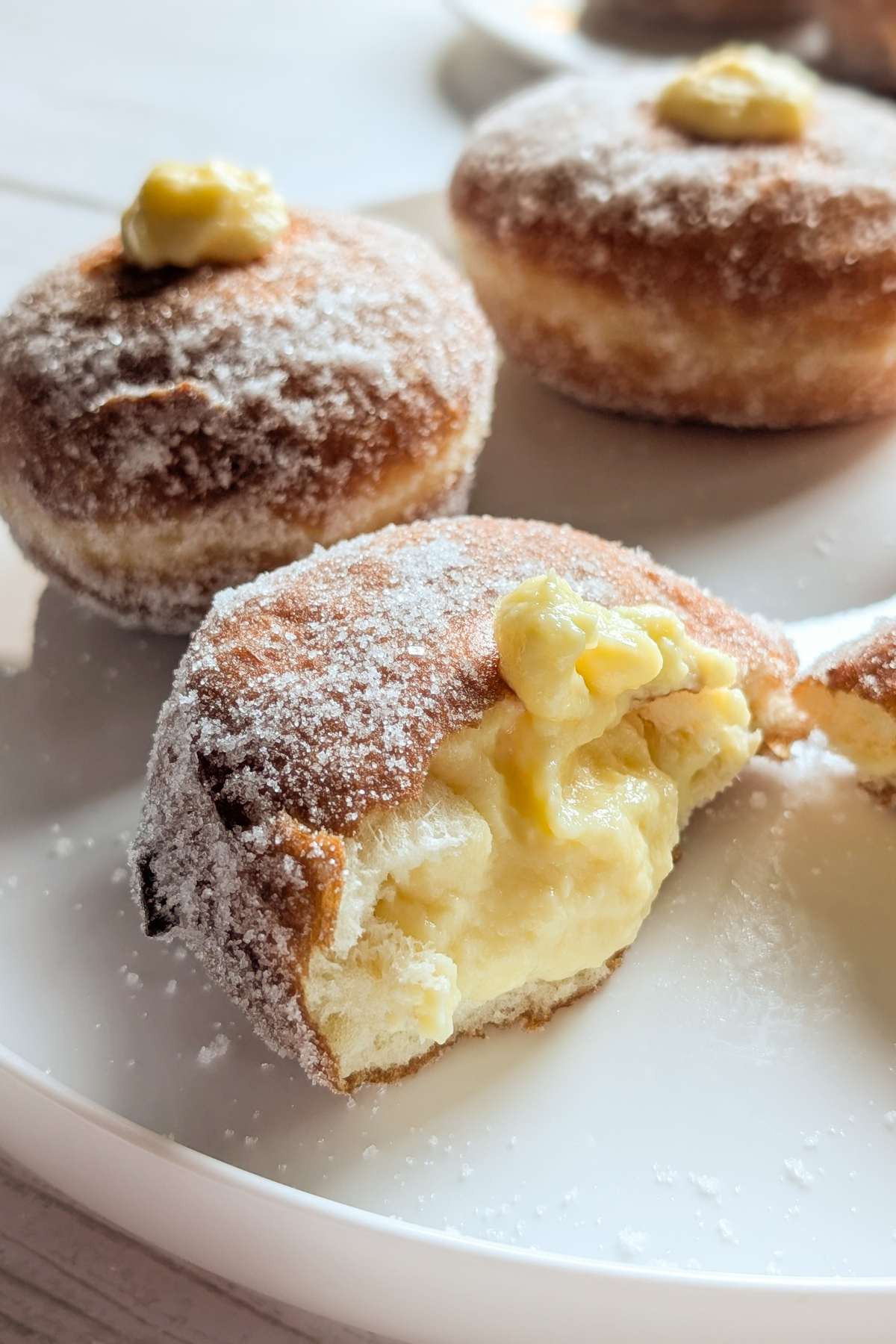
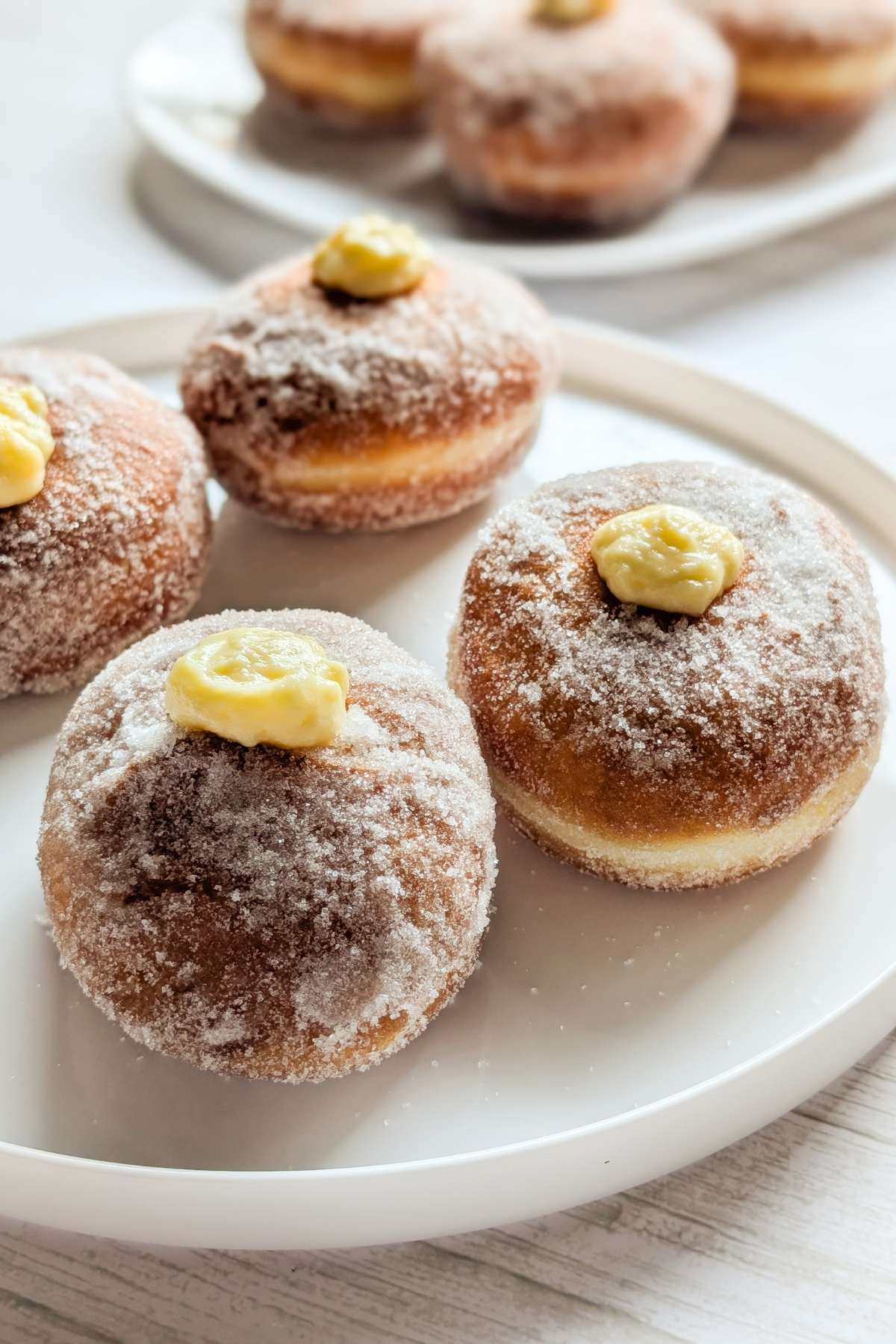
Bomboloni alla Crema are soft and fluffy Italian donuts filled with smooth lemon-scented pastry cream and generously coated in granulated sugar. Golden on the outside and wonderfully light inside, they are one of the most irresistible treats found in Italian pastry shops and cafés.
This Bomboloni alla Crema recipe shows you how to make them at home from scratch. The enriched yeast dough is prepared with milk, eggs and butter, then left to rise, rolled out and cut into rounds before being fried until beautifully golden. Once cooled, each bombolone is filled with homemade crema pasticcera.
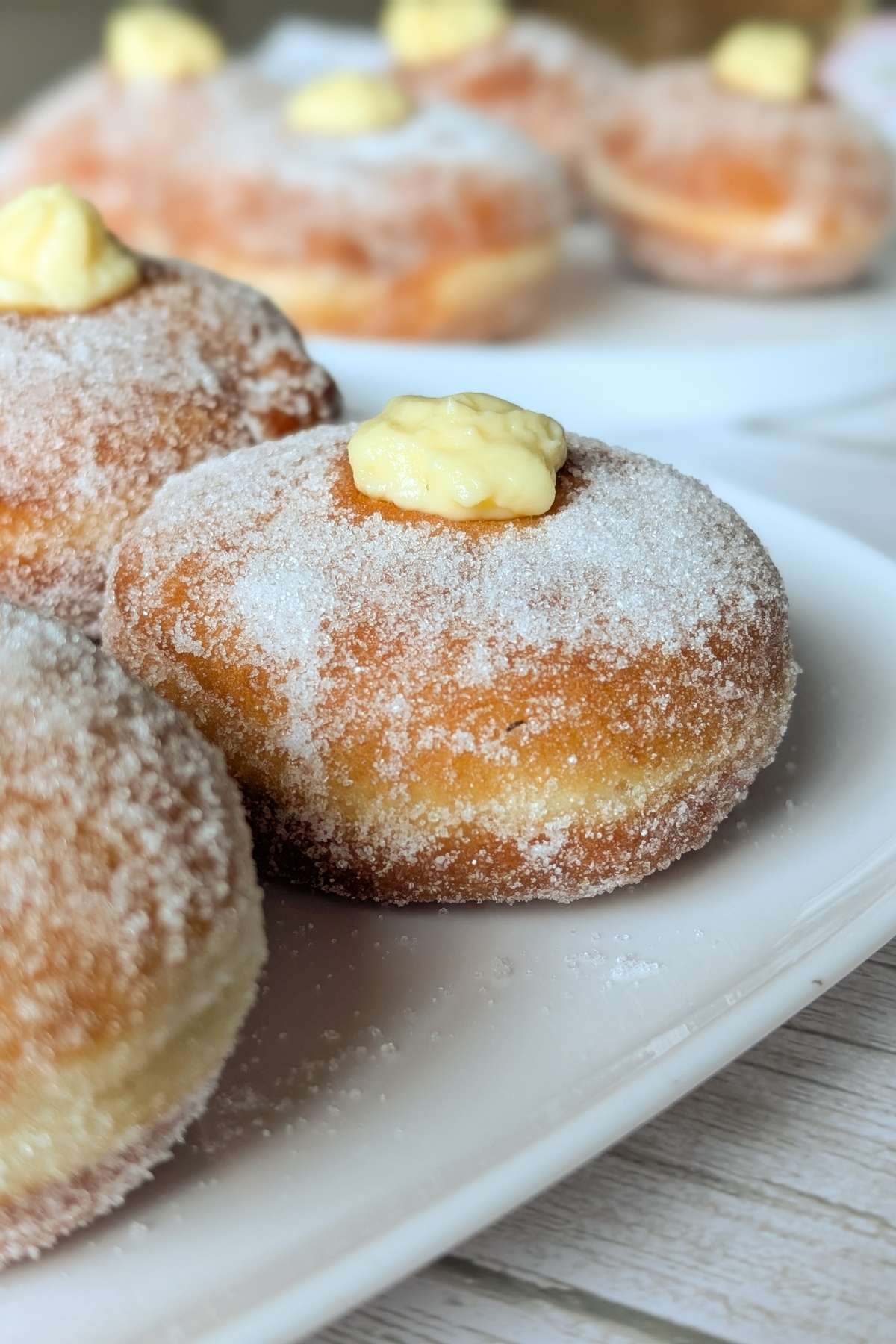
Unlike the classic ring-shaped donuts, Italian bomboloni are round and have no hole in the center. Their soft interior makes them perfect for filling with pastry cream, although they can also be prepared with chocolate cream, jam or other sweet fillings.
Making bomboloni takes a little time because the dough needs two separate rises, but the process is not difficult when you follow the steps carefully. The most important things are allowing the dough to rise properly and keeping the frying oil at a steady temperature. The result is a batch of fragrant, pillowy bomboloni that are best enjoyed freshly made.
Jump to:
- What Are Bomboloni alla Crema?
- Ingredients
- Kitchen Tools and Equipment
- How to Make Bomboloni alla Crema
- How to Make Bomboloni alla Crema
- How Long Should Bomboloni Dough Rise?
- How to Fry Bomboloni Perfectly
- Tips for the Best Homemade Bomboloni
- Bomboloni Fillings and Variations
- How to Store Bomboloni alla Crema
- History and Origins of Italian Bomboloni
- More Italian Fried Desserts and Cream-Filled Pastries
- FAQ
- Recipe Card
What Are Bomboloni alla Crema?
Bomboloni alla Crema are traditional Italian filled donuts made from a soft, enriched yeast dough. They are shaped into round, hole-free discs, fried until golden, coated generously with granulated sugar and filled with smooth crema pasticcera, the classic Italian pastry cream.
Bomboloni do not have a hole in the center. Their soft and airy interior is designed to hold a generous amount of filling. Pastry cream is one of the most traditional choices, but bomboloni can also be filled with jam, chocolate cream, hazelnut spread or pistachio cream.
In Italy, bomboloni are commonly found in pastry shops, cafés and bakeries. They are often enjoyed for breakfast with coffee or cappuccino, as an afternoon treat, or served freshly fried at fairs and seaside cafés. They are at their best when still fresh, with a light, fluffy interior, a golden surface and a delicate coating of crunchy sugar.
Ingredients
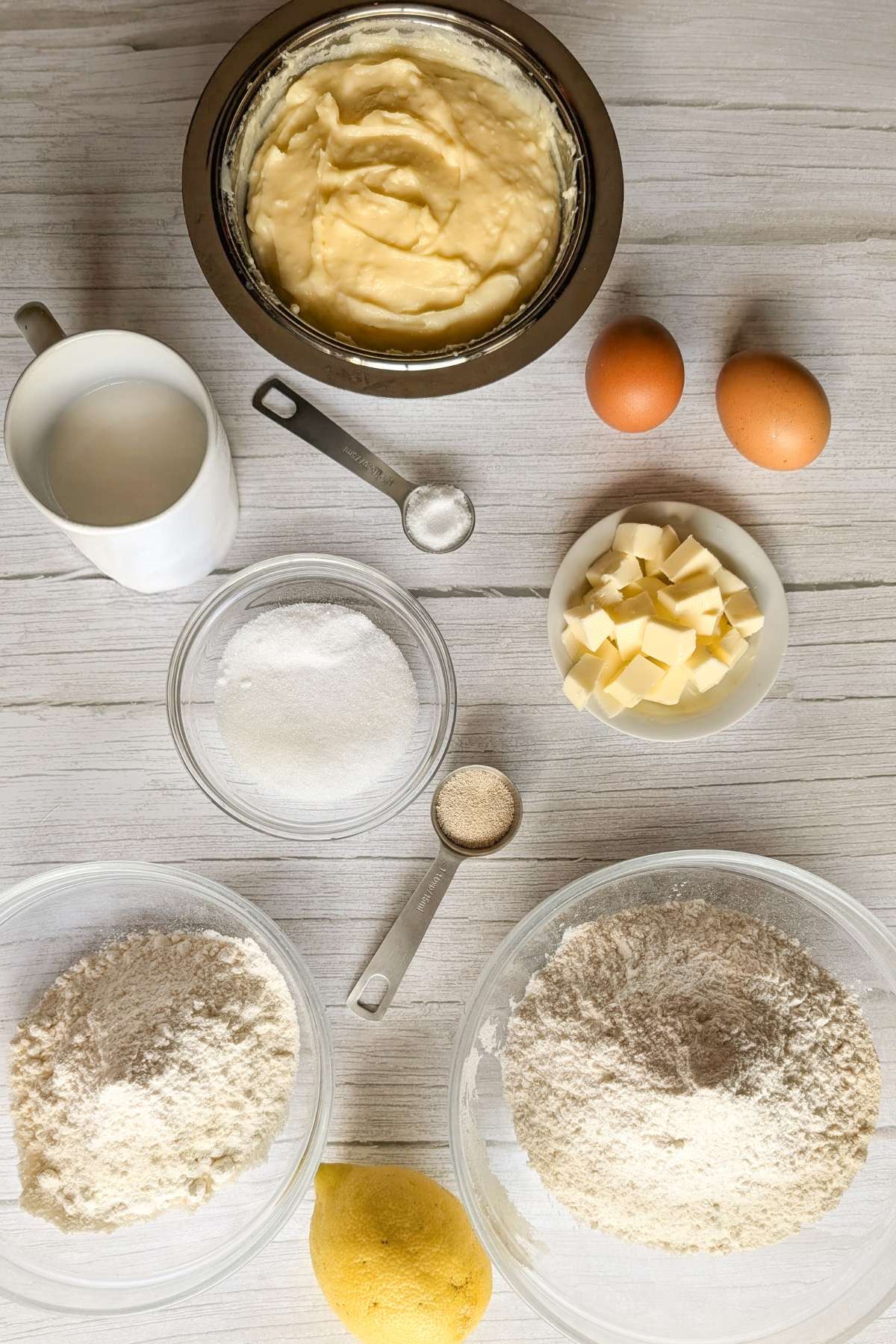
Prep Time: 40 Min | Rising Time: 3 Hours 30 Min | Cooking Time: 25 Min | Cooling Time: 1 Hour | Servings: 14 bomboloni (cutter size 8 cm/about 3 inches in diameter)
For the Crema Pasticcera (Italian Pastry Cream)
- 500 ml (2 cups) whole milk
- 4 large egg yolks, about 70-75 g (about 2.5 oz)
- 80 g (⅓ cup plus 1 tablespoon) granulated sugar
- 30 g (¼ cup) cornstarch
- Peel of ½ organic lemon
For the Bomboloni Dough
- 250 g (about 2 cups) Manitoba flour or strong bread flour
- 250 g (about 2 cups) Italian “00” flour
- 200 g (¾ cup plus 1 tablespoon and 1 teaspoon) whole milk, at room temperature
- 2 large eggs, about 100 g (3.5 oz) without the shells
- 80 g (⅓ cup plus 1 tablespoon) granulated sugar
- 70 g (5 tablespoons) unsalted butter, very soft but not melted
- 5 g (about 1½ teaspoons) instant dry yeast
- 8 g (about 1¼ teaspoons) fine salt
- Finely grated zest of ½ organic lemon
- 1 teaspoon vanilla extract
Flour note: Manitoba is a high-protein flour that gives the dough enough strength to support the eggs, butter and sugar. If it's not available, use strong bread flour. Italian “00” flour gives the bomboloni a softer and more delicate texture.
For Frying and Coating
- 1.5 liters (about 6⅓ cups) vegetable oil for frying, such as peanut, sunflower or canola oil
- 150–200 g (¾–1 cup) granulated sugar, for coating the bomboloni
Kitchen Tools and Equipment
You do not need professional pastry equipment to make Bomboloni alla Crema at home, but a few tools are especially helpful for working the dough, controlling the frying temperature and filling the bomboloni neatly.
- Stand mixer with dough hook: An enriched dough made with eggs, milk and butter needs to be kneaded thoroughly. A stand mixer makes it much easier to develop a smooth and elastic dough. You can knead it by hand, but it will take more time and effort.
- Large mixing bowl: Use a bowl large enough to allow the dough to double in volume during the first rise.
- Rolling pin: You will need it to roll the dough evenly to a thickness of about 1.5 cm (⅝ inch).
- 8 cm (about 3-inch) round cutter: This size produces medium-sized bomboloni that cook evenly and are easy to fill. Press the cutter straight down without twisting it.
- Parchment paper: Cut it into individual squares and place one bombolone on each. This allows you to transfer the risen dough into the hot oil without touching or deflating it.
- Wide, deep saucepan: The pan should be deep enough to hold plenty of oil while still leaving space at the top for safe frying. The bomboloni must be able to float without touching the bottom.
- Digital kitchen thermometer: This is one of the most important tools for the recipe. It allows you to check the oil quickly before and during frying and maintain a temperature of approximately 170°C (340°F).
- Frying skimmer: A wide frying skimmer makes it easier to turn the bomboloni gently and lift them from the oil without damaging them.
- Kitchen tongs: These are useful for removing the parchment paper from the oil after it separates from the dough.
- Paper towels: Use them to drain the bomboloni briefly after frying, before coating them with sugar.
- Piping bag with a long, plain nozzle: A long filling nozzle allows the pastry cream to reach the center of each bombolone. If you do not have one, make a small opening with the handle of a wooden spoon and use a regular plain nozzle.
How to Make Bomboloni alla Crema
Make the Crema Pasticcera
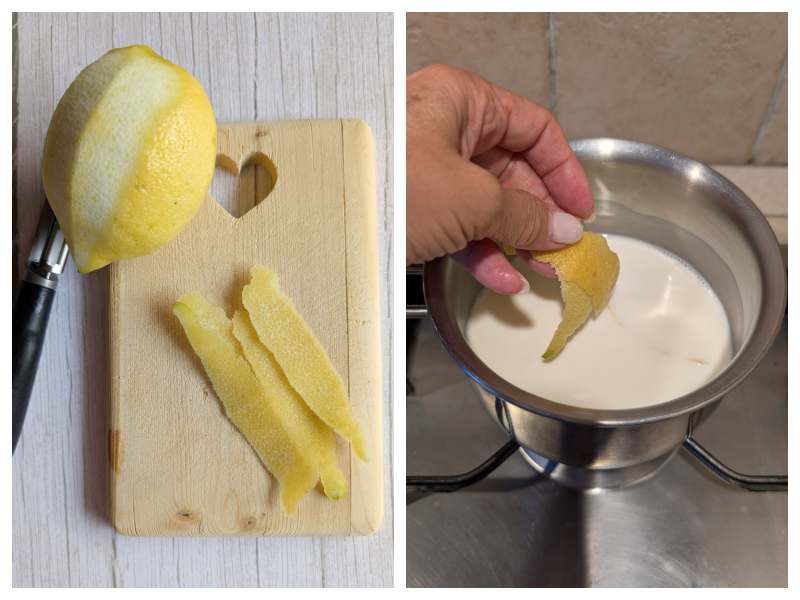
Step 1) - Pour the milk into a saucepan. Using a vegetable peeler, remove two or three wide strips of peel from half an organic lemon and add them to the milk.
NOTE: Use only the yellow outer part of the lemon peel, avoiding the bitter white pith underneath. Remove the peel in wide strips rather than grating it, so it can be easily taken out before cooking the pastry cream.
Heat the milk over medium-low heat until it's hot and begins to steam, but do not let it come to a full boil. Turn off the heat and leave the lemon peel to infuse for about 5 minutes.
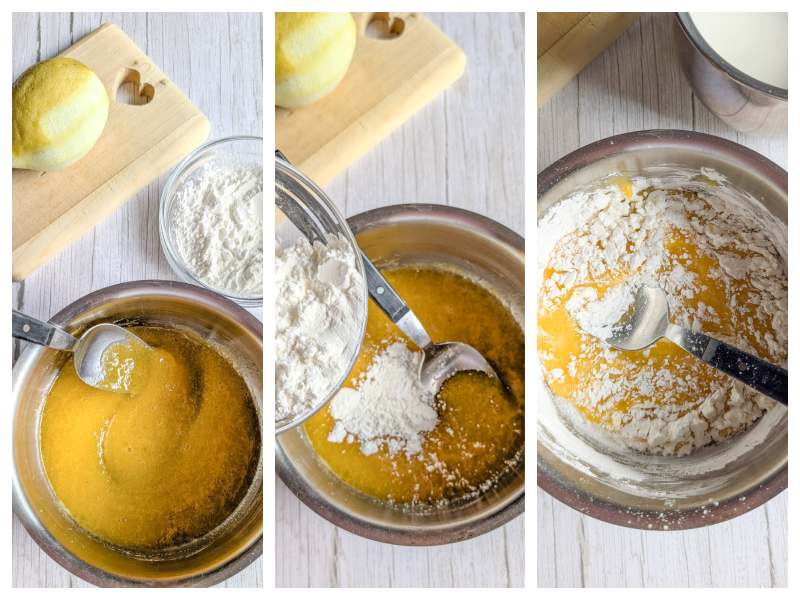
Step 2) - Meanwhile, place the egg yolks and sugar in a saucepan. Whisk briefly until combined.
Then add the cornstarch and mix until smooth and free of lumps.
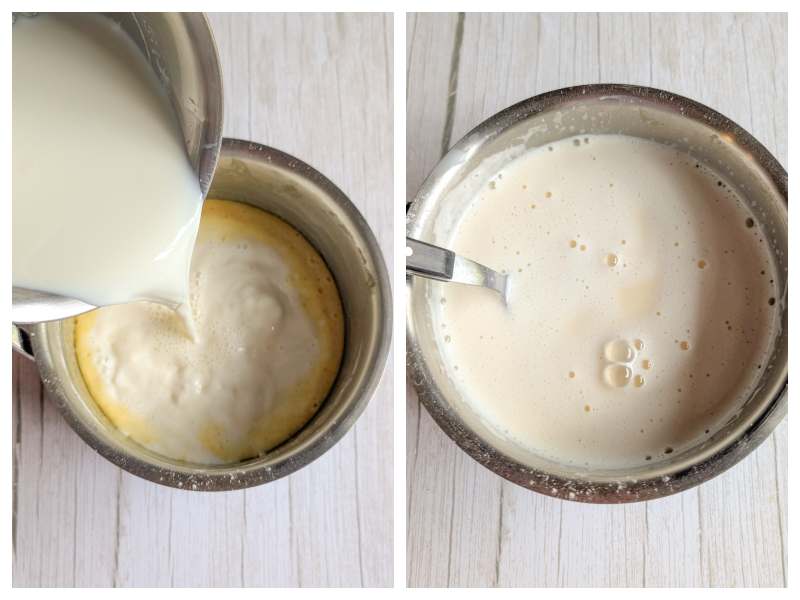
Step 3) - Remove the lemon peel from the milk. Gradually pour the warm milk into the egg mixture, whisking constantly.
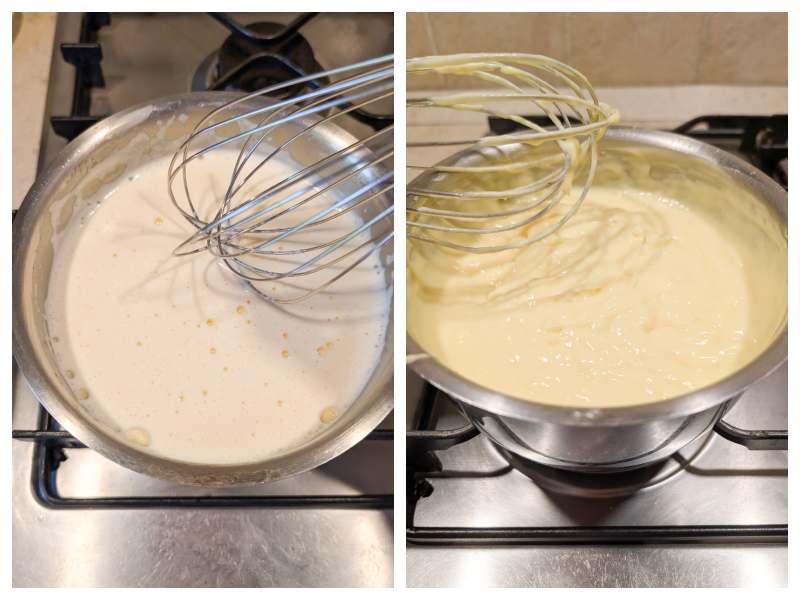
Step 4) - Cook over medium-low heat, stirring continuously with a whisk.
As soon as the pastry cream begins to thicken, continue cooking for about 30–60 seconds, until smooth and creamy.
For more information read the complete Crema Pasticcera Recipe.
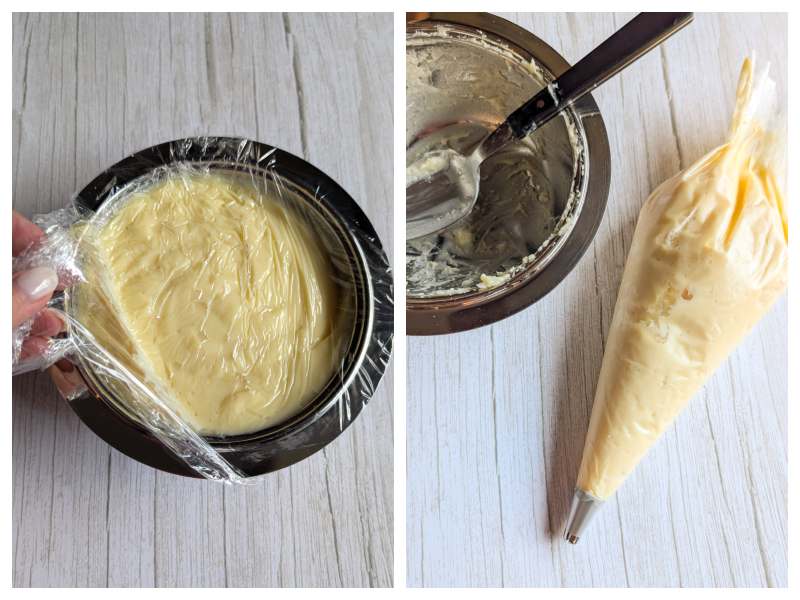
Step 5) - Transfer the pastry cream immediately to a shallow bowl or container. Cover the surface directly with plastic wrap to prevent a skin from forming.
Let it cool to room temperature, then refrigerate until completely cold.
Before filling the bomboloni, whisk the chilled pastry cream by hand for a few seconds to make it smooth and creamy again. Transfer it to a piping bag fitted with a long, plain nozzle.
NOTE: The pastry cream may appear quite thick once chilled. This is intentional: it needs to be firm enough to stay inside the bomboloni without leaking. Whisking it briefly before using will make it softer and easier to pipe.
How to Make Bomboloni alla Crema
Make the Bomboloni Dough
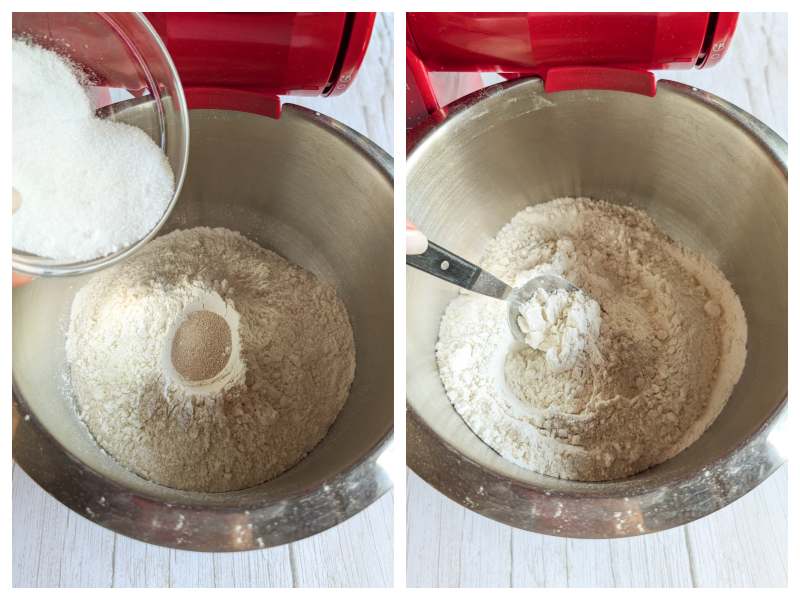
Step 1) - Place the Manitoba flour, “00” flour, dry yeast, granulated sugar and grated lemon zest in the bowl of a stand mixer. Stir briefly with a spoon to distribute the ingredients evenly.
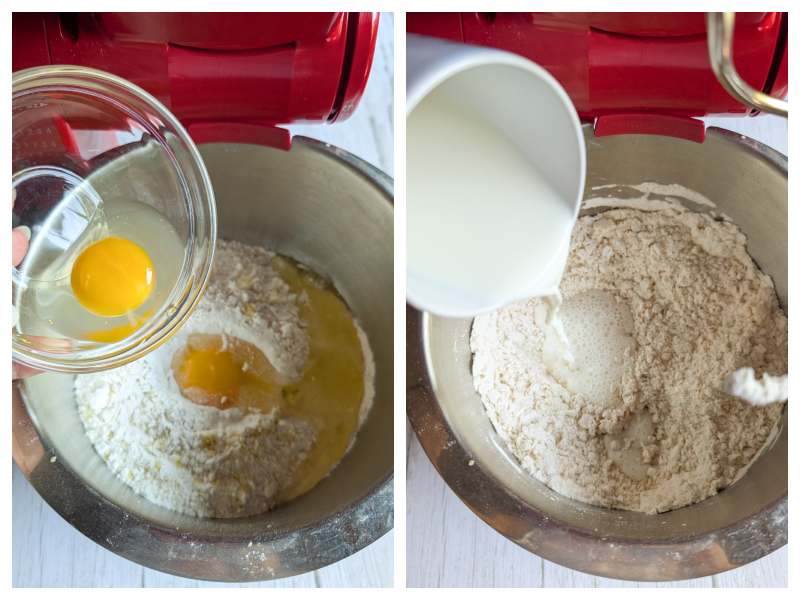
Step 2) - Add the eggs and begin kneading with the dough hook at medium-low speed. Once the eggs have been incorporated, gradually pour in the milk and continue kneading.
Knead for about 6–8 minutes, or until the dough begins to come together and become more elastic.
Add the salt and vanilla extract, then knead for another minute.
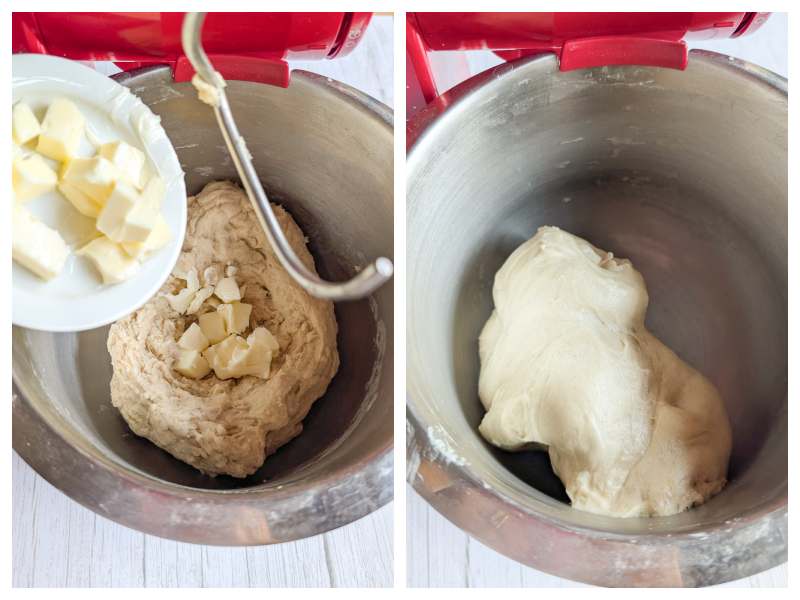
Step 3) Add the softened butter a little at a time, ideally in three or four additions. Wait until each addition has been completely incorporated before adding the next.
Continue kneading for another 8–10 minutes, until the dough is smooth, elastic, glossy and very soft, but no longer fluid. It should also pass the windowpane test: stretch a small piece of dough gently between your fingers. If it becomes thin and almost translucent without tearing, the gluten has developed sufficiently.
The total kneading time will usually be about 15–20 minutes, depending on your stand mixer.
Do not add extra flour simply because the dough looks sticky at first. As it is kneaded and the butter is gradually incorporated, it will become stronger and begin to pull away from the sides of the bowl.
First Rise
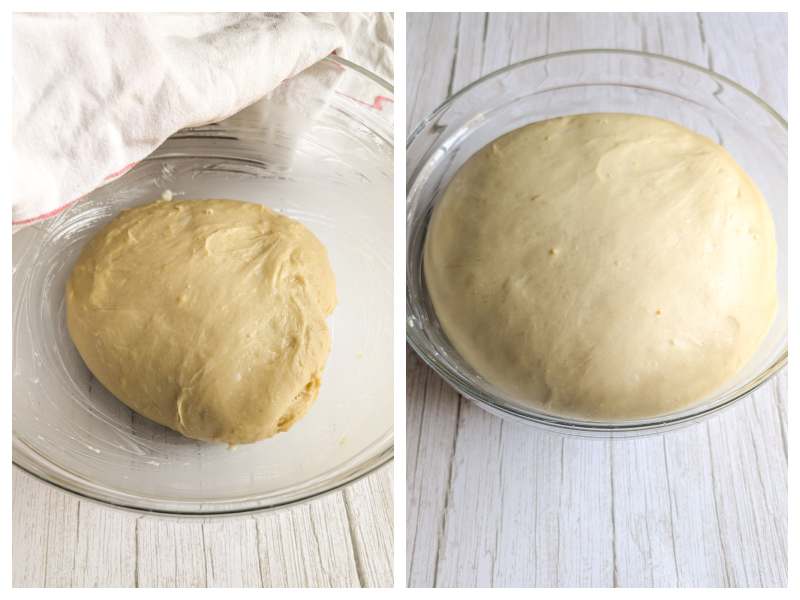
Step 4) - Shape the dough into a ball and place it in a large, lightly buttered bowl. Cover the bowl and leave the dough to rise in a warm place, ideally at about 24–26°C (75–79°F), for approximately 2 hours, or until doubled in volume.
Rising times may vary significantly depending on the temperature of your kitchen/room. In a very warm kitchen, the dough may double in as little as one hour. In a cooler environment, it may take considerably longer. Always check the volume and appearance of the dough rather than relying only on the clock.
Shape the Bomboloni
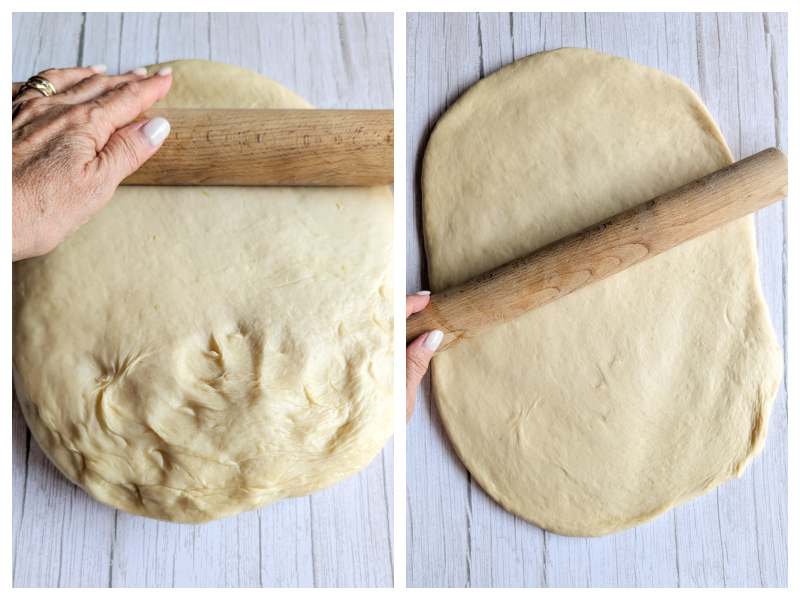
Step 5) - Once the dough has doubled in volume, transfer it to a lightly floured work surface. Press it down gently with your hands to release some of the gas, without kneading it again.
Using a rolling pin, roll the dough out to a thickness of approximately 1.5 cm (⅝ inch). Try to give the dough a roughly rectangular shape, as this will make it easier to cut out as many bomboloni as possible.
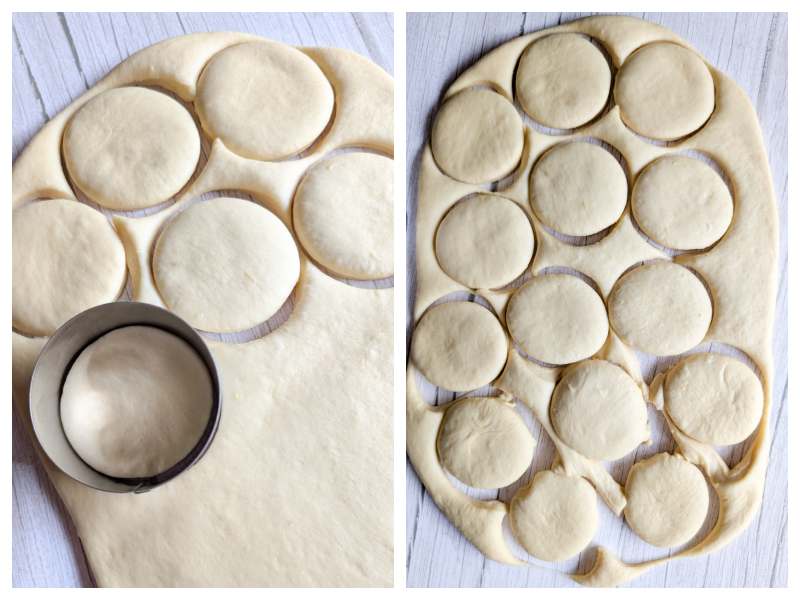
Step 6) - Cut out the bomboloni using an 8 cm (about 3-inch) round cutter. Press the cutter straight down into the dough without twisting it, as twisting can seal the edges and prevent the bomboloni from rising evenly.
With these quantities, you should obtain approximately 14 bomboloni.
What to Do with the Dough Scraps
Instead of kneading and rolling the scraps again, cut them into small, irregular pieces. Let them rise until puffy, then fry them and coat them in sugar just like the bomboloni.
They may not have a perfect shape, but they are delicious. Reworking the scraps into new bomboloni is not ideal because the dough would need to rise again after being kneaded, rolled and cut, and the final result is usually less soft and airy than the first batch.
Second Rise
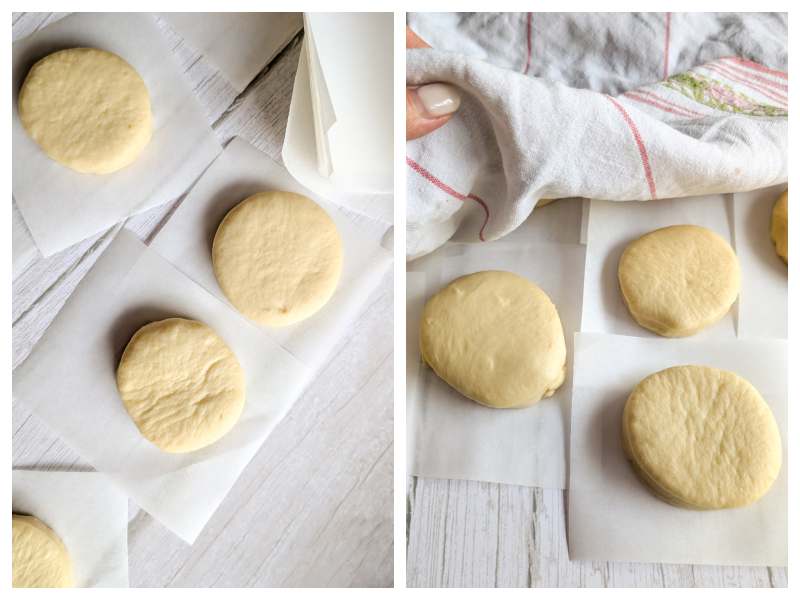
Step 7) - Cut out individual squares of parchment paper and place one bombolone on each square. The paper will make it much easier to transfer the delicate, risen dough into the hot oil without deflating it.
Arrange the bomboloni on a tray, leaving some space between them. Cover loosely with plastic wrap or a lightweight kitchen towel.
Let them rise for approximately 30–60 minutes at about 24–26°C (75–79°F), or until visibly puffy, light and well risen.
To check whether they are ready, gently press one bombolone with a fingertip:
- If the indentation springs back immediately, it needs more time.
- If it slowly springs back while leaving a faint mark, it is ready to fry.
- If the indentation remains deeply visible and the dough deflates, it may be overproofed.
In a very warm kitchen, around 30°C (86°F), the second rise may take only about 30 minutes.
Fry the Bomboloni
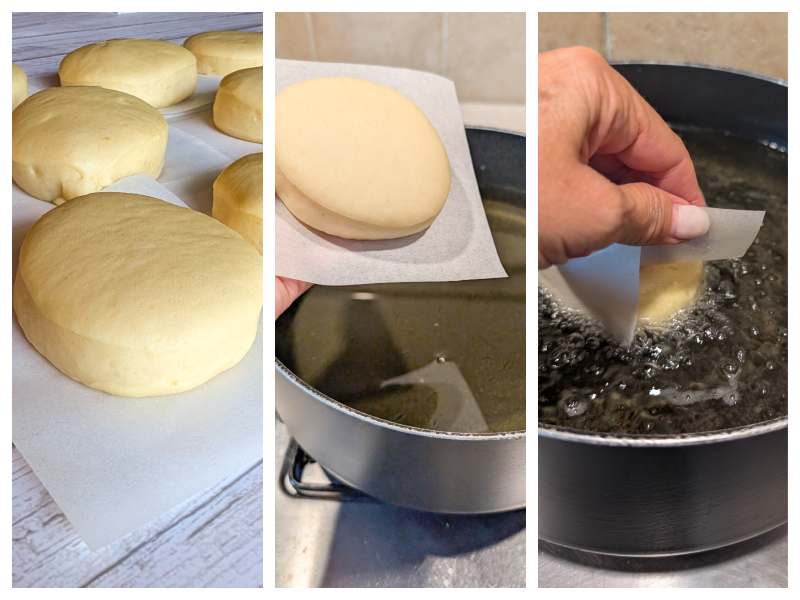
Step 8) - Pour the frying oil into a wide, deep saucepan. The oil should be deep enough for the bomboloni to float without touching the bottom.
Heat the oil to approximately 170°C (340°F). A reliable kitchen thermometer is extremely useful for this recipe, as the temperature should be checked both before and during frying. Make sure the tip of the thermometer is immersed in the oil without touching the bottom of the pan.
Fry only one or two bomboloni at a time, so the oil temperature does not drop too sharply.
Lift one bombolone by holding the edges of its parchment square. Gently turn it over into the oil so that the dough touches the oil first and the parchment paper remains on top. After a few seconds, the paper should release easily. Remove it carefully using kitchen tongs.
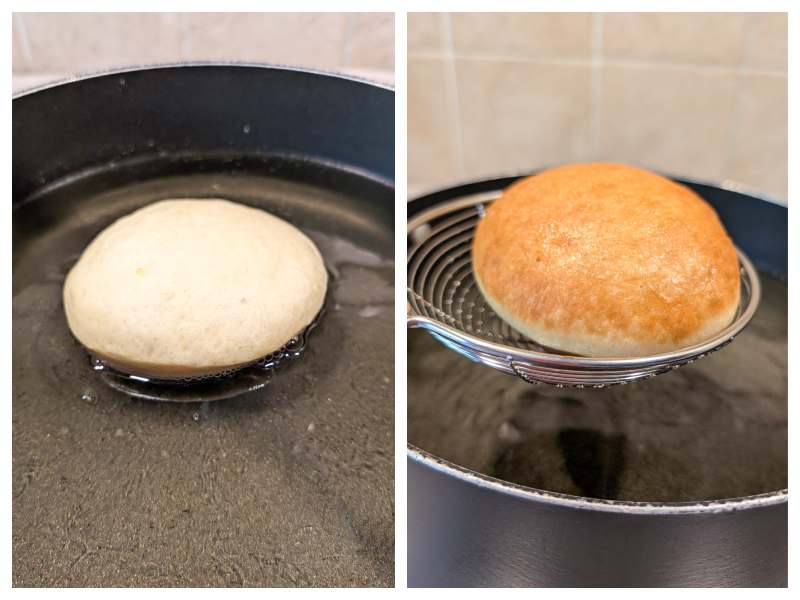
Step 9) - Fry the bomboloni for approximately 30–60 seconds on each side, turning them once with a frying skimmer.
The exact cooking time will depend on their size and on the temperature of the oil. Keep checking the thermometer and adjust the heat as necessary to maintain a temperature close to 170°C (340°F).
The bomboloni should become evenly golden and develop the characteristic pale ring around the center. This lighter band is usually a sign that the dough was properly proofed and that the bomboloni floated correctly during frying.
If they become dark within just a few seconds, the oil is too hot. If they take a long time to color, the oil may be too cool and the bomboloni could absorb more oil.
Drain and Coat with Sugar
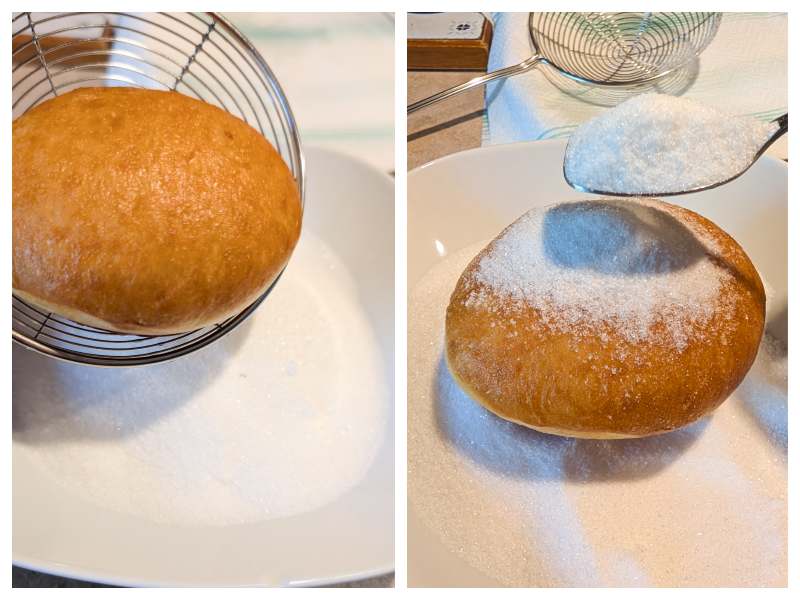
Step 10) - Remove the bomboloni from the oil with a frying skimmer and place them briefly on a tray lined with paper towels.
While they are still warm, but no longer dripping with oil, roll them in granulated sugar until evenly coated.
Do not allow them to cool completely before coating them, or the sugar will not stick as easily.
Fill the Bomboloni with Pastry Cream
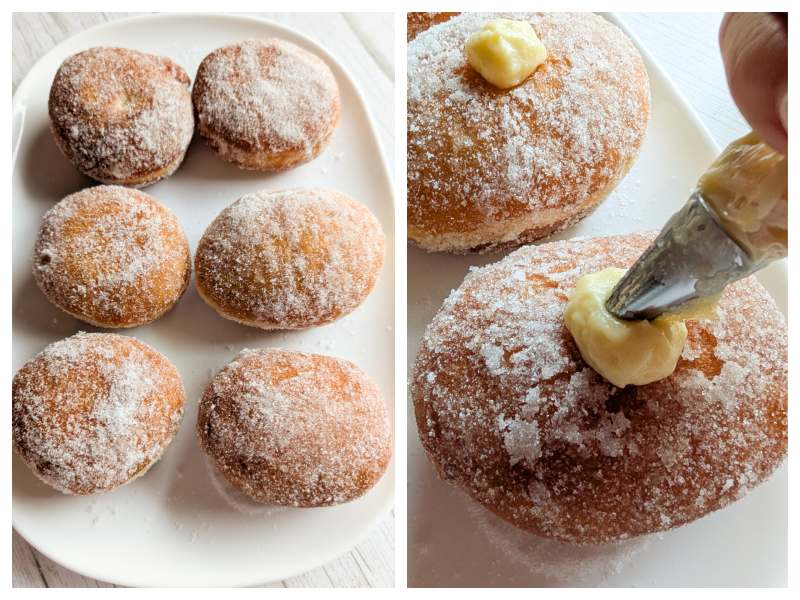
Step 11) - Let the bomboloni cool until they are just slightly warm or at room temperature.
Transfer the chilled pastry cream to a piping bag fitted with a long, plain filling nozzle.
Make a small hole in the side or center of each bombolone. You can use the handle of a wooden spoon to gently create enough space for the filling.
Insert the piping nozzle into the hole and fill each bombolone with approximately 35–40 g (1¼–1½ oz) of pastry cream.
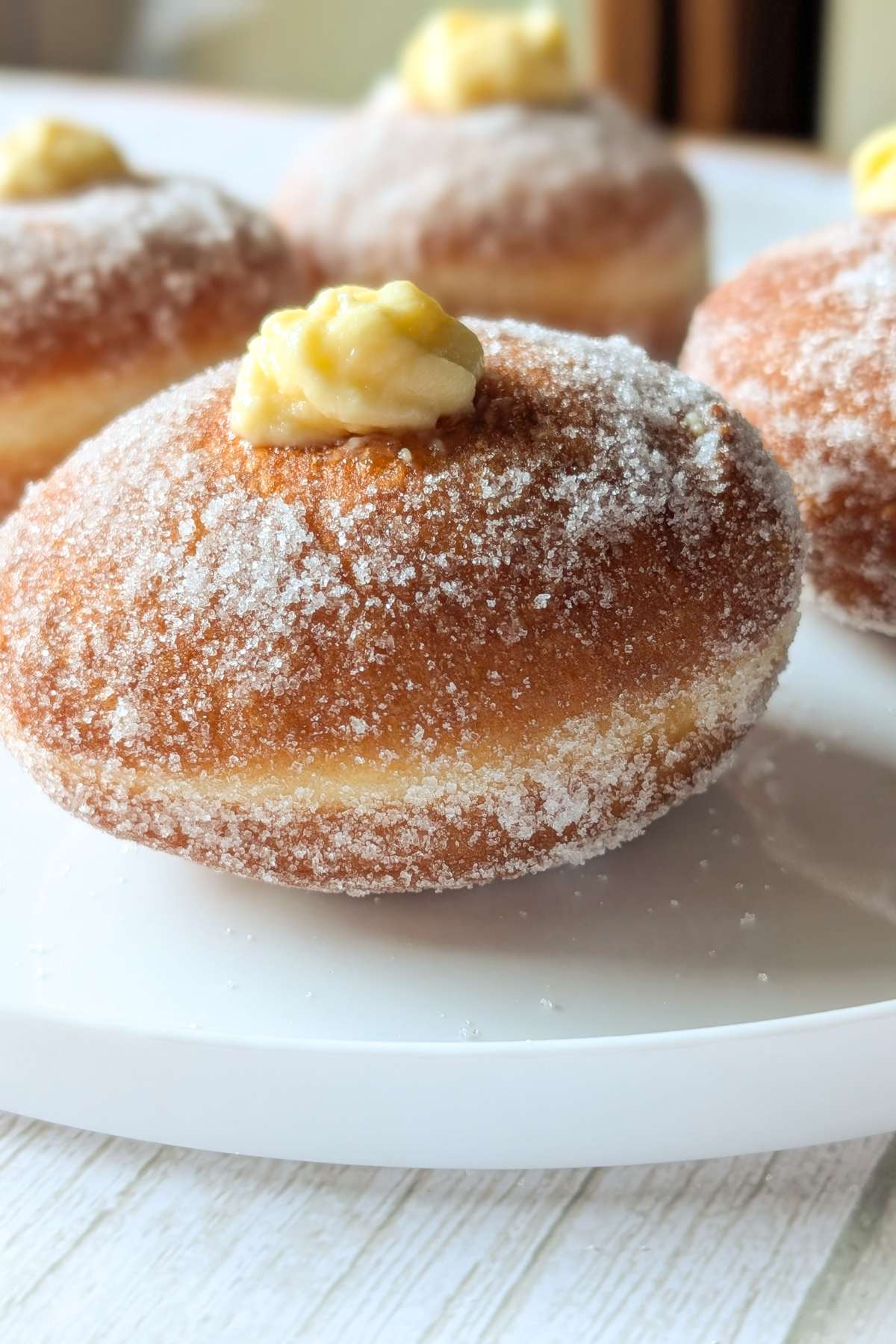
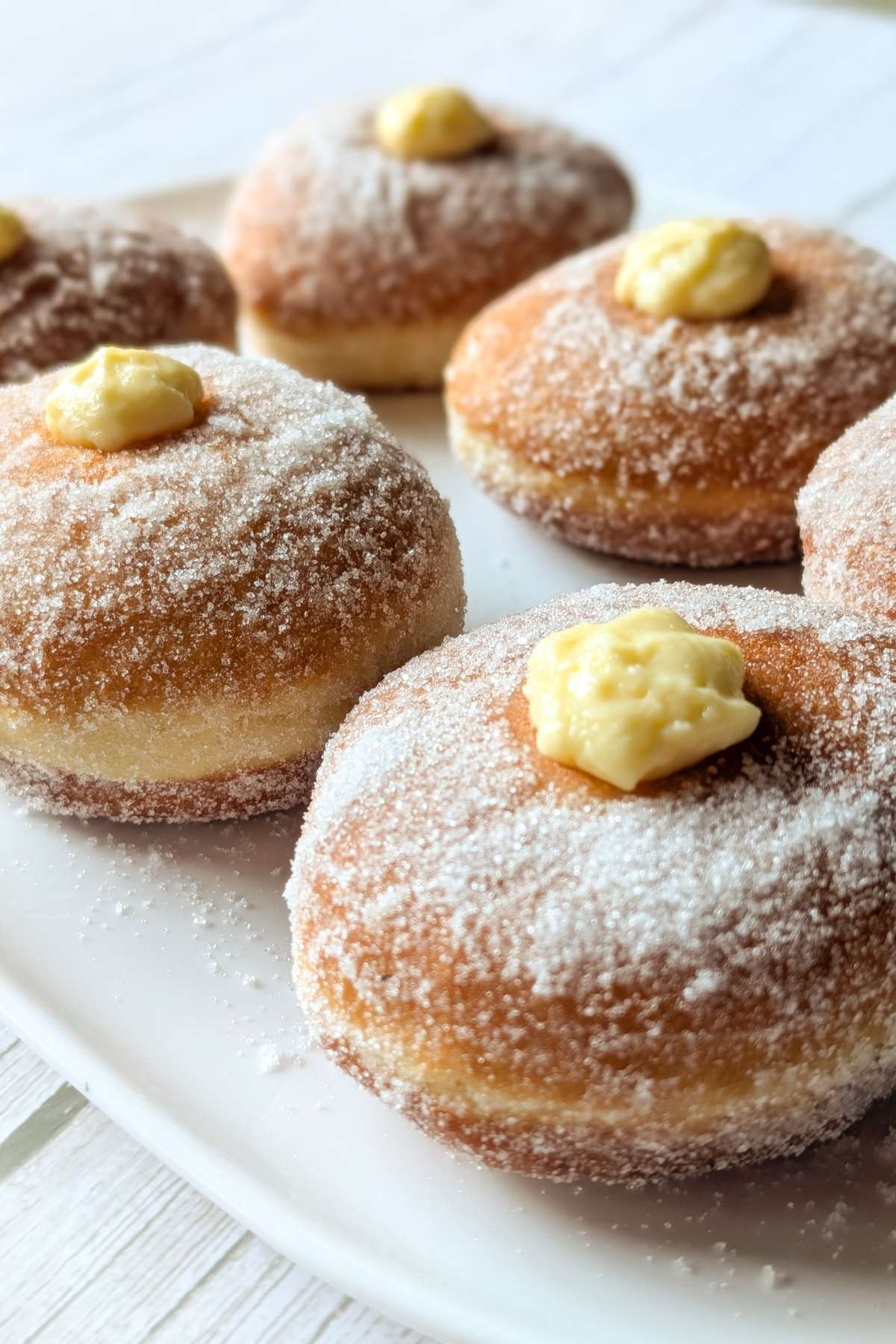
The Bomboloni alla Crema are now ready to serve. They are at their best when freshly made, while the dough is still wonderfully soft and the sugar coating is crisp.
How Long Should Bomboloni Dough Rise?
Bomboloni dough needs two rises. At a room temperature of about 24–26°C (75–79°F), the first rise usually takes around 2 hours, or until the dough has doubled in volume. There is no need to let it triple.
After shaping, let the bomboloni rise again for about 30–60 minutes. They should look visibly puffy, light and well risen before frying.
Rising times depend greatly on room temperature. In a very warm kitchen, around 30°C (86°F), the dough may double in only 1 hour, and the second rise may take just 30 minutes. In a cooler kitchen, both rises will take longer.
Always check the dough rather than relying only on the clock. Gently press a shaped bombolone with your fingertip. If the indentation slowly springs back, it's ready to fry. If it disappears immediately, it needs more time. Finally, if the dough remains deeply indented or begins to deflate, it may be overproofed.
How to Fry Bomboloni Perfectly
Heat the oil to 170°C (340°F) and check the temperature with a reliable digital kitchen thermometer. Continue monitoring it during frying, since the temperature will drop when the dough is added and may rise again quickly.
Fry only one or two bomboloni at a time. This prevents the oil from cooling too much and helps them cook evenly. Fry for about 30–60 seconds per side, turning them gently with a frying skimmer.
The bomboloni should become evenly golden and develop a lighter band around the center, known as the pale ring. This usually indicates that the dough was properly proofed and floated correctly in the oil.
If they darken in just a few seconds, the oil is too hot. If they take too long to color, the oil may be too cool and the dough could absorb excess oil. Drain them briefly on paper towels, then coat them with sugar while still warm.
Tips for the Best Homemade Bomboloni
Do not add extra flour: The dough will be sticky at first. Continue kneading and allow the flour to absorb the liquids and butter before judging its consistency.
Add the butter gradually: Incorporate the softened butter in three or four additions. Wait until each portion is fully absorbed before adding the next.
Check the gluten development: The dough is ready when it is smooth, glossy and elastic. A small piece should stretch into a thin, almost transparent layer without tearing.
Watch the dough, not only the clock: Rising times depend on room temperature. Continue once the dough has doubled during the first rise and the shaped bomboloni look light and puffy during the second.
Roll the dough evenly: Keep it about 1.5 cm (⅝ inch) thick so the bomboloni cook evenly and have enough space inside for the pastry cream.
Use parchment paper squares: Place each bombolone on its own square of parchment paper. This makes it easier to transfer the risen dough into the oil without deflating it.
Avoid reworking the scraps: Cut the leftover dough into small pieces, let them rise and fry them separately. Re-kneaded scraps usually produce less soft and evenly shaped bomboloni.
Monitor the oil temperature: Keep the oil close to 170°C (340°F) and check it throughout frying. Oil that is too hot darkens the bomboloni quickly, while oil that is too cool makes them absorb more fat.
Coat them while warm: Roll the bomboloni in granulated sugar shortly after draining. The sugar will not stick as well once they are completely cold.
Fill them after cooling: Let the bomboloni cool before adding the pastry cream. Filling them while hot could soften or melt the cream.
Bomboloni Fillings and Variations
Classic Bomboloni alla Crema are filled with Italian pastry cream, delicately flavored with lemon. However, the same soft dough can be paired with many other fillings.
- Chocolate pastry cream: Add dark chocolate or cocoa powder to the pastry cream for a rich chocolate filling.
- Hazelnut cream: Fill the bomboloni with chocolate-hazelnut spread or homemade hazelnut cream.
- Pistachio cream: Use a smooth pistachio pastry cream for a particularly rich and elegant variation.
- Jam: Apricot, strawberry, raspberry and cherry jam all work well. Choose a smooth jam without large pieces of fruit, so it is easier to pipe.
- Vanilla pastry cream: Replace the lemon peel with vanilla extract or a vanilla bean for a milder, more delicate flavor.
- Whipped cream: Fill completely cooled bomboloni with sweetened whipped cream shortly before serving. Keep them refrigerated and eat them the same day.
You can also leave the bomboloni unfilled and serve them simply coated in granulated sugar. For a different finish, replace the granulated sugar with powdered sugar, although the classic crunchy coating is part of their traditional appeal.
For any filling, wait until the bomboloni have cooled. Use approximately 35–40 g (1¼–1½ oz) of filling per bombolone, adjusting the quantity according to its consistency.
How to Store Bomboloni alla Crema
Bomboloni alla Crema are best enjoyed on the day they are made, when the dough is still soft and the sugar coating has a slightly crisp texture.
Once filled with pastry cream, place them in an airtight container and store them in the refrigerator for up to 2 days. Keep in mind that refrigeration gradually makes the fried dough firmer and causes the sugar coating to become moist.
Before serving, let the bomboloni stand at room temperature for about 15–20 minutes. Do not reheat filled bomboloni, as the pastry cream may become too soft.
Unfilled bomboloni can be kept in an airtight container at room temperature until the following day.
You can also freeze them before filling, preferably without the sugar coating. Once completely cool, place them in a freezer-safe bag and freeze for up to 1 month. Thaw at room temperature, then fill with fresh pastry cream before serving.
Freezing already filled bomboloni is not recommended, as the pastry cream and fried dough may lose their original texture.
History and Origins of Italian Bomboloni
The exact origin of bomboloni is not fully documented, but they are strongly associated with Tuscany, where they have long been a popular pastry and street food. The Italian dictionary Treccani identifies bombolone as a Tuscan and Roman term and traces the name to bomba, referring to the pastry’s round, swollen shape.
Bomboloni are often compared to the Central European krapfen, another round pastry made from sweet yeast dough and traditionally filled before or after frying. However, the Italian bombolone developed its own recognizable character: a soft, sugar-coated exterior and a generous filling of pastry cream, jam or chocolate.
Today, bomboloni are found throughout Italy, although they remain particularly connected with Tuscany and central Italy. They are sold in pastry shops, cafés, fairs and seaside resorts, where they are often fried and filled shortly before serving. In Livorno, a related ring-shaped version is known as frati, or “friars,” because its shape is said to resemble a monk’s tonsure.
More Italian Fried Desserts and Cream-Filled Pastries
If you enjoyed these Bomboloni alla Crema, discover more traditional Italian pastries.
Try Tortelli di Carnevale, soft Italian Carnival doughnuts that can also be filled with pastry cream, or make the classic Zeppole di San Giuseppe.
For more delicious cream-filled treats, don’t miss Sporcamuss, made with crisp puff pastry, and Pasticciotto Leccese, a buttery pastry filled with crema pasticcera. You may also enjoy Chiacchiere, light and crunchy fried pastries traditionally prepared during Carnival.
FAQ
Yes. After kneading, place the dough in a lightly buttered bowl, cover it well and let it rise slowly in the refrigerator overnight. The next day, let it stand at room temperature for about 30–60 minutes, then roll, cut and proof the bomboloni before frying.
You can bake them, but the result will be closer to soft brioche buns than traditional bomboloni. Bake at 180°C (350°F) until lightly golden, then brush them with melted butter and coat them with sugar before filling.
The oil was probably too hot or the thermometer was not reading accurately. Keep the temperature close to 170°C (340°F) and check it throughout frying. The thermometer tip should remain immersed in the oil without touching the bottom of the pan.
Yes, but the dough requires thorough kneading because it contains eggs, milk and butter. Knead by hand until it becomes smooth, elastic and no longer excessively sticky, then gradually incorporate the softened butter. This will take longer than using a stand mixer.
Recipe Card

Bomboloni alla Crema Recipe (Italian Cream-Filled Donuts)

Ingredients
For the Crema Pasticcera (Italian Pastry Cream)
- 500 ml whole milk - 2 cups
- 4 large egg yolks - about 70-75 g (about 2.5 oz)
- 80 g granulated sugar - ⅓ cup plus 1 tablespoon
- 30 g cornstarch - ¼ cup
- ½ organic lemon peel
For the Bomboloni Dough
- 250 g Manitoba flour or strong bread - about 2 cups
- 250 g Italian “00” flour - about 2 cups
- 200 g whole milk - ¾ cup plus 1 tablespoon and 1 teaspoon, at room temperature
- 2 large eggs - about 100 g (3.5 oz) without the shells
- 80 g granulated sugar - ⅓ cup plus 1 tablespoon
- 70 g unsalted butter - 5 tablespoons, very soft but not melted
- 5 g instant dry yeast - about 1½ teaspoons
- 8 g fine salt - about 1¼ teaspoons
- ½ organic lemon, finely grated zest
- 1 teaspoon vanilla extract
For Frying and Coating
- 1.5 liters vegetable oil for frying - about 6⅓ cups, such as peanut, sunflower or canola oil
- 150-200 g granulated sugar - ¾–1 cup, for coating the bomboloni
Instructions
Make the Crema Pasticcera
- Pour the milk into a saucepan. Using a vegetable peeler, remove two or three wide strips of peel from half an organic lemon and add them to the milk.
- Heat the milk over medium-low heat until it's hot and begins to steam, but do not let it come to a full boil. Turn off the heat and leave the lemon peel to infuse for about 5 minutes.
- Meanwhile, place the egg yolks and sugar in a saucepan. Whisk briefly until combined.
- Then add the cornstarch and mix until smooth and free of lumps.
- Remove the lemon peel from the milk. Gradually pour the warm milk into the egg mixture, whisking constantly.
- Cook over medium-low heat, stirring continuously with a whisk.As soon as the pastry cream begins to thicken, continue cooking for about 30–60 seconds, until smooth and creamy.
- Transfer the pastry cream immediately to a shallow bowl or container. Cover the surface directly with plastic wrap to prevent a skin from forming.Let it cool to room temperature, then refrigerate until completely cold.
- Before filling the bomboloni, whisk the chilled pastry cream by hand for a few seconds to make it smooth and creamy again. Transfer it to a piping bag fitted with a long, plain nozzle.
Make the Bomboloni Dough
- Place the Manitoba flour, “00” flour, dry yeast, granulated sugar and grated lemon zest in the bowl of a stand mixer. Stir briefly with a spoon to distribute the ingredients evenly.
- Add the eggs and begin kneading with the dough hook at medium-low speed. Once the eggs have been incorporated, gradually pour in the milk and continue kneading.
- Knead for about 6–8 minutes, or until the dough begins to come together and become more elastic.
- Add the salt and vanilla extract, then knead for another minute.
- Add the softened butter a little at a time, ideally in three or four additions. Wait until each addition has been completely incorporated before adding the next.
- Continue kneading for another 8–10 minutes, until the dough is smooth, elastic, glossy and very soft, but no longer fluid. It should also pass the windowpane test: stretch a small piece of dough gently between your fingers. If it becomes thin and almost translucent without tearing, the gluten has developed sufficiently.The total kneading time will usually be about 15–20 minutes, depending on your stand mixer.
First Rise
- Shape the dough into a ball and place it in a large, lightly buttered bowl. Cover the bowl and leave the dough to rise in a warm place, ideally at about 24–26°C (75–79°F), for approximately 2 hours, or until doubled in volume.Rising times may vary significantly depending on the temperature of your kitchen/room. In a very warm kitchen, the dough may double in as little as one hour. In a cooler environment, it may take considerably longer. Always check the volume and appearance of the dough rather than relying only on the clock.
Shape the Bomboloni
- Once the dough has doubled in volume, transfer it to a lightly floured work surface. Press it down gently with your hands to release some of the gas, without kneading it again.Using a rolling pin, roll the dough out to a thickness of approximately 1.5 cm (⅝ inch). Try to give the dough a roughly rectangular shape, as this will make it easier to cut out as many bomboloni as possible.
- Cut out the bomboloni using an 8 cm (about 3-inch) round cutter. Press the cutter straight down into the dough without twisting it, as twisting can seal the edges and prevent the bomboloni from rising evenly.With these quantities, you should obtain approximately 14 bomboloni.
What to Do with the Dough Scraps
- Instead of kneading and rolling the scraps again, cut them into small, irregular pieces. Let them rise until puffy, then fry them and coat them in sugar just like the bomboloni.They may not have a perfect shape, but they are delicious. Reworking the scraps into new bomboloni is not ideal because the dough would need to rise again after being kneaded, rolled and cut, and the final result is usually less soft and airy than the first batch.
Second Rise
- Cut out individual squares of parchment paper and place one bombolone on each square. The paper will make it much easier to transfer the delicate, risen dough into the hot oil without deflating it.
- Arrange the bomboloni on a tray, leaving some space between them. Cover loosely with plastic wrap or a lightweight kitchen towel.
- Let them rise for approximately 30–60 minutes at about 24–26°C (75–79°F), or until visibly puffy, light and well risen.
Fry the Bomboloni
- Pour the frying oil into a wide, deep saucepan. The oil should be deep enough for the bomboloni to float without touching the bottom.Heat the oil to approximately 170°C (340°F). A reliable kitchen thermometer is extremely useful for this recipe, as the temperature should be checked both before and during frying. Make sure the tip of the thermometer is immersed in the oil without touching the bottom of the pan.Fry only one or two bomboloni at a time, so the oil temperature does not drop too sharply.
- Lift one bombolone by holding the edges of its parchment square. Gently turn it over into the oil so that the dough touches the oil first and the parchment paper remains on top. After a few seconds, the paper should release easily. Remove it carefully using kitchen tongs.
- Fry the bomboloni for approximately 30–60 seconds on each side, turning them once with a frying skimmer.The exact cooking time will depend on their size and on the temperature of the oil. Keep checking the thermometer and adjust the heat as necessary to maintain a temperature close to 170°C (340°F).The bomboloni should become evenly golden and develop the characteristic pale ring around the center. This lighter band is usually a sign that the dough was properly proofed and that the bomboloni floated correctly during frying.
Drain and Coat with Sugar
- Remove the bomboloni from the oil with a frying skimmer and place them briefly on a tray lined with paper towels.
- While they are still warm, but no longer dripping with oil, roll them in granulated sugar until evenly coated.Do not allow them to cool completely before coating them, or the sugar will not stick as easily.
Fill the Bomboloni with Pastry Cream
- Let the bomboloni cool until they are just slightly warm or at room temperature.
- Transfer the chilled pastry cream to a piping bag fitted with a long, plain filling nozzle.
- Make a small hole in the side or center of each bombolone. You can use the handle of a wooden spoon to gently create enough space for the filling.
- Insert the piping nozzle into the hole and fill each bombolone with approximately 35–40 g (1¼–1½ oz) of pastry cream.
- The Bomboloni alla Crema are now ready to serve. They are at their best when freshly made, while the dough is still wonderfully soft and the sugar coating is crisp.


Leave a Reply