
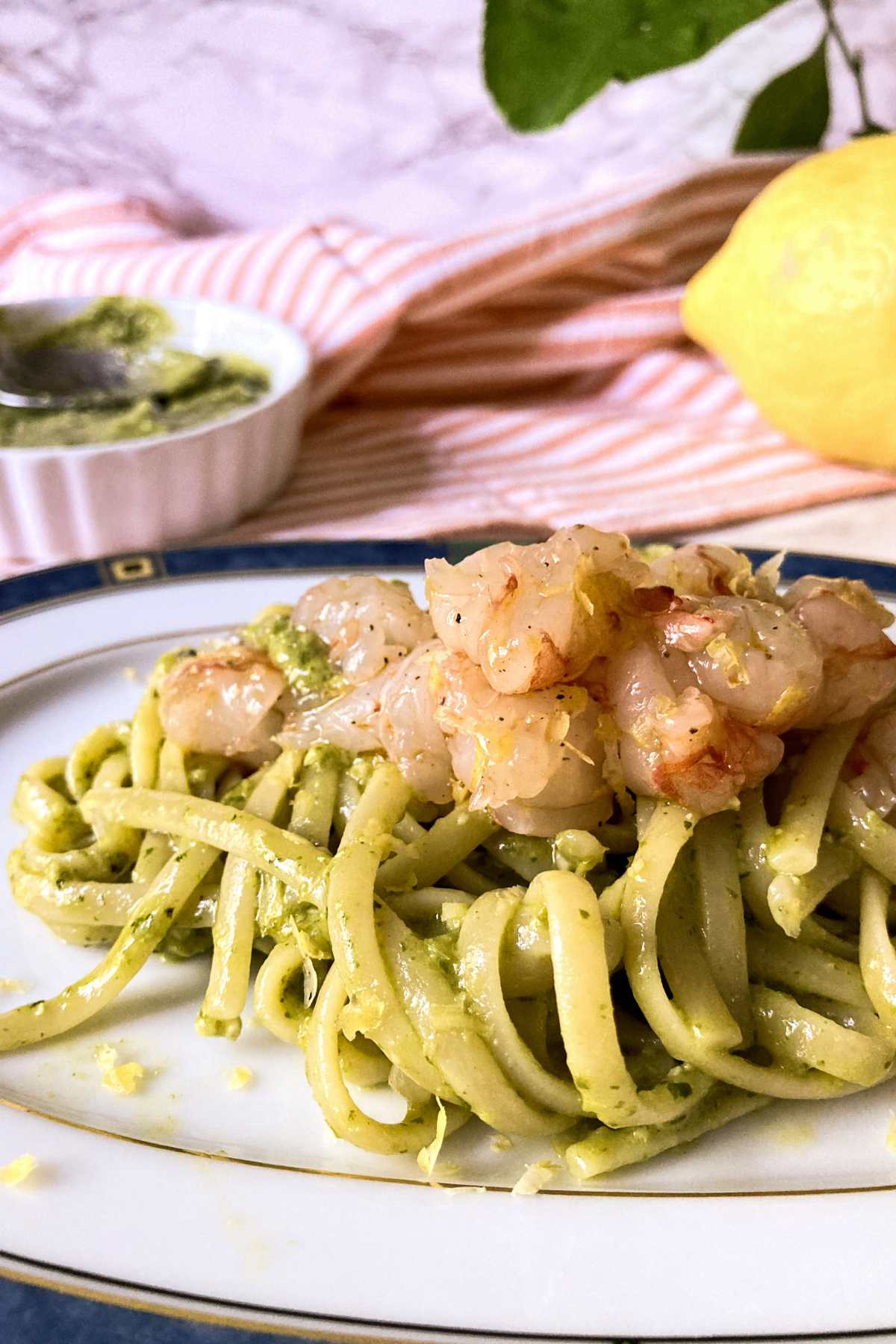
This Italian shrimp tartare pasta is a refined yet simple dish made with fresh raw shrimp, basil pesto and lemon. It’s quick to prepare, full of bright Mediterranean flavors, and perfect when you want something elegant without spending hours in the kitchen.
In this recipe, tender linguine are tossed with creamy homemade pesto and topped with a delicate shrimp tartare.
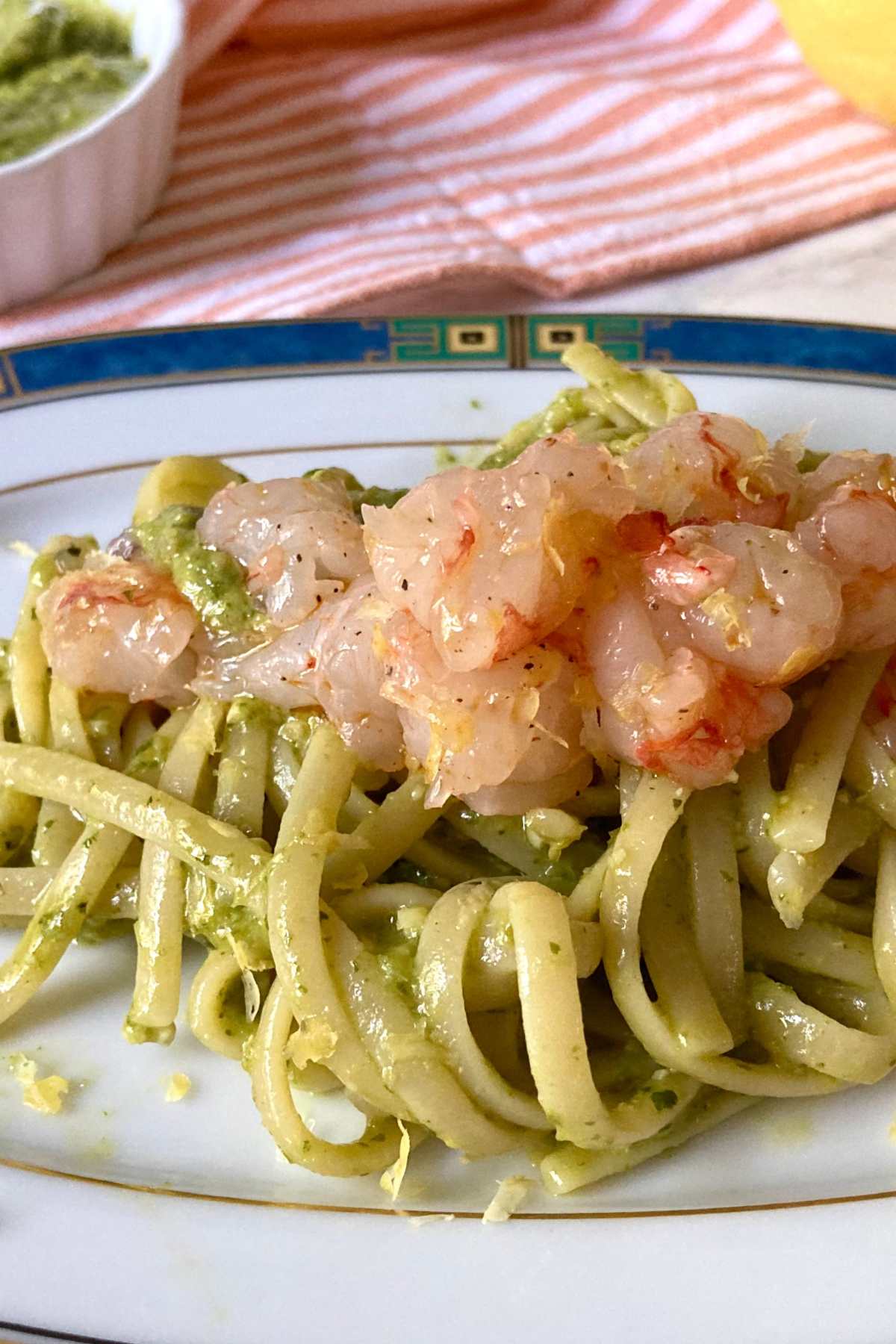
The shrimp are finely chopped and seasoned with olive oil, lemon zest and black pepper, creating a fresh and slightly sweet contrast to the rich, aromatic pesto.
The result is a perfectly balanced pasta dish, where the creaminess of the sauce meets the lightness of the raw shrimp and the brightness of citrus.
Use only very fresh, high-quality shrimp, as they are served raw. When handled properly, this dish is safe, incredibly flavorful and surprisingly easy to make at home.
Jump to:
What Is Shrimp Tartare Pasta?
Shrimp tartare pasta is an elegant Italian-inspired dish made with pasta topped with fresh, finely chopped raw shrimp. The shrimp tartare is lightly seasoned with olive oil, lemon and black pepper, and added at the end to preserve its delicate texture and flavor.
In this version, linguine are tossed with basil pesto and finished with the shrimp tartare on top. The result is a balanced dish where the richness of the pesto meets the freshness of the raw shrimp and the brightness of lemon.
Ingredients
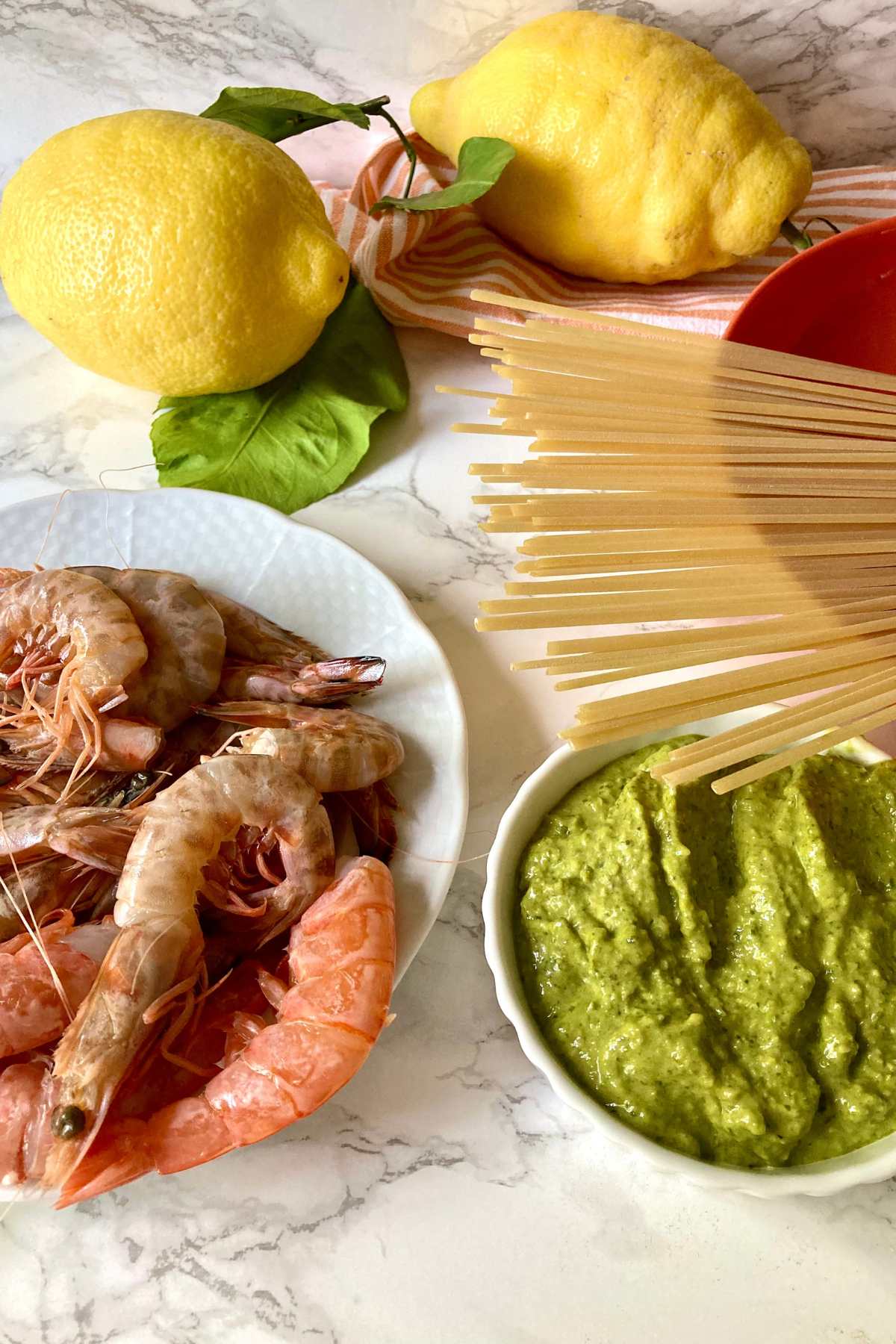
Prep Time: 10 Min | Cook Time: 10 Min | Servings: 4
For the Pasta
- 350 g (12 oz) linguine
- 180 g (6 oz) basil pesto (homemade or store-bought)
- 1 tablespoon extra virgin olive oil
For the Shrimp Tartare
- 100 g (about 10) very fresh red shrimp, sushi-grade
- 2 tablespoons extra virgin olive oil
- 1 organic lemon (zest and a little juice)
- salt, to taste
- freshly ground black pepper, to taste
About the Pesto
For the best flavor, we recommend making homemade Genovese pesto using fresh basil, pine nuts, Parmigiano Reggiano, Pecorino Fior Sardo, garlic and extra virgin olive oil.
You can find the full step-by-step recipe here: Pesto alla Genovese (Authentic Italian Basil Pesto Recipe)
If you are short on time, you can also use a good quality store-bought pesto.
How to Choose Fresh Shrimp for Tartare
For this recipe, red shrimp are an excellent choice thanks to their sweet, intense flavor and firm texture. In Italy, the most prized varieties come from Mazara del Vallo in Sicily and from Sanremo in Liguria.
You can also use other types of shrimp or even scampi, as long as they are extremely fresh and of high quality. Since the shrimp are served raw, this step is essential.
Before consuming raw shrimp, they must be properly frozen for safety. This means blast chilling at -20°C (4°F) for at least 24 hours. At home, you can place them in a freezer at -18°C (0°F) for about 96 hours.
Many fishmongers and supermarkets now sell shrimp that have already been frozen and are safe to eat raw. When in doubt, always ask your fishmonger.
To recognize fresh shrimp, look for bright, clear eyes and a firm, shiny shell. The head should be intact and not darkened, and the smell should be clean and reminiscent of the sea, never strong or unpleasant.
How to Make Shrimp Tartare Pasta

Step 1) - Start by bringing a large pot of salted water to a boil for the pasta.
In the meantime, clean the shrimp by removing the head, shell and dark vein.

Step 2) - Pat them dry with paper towels, then finely chop them with a knife. Avoid using a food processor, as it would ruin the texture.
Place the chopped shrimp in a bowl.

Step 3) - Season with the extra virgin olive oil, freshly ground black pepper and a little lemon zest.
Mix gently and keep refrigerated while you cook the pasta.
Add the salt and a small squeeze of lemon juice only at the end, to keep the shrimp fresh and delicate.

Step 4) - Cook the linguine in boiling salted water until al dente. Before draining, reserve a little of the cooking water.
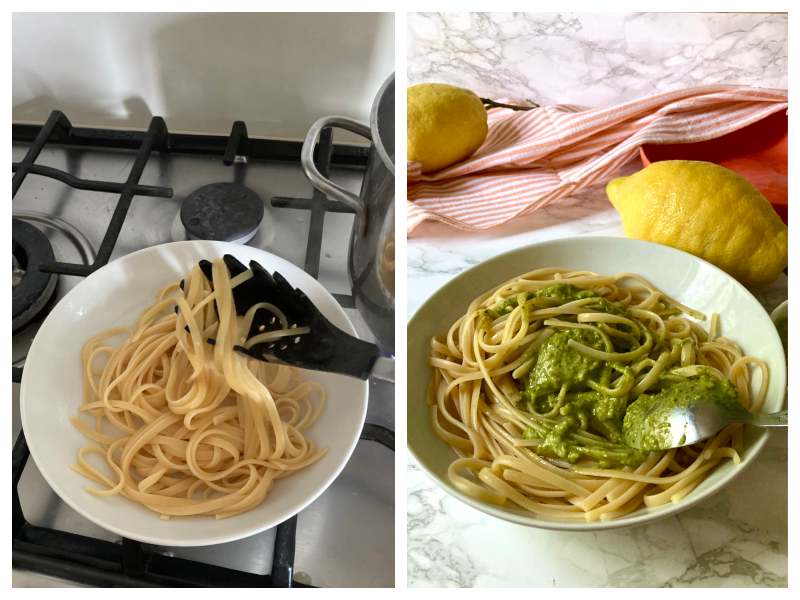
Step 5) - Transfer the pasta to a bowl and toss with the pesto, adding a few tablespoons of the cooking water to create a creamy sauce. Drizzle with a little olive oil and toss to combine.

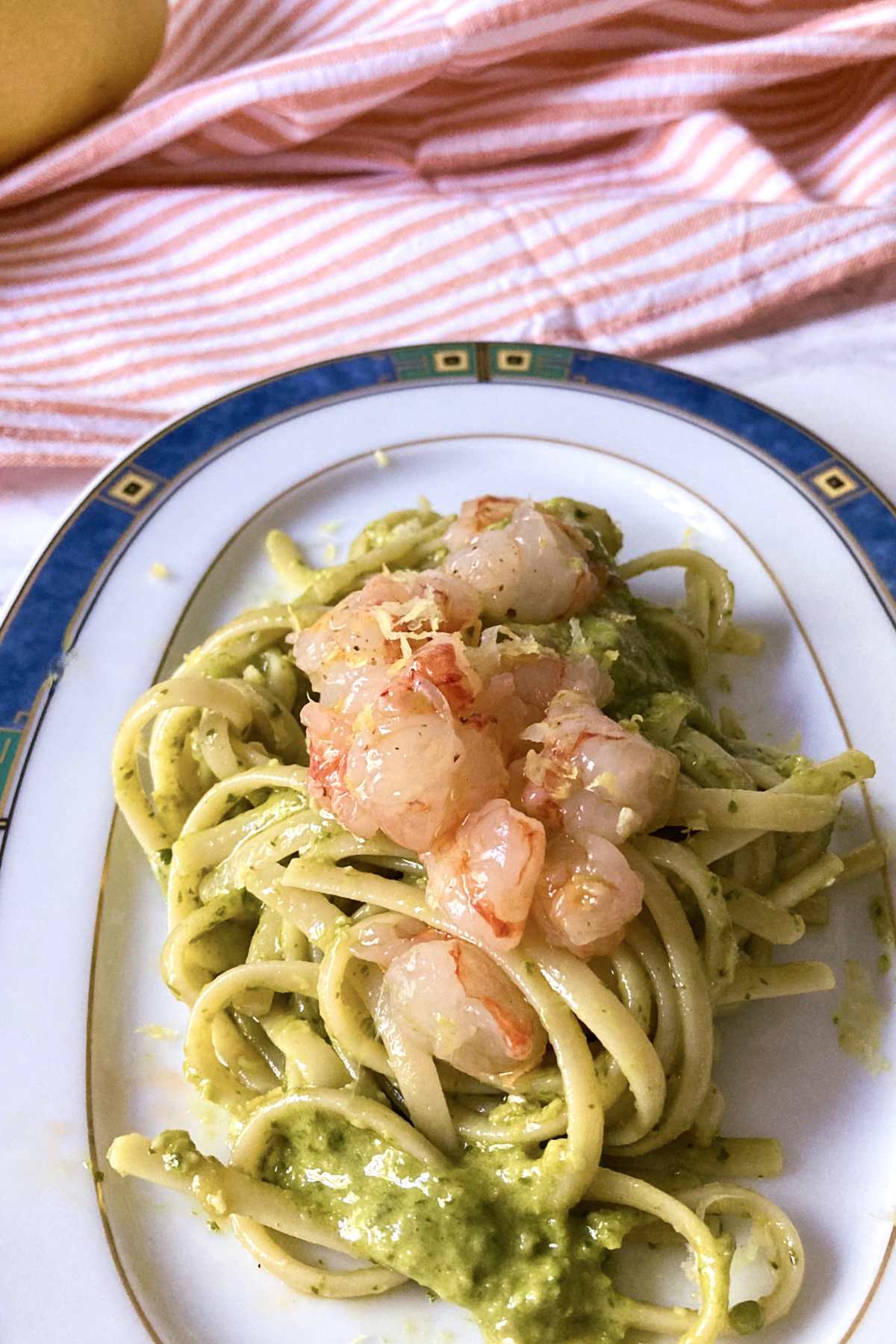
Step 6) - Arrange the pesto linguine on plates and top with the shrimp tartare. Finish with a touch of lemon zest and freshly ground black pepper. Serve immediately.
How to Prepare the Shrimp Tartare
For the best result, the shrimp tartare should be fresh, delicate and well balanced, not overly seasoned.
Choose very fresh, high-quality shrimp, ideally sushi-grade. Their flavor is naturally sweet and should not be covered with too much lemon or seasoning.
Chop the shrimp by hand into small, even pieces. Avoid overworking them, as the texture should remain slightly coarse and not mushy.
Season lightly with olive oil and lemon zest, and add only a small amount of lemon juice at the end. Too much acidity will “cook” the shrimp and overpower their flavor.
Keep the tartare cold at all times and assemble the dish just before serving to preserve its freshness and texture.
How to Store Shrimp Tartare Pasta
Shrimp tartare pasta is best enjoyed immediately after preparation.
Because the shrimp are raw, the tartare should not be stored once seasoned. If left in the refrigerator, the texture and flavor will quickly deteriorate, especially after adding lemon juice.
If needed, you can clean and chop the shrimp slightly in advance, but keep them well chilled and unseasoned. Season and assemble the tartare only just before serving.
Cooked pasta with pesto can be stored in the refrigerator for up to 1 day, in an airtight container. However, it is best served fresh, as the sauce may lose its vibrant color and aroma over time.
Freezing is not recommended.
Tips for Perfect Shrimp Tartare Pasta
USE VERY FRESH SHRIMP: Since the shrimp are served raw, freshness is essential. Choose high-quality shrimp and make sure they have been properly frozen for safety before consumption.
CHOP BY HAND, NOT WITH A PROCESSOR: Finely chop the shrimp with a knife to keep a delicate, slightly coarse texture. A food processor would turn them into a paste and ruin the tartare.
SEASON LIGHTLY: Shrimp tartare should taste fresh and natural. Use just a little olive oil, lemon zest, a little salt and black pepper. Too much seasoning will cover the delicate flavor of the shrimp.
ADD LEMON JUICE AT THE END: Lemon juice should be added just before serving. If added too early, it will “cook” the shrimp and change both texture and taste.
KEEP THE TARTARE COLD: Always keep the shrimp refrigerated and assemble the dish at the last moment. This preserves both safety and texture.
DON’T OVERHEAT THE PASTA: When mixing the pasta with pesto, avoid excessive heat. Too much heat can dull the flavor and darken the color of the sauce.
USE PASTA WATER FOR CREAMINESS: A few tablespoons of starchy cooking water help create a smooth, creamy consistency without adding extra fat.
More Italian Pasta Recipes to Try
If you enjoyed this shrimp tartare pasta, here are more Italian recipes with similar fresh and vibrant flavors:
Seafood Pasta Recipes
- Spaghetti allo Scoglio
- Linguine with Zucchini, Shrimp and Saffron
- Shrimp and Zucchini Pasta and Cherry Tomatoes
Pesto Pasta Recipes
Fresh and Lemon-Flavored Pasta
Faq
Yes, shrimp tartare is safe to eat when prepared with high-quality shrimp that have been properly handled. For safety, the shrimp should be previously frozen at very low temperatures to eliminate potential parasites. Always use sushi-grade shrimp, keep them well refrigerated, and consume the dish immediately after preparation.
The best shrimp for tartare are fresh, high-quality shrimp with firm flesh and a naturally sweet flavor. Red shrimp are an excellent choice, especially varieties from Mazara del Vallo or Sanremo in Italy. Alternatively, you can use other premium shrimp or even scampi, as long as they are suitable for raw consumption.
No, this dish is best prepared and served immediately. Shrimp tartare should not be stored once seasoned, as the texture and flavor quickly deteriorate. You can clean and chop the shrimp slightly in advance, but keep them refrigerated and unseasoned, then assemble the dish just before serving.
Recipe Card
Italian Shrimp Tartare Pasta with Pesto and Lemon

Ingredients
- 350 g linguine - 12 oz
- 180 g basil pesto - 6 oz
- 1 organic lemon - zest and a little juice
- 100 g very fresh red shrimp, sushi-grade - about 10
- 3 tablespoons extra virgin olive oil
- salt - to taste
- freshly ground black pepper - to taste
Instructions
- Start by bringing a large pot of salted water to a boil for the pasta.In the meantime, clean the shrimp by removing the head, shell and dark vein.
- Pat them dry with paper towels, then finely chop them with a knife. Avoid using a food processor, as it would ruin the texture.Place the chopped shrimp in a bowl.
- Season with the extra virgin olive oil, freshly ground black pepper and a little lemon zest.
- Mix gently and keep refrigerated while you cook the pasta.
- Add the salt and a small squeeze of lemon juice only at the end, to keep the shrimp fresh and delicate.
- Cook the linguine in boiling salted water until al dente. Before draining, reserve a little of the cooking water.
- Transfer the pasta to a bowl and toss with the pesto, adding a few tablespoons of the cooking water to create a creamy sauce. Drizzle with a little olive oil and toss to combine.
- Arrange the pesto linguine on plates and top with the shrimp tartare. Finish with a touch of lemon zest and freshly ground black pepper. Serve immediately.
Leave a Reply