
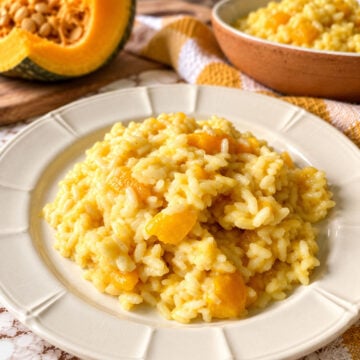
Pumpkin risotto, or risotto alla zucca, is a classic Northern Italian autumn dish made with rice, pumpkin, and broth. Its creamy texture comes from the natural starch released by the rice as it cooks, while the pumpkin adds a delicate sweetness and a smooth, velvety consistency.
For this Italian pumpkin risotto recipe, use a sweet, flavorful pumpkin or winter squash with dense flesh. In Italy, varieties such as zucca mantovana are especially appreciated, while kabocha and butternut squash are excellent alternatives.
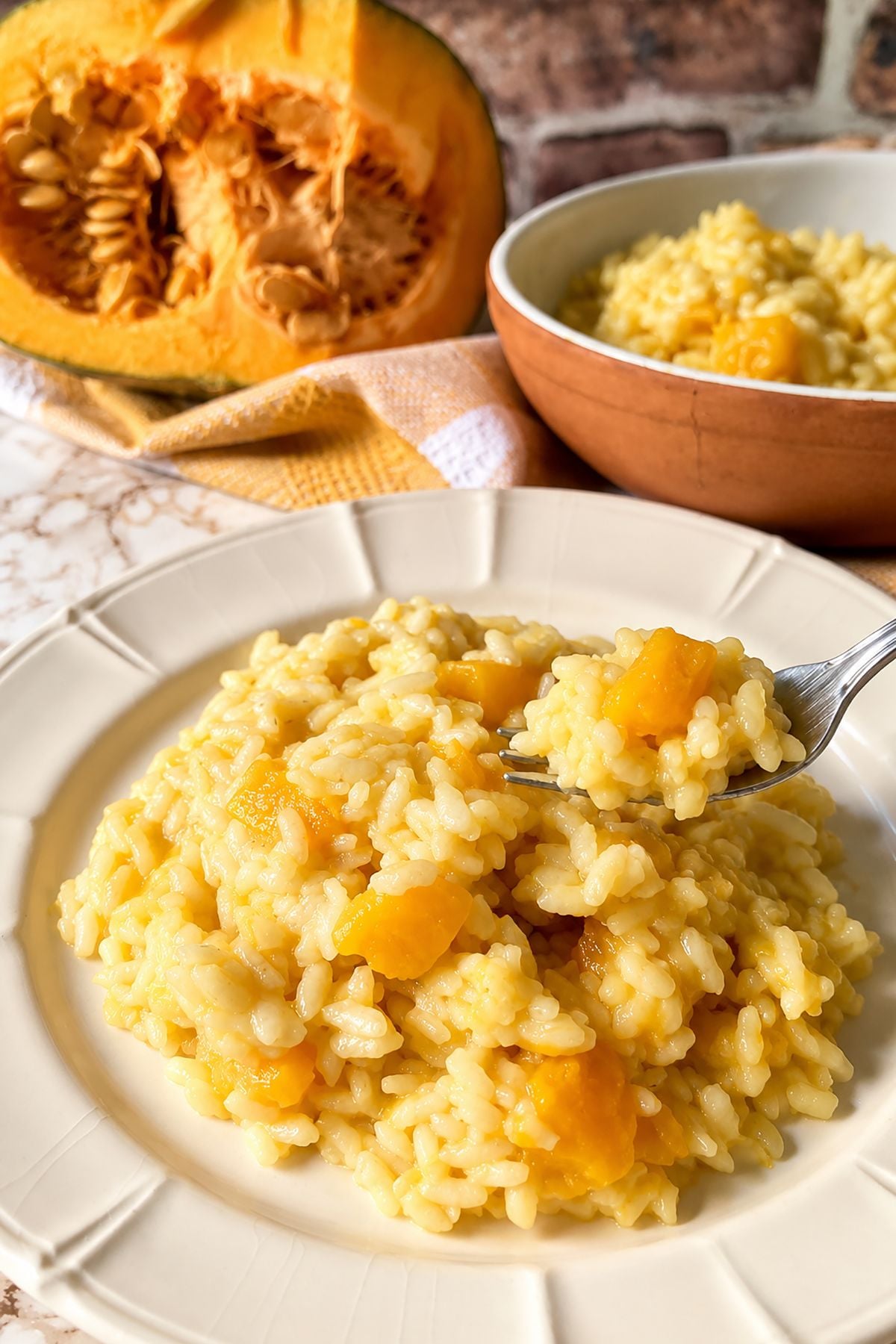
This is a simple but comforting risotto, with a delicate flavor that works beautifully with the richness of butter and Parmigiano Reggiano.
Pumpkin is also perfect for other traditional Italian recipes such as pumpkin ravioli and pumpkin gnocchi.
A few things che mi piacciono di più in questa versione: togliamo le ripetizioni, mettiamo subito pumpkin risotto / risotto alla zucca, spieghiamo in modo naturale perché è cremoso e lasciamo spazio agli ingredienti e agli step per spiegare la tecnica vera.
Jump to:
Ingredients
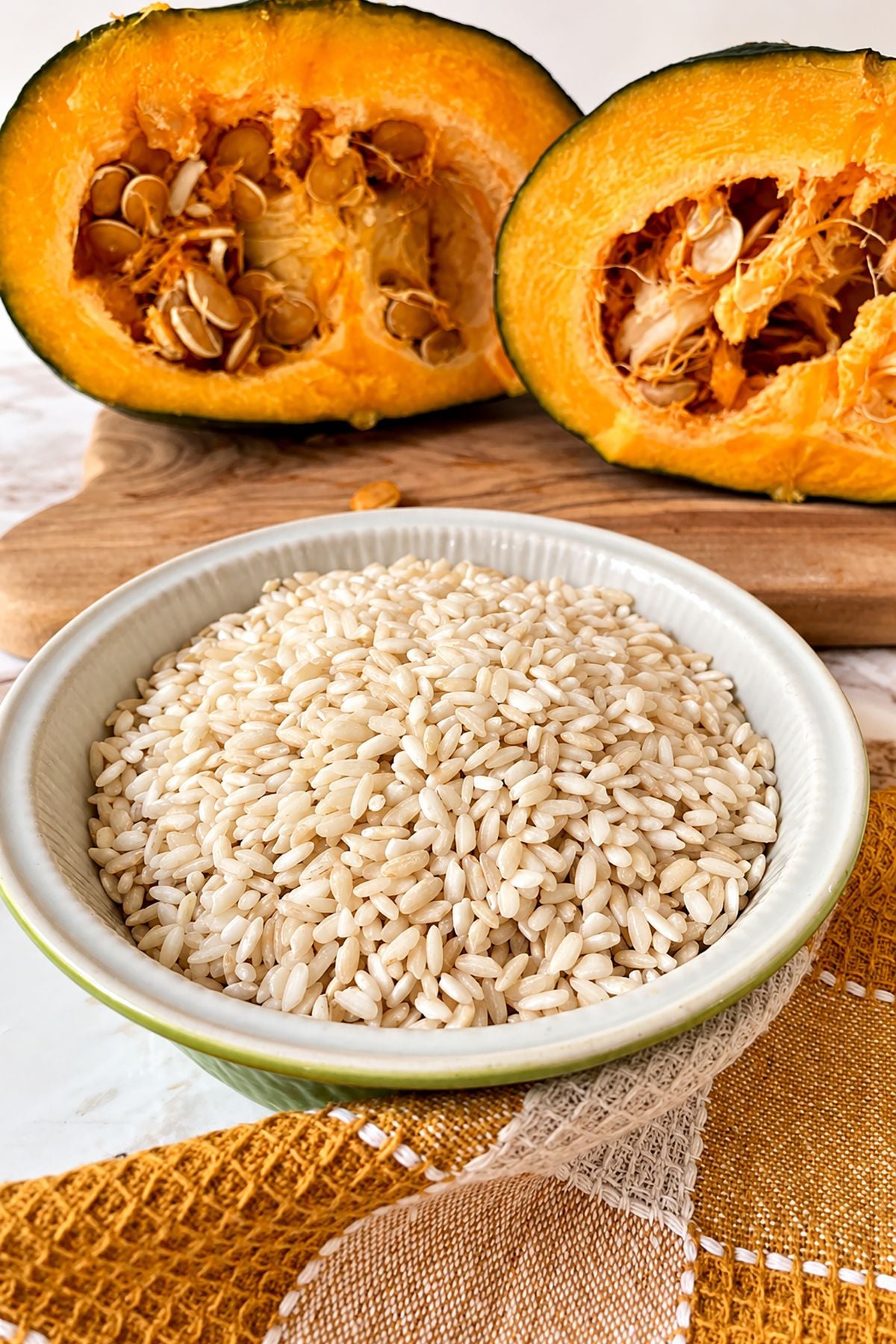
Prep Time: 15 Min | Cook Time: 30 Min | Servings: 4
- 450 g (16 oz) pumpkin flesh, peeled and seeded – zucca mantovana, kabocha squash or butternut squash
- 1 medium onion
- 1.5 liters (about 6⅓ cups) vegetable broth, kept hot
- 400 g (about 2 cups) Carnaroli or Arborio rice
- 80 g (about ¾ stick) unsalted butter
- 120 g (about 1⅓ cups) finely grated Parmigiano Reggiano
- 3 tablespoons extra virgin olive oil
- Freshly ground black pepper, to taste (optional)
- Fine salt, to taste
How to Make Italian Pumpkin Risotto

Step 1) - Remove the seeds and skin from the pumpkin, then cut the flesh into small cubes.

Step 2) - Finely chop the onion. Heat the extra virgin olive oil and half of the butter in a wide saucepan over low heat.
Add the onion and cook gently for about 5 minutes, until soft and translucent but not browned.

Step 3) - Add the pumpkin cubes and pour in a small ladleful of the hot vegetable broth.
Stir, cover with a lid, and cook over low to medium heat for about 10 minutes, or until the pumpkin begins to soften.

Step 4) - As the pumpkin cooks, gently mash some of the pieces with a wooden spoon. You don't need to make a completely smooth purée: leaving a few small pieces gives the risotto more texture.
When most of the liquid has been absorbed and the pumpkin is soft and creamy, add the rice.

Step 5) - Stir the rice into the pumpkin mixture and let it toast for about 1–2 minutes, stirring frequently.
This short step helps the grains maintain their texture during cooking.
Begin adding the hot vegetable broth one ladleful at a time, stirring often. Wait until most of the liquid has been absorbed before adding more.
Continue cooking for about 15–18 minutes, depending on the type of rice, until the grains are tender but still slightly firm in the center.
Taste before adding salt, since the broth and Parmigiano may already be quite savory.
Mantecare the Risotto
Step 6) - When the rice is ready, turn off the heat.
Add the remaining butter and grated Parmigiano Reggiano. Stir vigorously until the butter and cheese melt and the risotto becomes smooth and creamy.
If necessary, add a small amount of hot broth to loosen the consistency.
Let the risotto rest for 1–2 minutes, then add freshly ground black pepper if you like.
Serve the pumpkin risotto immediately, while it's hot and creamy.
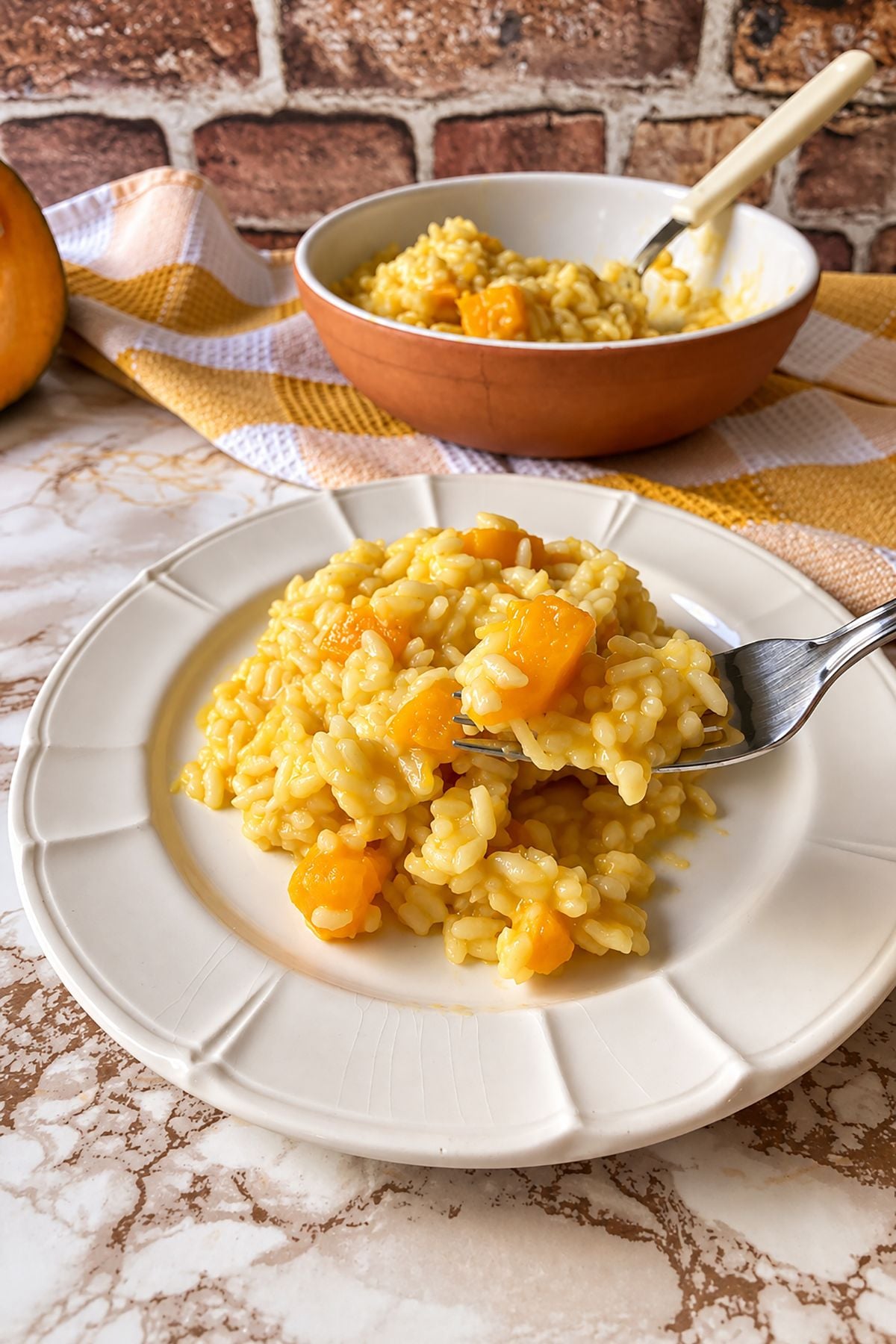
What Is the Best Pumpkin for Risotto?
For pumpkin risotto, choose a pumpkin or winter squash with dense, sweet, creamy flesh and as little water as possible.
In Northern Italy, one of the traditional choices is zucca mantovana, or Mantuan pumpkin. Its firm, naturally sweet flesh becomes creamy as it cooks, making it particularly suitable for risotto.
If you can't find it, these are excellent alternatives:
- Kabocha Squash: Sweet and slightly nutty, with dense, velvety flesh. It's one of the best substitutes for Italian zucca mantovana.
- Butternut Squash: Easy to find and naturally sweet, with smooth flesh that breaks down nicely during cooking.
- Sugar Pie Pumpkin (Pie Pumpkin): Smaller and less watery than carving pumpkins, with sweet flesh that works well in savory dishes.
- Red Kuri Squash (Hokkaido Pumpkin): Naturally sweet and creamy, with a delicate chestnut-like flavor that pairs beautifully with risotto.
Avoid large carving pumpkins, which tend to have watery, stringy flesh and much less flavor.
Whichever variety you choose, peel and seed it, then cut the flesh into small, even cubes so it cooks quickly and blends naturally into the risotto.
Tips for Perfect Pumpkin Risotto
Choose the right rice. Carnaroli is my first choice for risotto because it releases plenty of starch while remaining firm and al dente. Arborio is also a good option and is usually easier to find. Avoid regular long-grain rice, which will not give you the same creamy texture.
Always keep the broth hot. Add hot broth to the rice rather than cold or room-temperature broth. This keeps the cooking temperature steady and helps the rice cook evenly.
Toast the rice before adding the broth. After adding the rice to the pumpkin mixture, cook it for 1–2 minutes before you begin adding the broth. This brief tostatura helps the grains maintain their structure during cooking.
Add the broth gradually. Pour in one ladleful at a time and wait until most of it has been absorbed before adding more. The amount of broth you actually need may vary slightly depending on the rice and cooking temperature.
Stir often, but not constantly. Regular stirring helps release the starch that makes risotto creamy, but there's no need to stir continuously. Gentle, frequent stirring is enough.
Don't overcook the rice. A good Italian risotto should be creamy while the rice remains slightly firm in the center. Start tasting it toward the end of the cooking time rather than relying only on the clock.
Finish the risotto off the heat. Once the rice is cooked, remove the pan from the heat before adding the butter and Parmigiano Reggiano. This final step, called mantecatura, gives the risotto its characteristic smooth and creamy texture.
Keep it creamy—not dry. Risotto continues to thicken after it leaves the heat. The finished dish should be soft enough to spread gently across the plate rather than sit in a firm mound. If necessary, stir in a little extra hot broth before serving.
Taste before adding salt. Vegetable broth and Parmigiano Reggiano can both be quite savory, so adjust the salt only toward the end of cooking.
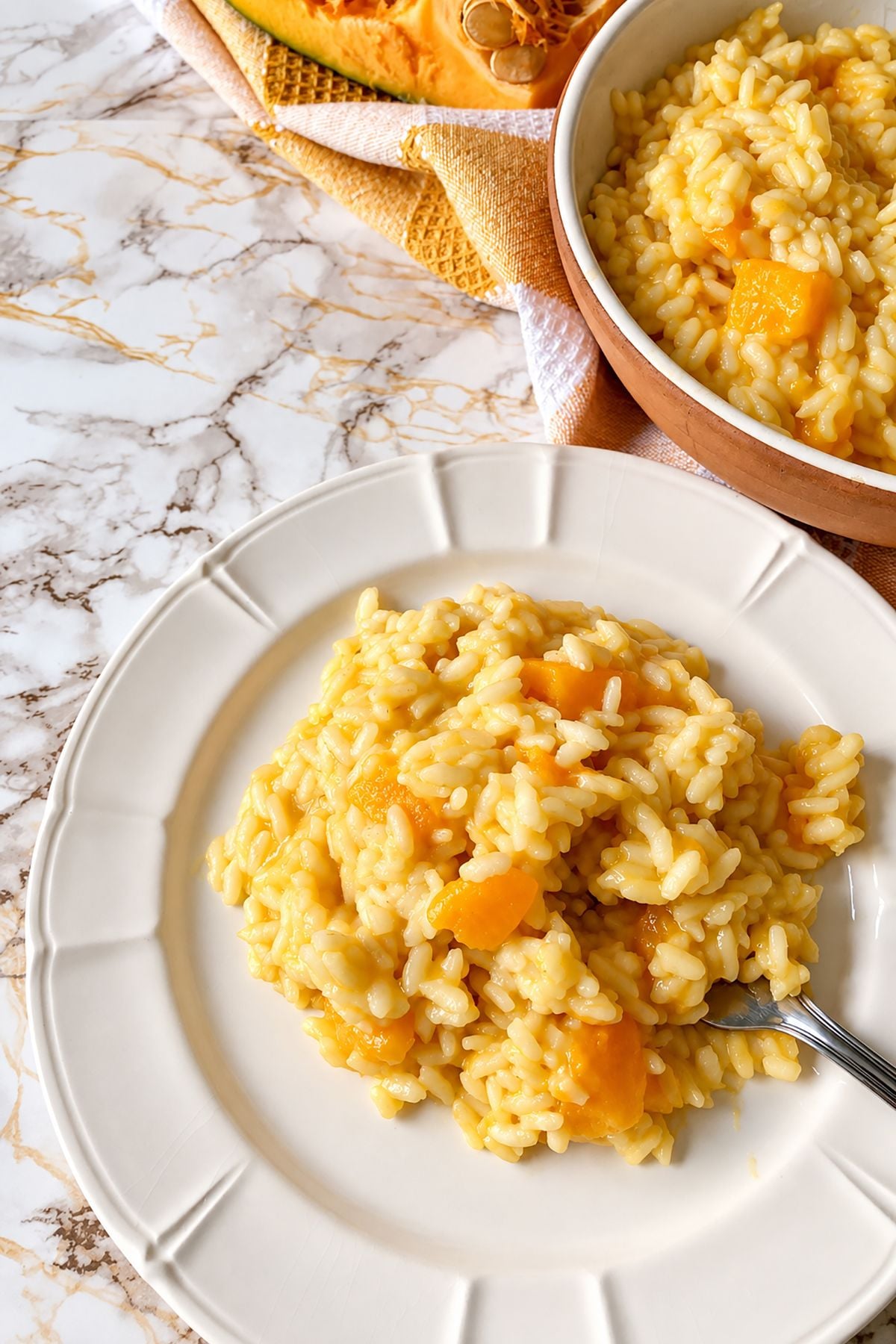
Pumpkin Risotto Variations
The classic risotto alla zucca is delicious on its own, but pumpkin also pairs well with several savory ingredients. Here are a few variations you can try:
- Pumpkin Risotto with Sausage: Brown about 150–200 g (5–7 oz) of Italian sausage before adding the onion, then continue with the recipe. The savory flavor of the sausage balances the natural sweetness of the pumpkin.
- Pumpkin Risotto with Gorgonzola: At the end of cooking, add a small amount of Gorgonzola together with the butter. Its sharp, creamy flavor creates a richer and more intense risotto.
- Pumpkin Risotto with Speck: Add diced speck or pancetta at the beginning and cook until lightly crisp. You can reserve a little to sprinkle over the finished risotto.
Storage and Reheating
Pumpkin risotto is best served immediately, while it is still hot and creamy. As it cools, the rice continues to absorb liquid and the texture becomes thicker.
If you have leftovers, let the risotto cool quickly, then transfer it to an airtight container and refrigerate it for up to 1–2 days.
To reheat, place the risotto in a saucepan over low heat and add a small amount of vegetable broth or water. Stir gently until heated through and creamy again. You can also add a small knob of butter or a little grated Parmigiano before serving.
I don't recommend freezing pumpkin risotto. The rice can become soft and lose its characteristic creamy texture after thawing.
More Italian Risotto Recipes to Try
If you love creamy Italian risotto, here are a few more recipes to try:
- Creamy Italian Mushroom Risotto – A classic fall risotto made with mushrooms, hot broth, butter, and Parmigiano Reggiano.
- Italian Saffron Risotto (Risotto alla Milanese) – One of the most traditional Northern Italian risottos, flavored with saffron and finished with butter and Parmigiano.
- Risotto with Gorgonzola, Pear and Walnuts – A rich, creamy risotto with a sweet-savory combination that works especially well in fall.
- Italian Sausage and Radicchio Risotto – A hearty Northern Italian risotto with sausage and the slightly bitter flavor of radicchio.
Recipe Card
Italian Pumpkin Risotto Recipe (Risotto alla Zucca)

Ingredients
- 450 g pumpkin flesh - 1 pound, peeled and seeded – zucca mantovana, kabocha squash or butternut squash
- 1 medium onion
- 1.5 liters vegetable broth - 6 ⅓ cups, kept hot
- 400 g Carnaroli or Arborio rice - 2 cups
- 80 g unsalted butter - ¾ stick
- 120 g grated Parmigiano Reggiano - 1 ⅓ cups
- 3 tablespoons extra virgin olive oil
- freshly ground black pepper - to taste (optional)
- fine salt - to taste
Instructions
- Remove the seeds and skin from the pumpkin, then cut the flesh into small cubes.
- Finely chop the onion. Heat the extra virgin olive oil and half of the butter in a wide saucepan over low heat.Add the onion and cook gently for about 5 minutes, until soft and translucent but not browned.
- Add the pumpkin cubes and pour in a small ladleful of the hot vegetable broth.
- Stir, cover with a lid, and cook over low to medium heat for about 10 minutes, or until the pumpkin begins to soften.
- As the pumpkin cooks, gently mash some of the pieces with a wooden spoon. You don't need to make a completely smooth purée: leaving a few small pieces gives the risotto more texture.
- When most of the liquid has been absorbed and the pumpkin is soft and creamy, add the rice.
- Stir the rice into the pumpkin mixture and let it toast for about 1–2 minutes, stirring frequently.This short step helps the grains maintain their texture during cooking.
- Begin adding the hot vegetable broth one ladleful at a time, stirring often. Wait until most of the liquid has been absorbed before adding more.Continue cooking for about 15–18 minutes, depending on the type of rice, until the grains are tender but still slightly firm in the center.Taste before adding salt, since the broth and Parmigiano may already be quite savory.
Mantecare the Risotto
- When the rice is ready, turn off the heat.Add the remaining butter and grated Parmigiano Reggiano. Stir vigorously until the butter and cheese melt and the risotto becomes smooth and creamy.If necessary, add a small amount of hot broth to loosen the consistency.
- Let the risotto rest for 1–2 minutes, then add freshly ground black pepper if you like.Serve the pumpkin risotto immediately, while it's hot and creamy


Leave a Reply