
Risi e Bisi is a traditional Venetian rice and peas recipe, especially popular in spring when fresh peas are at their sweetest. The name simply means “rice and peas” in Venetian dialect, and the dish is typical of Veneto cuisine, especially the cities of Venice and Vicenza.
This Italian rice and peas dish has a unique texture, somewhere between a creamy risotto and a thick soup. It should be soft and creamy, not too dry and not too runny, with enough broth to be eaten with a spoon.
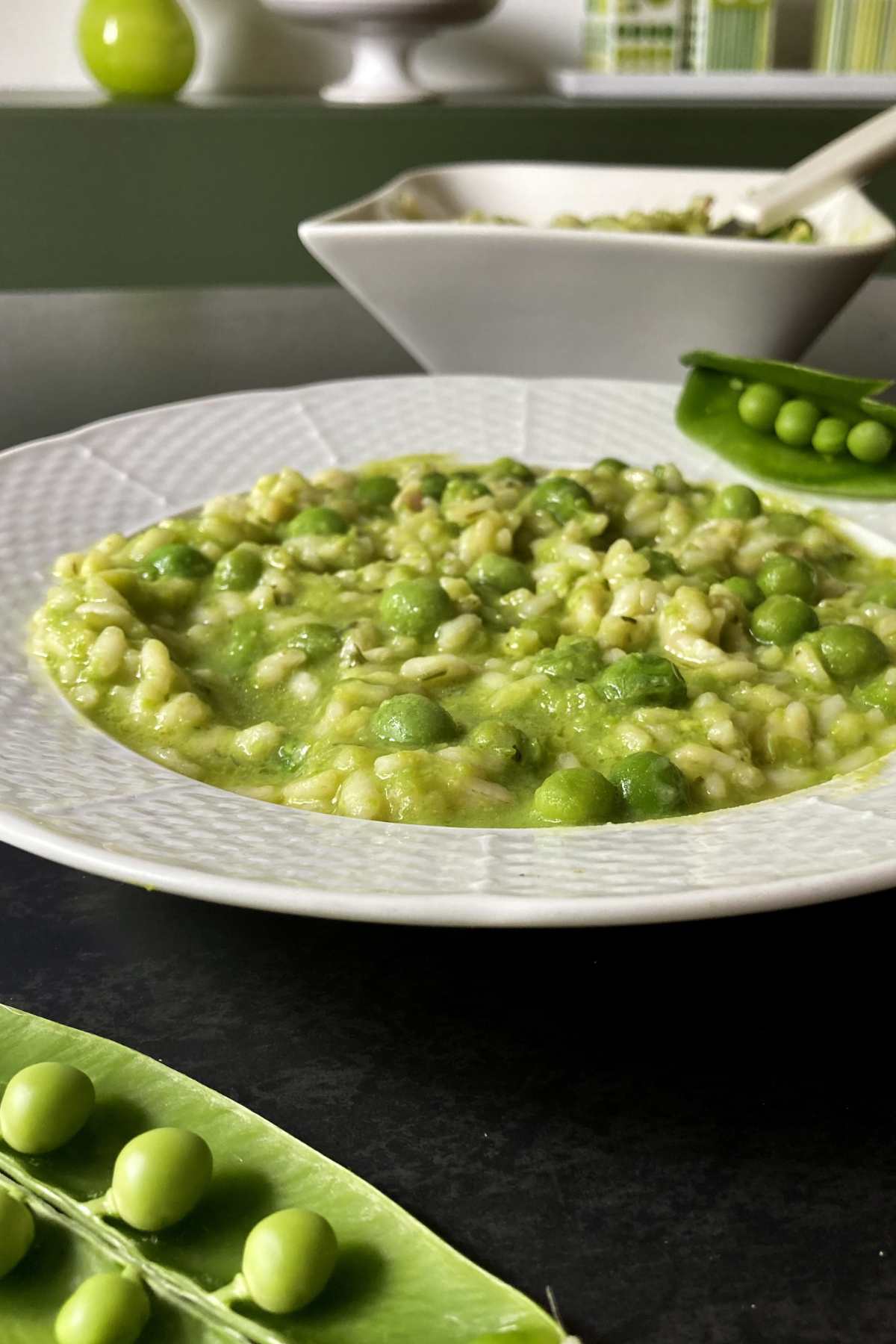
The authentic Venetian recipe is made with fresh peas and their pods. The pods are used to prepare a delicate pea broth, which gives Risi e Bisi its fresh, sweet flavor and makes this simple dish truly special.
Risi e Bisi is rich and satisfying enough to serve as a main course. Pancetta, butter and Parmigiano Reggiano cheese make it even creamier and more flavorful, while the peas keep it fresh and delicate.
Follow this step-by-step recipe to make authentic Risi e Bisi at home, just like a traditional Venetian spring dish should be.
Jump to:
What is Risi e Bisi?
Risi e Bisi means “rice and peas” in the Venetian dialect. It's a traditional dish from Veneto, especially associated with Venice and Vicenza.
It's often described as a cross between risotto and soup, but its texture is very specific: creamy, soft and slightly brothy. It should not be as firm as risotto, and it should not be as liquid as a regular soup.
Traditionally, Risi e Bisi was prepared in spring with fresh peas and served in Venice for the feast of Saint Mark on April 25.
Ingredients
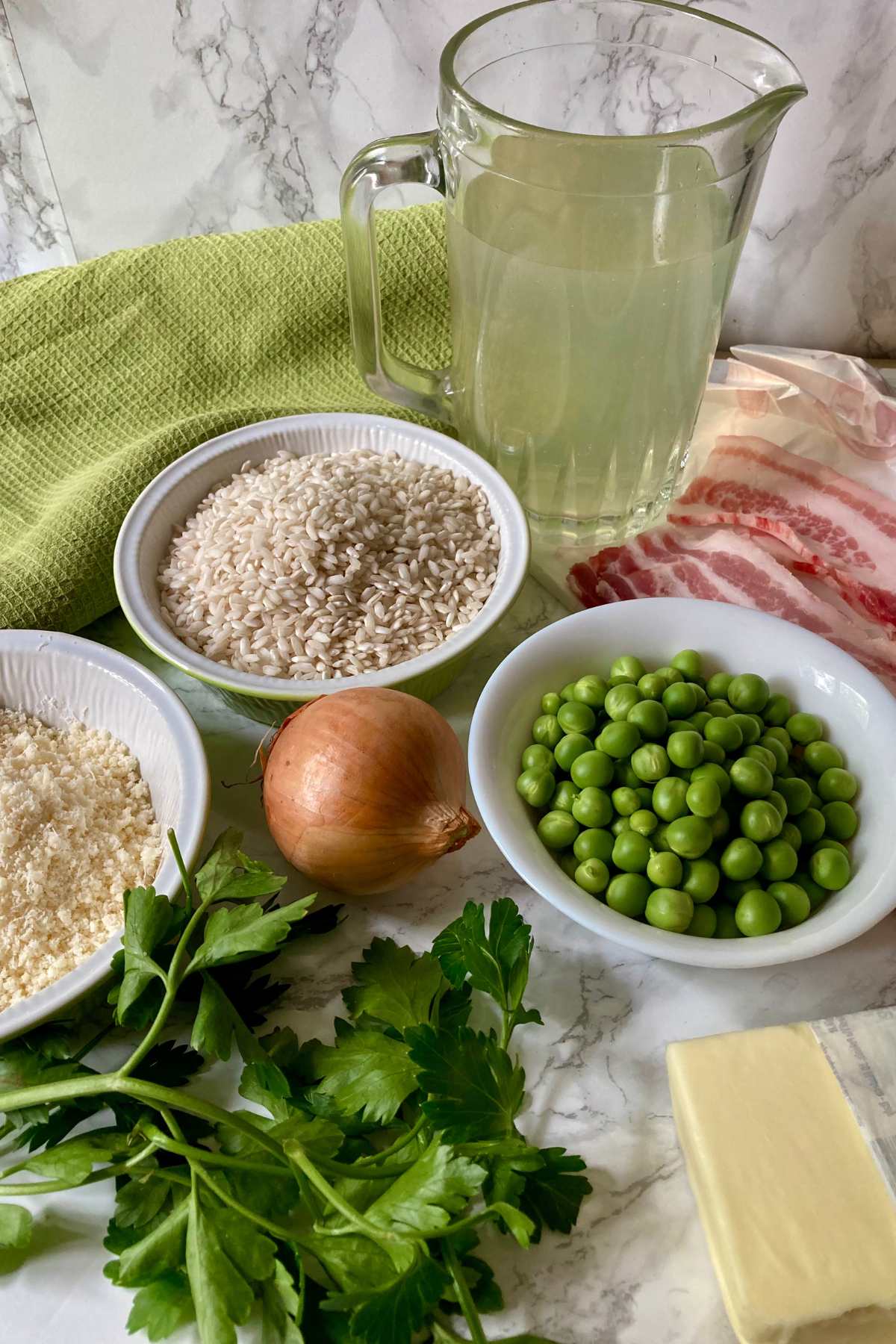
Prep Time: 30 Min | Cook Time: 1 Hours | Servings: 4
- 350 g (1 ¾ cups) Vialone Nano rice
- 1 kg (2.2 pounds) fresh peas in the pod
- lightly salted water, as needed, for cooking the pea pods
- 1 liter (4 ¼ cups) vegetable broth, chicken broth or hen broth.
- 60 g (about ½ stick) unsalted butter
- 1 small onion
- 1 tablespoon extra virgin olive oil
- 50 g (2 oz) pancetta
- 50 g (½ cup) grated Parmigiano Reggiano
- 2 tablespoons chopped fresh parsley
- salt, to taste
- freshly ground black pepper, to taste
Note about the broth: In the traditional Venetian recipe, the pea pods are used to make a flavorful green broth. You will prepare this pea pod liquid in the first steps of the recipe, then use it together with the hot vegetable or chicken broth to cook the peas and rice.
Best Rice for Risi e Bisi
Risi e Bisi is often described as a cross between risotto and soup. It has the creaminess of a risotto, but the final texture should be much softer and more brothy.
Unlike a classic risotto, Risi e Bisi is traditionally eaten with a spoon, not a fork. It should not be dry or compact, but creamy, fluid and slightly soupy.
Another difference is the cooking method. In a risotto, the broth is usually added little by little and absorbed almost completely. In Risi e Bisi, the rice cooks in a more generous amount of liquid, including the pea pod broth, so the final result stays soft and creamy.
For this reason, Risi e Bisi is closer to a thick soup than to a firm risotto, although it still has the rich, creamy consistency of a rice dish.
Fresh Peas and Pea Pod Broth
Fresh peas are the best choice for making authentic Risi e Bisi, especially in spring when they are sweet and tender. In the traditional Venetian recipe, the pea pods are not thrown away. They are used to prepare a delicate broth that gives the dish a deeper, fresher flavor.
To make the pea pod broth, wash the pods well, then simmer them in water or vegetable broth until they release their flavor. Once cooked, strain the broth and use it to cook the rice. This simple step is what makes Risi e Bisi different from a regular rice and peas recipe.
How to Make Risi e Bisi

Step 1) - First, prepare the vegetable broth, chicken broth, or hen broth, according to your taste. Keep it warm, as you will use it later to cook the peas and rice.
Then shell the peas, keeping the pods aside. Once you have shelled all the peas, wash the pods very well under running water.

Step 2) - Place the pods in a large pot with lightly salted water and boil them for about 45 minutes. Once cooked, blend them with an immersion blender until you get a thick puree. Then pour the puree through a fine-mesh strainer or colander to collect the liquid and remove the fibrous part.
Keep this green pea pod liquid warm. You will add it to the rice later to give Risi e Bisi its traditional fresh pea flavor.

Step 3) - Finely chop the onion and cut the pancetta into small pieces. Place the oil, half the butter, the onion and the pancetta in a large skillet or saucepan.

Step 4) - Sauté over medium heat for about 5 minutes, until the onion is soft and the pancetta has released its flavor. Then add the chopped parsley and stir.

Step 5) - Add the shelled peas and two ladles of the hot broth. Cook for about 5 minutes, stirring occasionally.

Step 6) - Add the warm pea pod liquid, season with salt and pepper, and bring to a boil. Then lower the heat and add the rice.

Step 7) - Cook slowly for about 15 minutes, stirring from time to time. During cooking, add more hot broth as needed, one ladle at a time. Risi e Bisi should never become dry like a firm risotto. The final consistency should be soft, creamy and slightly brothy, more like a thick soup.
When the rice is cooked, turn off the heat and add the remaining butter.

Step 8) - Add the grated Parmigiano Reggiano and stir until creamy. Serve Risi e Bisi immediately, hot and soft, with a little extra Parmigiano if you like.
Risi e Bisi: Risotto or Soup?
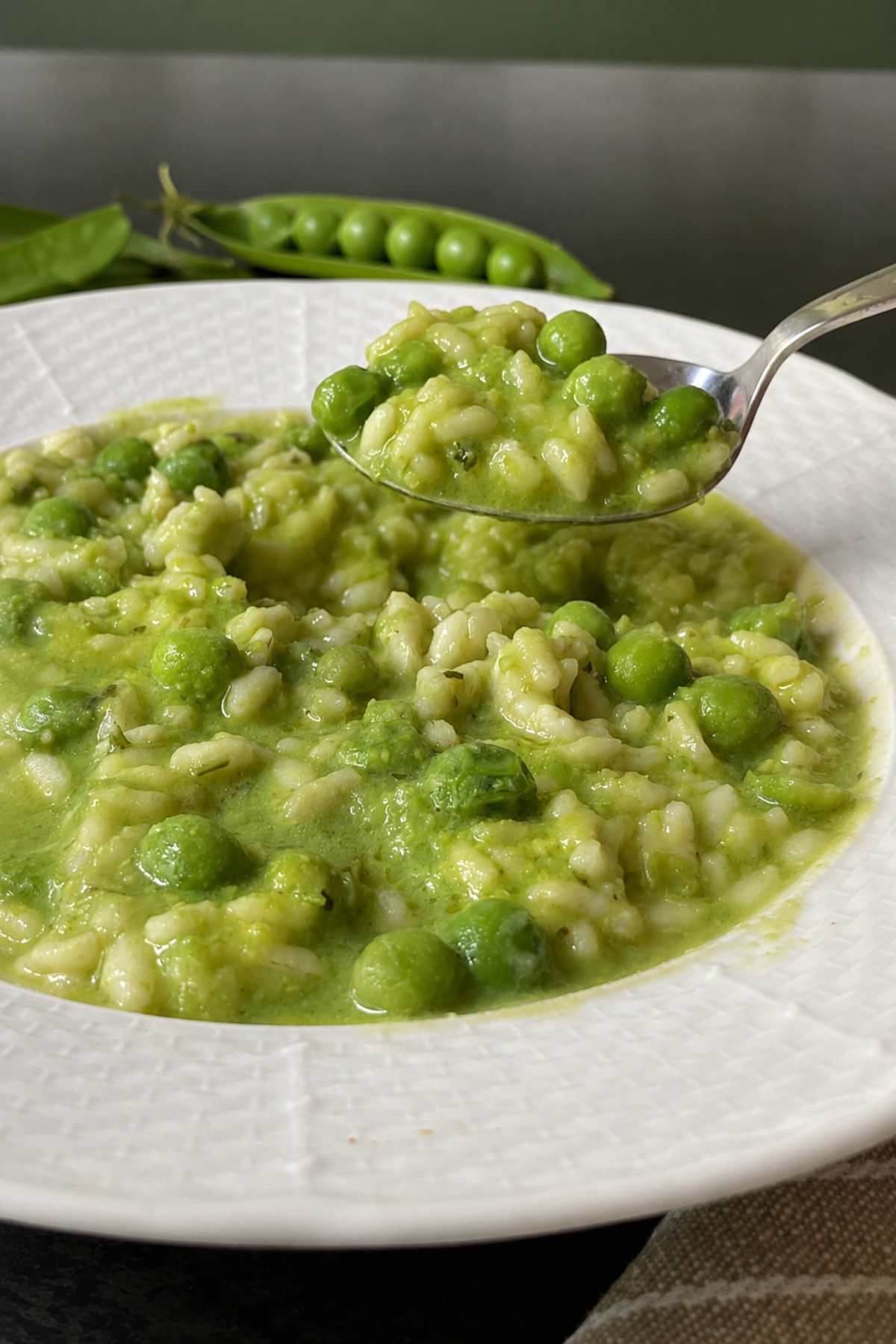
Risi e Bisi is a genuine comfort food, a cross between a risotto and a soup. It should be soft and creamy, neither too dry nor too runny.
The custom is to eat Risi e Bisi with a spoon and not with a fork as is done for risotto.
Moreover broth is added all at once and not gradually as it is done for risotto.
For these reasons it is better to consider Risi e Bisi as a thick soup rather than a risotto.
Tips for the Best Venetian Rice and Peas
FRESH PEAS: Use fresh peas in the pod when they are in season. The pea pod broth is what gives authentic Risi e Bisi its delicate spring flavor and makes it different from a simple rice and peas recipe.
WARM BROTH: Keep the broth warm while cooking. Adding cold broth would slow down the cooking process and could affect the texture of the rice.
CONSISTENCY: Do not let Risi e Bisi become too dry. This dish should be softer and more fluid than a classic risotto, with a creamy, slightly brothy consistency.
STIRRING: Stir from time to time, but not constantly. The rice needs to release its starch, but the final texture should remain soft and delicate.
FINAL CREAMINESS: Add the butter and Parmigiano Reggiano at the end, off the heat. This final step makes Risi e Bisi creamy and rich without making it heavy.
SERVING: Serve immediately. Risi e Bisi is best when hot, creamy and still slightly soupy.
Storage and Reheating
Risi e Bisi is best enjoyed immediately, when it is hot, creamy and still slightly brothy. As it cools, the rice continues to absorb the liquid, so the texture becomes thicker and less fluid.
If you have leftovers, let them cool completely, then store them in an airtight container in the refrigerator for up to 2 days.
To reheat Risi e Bisi, place it in a saucepan with a little hot broth or water. Warm it gently over low heat, stirring often, until it becomes creamy again. Add the liquid a little at a time, because the rice will have absorbed most of the broth while resting.
Freezing is not recommended, because the rice and peas can lose their texture after thawing.
Variations
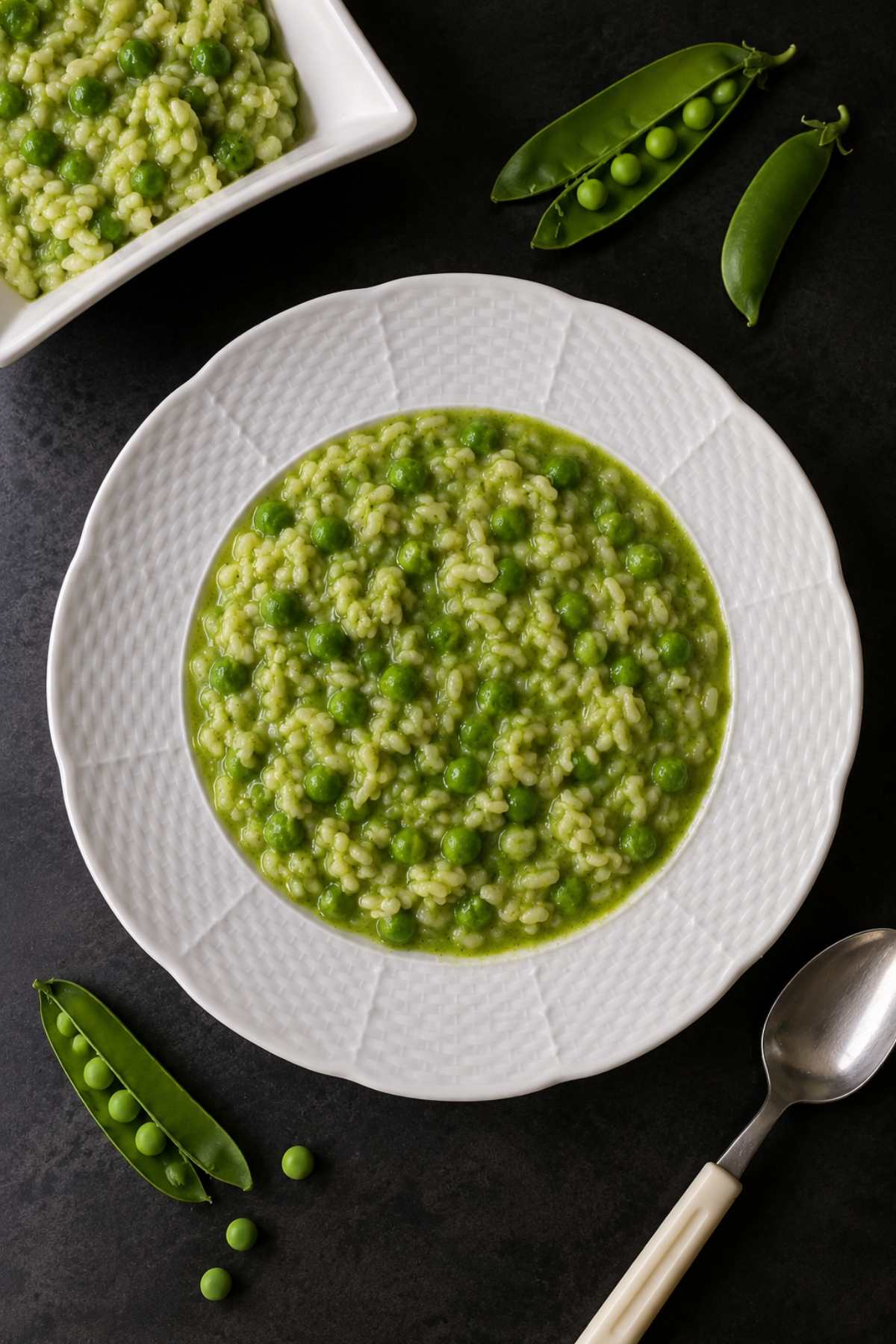
FROZEN PEAS: If fresh peas in the pod are not available, you can use good-quality frozen peas. Since you will not have the pods to make the traditional pea pod broth, blend about half of the cooked peas with a ladle of hot broth. This will give the dish a greener color and a creamier texture, similar to the traditional version.
CANNED PEAS: Canned peas can be used only if you have no other option, but they are softer and less sweet than fresh or frozen peas. Add them near the end of cooking so they do not become mushy.
LIGHTER VERSION: For a lighter version, use vegetable broth instead of chicken broth and replace part or all of the butter with extra virgin olive oil. You can also reduce the amount of pancetta or omit it, although the flavor will be more delicate.
FAQ
Not exactly. Risi e Bisi is creamier and more brothy than a classic risotto. It should be soft enough to eat with a spoon, but not as liquid as a soup.
Yes. Fresh peas are traditional, especially in spring, but good-quality frozen peas work well. If you use frozen peas, you will not have the pods for the broth, so use a good vegetable broth instead.
Vialone Nano is traditional in Veneto and works very well because it releases starch while keeping a good texture. Carnaroli or Arborio are good alternatives.
Risi e Bisi means “rice and peas” in Venetian dialect.
Risi e Bisi should be creamy, soft, and slightly soupy. It should not be dry like a firm risotto, but it should not be watery either.
More Italian Rice, Pea and Soup Recipes to Try
If you enjoyed this Risi e Bisi recipe, you may also like other simple and comforting Italian dishes with rice, peas and vegetables.
- Risotto with Peas and Zucchini Flowers
- Pasta e Piselli (Neapolitan Pasta and Peas)
- Pasta and Beans Recipe
- Leek Risotto Recipe
- Italian Minestrone Soup Recipe
Recipe Card

Risi e Bisi Recipe (Authentic Venetian Rice and Peas)

Ingredients
- 350 g Vialone Nano rice - 1 ¾ cups
- 1 kg fresh peas in the pod - 2.2 pounds
- lightly salted water - as needed, for cooking the pea pods
- 1 liter vegetable broth, chicken or hen broth - 4 ¼ cups
- 60 g unsulted butter - about ½ stick
- 1 small onion
- 1 tablespoon extra virgin olive oil
- 50 g pancetta - 2 oz
- 50 g grated Parmigiano Reggiano - ½ cup
- 2 tablespoons chopped fresh parsley
- salt - to taste
- freshly ground black pepper - to taste
Instructions
- First, prepare the vegetable broth, chicken broth, or hen broth, according to your taste. Keep it warm, as you will use it later to cook the peas and rice.
- Then shell the peas, keeping the pods aside. Once you have shelled all the peas, wash the pods very well under running water.
- Place the pods in a large pot with lightly salted water and boil them for about 45 minutes.
- Once cooked, blend them with an immersion blender until you get a thick puree. Then pour the puree through a fine-mesh strainer or colander to collect the liquid and remove the fibrous part.Keep this green pea pod liquid warm. You will add it to the rice later to give Risi e Bisi its traditional fresh pea flavor.
- Finely chop the onion and cut the pancetta into small pieces.
- Place the oil, half the butter, the onion and the pancetta in a large skillet or saucepan.
- Sauté over medium heat for about 5 minutes, until the onion is soft and the pancetta has released its flavor.
- Then add the chopped parsley and stir.
- Add the shelled peas and two ladles of the hot broth. Cook for about 5 minutes, stirring occasionally.
- Add the warm pea pod liquid, season with salt and pepper, and bring to a boil. Then lower the heat and add the rice.
- Cook slowly for about 15 minutes, stirring from time to time. During cooking, add more hot broth as needed, one ladle at a time. Risi e Bisi should never become dry like a firm risotto. The final consistency should be soft, creamy and slightly brothy, more like a thick soup.
- When the rice is cooked, turn off the heat and add the remaining butter.
- Add the grated Parmigiano Reggiano and stir until creamy. Serve Risi e Bisi immediately, hot and soft, with a little extra Parmigiano if you like.


Joan says
I love risi e bisi! Can you please tell me the quantity/weight of frozen peas that equals 1 kilo of fresh peas in their pods?
Thank you.
Silvana Nava says
Hi Joan,
For this recipe, if you don't have fresh peas in pods, I recommend using about 800 grams of frozen or shelled peas. About half then you will blend to get the creamy component instead of the pods.
In general it is not easy to indicate the amount of frozen peas that is equivalent to 1 kg of fresh peas with pods. In fact, the content and weight of pods are not always the same. Indicatively, 1 kg of peas with pods yields 400-500 grams of shelled peas.
I hope you will enjoy Risi e Bisi!
Joan says
Grazie mille, Silvana!