
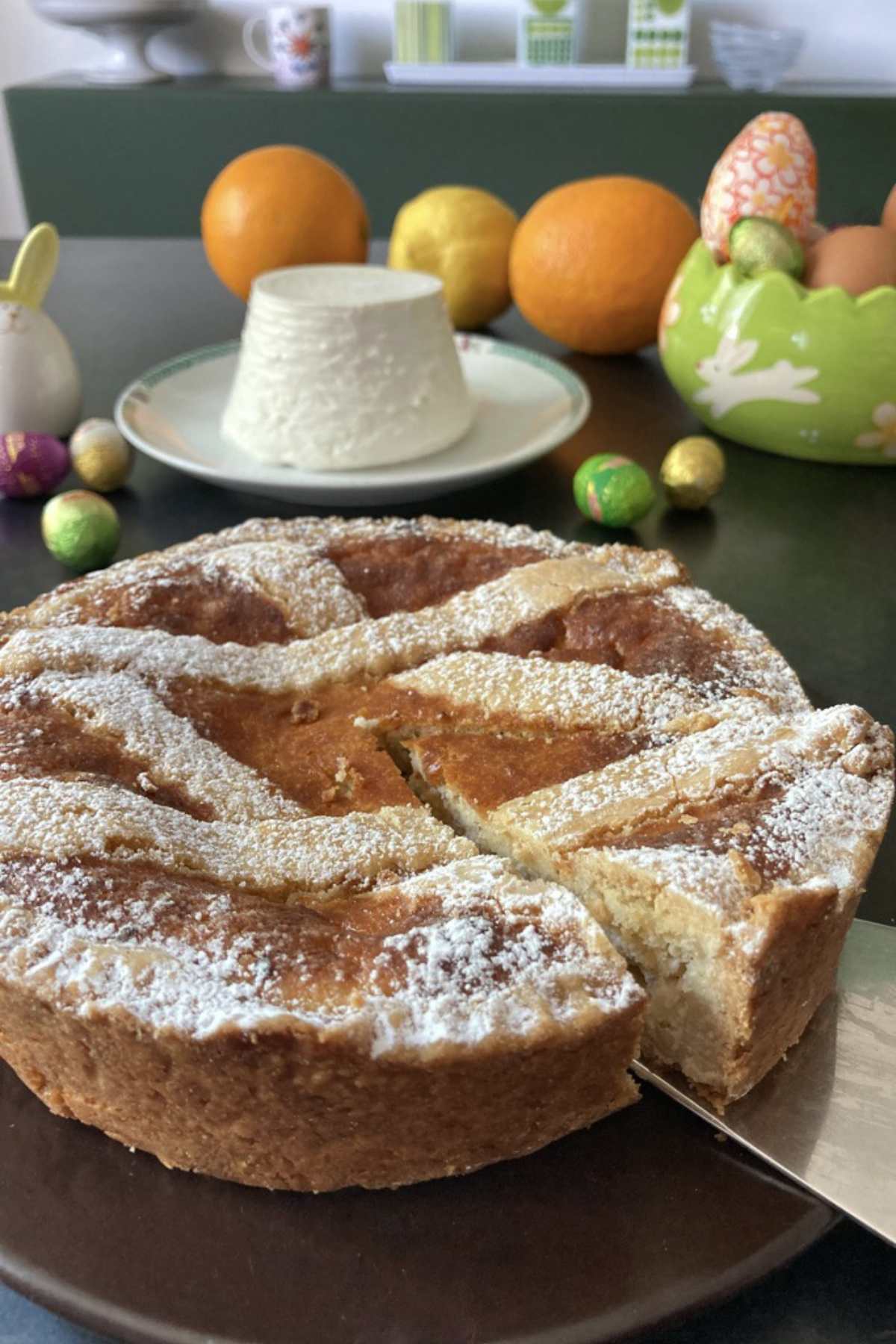
Pastiera Napoletana is a traditional Italian Easter grain pie from Naples, made with ricotta cheese, cooked wheat berries and fragrant orange blossom water. In Italy, it is the symbol of Easter in Neapolitan homes.
Unlike other ricotta desserts, pastiera has a unique texture thanks to the tender grains of wheat mixed into the creamy filling. The flavor is delicate and aromatic, with notes of citrus, vanilla and orange blossom that make it unmistakable.
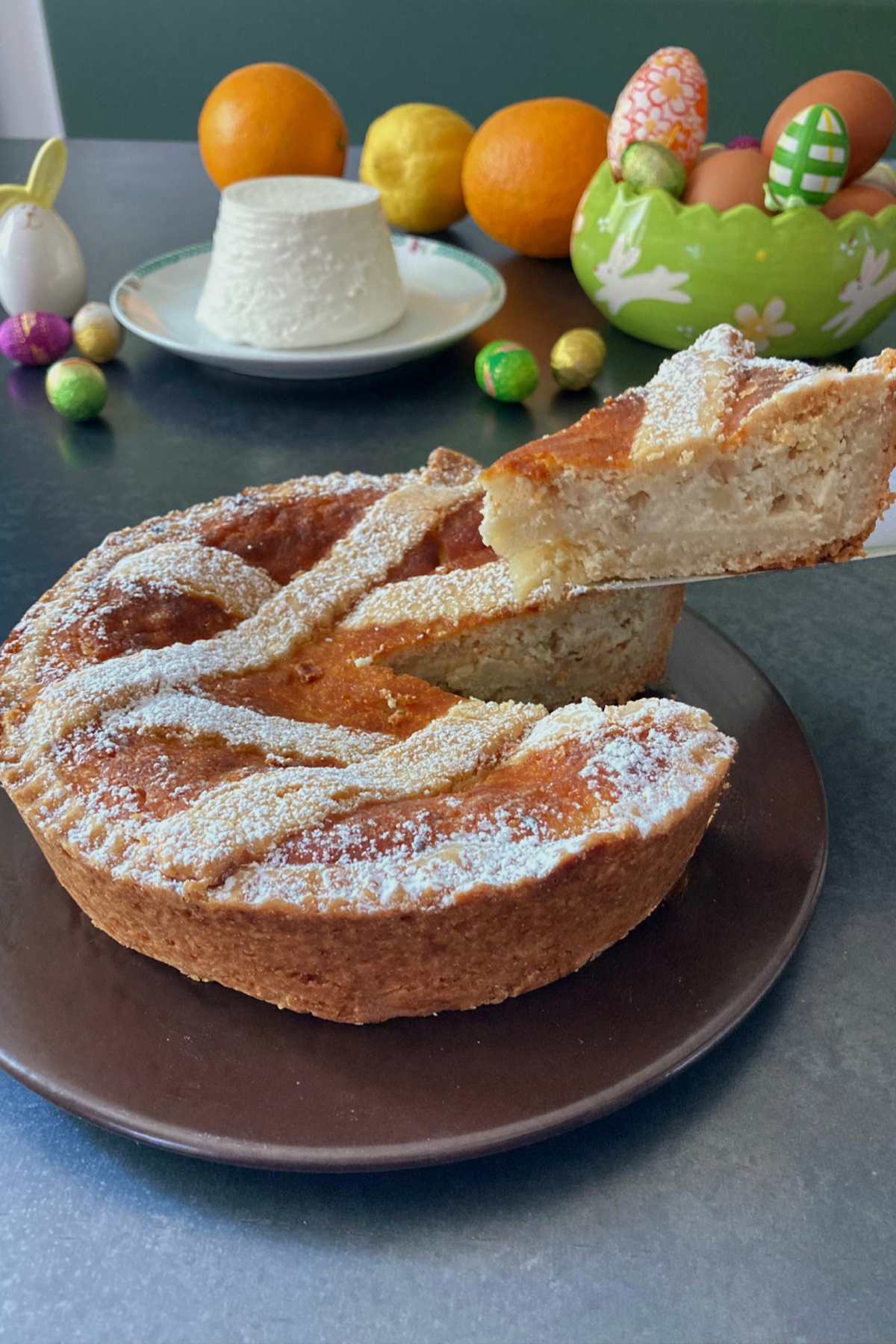
It's often called Italian grain pie or Easter grain pie, but in Naples it remains simply pastiera.
This is the authentic version, prepared with pasta frolla and a rich ricotta and wheat filling, exactly as it is made in Southern Italy. I will guide you step by step so you can recreate the true taste of Neapolitan Easter in your own kitchen.
Jump to:
What Is Pastiera Napoletana?
Pastiera Napoletana is a traditional Italian Easter grain pie from Naples made with ricotta cheese, cooked wheat berries, eggs, sugar and orange blossom water. The filling is baked inside a shortcrust pastry shell.
Its distinctive feature is the soft texture created by whole grains of wheat mixed into the creamy ricotta filling.
Ingredients for Pastiera Napoletana (Italian Easter Grain Pie)
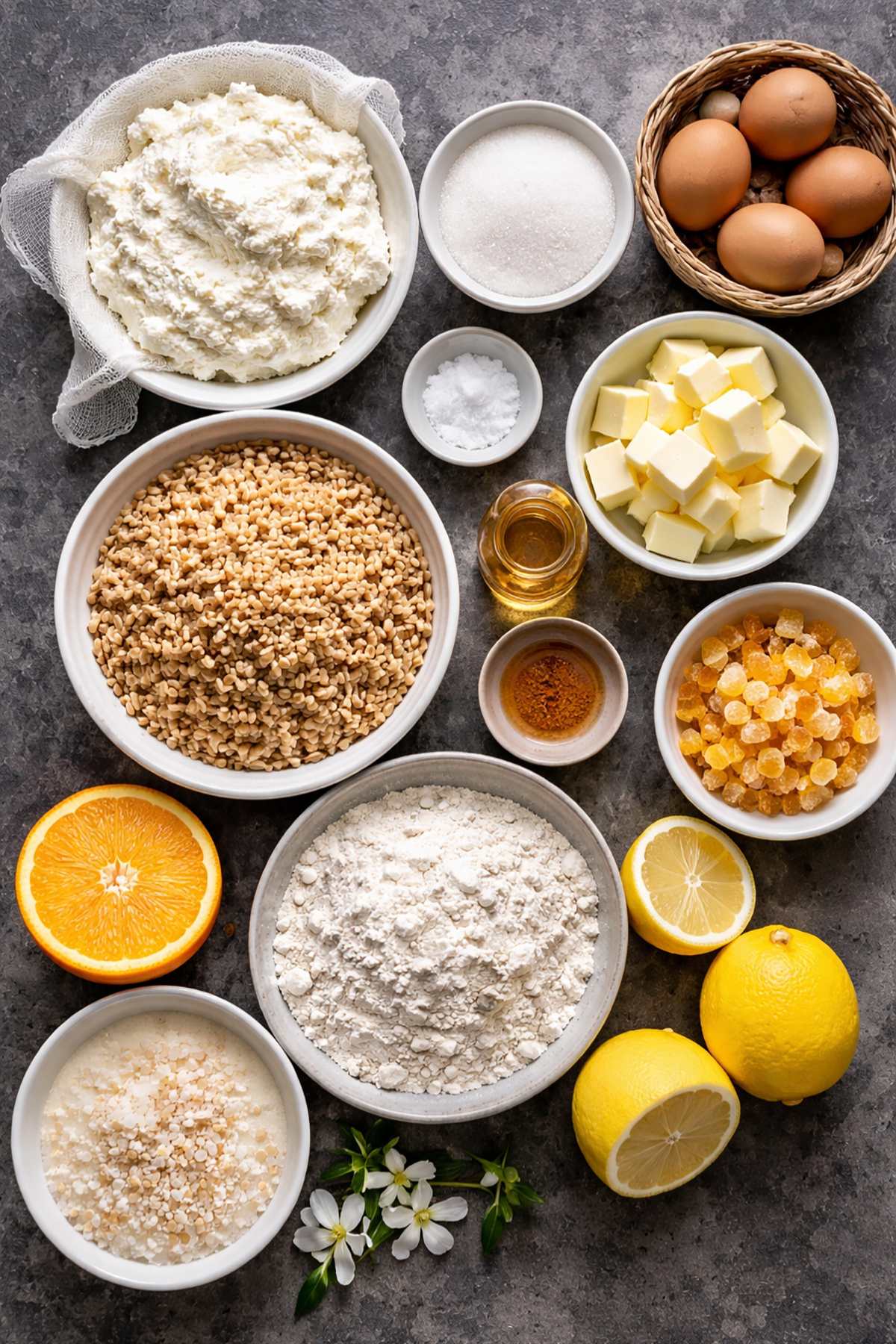
Pastiera Napoletana is made with three main components: shortcrust pastry, a creamy cooked wheat mixture, and a ricotta filling.
Prep Time: 1 Hour | Resting Time: at least 12 Hours | Cook Time: 1 Hour 30 Min | Servings: 10 people, for a 26 cm (10 inch) pie dish
For the Shortcrust Pastry
- 400 g (3 ¼ cups) all-purpose flour or Italian 00 flour
- 180 g (about 1 cup) granulated sugar
- 180 g (¾ cup) unsalted butter, at room temperature
- 3 medium eggs
- A pinch of fine salt
For the Wheat Cream (Cooked Wheat Filling)
- 300 g (10 oz) cooked wheat berries, also known as “grano cotto” and commonly used for Italian grain pie
- 200 ml (⅘ cup) whole milk
- Peel of 1 orange
- Peel of 1 lemon
- 30 g (2 tablespoons) unsalted butter
For the Ricotta Cream
- 400 g (1 ½ cups) whole milk ricotta, well drained
- 300 g (1 ½ cups) granulated sugar
- 3 medium eggs
- 2 egg yolks
- ½ teaspoon ground cinnamon
- 2 tablespoons orange blossom water
- 50 g (⅓ cup) candied citron, finely chopped
- 50 g (⅓ cup) candied orange peel, finely chopped
Kitchen Tools You May Need
You don’t need any special equipment to make Pastiera Napoletana. Most of the tools are common in any home kitchen. However, a few items can make the process easier.
- 10-inch (26 cm) pie pan: Traditionally, pastiera is baked in a round pan with slightly flared edges and a high rim, about 4.5 cm (2 inches). For this recipe, a standard 10-inch pie dish works perfectly.
- Food processor: Not essential, but very helpful if you want to partially blend the cooked wheat for a creamier texture.
- Stand mixer or hand mixer: Useful for beating the eggs and sugar until light and fluffy. If you prefer, you can do it by hand with a whisk.
Instructions
IMPORTANT! READ BEFORE YOU START: Some steps of Pastiera Napoletana need to be prepared in advance, so allow at least two days to complete the recipe properly.
Pastiera also tastes best the day after it is baked, once the flavors have had time to develop and blend together.
If you plan to serve it on Easter Sunday, begin preparing it on Friday, or even Thursday if you prefer, and bake it on Saturday.
The Shortcrust Pastry
First, prepare the pastry. The dough used for Pastiera Napoletana is slightly different from classic Italian pasta frolla. It must be firm and elastic rather than crumbly. If the dough is too fragile, the lattice strips may break during baking and the slices will not hold their shape.

Step 1) - In a large bowl, beat the softened butter with the sugar for 3 to 4 minutes, until light and creamy. Using a stand mixer or electric hand mixer makes this step easier, but you can also do it by hand.

Step 2) - Add the eggs one at a time, mixing well after each addition. Wait until the first egg is fully incorporated before adding the next. Continue mixing until you obtain a smooth, lump-free cream. Stir in the salt.

Step 3) - Sift the flour and add it all at once. Mix with a wooden spoon until the dough begins to come together. It will be very soft, and that is exactly what you want at this stage.

Step 4) - Transfer the dough to a lightly floured work surface and knead gently, just enough to bring everything together. If it sticks slightly to your hands, dust with a little flour, but do not add too much.

Step 5) - Shape into a ball, wrap tightly in plastic wrap and refrigerate for at least 12 hours, preferably 24. This resting time is essential. The dough must become firm and cold so it can be rolled out properly and hold the decorative strips during baking.
The Wheat Cream
Now prepare the wheat cream, which gives pastiera its distinctive texture and flavor.

Step 6) - Start by peeling the orange and lemon. Use a vegetable peeler and remove only the colored outer layer, avoiding the bitter white pith underneath. Set the peels aside.

Step 7) - In a medium saucepan, combine the cooked wheat berries, whole milk, butter and the citrus peels. Make sure the wheat is spread evenly in the pan rather than piled up, so it cooks gently and uniformly.

Step 8) - Place the saucepan over very low heat. This step requires patience. Cook for about 25 to 30 minutes, stirring frequently to prevent the mixture from sticking to the bottom. The milk will slowly be absorbed and the mixture will thicken into a soft, creamy consistency.
By the end of cooking, the wheat should be tender and the mixture velvety, not dry. Remove the citrus peels and let the cream cool completely at room temperature.

Step 9) - Once cooled, take about 100 g (½ cup) of the wheat mixture and blend it until smooth. This small step makes a big difference: it creates a creamier filling while still preserving the pleasant texture of the whole grains.
Mix the blended portion back into the remaining wheat cream and stir well to combine.

Step 10) - Cover with plastic wrap and refrigerate. You can prepare this mixture the day before and keep it chilled until you are ready to assemble the pastiera.
The Ricotta Cream
The ricotta filling is what makes Pastiera Napoletana rich, fragrant and unmistakable. The key to a perfect texture is patience.

Step 11) - At least 12 to 24 hours before assembling the cake, drain the ricotta thoroughly. Place it in a fine sieve or wrap it in a clean cotton cloth and gently squeeze to remove as much liquid as possible. This step is essential if you are using cow’s milk ricotta, which tends to be more moist.
If you are using traditional sheep’s milk ricotta, it is usually drier and may not require as much draining.
Transfer the drained ricotta to a bowl and add the sugar and mix well.

Step 12) - Cover tightly and refrigerate for 12 to 24 hours. During this resting time, the sugar will slowly dissolve and blend into the ricotta, creating a smoother and more harmonious filling.
The next day, pass the ricotta and sugar mixture through a fine sieve. This is one of the most important steps of the recipe. Take your time and press it through with a spoon or spatula until you obtain a smooth, silky cream with no lumps. The texture should be soft and velvety.

Step 13) - Add the cinnamon and mix to combine. Then add the whole eggs and the egg yolks one at a time, stirring gently after each addition until fully incorporated. The mixture will become looser and creamier.
Stir in the orange blossom water, which gives pastiera its characteristic aroma. The fragrance should be delicate and floral, never overpowering.

Step 14) - Finely chop the candied citron and candied orange peel. If you prefer a smoother texture, you can pulse them briefly in a food processor. Fold them into the ricotta mixture.
Finally, add the cooled wheat cream and mix until everything is evenly combined.

Step 15) - The filling should be smooth, creamy and slightly fluid, but not runny.
Cover and refrigerate until you are ready to assemble the pastiera.
Assembling the Pastiera

Step 16) - Lightly butter and flour a 10-inch (26 cm) pie pan. This will help the pastry release easily after baking.
Take the chilled dough from the refrigerator. It should now be firm and easy to handle. On a lightly floured surface, roll it out to about 4 mm (⅙ inch) thick, turning it gently as you work to prevent sticking.

Step 17) - Carefully wrap the dough around the rolling pin and unroll it over the pie pan. Gently press it into the base and up the sides without stretching it.
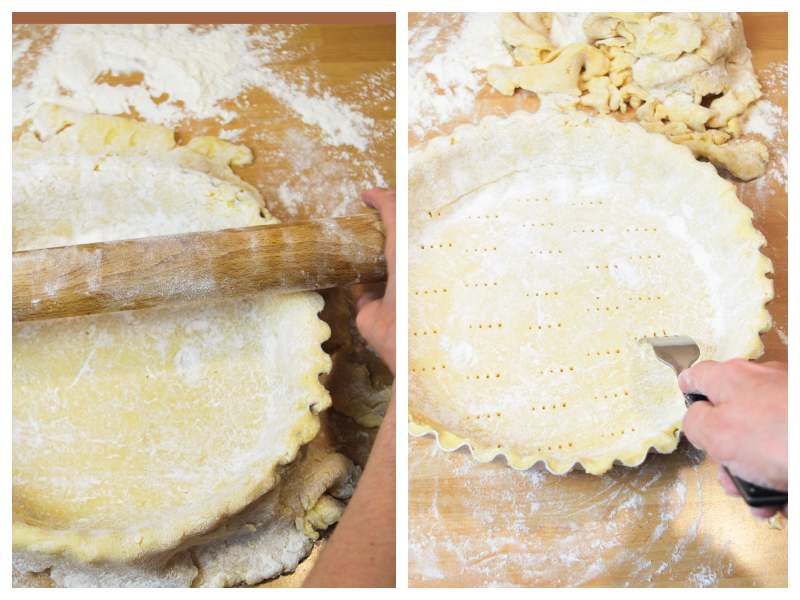
Step 18) - Trim the excess dough by rolling the pin across the top of the pan.
Prick the base lightly with a fork. This helps prevent large air bubbles during baking. Place the pastry shell in the refrigerator while you prepare the decorative strips.

Step 19) - Gather the remaining dough scraps, knead them briefly just to combine, then roll them out again to the same thickness. Cut 6 to 8 strips about 1.5 cm (½ inch) wide. They should not be too thin, otherwise they may break during baking.

Step 20) - Remove the pastry shell and the filling from the refrigerator. Pour the ricotta and wheat filling into the shell, spreading it evenly with a spatula. Leave about 6 mm (¼ inch) from the edge to allow for slight expansion in the oven.
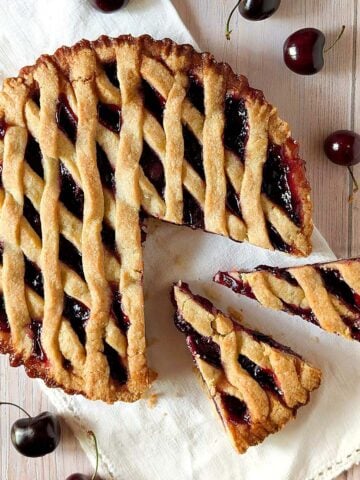
Arrange the pastry strips over the top in a lattice pattern, spacing them evenly.

Step 21) - Once all the strips have been added, remove the excess dough from the edge, being careful to leave a small margin and not to cut too much.
Seal by pinching the ends of the strips at the edges.
Refrigerate the assembled pastiera for about 2 hours before baking. Chilling helps the pastry hold its shape and prevents excessive puffing.
Baking the Pastiera
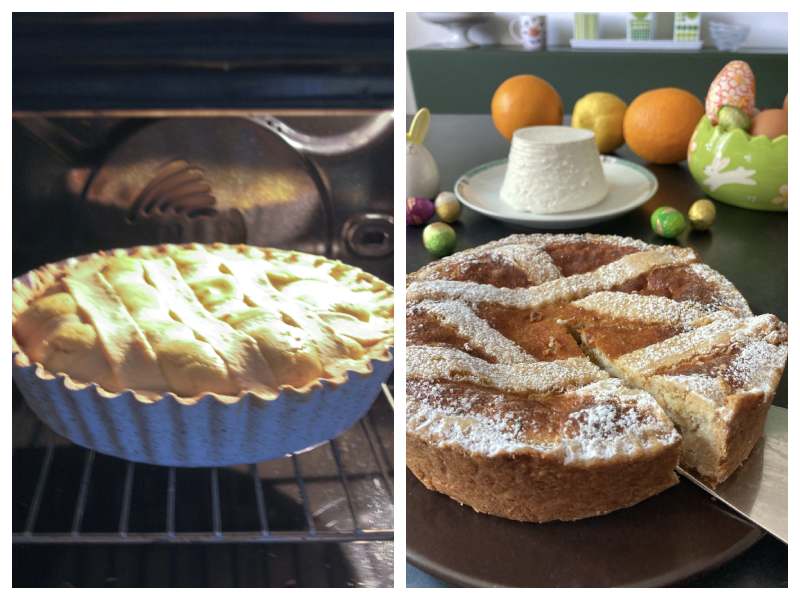
Here are some tips on how to bake the pastiera perfectly!
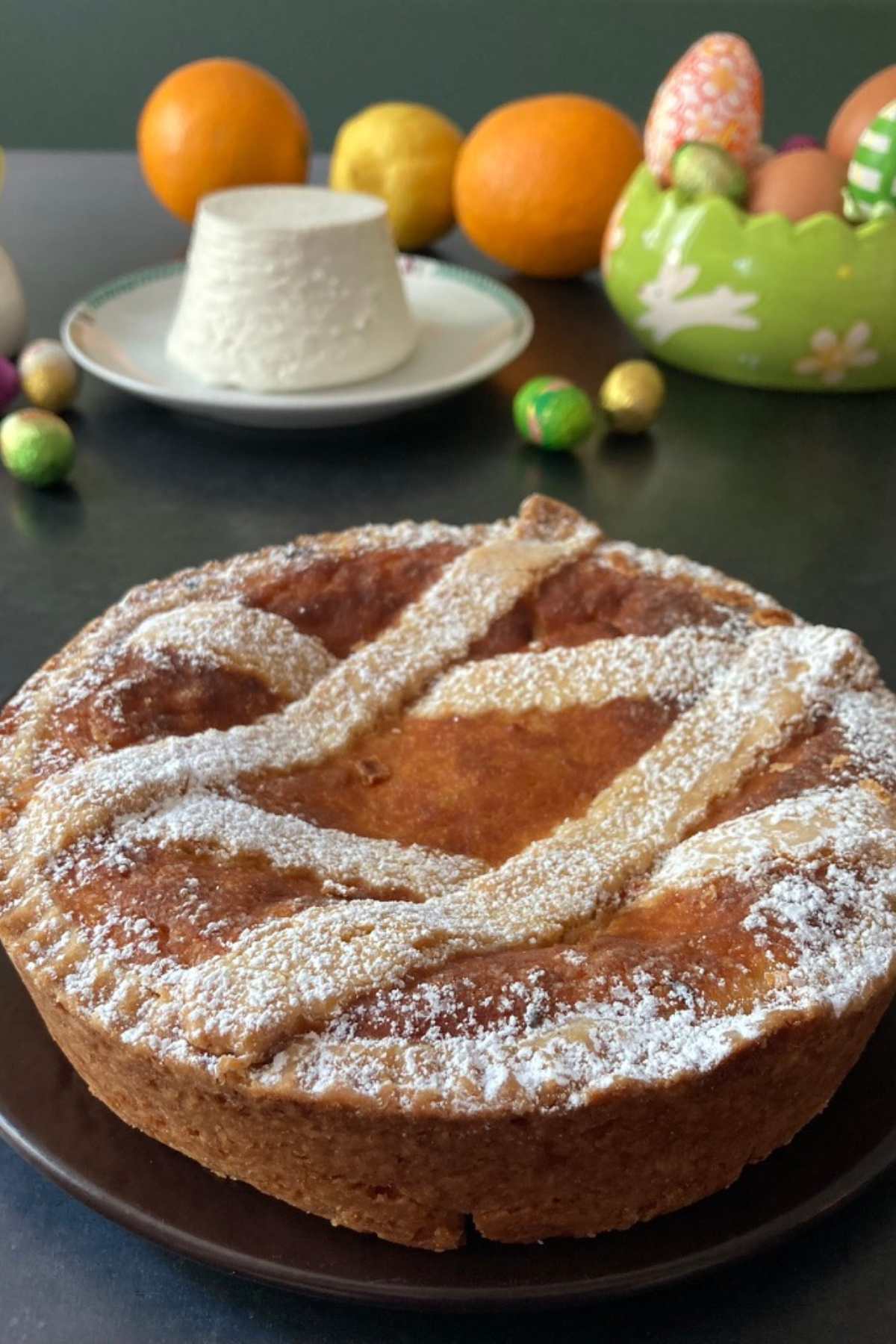
- Bake in a preheated oven on the medium-low rack at 150°C (300°F) for about 1 hour and 45-50 minutes.
- The pastiera must be baked slowly and for a long time. First, because this type of baking favors a cooked filling and a golden, not burnt pastry. Secondly, because slow, soft baking ensures a better taste.
- After 1 hour, check the situation in the oven: it's possible that the pastiera will puff up too much. Don't worry: open the oven a bit and close it again: the cake will deflate a little.
- In the last 15 minutes, check the color of the pastiera; it should be caramelized/amber. If it's a little pale, move it to the medium/high level so that it gets a little color, and only in the last 5 minutes, if it really does not get a nice color, bring it to 180°C (356°F).
- Before removing from the oven, do the toothpick test. If it comes out dry, the pastiera is ready.
- Turn off the oven and let the pastiera rest inside. Leave the oven slightly open with a wooden spoon in the door for about 30 minutes. If the pastiera has puffed up during baking, it will tend to deflate and settle at this stage.
- Remove from the oven and leave to cool in the pan.
- Eat Pastiera Napoletana the next day - it tastes even better!
Storage
You can store the Pastiera Napoletana in three main ways: at room temperature, in the refrigerator or you can freeze it.
Let's see in detail all the ways to store the pastiera:
At Room Temperature
Italian tradition dictates that pastiera should be prepared on Holy Friday and stored at room temperature to be eaten on Easter Sunday.
This is not only a custom, but also proof that the pastiera keeps perfectly for a few days, despite the fact that one of its main ingredients is ricotta cheese, which is easily perishable. The secret? The presence of candied fruit, which preserves the moisture content of the filling.
You can store pastiera at room temperature for about a week. Just wrap it in baking paper or a clean kitchen towel, or place it under a dome. The important thing is to keep it away from heat sources and in a cool, dry place.
In the Refrigerator
If the temperature outside is very high, or if the kitchen is hot and humid and not very ventilated, you can store the pastiera in the refrigerator.
However, be aware that some of the flavors will disappear and the pastiera will lose its crispness.
To reduce this risk, even if only partially, it is best to wrap the pastiera in cling film and place it on the middle shelf of the refrigerator.
In the Freezer
Yes, it is possible to freeze the Pastiera Napoletana for up to a maximum of thirty days.
It's better to cut it into slices and put each slice in a freezer bag.
Before eating, we recommend taking it out of the freezer for at least 3-4 hours.
History and Origins of Pastiera Napoletana
Many historians agree that Pastiera Napoletana has ancient pagan roots, linked to spring rituals celebrating rebirth and fertility.
The Legend of Partenope
One of the most poetic legends tells that the first pastiera was created by the siren Partenope, the mythical figure associated with the founding of Naples.
To thank her for choosing the Gulf of Naples as her home and for enchanting them with her voice, the people of Naples offered her seven gifts from nature, delivered by seven young maidens. These gifts symbolized prosperity and renewal.
Partenope herself mixed them together, creating a dessert made with flour, ricotta, eggs, wheat, orange blossom water, spices and sugar. That mixture became the first pastiera.
The Fishermen’s Legend
Another tradition connects the dessert to the lives of Neapolitan fishermen.
According to this story, the fishermen’s wives left baskets on the shore filled with ricotta, wheat, eggs, candied fruit and orange blossoms as an offering to the sea, praying for the safe return of their husbands.
During the night, the waves are said to have mixed all the ingredients together. When the women returned the next morning, they found the baskets transformed into a ready-made dessert: pastiera.
In both legends, the symbolic meaning of the ingredients reflects ancient spring rituals. Wheat represented fertility and prosperity, eggs symbolized new life, ricotta suggested abundance, flour wealth, orange blossoms the fragrance of the Campania land, and sugar the sweetness of hope for the coming year.
More Traditional Italian Easter Cakes
If you love Pastiera Napoletana, you may also enjoy other classic Italian Easter desserts prepared across different regions of Italy:
- Colomba – The famous Italian Easter dove-shaped cake with candied fruit and almonds.
- Scarcella – A traditional Easter cookie from Puglia, often decorated with hard-boiled eggs and colorful sprinkles.
- Treccia di Pasqua – A soft and sweet braided bread traditionally baked for Easter celebrations.
- Ciaramicola - A delicious Umbrian Easter bundt cake with meringue
FAQ About Pastiera Napoletana
Yes. In Italy, “grano cotto” is sold ready to use, but you can cook dried wheat berries from scratch. Soak them overnight, then simmer until tender before preparing the wheat cream. The texture should be soft but not mushy.
Traditional pastiera requires cooked wheat berries for its unique texture. Substitutions such as rice or semolina change the character of the dessert and are not authentic. If possible, use canned cooked wheat.
The most common reason is ricotta that was not drained properly. Excess moisture can make the filling too loose. Always drain the ricotta for at least 12 hours and bake the pie slowly at a low temperature to allow the filling to set completely.
Yes. Pastiera tastes best the day after baking. Resting allows the flavors to blend and the filling to firm up properly. Many Neapolitan families prepare it two days before Easter.
Yes. Once completely cooled, pastiera can be wrapped tightly and frozen. Thaw it slowly in the refrigerator and bring it to room temperature before serving. Keep in mind that the texture may become slightly softer after freezing.
Stored in the refrigerator, it keeps well for 3 to 4 days. Always let it come to room temperature before serving to fully appreciate its flavor.
Recipe Card
Pastiera Napoletana Recipe (Italian Easter Grain Pie with Ricotta)

Ingredients
For the Shortcrust Pastry
- 400 g all-purpose flour or Italian 00 flour - 3 ¼ cups
- 180 g granulated sugar - about 1 cup
- 180 g unsalted butter - ¾ cup, at room temperature
- 3 medium eggs
- 1 pinch fine salt
For the Wheat Cream
- 300 g cooked wheat berries (grano cotto) - 10 oz
- 200 ml whole milk - ⅘ cup
- 1 orange peel
- 1 lemon peel
- 30 g unsalted butter - 2 tablespoons
For the Ricotta Cream
- 400 g whole milk ricotta - 1 ½ cups, well drained
- 300 g granulated sugar - 1 ½ cups
- 3 medium eggs
- 2 egg yolks
- ½ teaspoon ground cinnamon
- 2 tablespoons orange blossom water
- 50 g candied citron - ⅓ cup
- 50 g candied orange - ⅓ cup
Instructions
THE PASTA FROLLA (SHORTCRUST PASTRY)
- In a large bowl, beat the softened butter with the sugar for 3 to 4 minutes, until light and creamy. Using a stand mixer or electric hand mixer makes this step easier, but you can also do it by hand.
- Add the eggs one at a time, mixing well after each addition. Wait until the first egg is fully incorporated before adding the next. Continue mixing until you obtain a smooth, lump-free cream. Stir in the salt.
- Sift the flour and add it all at once. Mix with a wooden spoon until the dough begins to come together. It will be very soft, and that is exactly what you want at this stage.
- Transfer the dough to a lightly floured work surface and knead gently, just enough to bring everything together. If it sticks slightly to your hands, dust with a little flour, but do not add too much.
- Shape into a ball, wrap tightly in plastic wrap and refrigerate for at least 12 hours, preferably 24. This resting time is essential. The dough must become firm and cold so it can be rolled out properly and hold the decorative strips during baking.
THE WHEAT CREAM
- Start by peeling the orange and lemon. Use a vegetable peeler and remove only the colored outer layer, avoiding the bitter white pith underneath. Set the peels aside.
- In a medium saucepan, combine the cooked wheat berries, whole milk, butter and the citrus peels. Make sure the wheat is spread evenly in the pan rather than piled up, so it cooks gently and uniformly.
- Place the saucepan over very low heat. This step requires patience. Cook for about 25 to 30 minutes, stirring frequently to prevent the mixture from sticking to the bottom. The milk will slowly be absorbed and the mixture will thicken into a soft, creamy consistency.
- By the end of cooking, the wheat should be tender and the mixture velvety, not dry. Remove the citrus peels and let the cream cool completely at room temperature.
- Once cooled, take about 100 g (½ cup) of the wheat mixture and blend it until smooth. This small step makes a big difference: it creates a creamier filling while still preserving the pleasant texture of the whole grains.
- Mix the blended portion back into the remaining wheat cream and stir well to combine.
- Cover with plastic wrap and refrigerate. You can prepare this mixture the day before and keep it chilled until you are ready to assemble the pastiera.
THE RICOTTA CREAM
- At least 12 to 24 hours before assembling the cake, drain the ricotta thoroughly. Place it in a fine sieve or wrap it in a clean cotton cloth and gently squeeze to remove as much liquid as possible. This step is essential if you are using cow’s milk ricotta, which tends to be more moist.If you are using traditional sheep’s milk ricotta, it is usually drier and may not require as much draining.
- Transfer the drained ricotta to a bowl and add the sugar and mix well.
- Cover tightly and refrigerate for 12 to 24 hours. During this resting time, the sugar will slowly dissolve and blend into the ricotta, creating a smoother and more harmonious filling.
- The next day, pass the ricotta and sugar mixture through a fine sieve. This is one of the most important steps of the recipe. Take your time and press it through with a spoon or spatula until you obtain a smooth, silky cream with no lumps. The texture should be soft and velvety.
- Add the cinnamon and mix to combine. Then add the whole eggs and the egg yolks one at a time, stirring gently after each addition until fully incorporated. The mixture will become looser and creamier.Stir in the orange blossom water, which gives pastiera its characteristic aroma. The fragrance should be delicate and floral, never overpowering.
- Finely chop the candied citron and candied orange peel. If you prefer a smoother texture, you can pulse them briefly in a food processor. Fold them into the ricotta mixture.
- Finally, add the cooled wheat cream and mix until everything is evenly combined.
- The filling should be smooth, creamy and slightly fluid, but not runny. Cover and refrigerate until you are ready to assemble the pastiera.
ASSEMBLING THE PASTIERA
- Lightly butter and flour a 10-inch (26 cm) pie pan. This will help the pastry release easily after baking.Take the chilled dough from the refrigerator. It should now be firm and easy to handle. On a lightly floured surface, roll it out to about 4 mm (⅙ inch) thick, turning it gently as you work to prevent sticking.
- Carefully wrap the dough around the rolling pin and unroll it over the pie pan. Gently press it into the base and up the sides without stretching it.
- Trim the excess dough by rolling the pin across the top of the pan.Prick the base lightly with a fork. This helps prevent large air bubbles during baking. Place the pastry shell in the refrigerator while you prepare the decorative strips.
- Gather the remaining dough scraps, knead them briefly just to combine, then roll them out again to the same thickness. Cut 6 to 8 strips about 1.5 cm (½ inch) wide. They should not be too thin, otherwise they may break during baking.
- Remove the pastry shell and the filling from the refrigerator. Pour the ricotta and wheat filling into the shell, spreading it evenly with a spatula. Leave about 6 mm (¼ inch) from the edge to allow for slight expansion in the oven.
- Arrange the pastry strips over the top in a lattice pattern, spacing them evenly.
- Once all the strips have been added, remove the excess dough from the edge, being careful to leave a small margin and not to cut too much.
- Seal by pinching the ends of the strips at the edges.
- Refrigerate the assembled pastiera for about 2 hours before baking. Chilling helps the pastry hold its shape and prevents excessive puffing.
BAKING THE PASTIERA
- Bake in a preheated oven on the medium-low rack at 150°C (300°F) for about 1 hour and 45-50 minutes. The pastiera must be baked slowly and for a long time. First, because this type of baking favors a cooked filling and a golden, not burnt pastry. Secondly, because slow, soft baking ensures a better taste.
- After 1 hour, check the situation in the oven: it's possible that the pastiera will puff up too much. Don't worry: open the oven a bit and close it again: the cake will deflate a little.
- In the last 15 minutes, check the color of the pastiera; it should be caramelized/amber. If it's a little pale, move it to the medium/high level so that it gets a little color, and only in the last 5 minutes, if it really does not get a nice color, bring it to 180°C (356°F).
- Before removing from the oven, do the toothpick test. If it comes out dry, the pastiera is ready.
- Turn off the oven and let the pastiera rest inside. Leave the oven slightly open with a wooden spoon in the door for about 30 minutes. If the pastiera has puffed up during baking, it will tend to deflate and settle at this stage.
- Remove from the oven and leave to cool in the pan. Eat Pastiera Napoletana the next day - it tastes even better!

Diane says
I have so many conflicting recipes for this pie. This one seems very clear and well written. I will try this one this year. Buon Pasqua tutti!
Virginia Phillips says
Although this sounds like a lot of work, I am definitely going to make it as stated. While growing up, my mom made this every Easter. It was always so delicious! I cannot wait to try this recipe as it’s just a bit different than my mom’s recipe. I love Pastiera immensely!