
In Roman cuisine, guanciale is more than just cured pork. It's the ingredient that gives some of Italy’s most famous pasta dishes their unmistakable flavor.
Made from pork jowl and traditionally seasoned and cured for several weeks, guanciale has a rich, delicate texture and a deep savory taste that melts beautifully when cooked. Its rendered fat forms the flavorful base of iconic Roman recipes such as Carbonara, Amatriciana, and Gricia.
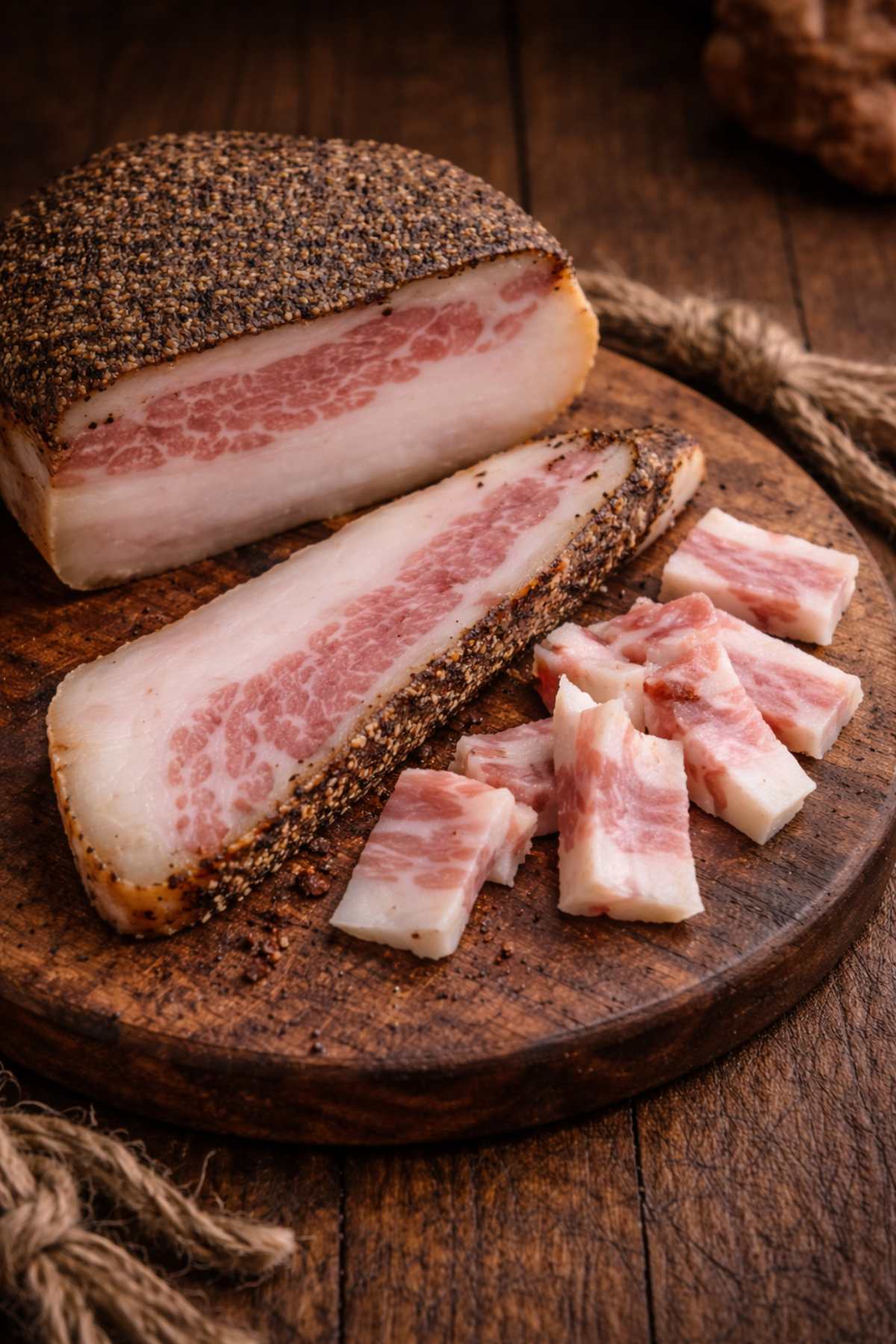
Although many people outside Italy confuse it with pancetta or bacon, guanciale has its own unique character and plays a specific role in traditional Roman cooking.
Understanding what guanciale is, how it's made, and why it matters will help you appreciate the true flavor of Roman pasta.
Jump to:
What Is Guanciale?
Guanciale is a traditional Italian cured pork made from pork jowl, the cheek of the pig. The name comes from the Italian word guancia, meaning “cheek.” It's one of the most distinctive ingredients in central Italian cooking and a cornerstone of classic Roman pasta.
To make guanciale, the pork jowl is rubbed with salt and usually black pepper. Depending on local tradition, it may also be seasoned with garlic or aromatic herbs, then it's left to cure and air-dry for several weeks. During this time, the meat develops a deep, savory flavor and a firm but silky texture.
What makes guanciale special is its fat-to-meat ratio. It contains a generous amount of fat that melts slowly when heated, turning into a fragrant, flavorful base for sauces. At the same time, the lean part becomes tender and slightly crisp around the edges when cooked properly. This combination of richness and texture is exactly why guanciale plays such an important role in Roman cuisine.
If you have never used it before, you can think of guanciale as more intense and aromatic than pancetta, and very different from bacon, which is typically smoked. In the next sections, you will see why guanciale is considered essential for authentic Roman pasta recipes.
The Origins of Guanciale in Central Italian Cuisine
Guanciale has deep roots in the culinary traditions of central Italy, particularly in the regions of Lazio, Umbria, and Abruzzo. In these areas, rural cooking developed around local ingredients and traditional methods of preserving meat.
Pork was historically an essential resource for farming families, and curing different cuts of the animal allowed them to store food for long periods. The pork jowl, rich in fat and flavor, proved ideal for curing and gradually became a staple ingredient in many local dishes.
Over time, guanciale became one of the ingredients that most clearly expresses the identity of Roman pasta dishes.
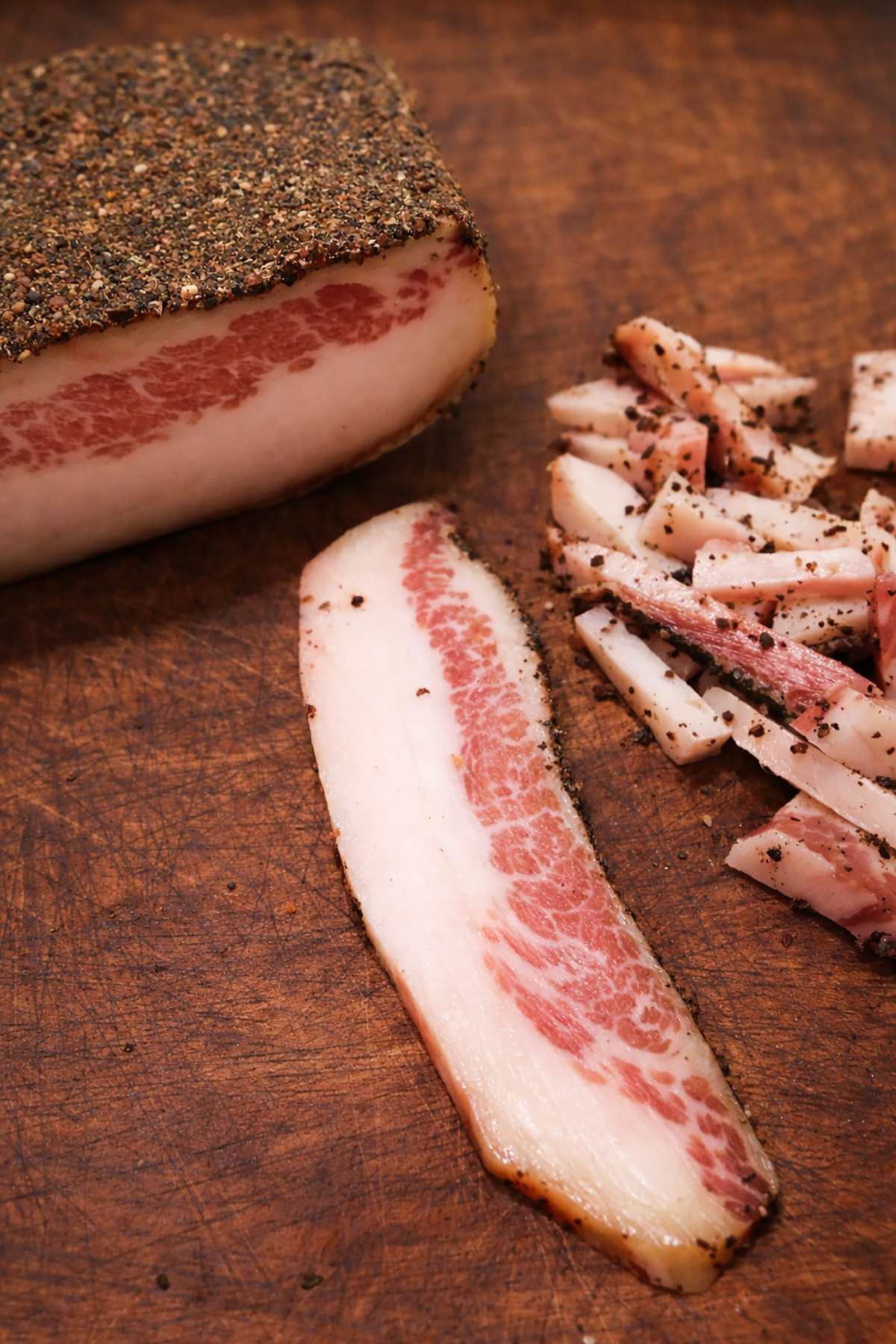
Guanciale and the Tradition of Roman Pasta
In Roman cuisine, guanciale is not just an ingredient but a defining element of some of the city’s most iconic dishes. Its rich flavor and delicate fat are essential to the balance of several traditional Roman pasta recipes.
Guanciale is the key ingredient in classics such as Carbonara, Amatriciana, and Gricia, where it's slowly rendered in the pan to release its flavorful fat. This melted fat becomes the base of the sauce, coating the pasta and carrying the other ingredients—eggs and Pecorino Romano in Carbonara, tomatoes in Amatriciana, or simply cheese and pepper in Gricia.
Another Roman favorite, Pasta alla Zozzona, also relies on guanciale for its deep, savory character. In all these dishes, the goal is not to overpower the pasta with complex sauces, but to create harmony between just a few carefully chosen ingredients.
This approach reflects the spirit of traditional Roman pasta recipes, where technique and ingredient quality matter far more than elaborate preparation. When cooked properly, guanciale becomes slightly crisp on the outside while remaining tender inside, adding both texture and flavor to the dish.
For this reason, many Roman cooks consider guanciale irreplaceable in their most beloved pasta dishes.
Guanciale vs Pancetta vs Bacon: What’s the Difference?
Guanciale is often confused with pancetta or bacon, but these three cured pork products are quite different in both flavor and culinary use.
The main difference lies in the cut of meat, the curing process, and the presence or absence of smoking, which strongly affects the final taste. The comparison below highlights the key characteristics of each ingredient.
| Ingredient | Cut of Pork | Smoking | Flavor and Texture |
| Guanciale | Pork jowl (cheek) | No | Rich, delicate, very flavorful with a high fat content that melts beautifully when cooked |
| Pancetta | Pork belly | Usually not smoked | Milder and slightly sweeter, with a more balanced ratio of meat and fat |
| Bacon | Pork belly | Smoked | Strong smoky flavor that can dominate a dish |
Among these three ingredients, guanciale is the traditional choice for Roman pasta dishes such as Carbonara, Amatriciana, and Gricia.
In Italy, pancetta itself can be either pancetta dolce (unsmoked) or pancetta affumicata (smoked). Pancetta dolce is sometimes used as a substitute for guanciale when the latter is hard to find, though the flavor will be less intense.
Bacon, on the other hand, has a distinctly smoky taste that changes the character of the dish. For this reason, traditional Roman recipes prefer guanciale, whose rich fat melts slowly and enhances the pasta without overpowering the other ingredients.
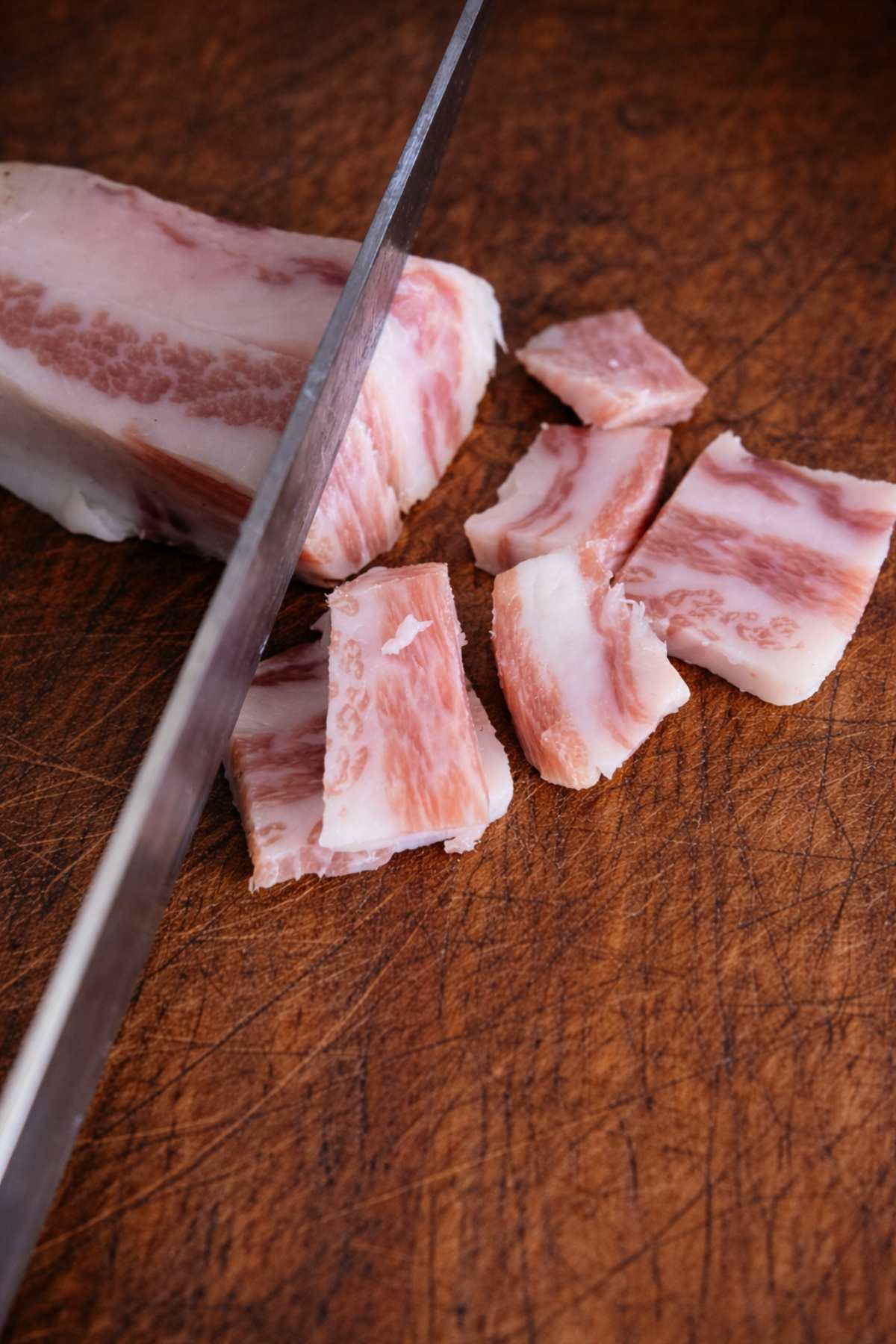
Why Guanciale Is Essential in Roman Pasta
Guanciale works particularly well in Roman pasta because of the way its fat behaves during cooking. When heated gently, the fat slowly melts and turns into a flavorful base that coats the pasta without making the dish heavy.
Unlike many other cured pork products, guanciale contains a high proportion of delicate fat that renders smoothly in the pan. This melted fat creates a natural sauce that binds the ingredients together, whether it's eggs and Pecorino Romano in Carbonara or tomatoes in Amatriciana.
At the same time, the lean part of the meat becomes lightly crisp, adding texture to the dish. This contrast between creamy rendered fat and crispy pieces of guanciale is one of the elements that defines the character of Roman pasta.
Because of these qualities, guanciale plays a unique role in Roman cooking. Few ingredients can create the same balance of richness, texture, and depth of flavor.
Can You Substitute Guanciale?
Guanciale is the traditional ingredient used in Roman pasta, but outside Italy it can sometimes be difficult to find. When this happens, cooks often look for substitutes.
The closest alternative is pancetta, preferably the unsmoked variety known in Italy as pancetta dolce. It has a similar curing process and a comparable balance of fat and meat, although its flavor is milder than guanciale.
Smoked pancetta or bacon can also be used in a pinch, but they will noticeably change the taste of the dish. Their smoky flavor tends to dominate the sauce and move the result further away from the traditional Roman profile.
Whenever possible, guanciale remains the best choice for recipes like Carbonara, Amatriciana, or Gricia. However, if it's not available, pancetta can still produce a good result while preserving the spirit of the dish.
How to Slice and Cook Guanciale
To get the best flavor and texture, it's important to slice and cook guanciale properly. In traditional Roman recipes, cooks usually cut guanciale into small cubes or short strips, depending on the dish.
For Carbonara, small cubes are often preferred because they render evenly and become lightly crisp while keeping a tender center. For Amatriciana or Gricia, many cooks prefer thin strips, which create a slightly more pronounced texture in the final dish.
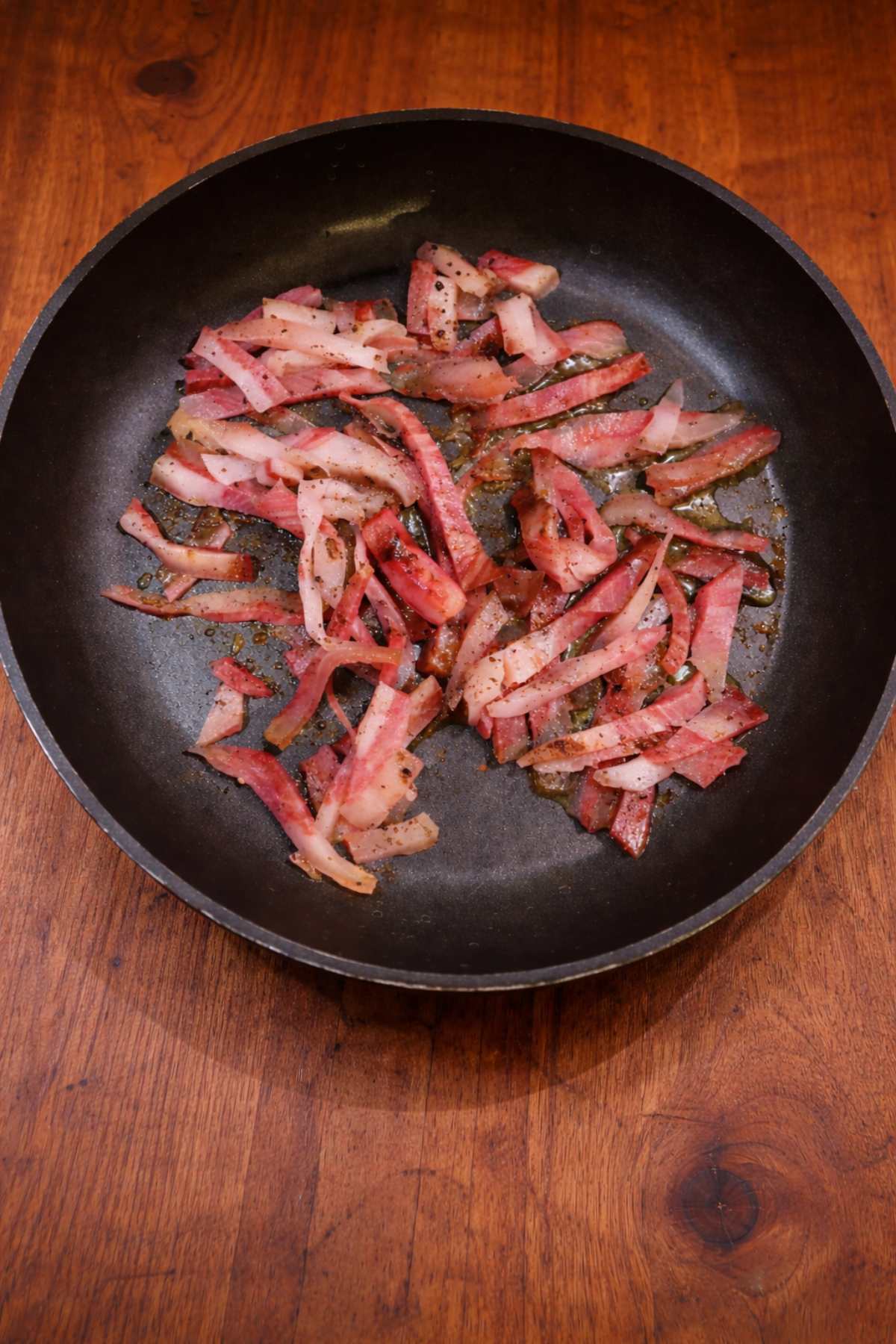
Start by placing the guanciale in a cold pan without adding oil. As the pan heats gently, the fat begins to melt and slowly releases its rich flavor. This rendered fat becomes the base of the sauce and helps coat the pasta evenly.
Cook the guanciale over medium to low heat, stirring occasionally, until the edges turn lightly golden and crisp. Avoid high heat, which can burn the fat and make the meat tough.
When done correctly, guanciale should be crisp on the outside and tender inside, with enough rendered fat left in the pan to flavor the pasta.
How to Store Guanciale
Proper storage helps preserve the flavor and texture of guanciale for a long time. Because it's a cured product, guanciale keeps well if handled correctly.
Once cut, wrap the remaining piece in parchment paper or butcher paper, then place it in an airtight container and store it in the refrigerator. This method allows the meat to breathe slightly while protecting it from excess moisture.
Avoid wrapping guanciale tightly in plastic wrap for long periods, as this can trap moisture and affect its texture.
When stored properly in the refrigerator, guanciale can last several weeks. If you notice that the surface dries slightly over time, simply trim the outer layer before using it.
For longer storage, you can also cut guanciale into portions and keep it in the freezer. When needed, thaw it slowly in the refrigerator before slicing and cooking.


Leave a Reply