
Caponata is one of the most famous dishes in Sicilian cuisine. It's a rich sweet and sour eggplant dish made with fried eggplant, celery, onion, tomato, green olives, capers, vinegar, and sugar. The result is colorful, fragrant, and full of Mediterranean flavor.
The most traditional Sicilian caponata recipe is made by frying the eggplant first, then combining it with the other vegetables and the sweet and sour sauce. This step gives the dish its unmistakable texture: soft, flavorful eggplant that absorbs the sauce without falling apart.

Like many traditional Italian recipes, caponata changes slightly from one area of Sicily to another. Some versions include pine nuts, others add raisins, bell peppers, or even a touch of cocoa. This recipe follows the classic version with eggplant, celery, olives, capers, tomato, and pine nuts.
Caponata is usually served cold or at room temperature, which makes it perfect as an appetizer, side dish, or vegetarian main course with slices of crusty bread. It also tastes even better after a few hours of resting, when the sweet and sour flavors have had time to blend.
Below you will find the traditional method for making authentic Sicilian caponata at home, with fried eggplant and a perfectly balanced agrodolce flavor.
Jump to:
What Is Caponata?
Caponata is a traditional Sicilian eggplant dish made with fried eggplant, celery, onion, tomatoes, olives, capers, vinegar, and sugar. Its most distinctive feature is the sweet and sour flavor, known in Italian as agrodolce, created by the balance of vinegar and sugar.
Although caponata is often described as a vegetable stew, it's usually served cold or at room temperature rather than hot. This makes it different from many other eggplant dishes. After resting for a few hours, the flavors become even deeper and more balanced.
In Sicily, caponata is commonly served as an appetizer, side dish, or vegetarian main course with bread. Every family and every area has its own version, but eggplant, celery, olives, capers, and the sweet and sour sauce are the ingredients that make caponata truly recognizable.
Sicilian Caponata Ingredients

Prep Time: 1 Hour | Cook Time: 40 Min | Servings: 6
- 3 large eggplants
- 1 large white onion, thinly sliced
- 2 celery stalks, finely chopped
- 2 tablespoons salted capers, rinsed well
- 200 g (1 cup) pitted green olives, sliced or roughly chopped
- 50 g (3 tablespoons) pine nuts
- 150 ml (⅔ cup) tomato passata (strained tomatoes)
- 4 tablespoons extra virgin olive oil
- 60 ml (¼ cup) white wine vinegar
- 2 teaspoons granulated sugar
- vegetable oil for frying, such as peanut oil or canola oil
- 1 tablespoon coarse salt, for purging the eggplant
- fine salt, to taste
- ground black pepper, to taste
How to Make Sicilian Caponata

Step 1) - First, prepare the eggplants. Wash and dry them, then cut them into small cubes. Place them in a colander and sprinkle with coarse salt. Let them drain for at least 30 minutes.
This step helps remove excess moisture and any slightly bitter taste from the eggplants.
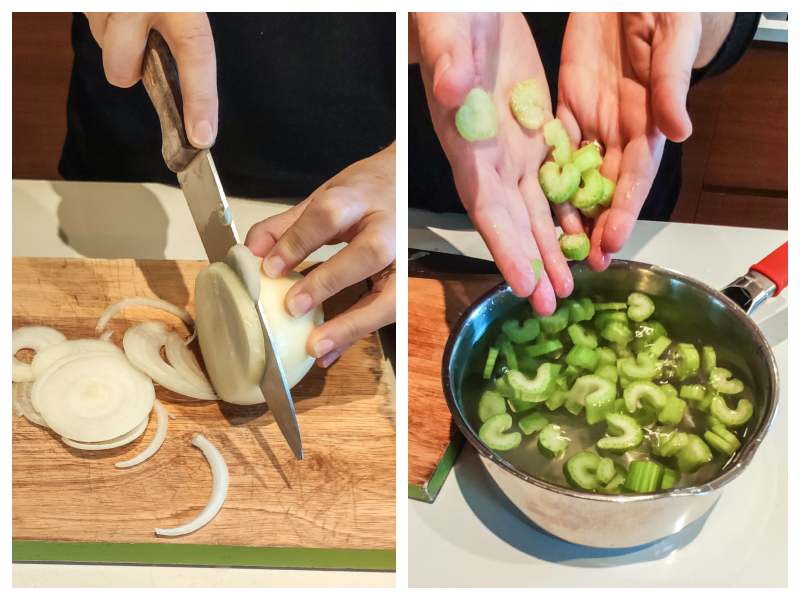
Step 2) - Meanwhile, prepare the other ingredients. Peel and thinly slice the onion. Wash the celery, cut it into small pieces, and blanch it in boiling salted water for about 5 minutes. Drain and set aside.

Step 3) - Rinse the salted capers under cold running water to remove the excess salt, then pat them dry. Toast the pine nuts in a dry pan for 1 to 2 minutes, just until lightly golden and fragrant. Set aside.

Step 4) - In a small bowl, mix the white wine vinegar with the sugar. Stir well and set aside. This mixture will give the caponata its typical sweet and sour flavor.
After 30 minutes, rinse the eggplants well under cold water to remove the salt. Pat them very dry with a clean kitchen towel or paper towels.

Step 5) - Heat plenty of vegetable oil in a deep frying pan. Fry the eggplant cubes in batches, a few at a time, until golden and tender.
Remove them with a slotted spoon and place them on a tray lined with paper towels to drain the excess oil. Set aside.

Step 6) - Pour the extra virgin olive oil into a large pan. Add the sliced onion and cook over medium heat until soft and lightly golden.
Add the blanched celery and the capers. Stir and cook for a few minutes, allowing the flavors to blend.
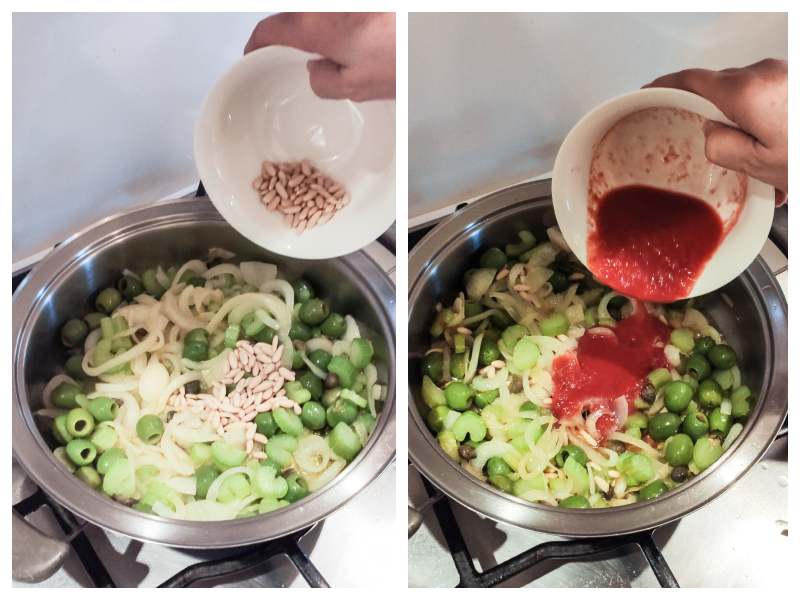
Step 7) - Add the green olives and toasted pine nuts, then pour in the tomato passata. Stir well.

Step 8) - Cover and simmer over low heat for about 20 minutes, stirring occasionally.
Taste and add a little salt only if needed, since the capers and olives are already savory.
Pour in the vinegar and sugar mixture. Increase the heat slightly and cook for 2 to 3 minutes, stirring often, until the strong vinegar aroma has evaporated and the sauce has a balanced sweet and sour flavor.

Step 9) - Turn off the heat and add the fried eggplants. Gently mix everything together, being careful not to break the eggplant pieces too much.
Transfer the caponata to a serving dish and let it cool first at room temperature, then in the refrigerator. Sicilian caponata is traditionally served cold or at room temperature. It's even better if made a few hours ahead, or the day before, so the flavors have time to blend.
Tips for the Best Caponata
Choose the right eggplants: Use firm, fresh eggplants with smooth, shiny skin. After salting them, rinse and dry them very well before frying. This helps them become golden and tender without absorbing too much oil.
Balance the sweet and sour flavor: Do not skip the vinegar and sugar mixture. This is what gives caponata its typical agrodolce taste. You can adjust it slightly to your preference, adding a little more vinegar or sugar if needed.
Be careful with salt: Olives and capers are already quite savory, especially if you use salted capers. Always taste the caponata before adding more salt.
Let it rest before serving: Caponata is much better after a few hours, or even the next day. Resting allows all the flavors to blend and become more balanced.
Storage
Let the caponata cool completely before storing. Transfer it to an airtight container and keep it in the refrigerator for up to 5 days.
Caponata is traditionally served cold or at room temperature, so there is usually no need to reheat it. For the best flavor, take it out of the refrigerator about 20 to 30 minutes before serving.
You can also freeze caponata for up to 1 month. Let it thaw overnight in the refrigerator, then bring it to room temperature before serving. Keep in mind that the texture of the eggplant may become slightly softer after freezing.
If you prefer to serve caponata warm, reheat it gently in a saucepan over low heat or in the microwave.
How to Serve Caponata
As an appetizer: Serve caponata cold or at room temperature in a bowl or on a platter, with slices of crusty bread on the side. It's perfect for an Italian appetizer spread, especially in summer.
With bruschetta: Caponata is also delicious served on toasted bread, just like bruschetta. Spoon it over warm slices of rustic bread and drizzle with a little extra virgin olive oil before serving. For another simple Italian appetizer, try our classic tomato bruschetta recipe.
As a side dish: Serve caponata with grilled fish, roasted meat, chicken, or cheese. Its sweet and sour flavor pairs especially well with simple dishes.
With pasta: You can also use caponata as a pasta dressing. It works especially well with short pasta such as fusilli, penne, or rigatoni. For a lighter summer version with eggplant, peppers, olives, and capers, try our Pasta alla Caponata recipe.
As a vegetarian main course: Serve it with fresh bread, focaccia, or even alongside cooked grains. Since caponata is rich and flavorful, it can easily become the center of a simple meal.

Variations
Like many traditional Sicilian recipes, caponata changes from one area to another and from family to family. The basic ingredients are usually eggplant, celery, olives, capers, tomato, vinegar, and sugar, but there are several local variations.
Palermo-style caponata: This is one of the most classic versions, made with eggplant, celery, onion, olives, capers, tomato, vinegar, and sugar. It's usually served cold or at room temperature as an appetizer or side dish.
Catania-style caponata: Around Catania, caponata is often made with the addition of red and yellow bell peppers. This version is colorful, rich, and slightly sweeter thanks to the peppers.
Trapani-style caponata: Some versions from the Trapani area include potatoes and peppers, making the dish heartier and more suitable as a vegetarian main course.
Agrigento-style caponata: In some versions from Agrigento, you may find eggplant, peppers, tomatoes, celery, onion, olives, capers, vinegar, sugar, and extra virgin olive oil. It's often served as a side dish or on toasted bread.
Messina-style caponata: In the Messina area, caponata is often made with eggplant, tomatoes, onion, and peppers. It can be served as a side dish or even used as a sauce for pasta.
Light caponata without frying: For a lighter version, you can cook the eggplant directly in a pan with the other vegetables instead of frying it first. The result is less traditional, but still very flavorful. This method is especially useful if you want to use caponata as a pasta dressing or make a lighter summer dish.

History and Origins
The origins of Sicilian caponata are often linked to the word capone, the Sicilian name for mahi-mahi, also known in Italian as lampuga. This prized fish was once served on aristocratic tables with a sweet and sour sauce.
According to tradition, people who could not afford this expensive fish replaced it with eggplant, a more humble and widely available ingredient. Over time, this simple substitution gave rise to one of Sicily’s most iconic dishes.
Historical references to caponata date back at least to the 18th century, when it was described as a cold dish made with different cooked ingredients. Later sources mention versions made with fish, eggplant, artichokes, and other vegetables, always served cold or at room temperature.
Today, caponata remains one of the best examples of Sicilian sweet and sour cooking. This recipe follows the classic Palermo-style version, made with fried eggplant, celery, olives, capers, tomato, vinegar, and sugar.
More Eggplant Recipes to Try
- Authentic Italian Pasta alla Norma Recipe
- Classic Italian Eggplant Parmigiana
- Eggplant Lasagna
- Melanzane a Funghetto (Italian Eggplant and Tomatoes)
- Eggplant Meatballs
- Breaded Eggplant Cutlets
Recipe Card

Authentic Sicilian Caponata Recipe (Classic Eggplant Dish)

Ingredients
- 3 large eggplants
- 1 large white onion - thinly sliced
- 2 celery stalks - finely chopped
- 2 tablespoons salted capers - rinsed well
- 200 g pitted green olives - 1 cup, sliced or roughly chopped
- 50 g pine nuts - 3 tablespoons
- 150 ml tomato passata (strained tomatoes) - ⅔ cup
- 4 tablespoons extra virgin olive oil
- 60 ml white wine vinegar - ¼ cup
- 2 teaspoons granulated sugar
- vegetable oil - for frying, such as peanut or canola oil
- 1 tablespoon coarse salt - for purging the eggplant
- fine salt - to taste
- ground black pepper - to taste
Instructions
- First, prepare the eggplants. Wash and dry them, then cut them into small cubes. Place them in a colander and sprinkle with coarse salt. Let them drain for at least 30 minutes.This step helps remove excess moisture and any slightly bitter taste from the eggplants.
- Meanwhile, prepare the other ingredients. Peel and thinly slice the onion. Wash the celery, cut it into small pieces, and blanch it in boiling salted water for about 5 minutes. Drain and set aside.
- Rinse the salted capers under cold running water to remove the excess salt, then pat them dry. Toast the pine nuts in a dry pan for 1 to 2 minutes, just until lightly golden and fragrant. Set aside.
- In a small bowl, mix the white wine vinegar with the sugar. Stir well and set aside. This mixture will give the caponata its typical sweet and sour flavor.
- After 30 minutes, rinse the eggplants well under cold water to remove the salt. Pat them very dry with a clean kitchen towel or paper towels.
- Heat plenty of vegetable oil in a deep frying pan. Fry the eggplant cubes in batches, a few at a time, until golden and tender.
- Remove them with a slotted spoon and place them on a tray lined with paper towels to drain the excess oil. Set aside.
- Pour the extra virgin olive oil into a large pan. Add the sliced onion and cook over medium heat until soft and lightly golden.Add the blanched celery and the capers. Stir and cook for a few minutes, allowing the flavors to blend.
- Add the green olives and toasted pine nuts, then pour in the tomato passata. Stir well.
- Cover and simmer over low heat for about 20 minutes, stirring occasionally.Taste and add a little salt only if needed, since the capers and olives are already savory.
- Pour in the vinegar and sugar mixture. Increase the heat slightly and cook for 2 to 3 minutes, stirring often, until the strong vinegar aroma has evaporated and the sauce has a balanced sweet and sour flavor.
- Turn off the heat and add the fried eggplants. Gently mix everything together, being careful not to break the eggplant pieces too much.
- Transfer the caponata to a serving dish and let it cool first at room temperature, then in the refrigerator. Sicilian caponata is traditionally served cold or at room temperature. It's even better if made a few hours ahead, or the day before, so the flavors have time to blend.


Chris Beasley says
Everyone in my family (except me) hates olives. Is it ok to omit them?
Silvana Nava says
Hi chris,
You can certainly leave out the olives, even though they’re a pretty important ingredient in this recipe.
You can increase the amount of capers and celery a bit. Obviously, the key ingredient is the eggplant.
Enjoy your meal and have a great day!
Richard Haylock says
If my local supermarket has capers in stock, am going to do this tomorrow!
Rosemarie Morello says
Recipe sounds delicious! I love Caponata and I didn't know how to make it. I will try this over the weekend!