
Italian tomato sauce from fresh tomatoes is a simple homemade sauce made with ripe tomatoes, extra virgin olive oil, aromatic vegetables, and fresh basil. In Italy, we call it salsa di pomodoro, and it's one of the most basic and versatile sauces in Italian cooking.
The best time to make fresh tomato sauce is summer, when tomatoes are fully ripe, naturally sweet, and full of flavor. San Marzano and other meaty plum tomatoes are especially good because they have plenty of pulp and relatively little water.
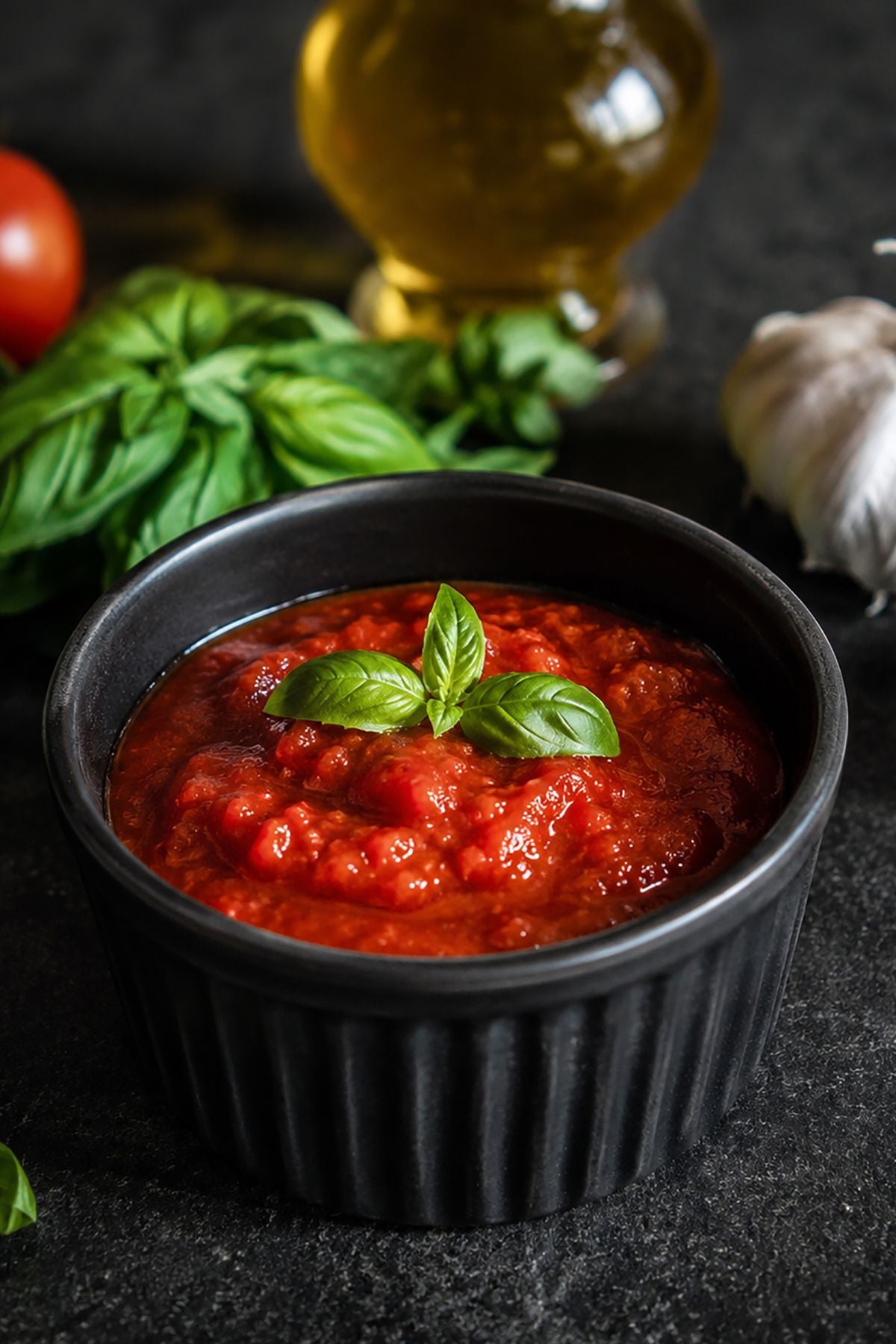
For this traditional recipe, the fresh tomatoes are first briefly cooked and then passed through a food mill or tomato strainer to remove the skins and seeds. The smooth tomato pulp is then cooked again with a simple soffritto and fresh herbs until it becomes a rich, flavorful sauce.
This is the main difference between tomato passata and tomato sauce: homemade tomato passata is essentially pure strained tomato, while tomato sauce is seasoned and cooked until ready to serve.
This fresh tomato sauce is perfect with spaghetti, penne, or any other pasta shape, and can also be used in many traditional Italian recipes that call for a simple homemade tomato sauce.
Jump to:
Ingredients
Prep Time: 20 Min | Cook Time: 40 Min | Servings: 4
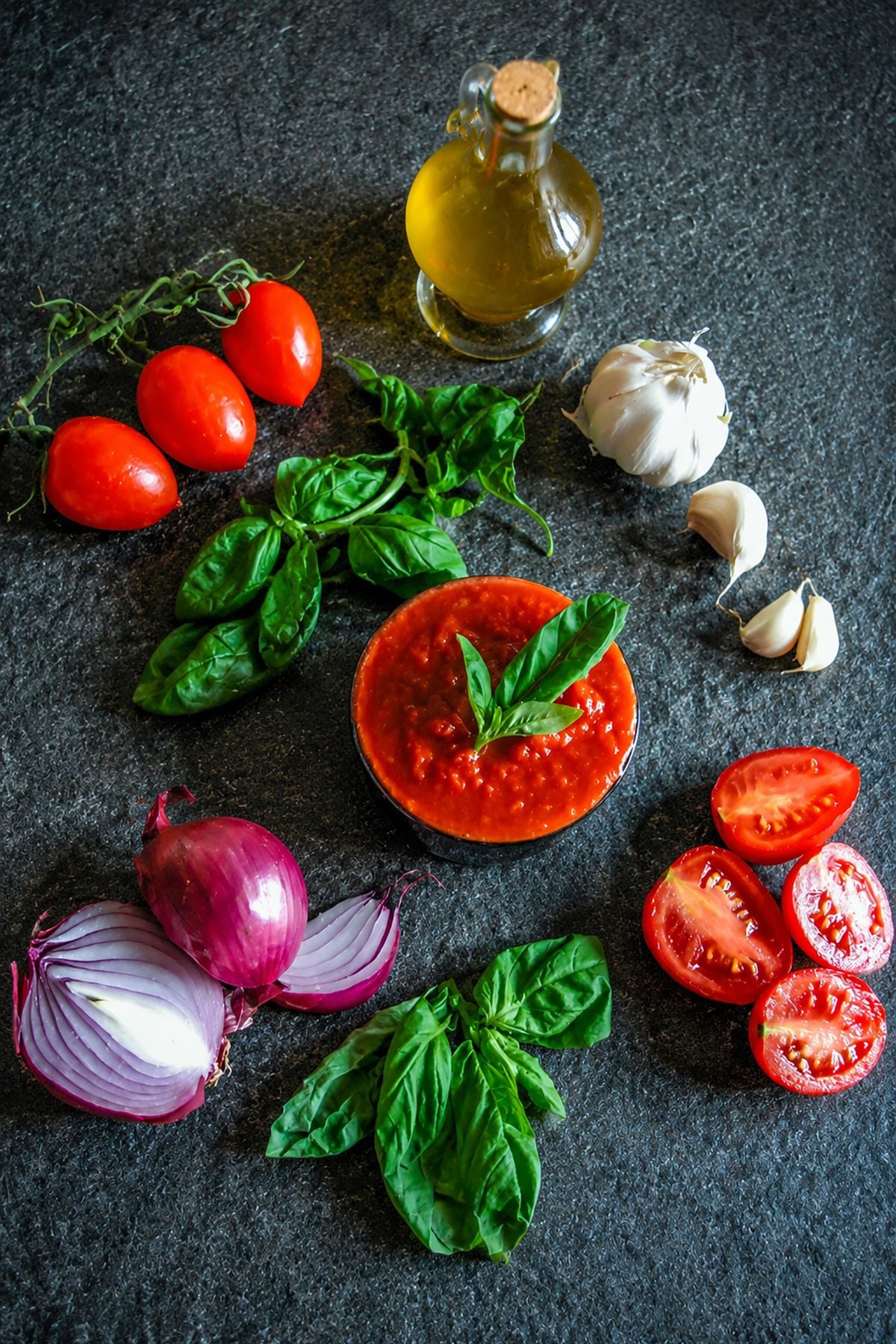
- 1 kg (2.2 lb) very ripe, flavorful tomatoes, preferably San Marzano, Roma, or other meaty plum tomatoes
- 2 tablespoons extra virgin olive oil
- 1 small onion, finely chopped
- 1 garlic clove
- 5–6 fresh basil leaves
- Fine salt, to taste
- A pinch of dried oregano, optional
- A small pinch of sugar, optional, only if the tomatoes taste particularly acidic
How to Make Tomato Sauce from Fresh Tomatoes

Step 1) - Wash the tomatoes thoroughly under running water. Remove the stems and cut the tomatoes in half.
Using a small knife or spoon, remove the seeds and the very watery inner part of each tomato. Place the prepared tomatoes in a large pot, cover with a lid, and cook over low heat for about 20 minutes, stirring occasionally, until they are soft and have released their juices. Do not add water.

Step 2) - Pass the cooked tomatoes through a food mill to remove the skins and any remaining seeds. Choose the grinding disc according to the texture you prefer. I use the disc with the largest holes for a slightly more rustic, full-bodied tomato sauce.
At this stage, you have essentially made a fresh tomato passata. Now you can turn it into a flavorful Italian tomato sauce by adding a simple soffritto.
Make the Soffritto

Step 3) - Finely chop the onion. Heat the extra virgin olive oil in a saucepan over low heat. Add the whole peeled garlic clove and the chopped onion, then sauté gently for 2 to 3 minutes, until the onion begins to soften. Do not let the garlic or onion brown.

Step 4) - Pour in the fresh tomato passata and season with salt to taste. Stir well and simmer over medium-low heat for about 15 minutes, stirring occasionally.
Cook the sauce uncovered or with the lid slightly ajar so that some of the excess moisture can evaporate and the sauce can thicken naturally.
If the tomatoes taste particularly acidic, you can add a small pinch of sugar, but only if needed.

Step 5) - Turn off the heat and add the fresh basil leaves. If you like, add a small pinch of dried oregano as well. Remove the garlic clove before serving.
Your fresh tomato sauce is now ready to use with pasta or in any recipe that calls for a simple homemade Italian tomato sauce.
What Are the Best Tomatoes for Fresh Tomato Sauce?
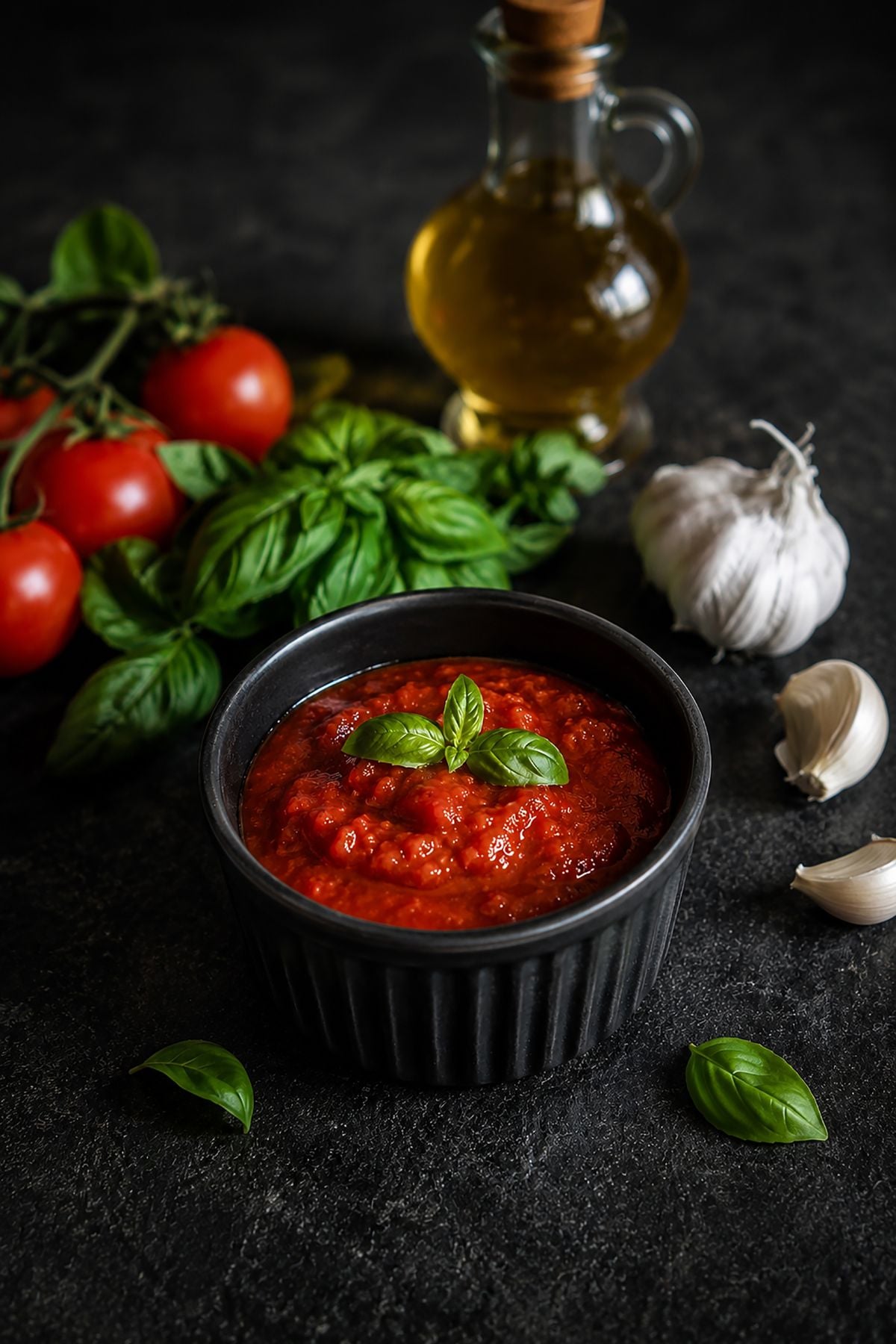
For the best homemade tomato sauce, choose ripe, flavorful, meaty tomatoes with relatively few seeds and not too much water.
San Marzano tomatoes are an excellent choice. They have a dense, fleshy pulp, a naturally rich flavor, and a good balance between sweetness and acidity, making them ideal for sauces.
If San Marzano tomatoes are not available, Roma tomatoes or other plum tomato varieties work very well too. Vine-ripened tomatoes can also be used, especially when they are fully ripe and flavorful, although they may contain a little more water.
Whatever variety you choose, ripeness is essential. The tomatoes should be deep red, fragrant, and naturally sweet. A tomato sauce made from bland or underripe tomatoes will never have the same rich flavor.
Cherry and grape tomatoes can also be used, but they produce a sweeter sauce and contain proportionally more skins and seeds. For the traditional smooth sauce in this recipe, I prefer larger, fleshy tomatoes.
Tips for the Best Fresh Tomato Sauce
Use fully ripe tomatoes. The flavor of the sauce depends almost entirely on the quality of the tomatoes. Choose ripe, fragrant tomatoes with a naturally sweet taste.
Remove excess water and seeds. Taking out the seeds and the most watery inner part helps you obtain a thicker, smoother sauce and prevents too many seeds from passing through the food mill.
Cook the soffritto gently. Onion and garlic should soften slowly without browning. A gentle soffritto gives the sauce a sweeter, more balanced flavor.
Let the sauce reduce naturally. During the final cooking, keep the pan uncovered or the lid slightly ajar so excess moisture can evaporate and the sauce can thicken.
Add sugar only if necessary. Sugar does not reduce the acidity of tomatoes, but a small pinch can help balance the flavor if your tomatoes taste particularly sharp.
Add basil at the end. Fresh basil keeps more of its aroma when added after the sauce has finished cooking.
Don't over-season it. This is meant to be a simple Italian tomato sauce. Good tomatoes, extra virgin olive oil, a delicate soffritto, and fresh basil should remain the main flavors.
Variations
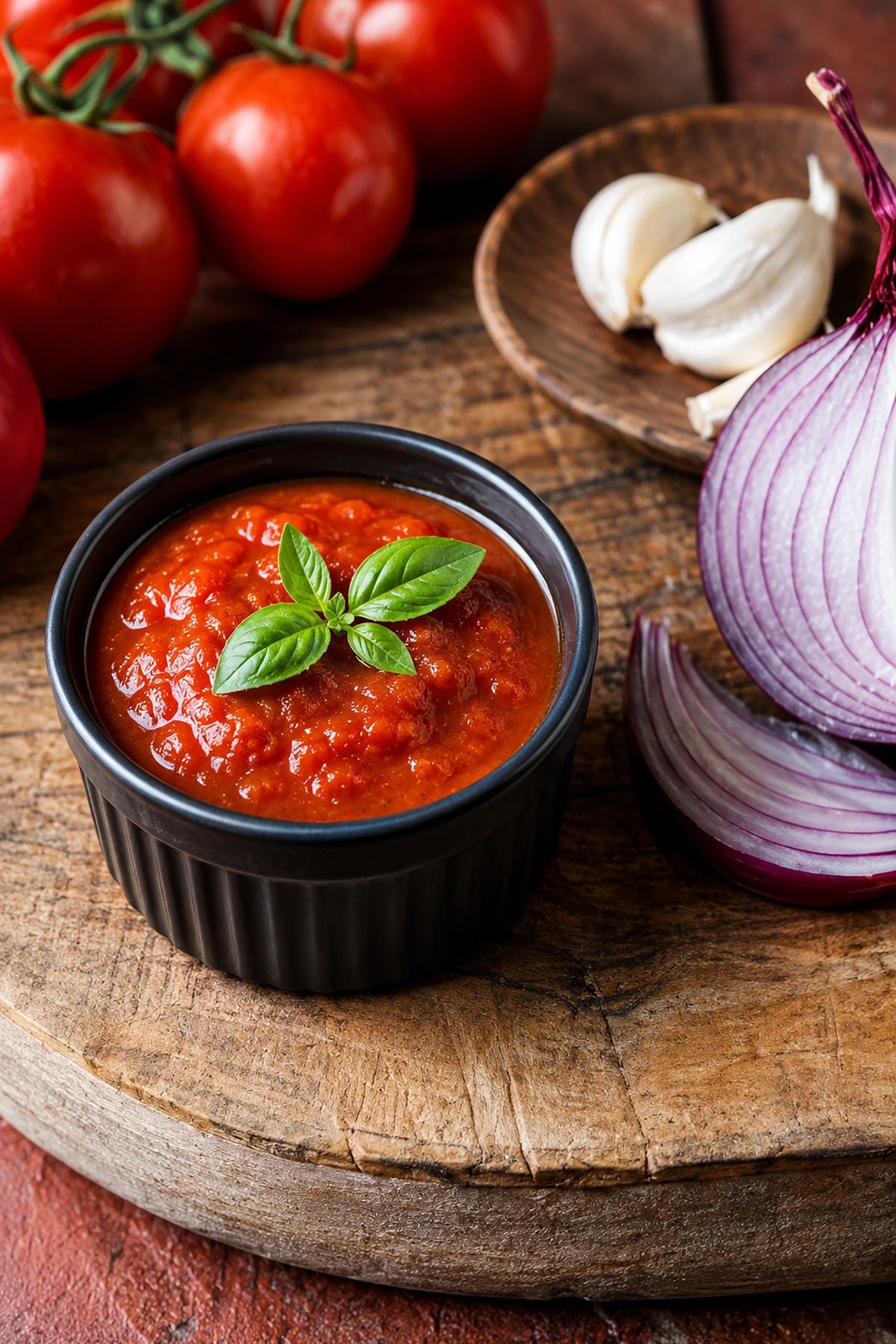
You can easily adapt this basic fresh tomato sauce to suit your taste while keeping the recipe simple and distinctly Italian.
- With Garlic Only. Skip the onion and gently sauté one or two garlic cloves in extra virgin olive oil before adding the tomato passata. This version has a more pronounced, savory flavor.
- With Onion Only. Omit the garlic and use finely chopped onion for a sweeter, more delicate tomato sauce.
- Rustic Tomato Sauce. For a more textured sauce, pass the cooked tomatoes through a food mill fitted with the disc with the largest holes. You can also leave the sauce slightly thicker by reducing it for a little less time.
- With Oregano. Add a small pinch of dried oregano during the final minutes of cooking for a more aromatic Mediterranean flavor. Fresh basil can still be added at the end.
- Spicy Tomato Sauce. Add a small fresh chili pepper or a pinch of red pepper flakes to the soffritto for a gently spicy version.
For a very quick sauce made with fresh cherry tomatoes, we recommend using a separate method rather than adapting this recipe, since the tomatoes are cooked directly in the pan without first making passata.
How to Use Fresh Tomato Sauce
Fresh tomato sauce is one of the most versatile sauces in Italian cooking. The simplest way to enjoy it is with pasta: toss it with spaghetti, penne, rigatoni, or your favorite pasta shape and finish with grated Parmigiano Reggiano and fresh basil.
It is also delicious with homemade Potato Gnocchi or as the tomato base for Gnocchi alla Sorrentina, where it is combined with mozzarella and Parmigiano and baked until bubbling.
You can also use this sauce in traditional baked dishes such as Eggplant Parmigiana or as a starting point for recipes such as Italian Meatballs in Tomato Sauce.
Because the sauce is already seasoned with extra virgin olive oil, onion, garlic, and basil, it works best in dishes that call for a simple cooked tomato sauce rather than plain tomato passata.
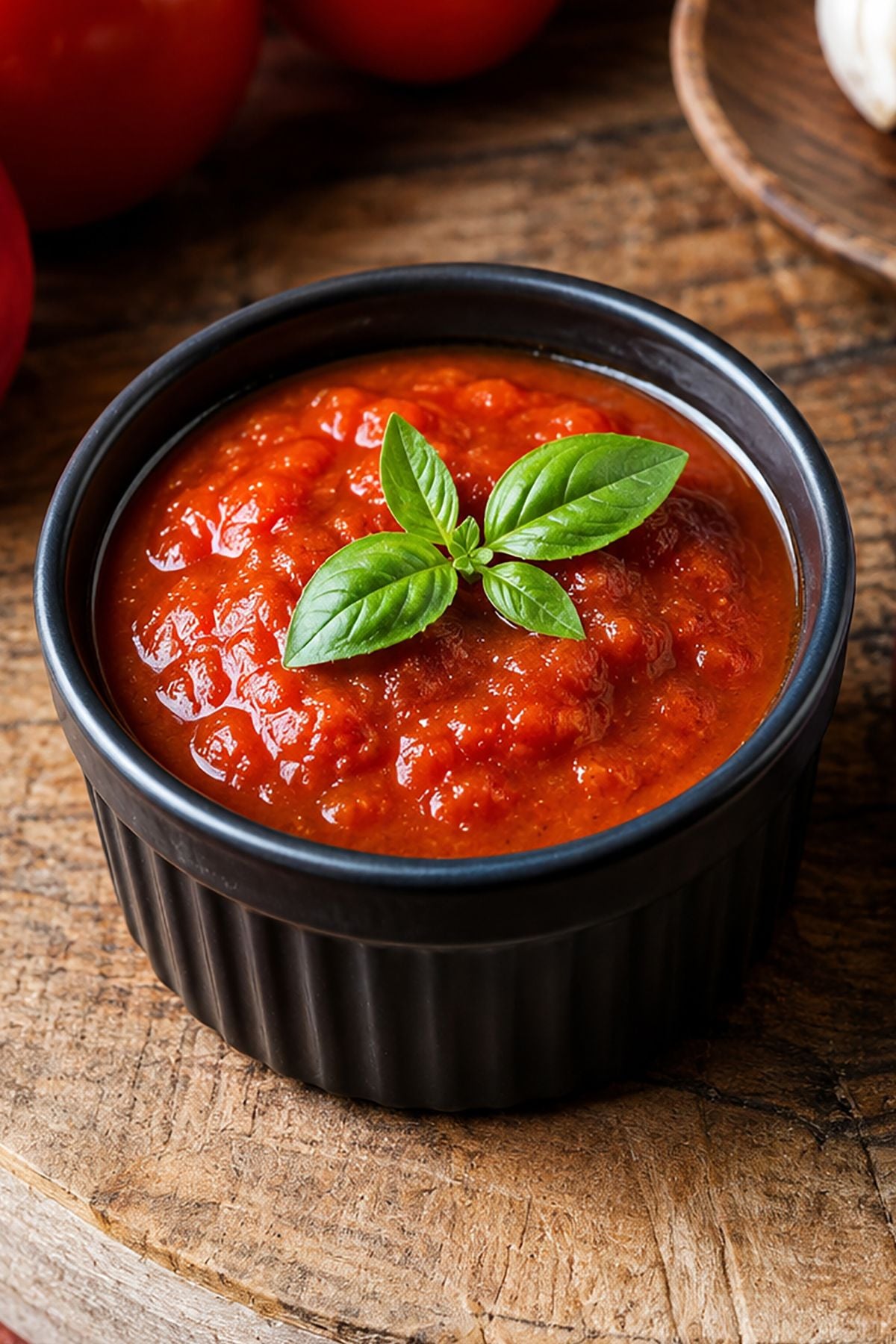
Storage
Let the tomato sauce cool, then transfer it to an airtight container and store it in the refrigerator for up to 3 to 4 days.
For longer storage, fresh tomato sauce freezes very well. Divide it into freezer-safe containers or glass jars, leaving some space at the top to allow the sauce to expand as it freezes. For the best flavor and texture, use it within about 3 months.
To thaw frozen tomato sauce, transfer it to the refrigerator and let it defrost gradually, preferably overnight. You can then reheat it gently in a saucepan over low heat, stirring occasionally.
If you need it more quickly, you can also thaw it in the microwave and reheat it immediately.
Tomato Sauce vs Tomato Passata
Although tomato sauce and tomato passata are both made from tomatoes, they are not the same thing.
Tomato passata is a simple preparation made from tomatoes that are cooked briefly and strained to remove the skins and seeds. It is usually left unseasoned, so it can be used as a versatile base for many different recipes.
Tomato sauce, on the other hand, is already seasoned and cooked. In this recipe, the fresh tomato passata is simmered with extra virgin olive oil, onion, garlic, salt, and basil until it develops a richer flavor and thicker consistency.
In other words, homemade tomato passata is an ingredient, while fresh tomato sauce is a finished sauce ready to serve.
If you'd like to learn more, see our complete guide to the differences between tomato passata, tomato sauce, and tomato paste.
More Italian Tomato Recipes
If you love the flavor of ripe Italian tomatoes, here are a few more traditional recipes to try. From simple pasta sauces to rustic Tuscan classics, tomatoes are the star of each dish.
Recipe Card
Italian Tomato Sauce from Fresh Tomatoes

Ingredients
- 1 Kg very ripe, flavorful tomatoes, preferably San Marzano, Roma, or other meaty plum tomatoes - 2.2 lb
- 2 tablespoons extra virgin olive oil
- 1 small onion, finely chopped
- 1 garlic clove
- 5-6 fresh basil leaves
- fine salt - to taste
- a pinch of dried oregano - optional
- a small pinch of sugar - optional, only if the tomatoes taste particularly acidic
Instructions
- Wash the tomatoes thoroughly under running water. Remove the stems and cut the tomatoes in half.
- Using a small knife or spoon, remove the seeds and the very watery inner part of each tomato. Place the prepared tomatoes in a large pot, cover with a lid, and cook over low heat for about 20 minutes, stirring occasionally, until they are soft and have released their juices. Do not add water.
- Pass the cooked tomatoes through a food mill to remove the skins and any remaining seeds. Choose the grinding disc according to the texture you prefer. I use the disc with the largest holes for a slightly more rustic, full-bodied tomato sauce.At this stage, you have essentially made a fresh tomato passata. Now you can turn it into a flavorful Italian tomato sauce by adding a simple soffritto.
- Finely chop the onion. Heat the extra virgin olive oil in a saucepan over low heat. Add the whole peeled garlic clove and the chopped onion, then sauté gently for 2 to 3 minutes, until the onion begins to soften. Do not let the garlic or onion brown.
- Pour in the fresh tomato passata and season with salt to taste. Stir well and simmer over medium-low heat for about 15 minutes, stirring occasionally.Cook the sauce uncovered or with the lid slightly ajar so that some of the excess moisture can evaporate and the sauce can thicken naturally.If the tomatoes taste particularly acidic, you can add a small pinch of sugar, but only if needed.
- Turn off the heat and add the fresh basil leaves. If you like, add a small pinch of dried oregano as well. Remove the garlic clove before serving.Your fresh tomato sauce is now ready to use with pasta or in any recipe that calls for a simple homemade Italian tomato sauce.


KIM Farrell says
Always looking for good tomato sauce recipe this Will try when home again as am away at moment last 3 months cooking for friend who is not well
As have mouli at home to remove skins,seeds from tomatoes
TYPO error in early info says ERBS Not HERBS.
Sam says
Seems a crime to waste the internal parts of the tomato..isn't that where all the umami is? What do you think of adding a few fresh tomato leaves to simmer with the passata, removing them when it is done?
holly says
Whenever I have worked with San Marzano tomatoes, I too, remove the insides. The real meat of that type of tomato is in the walls and adding the extra, really does water it down and require more cooking and more straining to acquire a true passata like this. And wow! I've never thought of tomato leaves! What would that do for the sauce? Really interested in your thoughts on the leaves.
DAVID L GUSTAFSON says
I thought tomato leaves were poisonous.
Roselynn J Woolf says
So, can you eat tomato leaves?
Contrary to popular opinion, yes—tomato leaves are flavorful, fragrant, and 100 percent edible. You can cook the fresh, young leaves like most other sturdy garden greens, such as kale, collards, or cabbage (leafy greens that need a little longer cooking time to become tender).
Ann Neal says
Thank you for the delicious recipe for sauce made with fresh tomatoes. I added a small can of tomato paste to thicken liquid and a little wine. Fresh herbs from the garden! Will definitely make this again.