
Panforte is a traditional Italian Christmas cake from Siena, a historic city in Tuscany. This rich and aromatic dessert has very ancient origins, with written records dating back as far as the year 1000.
Like many medieval Italian pastries, panforte is made with simple but precious ingredients: dried fruit, candied citrus peel, honey, and warm spices. Cinnamon, cloves, and nutmeg give this cake its unmistakable Christmas aroma.
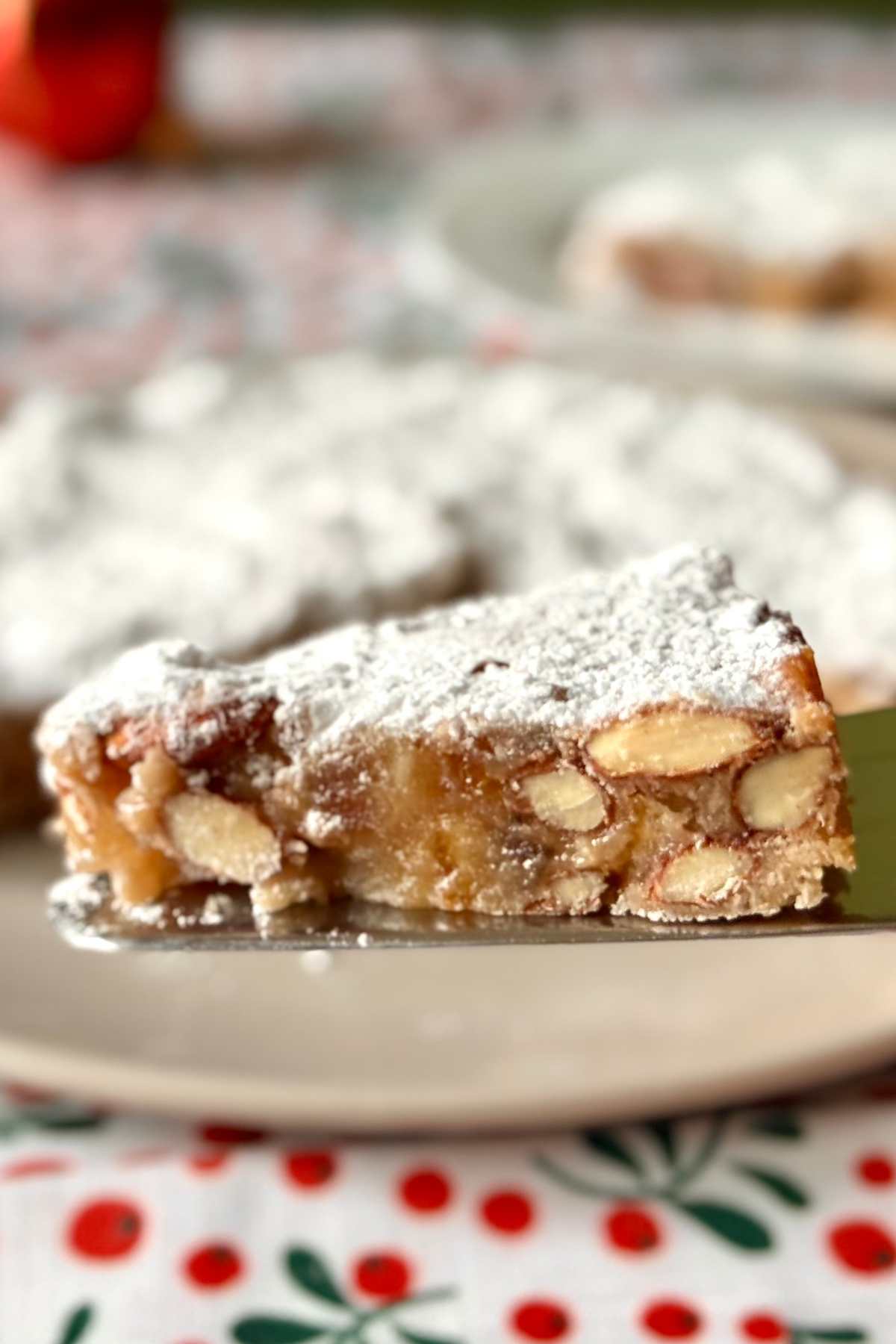
To make panforte, the fruit and spices are mixed with honey, then lightly bound with flour and baked on a thin wafer base. The result is a dense, fragrant cake with an intense flavor and a soft, chewy texture.
Panforte di Siena is a true holiday treat, and it is surprisingly easy to make at home. In just over an hour, you can bring to your table an authentic Italian Christmas dessert that feels festive and special.
This traditional panforte is delicious sliced thin and enjoyed with a cup of hot tea or coffee, or served after dinner as a dessert. In Siena, panforte is also wrapped with colorful ribbons and given as a homemade Christmas gift, a warm and thoughtful gesture straight from Italian tradition.
If you love spiced desserts and the comforting flavors of the holiday season, this authentic panforte recipe is a must-try.
Ingredients
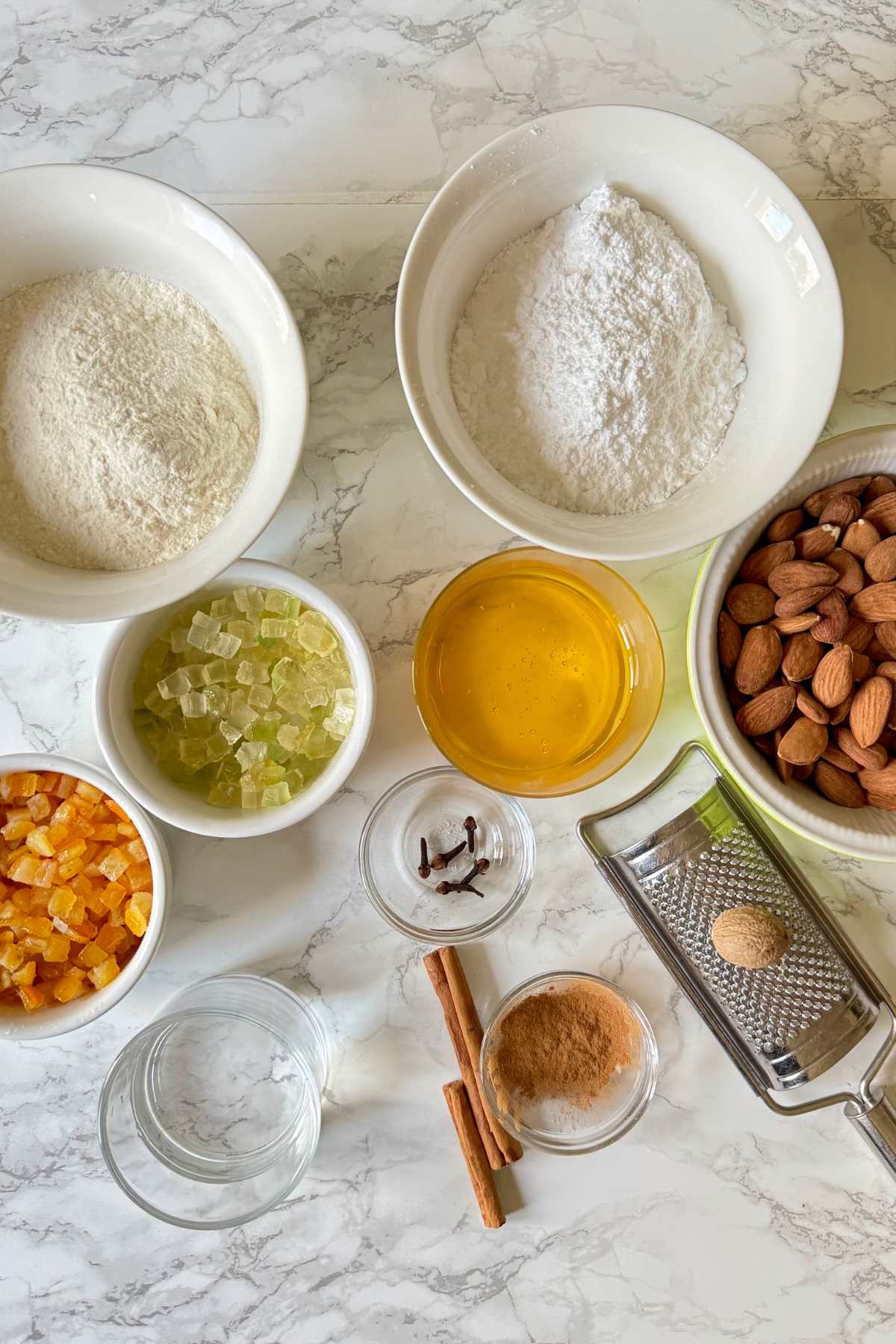
Prep Time: 20 Min | Cook Time: 15 Min | Servings: 8
NOTE: Quantities are for a 20 cm (8 inch) non-stick springform pan with removable bottom
FOR THE DOUGH
- 150 g (about 1 ¼ cups) all-purpose flour
- 300 g (about 10 oz) whole almonds, skin on
- 125 g (about 4.5 oz) candied citron, finely chopped
- 125 g (about 4.5 oz) candied orange, finely chopped
- 1 tablespoon ground cinnamon
- 1 pinch nutmeg
- 5 whole cloves, finely chopped
- 1 edible wafer paper sheet
FOR THE SYRUP
- 150 g (about 1 ¼ cups) powdered sugar
- 150 g (about ½ cup) acacia honey
- 50 g (about 3 tablespoons) water
TO DECORATE
- 50 g (about ½ cup) powdered sugar
Instructions
Make the Dough
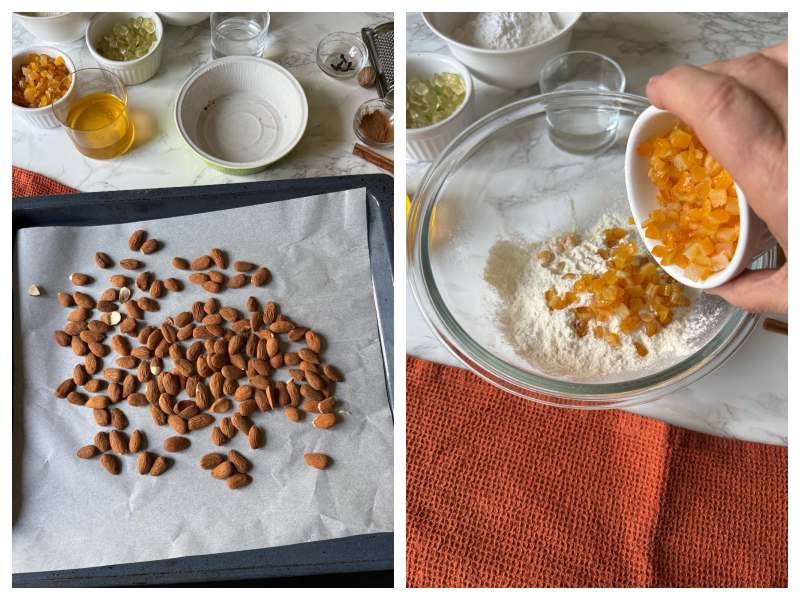
Step 1 ) - Preheat the oven to 180°C (350°F). Spread the whole, skin-on almonds on a baking sheet and toast them for 10 to 12 minutes, until lightly golden and fragrant. Remove from the oven and set aside to cool slightly.
In a large bowl, combine the flour with the candied orange peel and candied citron, both finely chopped into small cubes.
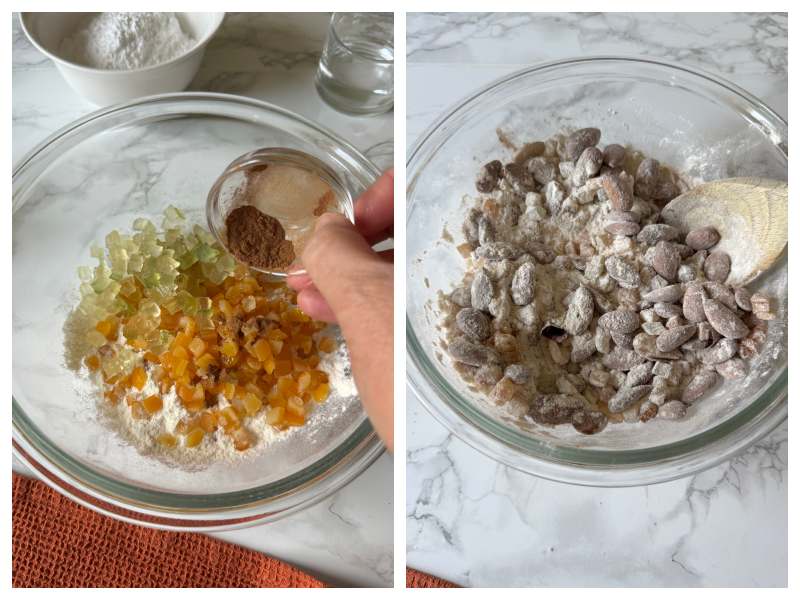
Step 2) - Add the spices to the bowl: ground cinnamon, ground nutmeg, and ground cloves. If your cloves are whole, crush them finely using a mortar and pestle or place them between two sheets of parchment paper and crush with a rolling pin.
Add the toasted almonds and mix very well until the flour evenly coats all the ingredients.
Tip: This step is important, make sure the flour is fully absorbed and no dry spots remain.
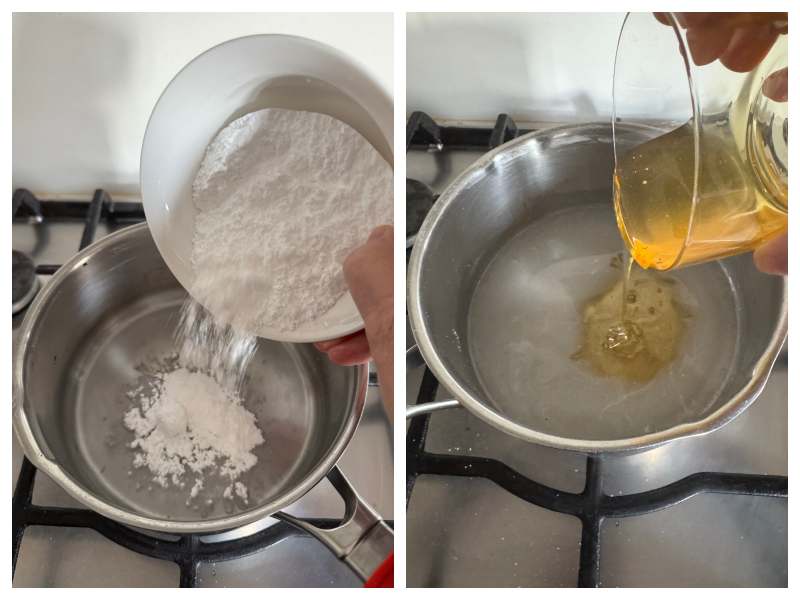
Step 3) - In a small saucepan, combine the powdered sugar and water. Heat gently over low heat, stirring until the sugar has completely dissolved. Add the honey and continue stirring until you obtain a smooth, fluid syrup.
Important: Keep the heat low and do not let the syrup boil. The mixture should remain liquid and glossy, not caramelized, so it can properly bind the dough.
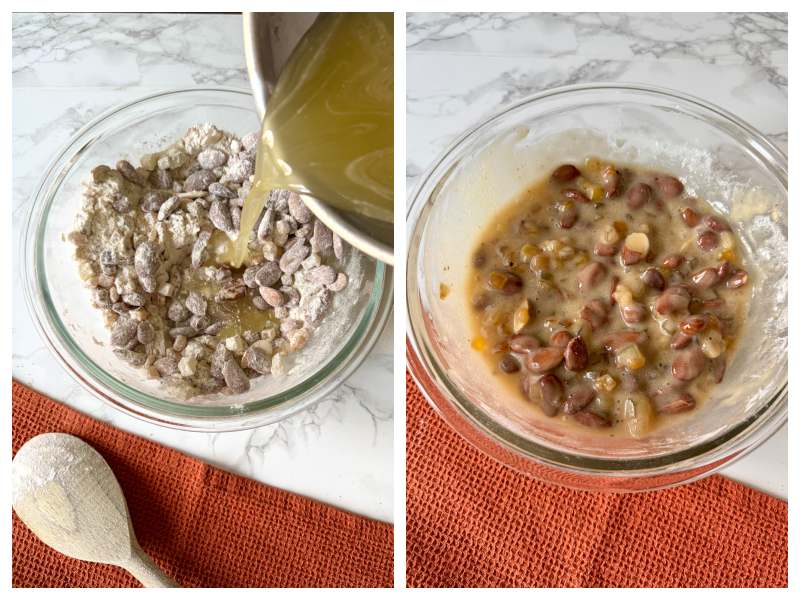
Step 4) - Pour the hot syrup over the almond and candied fruit mixture. Stir thoroughly with a sturdy spoon until all the ingredients are well combined and evenly coated.
Bake and Serve
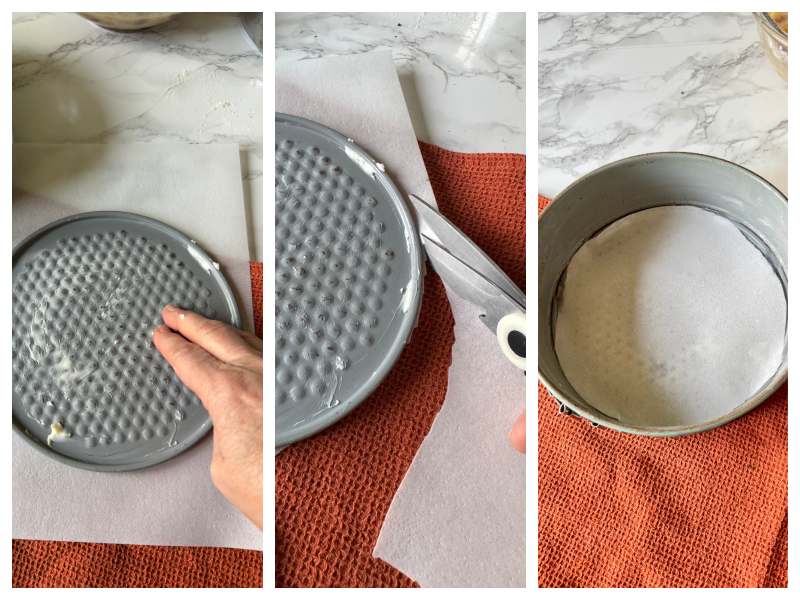
Step 5) - Lightly butter the bottom of a 20 cm (8-inch) springform pan and place a round of edible wafer paper on the base, trimming it to fit if necessary. Grease the sides well with butter to prevent sticking.
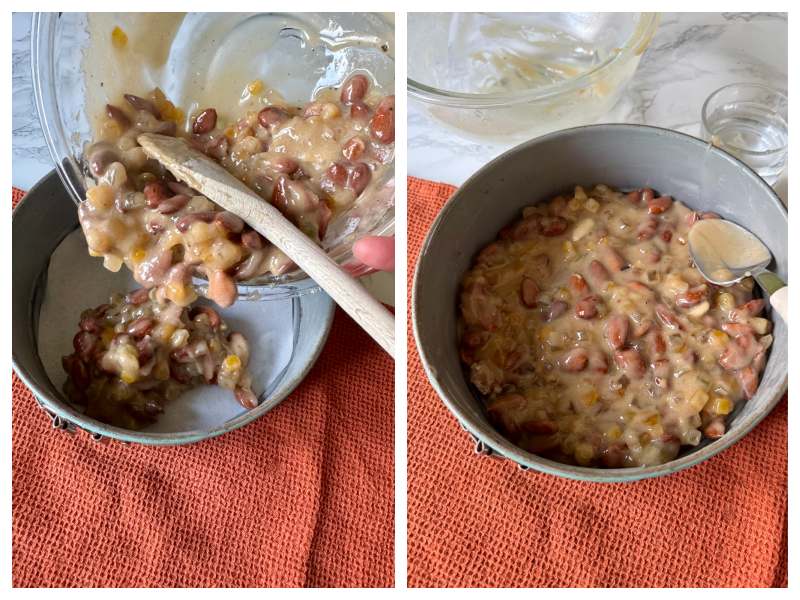
Step 6) - Transfer the panforte mixture to the prepared pan, spreading it evenly to a thickness of about 2 to 4 cm (1 to 1 ½ inches). Press and level the surface firmly using the back of a spoon lightly dipped in water.
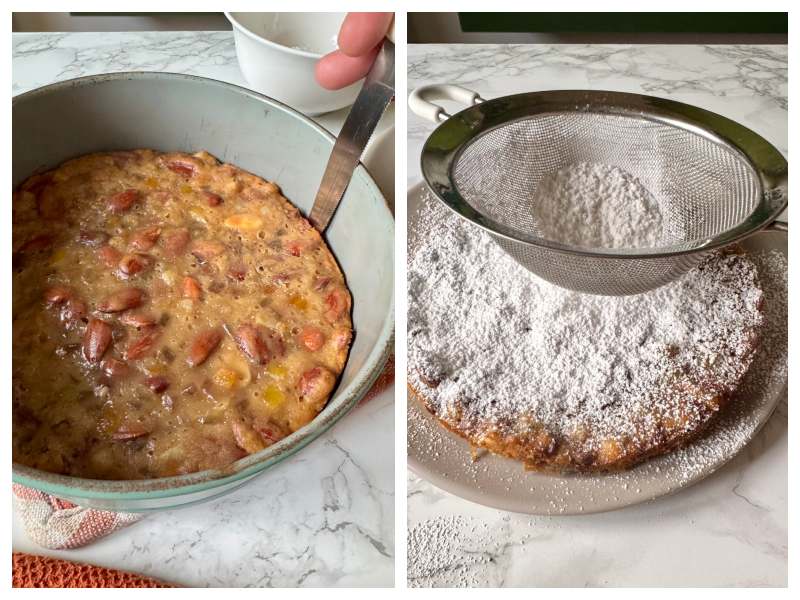
Step 7) - Bake in the preheated oven at 180°C (350°F) for 15 to 20 minutes. Remove from the oven and let the panforte cool until just warm.
Note: Do not let it cool completely in the pan, or it may be difficult to remove. Carefully release the panforte from the pan. If needed, run a knife gently around the edges to loosen it.
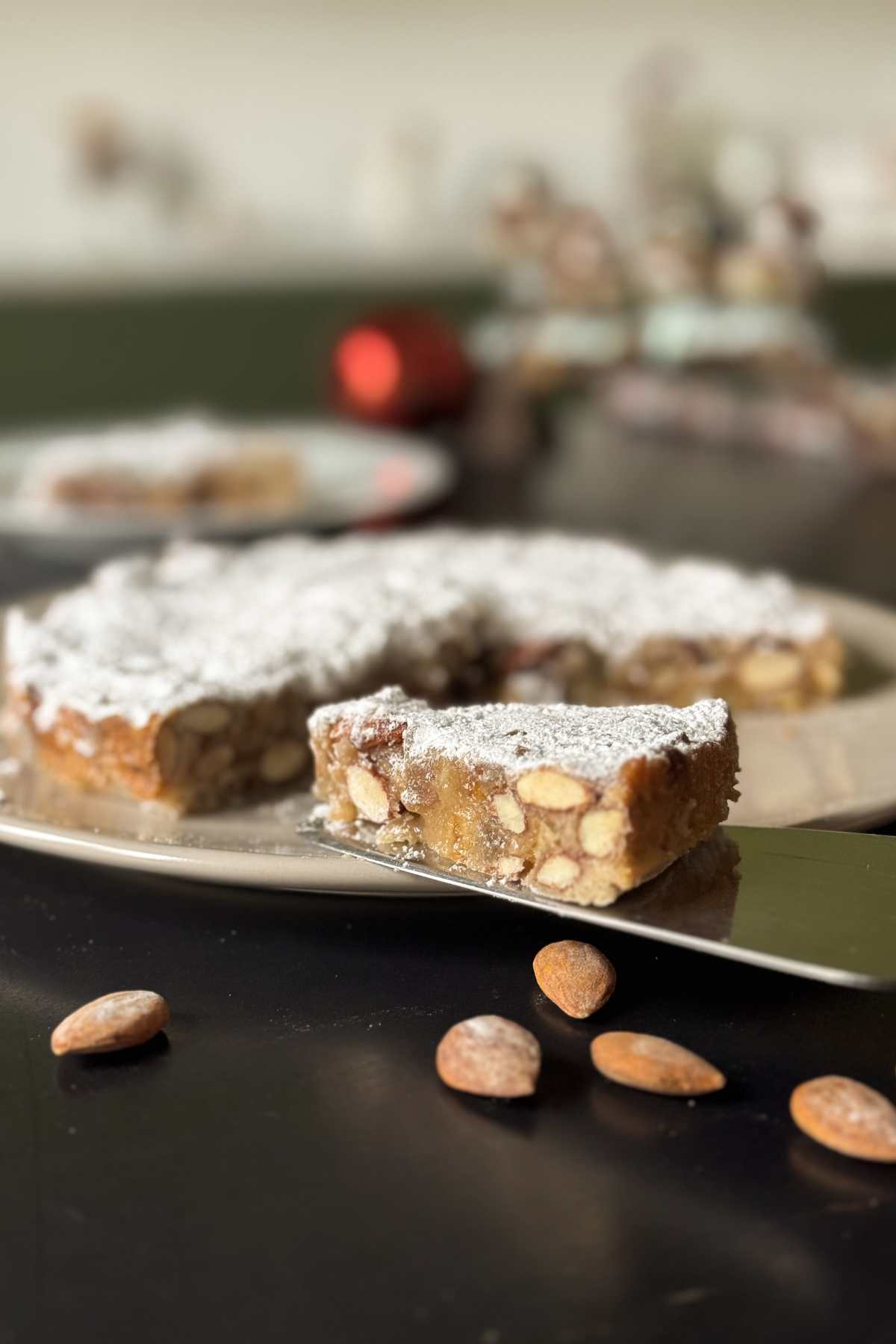
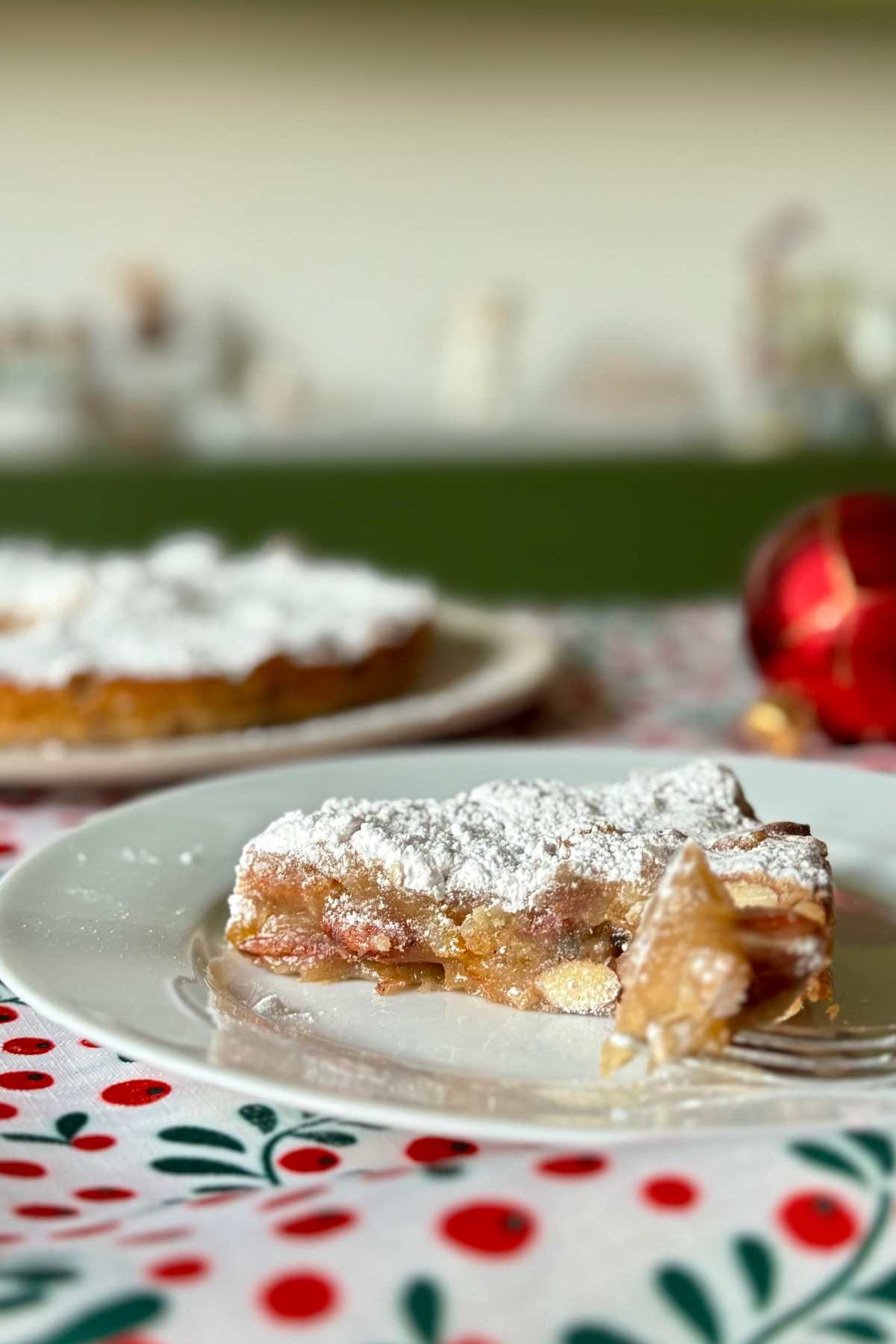
Transfer the panforte to a serving plate and dust generously with powdered sugar. Let it cool completely before slicing and serving.
Storage
Panforte keeps very well thanks to its dense texture and the presence of honey and dried fruit. Once completely cooled, store it wrapped in parchment paper or aluminum foil, then place it in an airtight container. Keep it at room temperature, in a cool and dry place, away from heat and direct sunlight.
Properly stored, panforte will keep for 2 to 3 weeks, and its flavor often improves after a few days as the spices meld together.
Tips
For the best flavor, use high-quality candied orange and citron. Buying them whole and cutting them into small cubes yourself makes a noticeable difference in taste and texture.
To make unmolding easier, line the bottom of the pan with edible wafer paper and either grease the sides well with butter or line them with a strip of parchment paper. This will help the panforte release cleanly once it has cooled.
Panforte Variations
White Panforte vs. Panforte Nero (Pan Pepato): Today there are several versions of this traditional Tuscan dessert. The most well-known are white panforte, the version shared here, and the much older Panforte Nero, also called Pan Pepato. Both are made with almonds, candied fruit, and spices, but Pan Pepato traditionally includes black pepper and candied melon, known in Siena as popone.
Dried Fruit Alternatives: This classic panforte recipe stays true to the traditional version from Siena, which may not suit everyone’s taste. If you are not a fan of candied fruit, you can replace it with raisins or chopped dried figs.
Nut Variations: Along with almonds, you can add or substitute other nuts such as hazelnuts, walnuts, or pistachios to personalize the flavor and texture.
Spice Adjustments: The spice mix can easily be adapted. Cinnamon and nutmeg are essential for the classic aroma, but you can omit the cloves if you prefer a milder flavor.
Extra Flavor Ideas: For a bolder, spicier note, add a pinch of ground ginger. For a softer, more delicate aroma, try a touch of vanilla instead.
Origins of Panforte
In its earliest form, panforte was mainly prepared in monasteries. It originally resembled a simple flatbread made with honey and fresh fruit and was known as pan mielato, meaning "honey bread".
After a few days of fermentation, however, the fresh fruit caused the dough to turn sour, creating what was called panes fortis - “strong bread” - from which the name panforte later evolved.
To avoid unwanted fermentation, the recipe began to be made only during the colder months. Over time, this seasonal preparation became closely associated with Christmas, turning panforte into a traditional Italian holiday dessert.
According to legend, in 1552, during the siege of Siena, Sister Berta, the mother abbess of a local monastery, enriched the recipe with almonds and candied fruit to nourish the exhausted soldiers returning from battle.
It is also said that the white version of panforte, completely covered in powdered sugar, was created in honor of Queen Margherita of Savoy during her visit to Siena in 1879.
A special dessert was developed for the occasion, inspired by the traditional Sienese recipe but with a milder, more refined flavor suited to the queen’s taste. Pepper was replaced with vanilla, pumpkin was added, and this elegant variation became known as Panforte Margherita.
More Traditional Italian Christmas Desserts
- Ricciarelli (Soft Italian Almond Cookies)
- Pandoro Tiramisu Cups
- Sicilian Almond Cookies
- Chocolate Salami
- Chocolate Mascarpone Truffles
Italian Panforte: FAQs
Panforte is a traditional Italian Christmas cake from Siena, Tuscany. It is a dense, spiced dessert made with almonds, candied fruit, honey, and flour, baked on a thin wafer base and dusted with powdered sugar.
Panforte is dense and compact, but not hard. Its texture is soft and slightly chewy, similar to a rich fruit and nut confection rather than a cake. When sliced thin, it is easy to eat and full of flavor.
Panforte has been traditionally prepared during the colder months to prevent fruit fermentation and has long been associated with the Christmas season. Its warm spices, honey, and dried fruit make it a classic Italian holiday dessert, especially in Tuscany.
Recipe Card
Panforte Recipe (Traditional Italian Christmas Cake from Siena)

Ingredients
FOR THE DOUGH
- 150 g all-purpose flour - about 1 ¼ cups
- 300 g whole almonds, skin on - about 10 oz
- 125 g candied citron, finely chopped - about 4.5 oz
- 125 g candied orange, finely chopped - about 4.5 oz
- 1 tablespoon ground cinnamon
- 1 pinch nutmeg
- 5 whole cloves - finely chopped
- 1 sheet edible wafer paper
FOR THE SYRUP
- 150 g powdered sugar - about 1 ¼ cups
- 150 g acacia honey - about ½ cup
- 50 g water - about 3 tablespoons
TO DECORATE
- 50 g powdered sugar - about ½ cup
Instructions
Make the Dough
- Preheat the oven to 180°C (350°F). Spread the whole, skin-on almonds on a baking sheet and toast them for 10 to 12 minutes, until lightly golden and fragrant. Remove from the oven and set aside to cool slightly.
- In a large bowl, combine the flour with the candied orange peel and candied citron, both finely chopped into small cubes.
- Add the spices to the bowl: ground cinnamon, ground nutmeg, and ground cloves. If your cloves are whole, crush them finely using a mortar and pestle or place them between two sheets of parchment paper and crush with a rolling pin.
- Add the toasted almonds and mix very well until the flour evenly coats all the ingredients. Tip: This step is important, make sure the flour is fully absorbed and no dry spots remain.
- In a small saucepan, combine the powdered sugar and water. Heat gently over low heat, stirring until the sugar has completely dissolved. Add the honey and continue stirring until you obtain a smooth, fluid syrup.Important: Keep the heat low and do not let the syrup boil. The mixture should remain liquid and glossy, not caramelized, so it can properly bind the dough.
- Pour the hot syrup over the almond and candied fruit mixture. Stir thoroughly with a sturdy spoon until all the ingredients are well combined and evenly coated.
Bake and Serve
- Lightly butter the bottom of a 20 cm (8-inch) springform pan and place a round of edible wafer paper on the base, trimming it to fit if necessary. Grease the sides well with butter to prevent sticking.
- Transfer the panforte mixture to the prepared pan, spreading it evenly to a thickness of about 2 to 4 cm (1 to 1 ½ inches). Press and level the surface firmly using the back of a spoon lightly dipped in water.
- Bake in the preheated oven at 180°C (350°F) for 15 to 20 minutes. Remove from the oven and let the panforte cool until just warm.Note: Do not let it cool completely in the pan, or it may be difficult to remove. Carefully release the panforte from the pan. If needed, run a knife gently around the edges to loosen it.
- Transfer the panforte to a serving plate and dust generously with powdered sugar. Let it cool completely before slicing and serving.
KIM says
Ciao from Queensland Australia like to make panaforte.
Ediable wafer?? Not sure if able to find here small seaside town Hervey Bay
Can i use double layer Baking paper as would use on the side of tin greased??
Thanks Kim Christina
Silvana Nava says
Hi Kim, if you can't find edible paper, you don't need to use it.
This rice starch-based paper is widely used in Tuscany in traditional honey-based desserts. Your panforte will definitely turn out fine anyway. However, you don't need to use two layers of baking paper. One layer on the base and edges will be fine.
Have a nice day, Silvana
Carol says
I have never seen edible paper, but I have seen rice paper, which is edible .Can I use this?
Silvana Nava says
Yes, wafer paper ( ostia ) is made from rice starch.
Have a nice day.