
Minestrone is one of the most traditional Italian recipes, passed down from generation to generation.
This hearty vegetable soup is a staple of Italian home cooking, made with a variety of seasonal vegetables and legumes. Its texture can range from light to thick, depending on family habits and regional traditions.
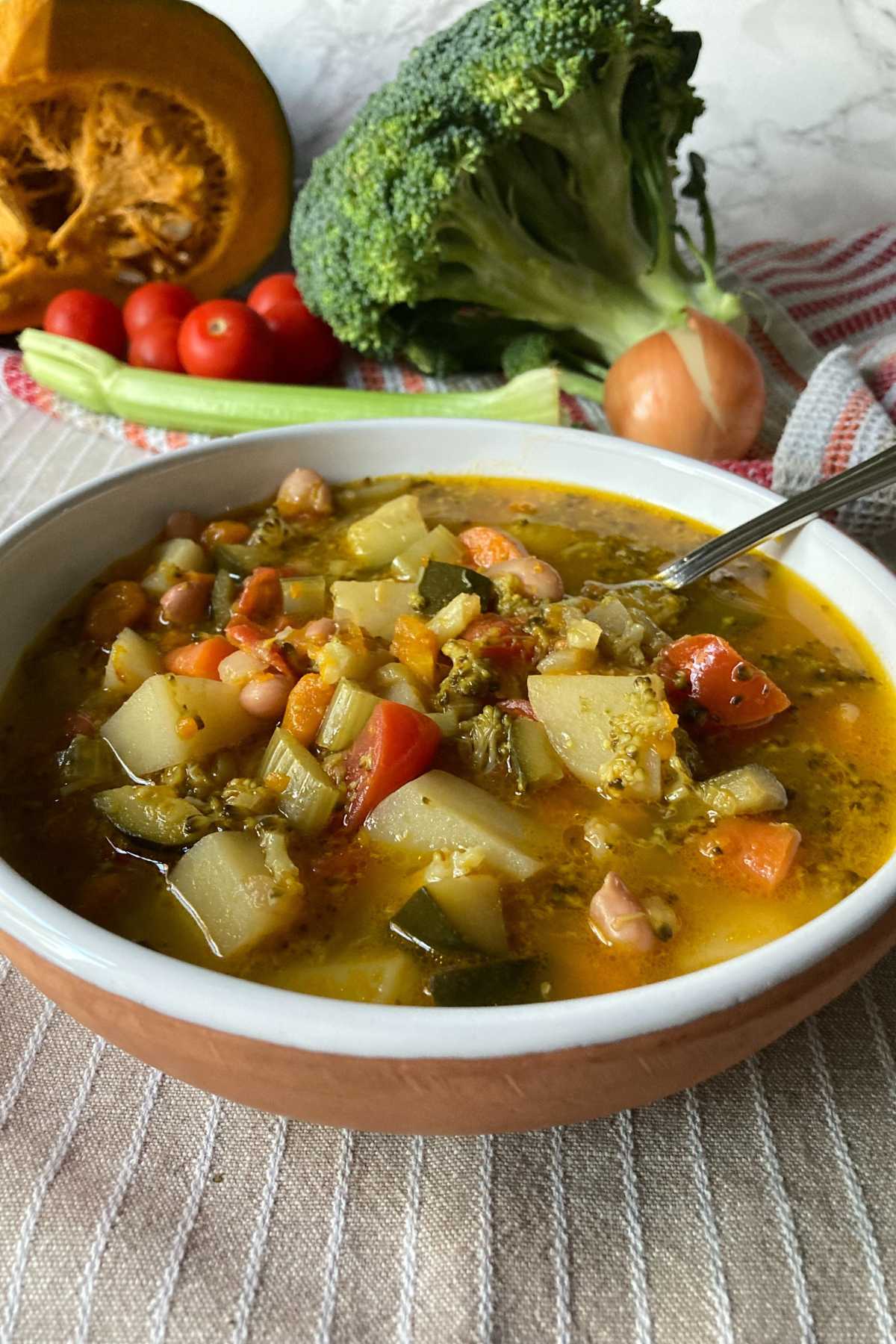
There isn’t a single “official” minestrone recipe. The ingredients, preparation method, and even how it’s served can vary from one region to another. What they all share is the use of a colorful mix of vegetables and legumes—fresh and in season whenever possible.
Some versions also include grains like rice, spelt, or barley, or small pasta shapes such as ditalini. The cook’s creativity and the vegetables available at the moment make every minestrone unique.
Although it’s perfect in winter, when a warm bowl of soup is pure comfort, Italians also enjoy minestrone in the warmer months. Served cold, it becomes a light yet satisfying dish, ideal for lunch on a hot day.
Here I’ll show you how to make the authentic Italian minestrone recipe, prepared with fresh vegetables that are available all year round. It’s the ultimate vegetarian comfort food—healthy, hearty, and full of genuine Italian flavor.
Jump to:
Ingredients

Prep Time: 20 Min | Cook Time: 50 Min | Servings: 6
- 2 medium potatoes
- 1 medium onion
- 2 medium carrots
- 1 medium zucchini
- 1 celery stalk
- 2 ripe tomatoes
- 100 g (4 oz) diced pumpkin
- 100 g (4 oz) broccoli florets
- 200 g (7 oz) borlotti beans (cranberry beans) or cannellini beans (white kidney beans)
- 3 tablespoons extra virgin olive oil
- Salt, to taste
- Ground black pepper, to taste
Kitchen Tools and Equipment
- To make the Minestrone recipe, first of all you need a cutting board on which to clean and cut all the vegetables with a sharp knife and a peeler.
- Then you need large pot with high sides and a lid. Traditionally we use a terracotta pot, which retains heat and cooks more evenly. This item is also very beautiful, decorates your kitchen and can be even a lovely gift. Even an Enameled Cast Iron Dutch Oven make the trick.
- To serve Minestrone, or other vegetable dishes, we recommend a set of plates decorated with themed subjects. Check out this beautiful set of plates that will grace your table and wow your guests!
Instructions
BEFORE YOU START:
- A) If you’re using dried beans, remember to soak them in plenty of water for at least 12 hours before cooking.
- B) Wash and peel all the vegetables thoroughly, then cut them into evenly sized pieces so they cook evenly.

Step 1) - In a large pot, sauté the diced onion, carrots, and celery with two tablespoons of olive oil. Cook slowly over low heat for about 10 minutes, stirring occasionally.

Step 2) - Add all the other vegetables, starting with those that take the longest to cook. In this case, begin with the beans.
If using dried beans, make sure they’ve been soaked for at least 12 hours beforehand.

Step 3) - Place the diced pumpkin in the pot and stir well.

Step 4)- Next, put in the potatoes cut into chunks.

Step 5) - Pour about 1.5 liters (6 cups) of water. Season lightly with salt, cover the pot, and cook for about 20 minutes from the moment it starts to boil, over medium heat.

Step 6) - After this time, add the remaining vegetables: first the zucchini and broccoli, cut into pieces.

Step 7) - Then stir in the chopped tomatoes.

Step 8) - Mix, and if necessary, adjust the consistency by pouring a little more hot water. Taste and adjust the salt, then continue cooking for about 15 minutes, covered, over medium heat, until you reach the desired thickness.
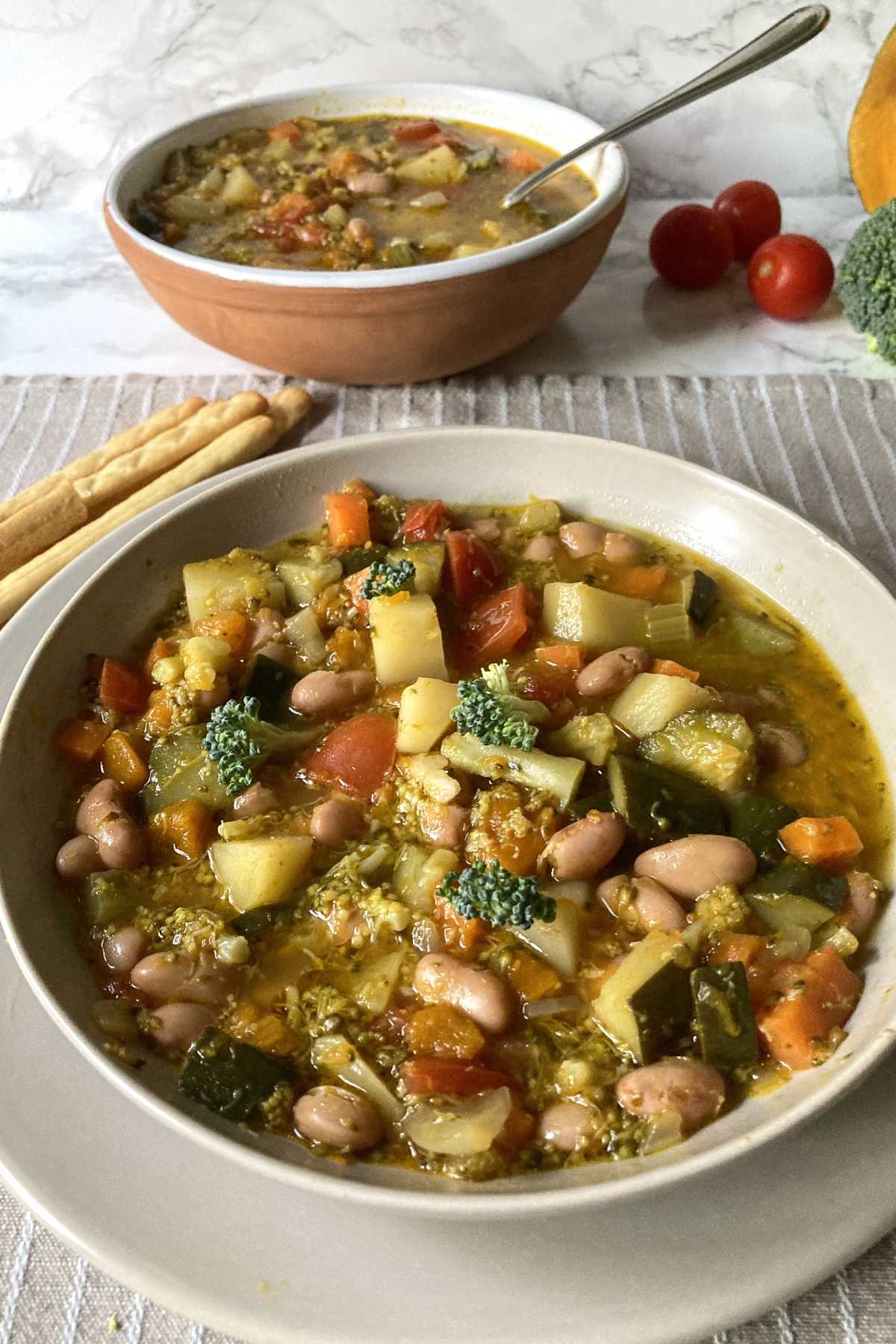
Your authentic Italian minestrone is ready! Serve it hot or warm with a drizzle of extra virgin olive oil and a sprinkle of freshly ground black pepper. Enjoy!
Storage
You can store vegetable minestrone in the refrigerator for up to 3 days in an airtight container.
Minestrone also freezes very well, especially when made with fresh ingredients. You can even prepare and freeze the vegetables in advance - washed, peeled, and diced - in freezer bags. When you’re ready, simply use them to make a fresh pot of minestrone.
Tips
As mentioned in Step 1, the preparation of minestrone always starts with the soffritto.
The soffritto is a mix of finely chopped onion, celery, and carrot sautéed in extra virgin olive oil. It’s the flavorful base that gives depth and aroma to the soup.
There are endless variations depending on regional traditions and family habits. For example, some cooks add a little chopped garlic or a touch of chili pepper for extra flavor. You can also season the soffritto with herbs: sage, rosemary, or bay leaf in winter; basil and parsley in summer.
Regional differences also affect the fat used for cooking. In Northern Italy, olive oil is sometimes replaced with butter or lard, while in Central and Southern Italy, small pieces of pancetta or cured ham fat are added for a richer taste.
Key takeaway: Make the soffritto! It’s the secret to a truly delicious and authentic Italian minestrone—the step that makes all the difference.
How to Serve Minestrone
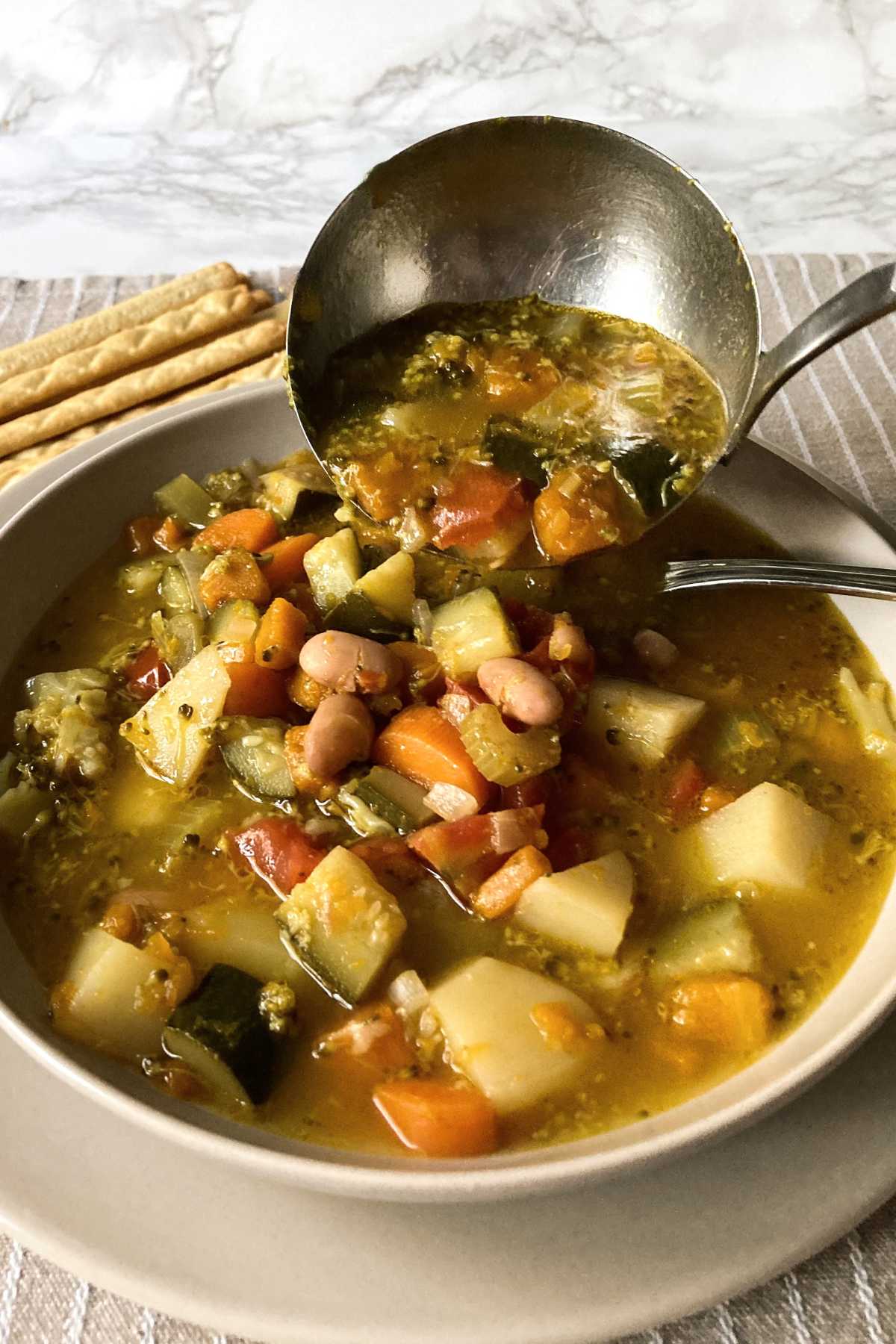
Minestrone is a hearty vegetable soup with a thick, comforting texture. You can serve it plain or top it with toasted bread cubes and a sprinkle of grated Parmesan cheese.
In Italy, it’s traditionally served as a first course, but thanks to its richness in vitamins, fiber, and flavor, it also makes a satisfying vegetarian main dish.
Many Italians like to add a handful of ditalini pasta or grains such as rice, spelt, or barley for a heartier version. If you do, keep the soup slightly more brothy by adding a bit of hot water, and cook the pasta or grains directly in the soup for 10–15 minutes, until tender.
Variations of Italian Minestrone
Minestrone varies greatly from region to region, depending on local traditions and available ingredients. Each area of Italy has its own version of this beloved vegetable soup.
Minestrone alla Fiorentina (Tuscan Minestrone) - In Tuscany, ditalini rigati pasta is often added to the soup. It’s also common to blend a portion of the beans to create a thicker, creamier texture.
Minestrone alla Romagnola (Emilia-Romagna Style) - In Emilia-Romagna, people prefer adding tiny egg pasta shapes, sometimes flavored with a hint of nutmeg for extra aroma.
Minestrone alla Milanese (Milan-Style Minestrone) - In Lombardy, rice replaces pasta. The famous Minestrone alla Milanese is made with rice, Savoy cabbage, borlotti beans, and other local vegetables, giving it a hearty, rich flavor.
Minestrone alla Genovese (Genoa-Style Minestrone) - In Liguria, the soup often includes broken trenette pasta, green beans, and a spoonful of fragrant Genovese pesto stirred in at the end—a true regional specialty.
Seasonal Variations
There is no single, fixed recipe for minestrone. The vegetables change with the seasons, while carrots, onions, potatoes, and celery remain the essential base.
A true minestrone should include at least 5 or 6 different vegetables for the perfect balance of flavors.
Spring Minestrone - In spring, use fresh fava beans, peas, and tender spinach. Add a spoonful of homemade basil pesto for a fragrant, seasonal touch.
Summer Minestrone - In summer, the choices are endless: zucchini, bell peppers, ripe tomatoes, green beans, and new potatoes are all at their best. These vibrant vegetables make the soup lighter and full of color.
Autumn and Winter Minestrone - During the colder months, minestrone becomes richer and more nourishing. Use pumpkin, leeks, fennel, cabbage, cauliflower, and mushrooms for a deep, comforting flavor.
Origins
The origins of Italian minestrone are ancient, dating back to Roman times. The Romans prepared a simple vegetable soup made with onions, garlic, carrots, asparagus, lentils, mushrooms, and any other ingredients they could find in the fields.
The cooking method was the same as today: all the ingredients were boiled together in water. Over the centuries, and especially after the discovery of the Americas, new vegetables like tomatoes and potatoes were added, enriching the recipe.
The word minestrone comes from the Latin minestrare, meaning “to serve” or “to distribute food.” The ministrata was the person who both prepared and served the dish at the table.
More Authentic Italian Soups You’ll Love
- Pasta and Beans Recipe - A hearty and comforting soup made with pasta, beans, and a rich tomato base, one of the most traditional dishes in Italian home cooking.
- Risi e Bisi - The classic Venetian spring dish made with rice and fresh peas, creamy and delicate like a light soup.
- Pappa al Pomodoro - A Tuscan favorite prepared with ripe tomatoes, stale bread, and extra virgin olive oil; simple, rustic, and bursting with flavor.
- Stracciatella alla Romana - A light Roman egg drop soup made with beaten eggs, Parmigiano, and broth, perfect as a comforting first course.
- Italian Lentil Soup Recipe - A wholesome and protein-rich soup made with lentils, vegetables, and herbs, often enjoyed during winter and New Year’s celebrations.
- Ribollita - A traditional Tuscan vegetable and bread soup, thick, hearty, and full of rustic countryside flavors.
FAQs
Minestrone is a traditional Italian vegetable soup made with a mix of seasonal vegetables, legumes, and sometimes pasta or rice. Unlike a simple vegetable soup, minestrone is thicker, heartier, and often includes beans for extra flavor and texture.
Yes! Minestrone freezes very well. Let it cool completely, then store it in airtight containers for up to 3 months. Thaw overnight in the refrigerator and reheat gently on the stovetop.
Absolutely. In fact, minestrone tastes even better the next day as the flavors blend together. Just refrigerate it and warm it up before serving.
Yes, very! It’s naturally low in fat and full of fiber, vitamins, and minerals from all the fresh vegetables and legumes. It’s a wholesome, balanced meal perfect for any season.
Recipe Card
Authentic Italian Minestrone Recipe (Classic Vegetable Soup)

Ingredients
- 2 medium potatoes
- 1 medium onion
- 2 medium carrots
- 1 medium zucchini
- 1 celery stalk
- 2 ripe tomatoes
- 100 g diced pumpkin - 4 oz
- 100 g broccoli florets - 4 oz
- 200 g borlotti beans (cranberry beans) or cannellini (white kidney beans) - 7 oz
- 3 tablespoons extra virgin olive oil
- salt to taste
- ground black pepper to taste
Instructions
- In a high-sided pot, sauté onion, carrots and celery (which you have previously diced) with two tablespoons of oil. Cook slowly for about 10 minutes, stirring occasionally.
- Add all the other vegetables, starting with those that have the longest cooking times. In our case, therefore, first of all the beans. Remember that if you are using dried beans, they should be soaked in plenty of water at least 12 hours beforehand.
- Then add the chopped pumpkin and the potatoes in chunks.
- Stir and add about 1.5 liters (about 6 cups) of water. Lightly salt, cover with a lid and cook for about 20 minutes from boiling over moderate heat.
- After this time, add the other vegetables as well. First the zucchini and broccoli cut into pieces. Then the chopped tomatoes or tomato passata.
- Stir and, if necessary, adjust the consistency by adding more hot water. Adjust salt and continue cooking for about 15 minutes, covered and over moderate heat, depending on the desired consistency.
- The authentic Italian minestrone soup is ready and should be served, hot or warm, with a drizzle of oil and a grinding of black pepper. Enjoy!
Notes
- A) If you’re using dried beans, remember to soak them in plenty of water for at least 12 hours before cooking.
- B) Wash and peel all the vegetables thoroughly, then cut them into evenly sized pieces so they cook evenly.



Will says
The recipe is good, I added a tin of diced tomatoes, Parmesan rind which I chopped up first, I also cooked separately some Pastina and added to the soup, I garnished each bowl with fresh chopped flat leaf parsley and freshly grated Pecorino cheese before serving.
Susan Rogan says
Thank you for another inspiring recipe. I guess That if I use canned beans I would add them toward the end and would one can be the correct amount?
Silvana Nava says
Hi Susan,
Yes I think one can is enough. Generally canned beans are 250 g (~9 oz) without liquid.
Buona giornata!
Bobbi Priddy says
I am new to your website and your recipes look wonderful. In fact, I would like to join your mailing list. Thank you!!!