
Creamy Artichoke Pasta is an easy Italian pasta recipe made with fresh artichoke hearts, Parmigiano, Pecorino and mint. The artichokes cook gently in a pan until tender, then turn into a light, velvety sauce that coats the pasta beautifully, without heavy cream.
This recipe is inspired by the flavors of Roman artichokes. It uses the same simple ingredients as Carciofi alla Romana and the same pasta-water technique that makes Cacio e Pepe so creamy.
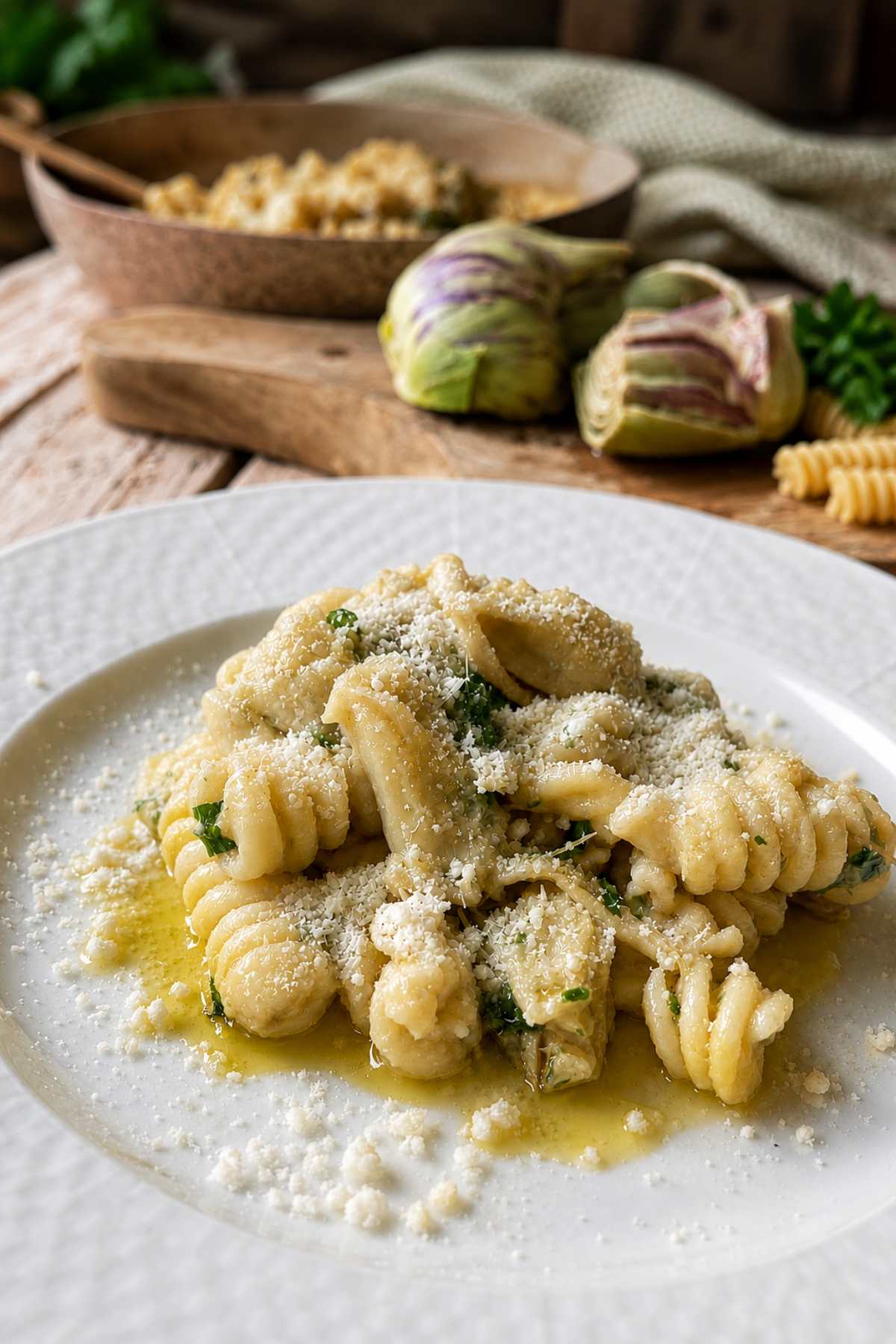
The result is a fresh and flavorful pasta with artichoke hearts, perfect from winter through spring, when artichokes are at their best.
You can also make the artichoke sauce ahead of time and toss it with freshly cooked pasta just before serving.
Follow the step-by-step recipe below for a creamy artichoke pasta that is simple, seasonal and full of real Italian flavor.
Jump to:
Which Artichokes to Use
For the best flavor, make this creamy artichoke pasta with fresh artichokes. Once cleaned, you will use the tender artichoke hearts and the soft inner part of the stems, which become creamy and flavorful as they cook.
Many people look for pasta with artichoke hearts using frozen, canned or jarred artichokes. Frozen artichoke hearts are the best alternative when fresh artichokes are not in season.
Canned or jarred artichoke hearts can also work, but choose plain artichokes packed in water, not marinated in vinegar or spices, and add them later because they are already tender.
Ingredients
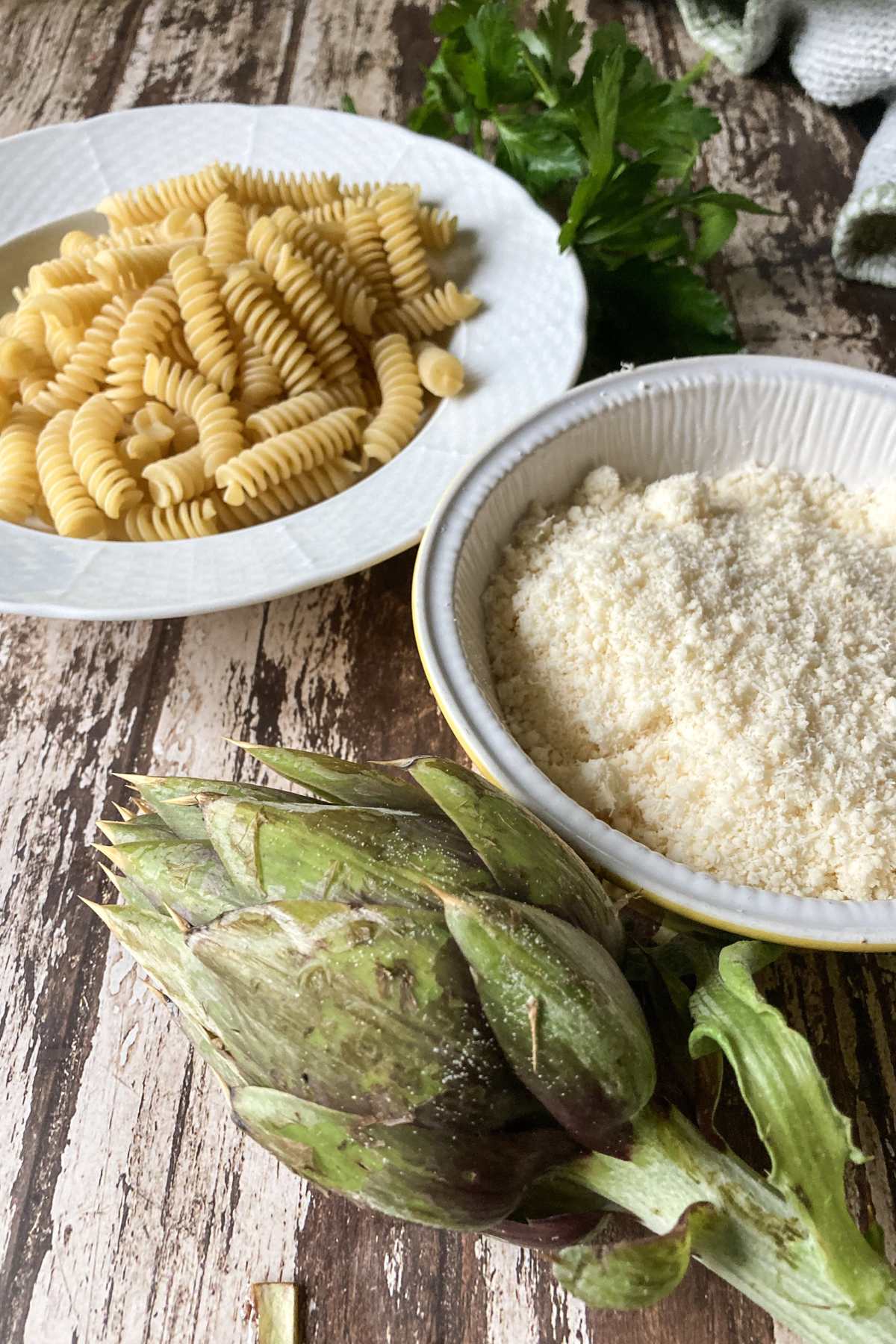
Prep Time: 10 Min | Cook Time: 25 Min | Servings: 4
- 350 g (12 oz) fusilli, or another pasta shape such as farfalle, penne, rigatoni or spaghetti
- 5 medium fresh artichokes, cleaned to use the hearts and tender stems, or 400 g (14 oz) frozen artichoke hearts, thawed and patted dry
- 2 garlic cloves
- 2 tablespoons chopped fresh mint
- 2 tablespoons chopped fresh parsley
- 30 g (⅓ cup) grated Pecorino Romano
- 30 g (⅓ cup) Parmigiano Reggiano
- ½ lemon, for soaking the cleaned artichokes
- Freshly ground black pepper, to taste
- Fine salt, to taste
- 6 tablespoons extra virgin olive oil
Kitchen Tools You May Need
- To make Creamy Artichoke Pasta Recipe, first of all you need a cutting board on which to clean and cut all the artichokes and also a sharp knife for vegetable.
- If you have chosen a variety of artichokes with thorns, we recommend using sturdy gloves, such as gardening gloves, to clean them.
- Next you'll need a non-stick pan to stew the artichokes in.
- And a pot with a colander to boil then drain the pasta. Very useful for draining the pasta and transferring it directly into the pan with the artichoke sauce, it's a convenient silicone pasta fork for long pasta and a large draining spoon or a spider skimmer ladle for short pasta.
How to Make Creamy Artichoke Pasta

If using fresh artichokes, clean them by removing the tough outer leaves and tips, then cut them into wedges. Use the tender hearts and the soft inner part of the stems. Place them in a bowl of cold water with lemon juice to prevent them from turning dark.
If using frozen artichoke hearts, let them thaw slightly and pat them dry with paper towels. You can add them directly to the pan.

Step 1) - In a large non-stick pan, heat the extra virgin olive oil with the garlic cloves.
I left the garlic cloves whole so I can remove them before serving. If you prefer a stronger flavor, you can chop them finely.
Add the artichokes to the pan and cook over high heat for a couple of minutes, stirring often.

Step 2) - Lower the heat, then add two tablespoons of the lemon water used for the fresh artichokes. If using frozen artichoke hearts, use plain water instead.
Season with a pinch of fine salt and freshly ground black pepper. Cover with a lid and cook over medium heat for about 10 minutes, or until the artichokes are tender.

Step 3) - Remove the garlic cloves. Taste and adjust the salt if necessary.
The artichokes should be soft but still in pieces, not completely mashed. Turn off the heat, add the chopped parsley and mint, and set aside.

Step 4) - Take about one third of the cooked artichokes and blend them until creamy. Set this artichoke cream aside.
Cook the Pasta

Step 5) - Bring a large pot of salted water to a boil and cook the pasta.
About halfway through the cooking time, remove two ladles of pasta cooking water and set them aside.

Step 6) - Drain the pasta a few minutes before it's fully cooked. Transfer it directly to the pan with the artichokes.
Add a little pasta cooking water and finish cooking the pasta in the pan over high heat, stirring often.
Note: check the cooking time on the pasta package. If the pasta cooks in 10 minutes, cook it for about 6 minutes in boiling water and finish it for about 4 minutes in the pan with the artichokes.

Step 7) - Turn off the heat and add the blended artichoke cream. Stir well, then add the grated Parmigiano Reggiano and Pecorino Romano.

Step 8) - Add a little more pasta cooking water, just enough to make the sauce soft and creamy. Mix very well until the pasta is evenly coated.
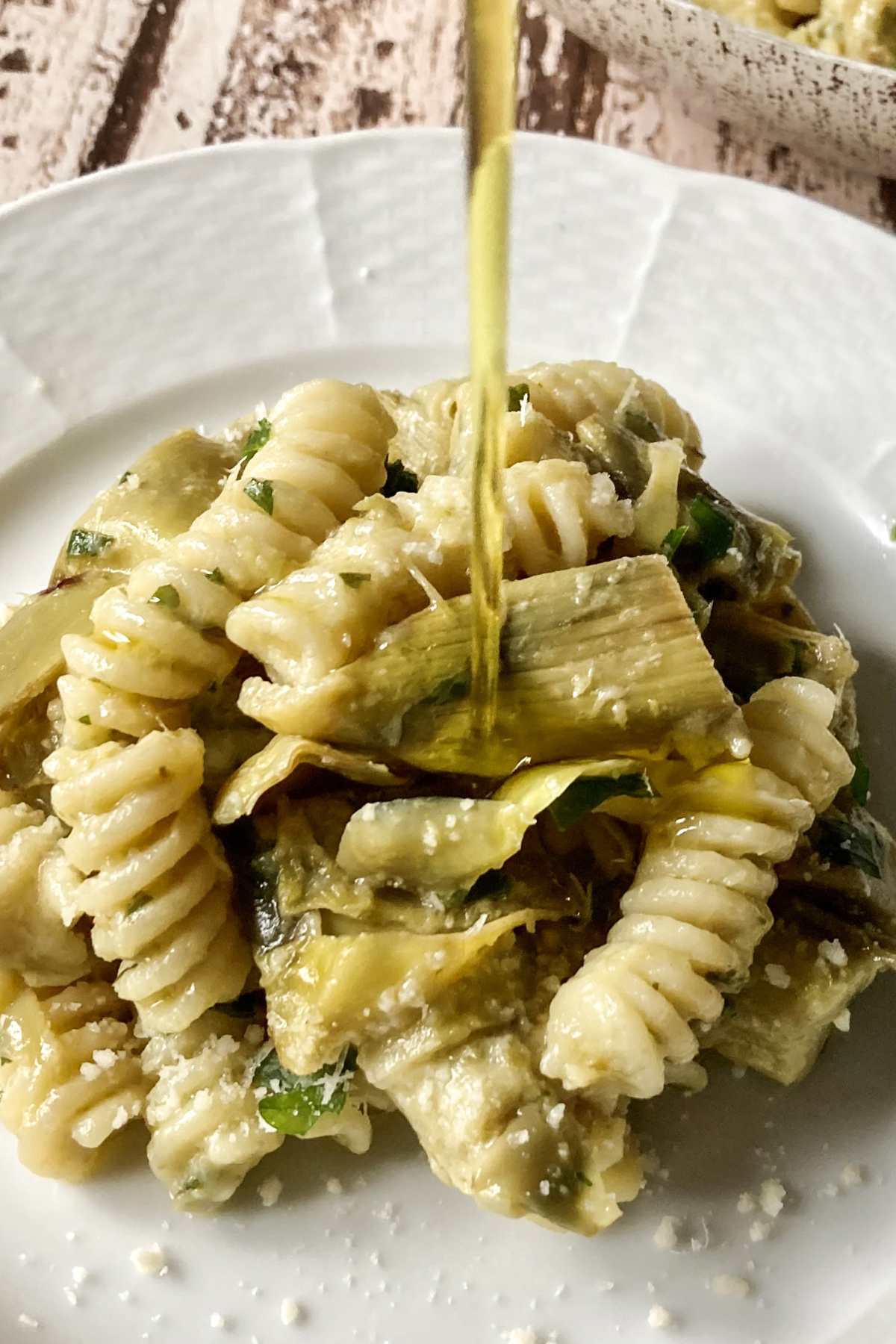
Serve the creamy artichoke pasta hot, freshly made. You can finish each plate with chopped parsley, a drizzle of extra virgin olive oil and a few thin slivers of Parmigiano Reggiano.
Tips for the Best Creamy Artichoke Pasta
Use tender artichokes. Fresh artichokes give the best flavor, especially when they are in season. Clean them well and use only the tender hearts and the soft inner part of the stems. If using frozen artichoke hearts, let them thaw slightly and pat them dry before cooking. This helps them brown lightly instead of releasing too much water.
Do not overcook the artichokes. They should become soft and creamy, but still keep some texture. If they cook too long, they can fall apart completely and lose their delicate flavor.
Blend only part of the artichokes. This is the secret to a creamy artichoke pasta without adding heavy cream. Blend about one third of the cooked artichokes, then mix this cream back into the pan at the end. You will get a velvety sauce while still keeping some artichoke pieces in the dish.
Finish cooking the pasta in the pan. Drain the pasta a few minutes before it's fully cooked and finish it with the artichokes and a little pasta cooking water. This helps the starch from the pasta bind with the artichoke cream and cheese, creating a smooth sauce.
Add the cheese off the heat. Turn off the heat before adding Parmigiano Reggiano and Pecorino Romano. This keeps the cheese from clumping and helps it melt gently into the sauce.
Adjust the creaminess with pasta water. Add the cooking water a little at a time, just until the sauce becomes soft and creamy. Do not add too much at once, or the sauce may become watery.
Serve immediately. Like many creamy pasta dishes, this artichoke pasta is best served hot, as soon as it is ready. As it sits, the sauce tends to thicken.
Storage and Make Ahead
Creamy artichoke pasta is best served hot, as soon as it is ready. Like many creamy pasta dishes, the sauce tends to thicken as it cools, especially because of the cheese and the starchy pasta water.
If you have leftovers, store them in an airtight container in the refrigerator for 1 to 2 days. Reheat the pasta gently in a pan over low heat, adding a splash of water or milk to bring back some creaminess. Stir often and avoid overheating, or the cheese may become grainy.
For the best result, you can prepare the artichoke sauce ahead of time. Cook the artichokes as explained in the recipe, blend one third of them, then store both the artichoke pieces and the cream in the refrigerator for up to 2 days. When ready to serve, cook the pasta and finish it in the pan with the artichokes, pasta water, Parmigiano and Pecorino.
I do not recommend freezing the finished pasta. However, you can freeze the cooked artichoke sauce without the cheese for up to 1 month. Let it thaw in the refrigerator, warm it gently in a pan, then add freshly cooked pasta, pasta water and grated cheese before serving.
Substitutions and Variations
Frozen artichoke hearts: If fresh artichokes are not in season, frozen artichoke hearts are the best alternative. Let them thaw slightly, pat them dry, then cook them in the pan with garlic and olive oil as you would with fresh artichokes. They may need a little less cooking time.
Canned or jarred artichoke hearts: You can also use canned or jarred artichoke hearts, but choose plain artichokes packed in water, not marinated ones. Drain them well and add them to the pan only for a few minutes, since they are already tender. The flavor will be milder than with fresh artichokes, but the recipe will still work.
Without mint: Mint gives this pasta a fresh Roman-style flavor, similar to Carciofi alla Romana. If you do not like mint, you can use only parsley or add a little fresh basil instead.
With lemon: For a fresher flavor, add a little grated lemon zest at the end, just before serving. It goes very well with artichokes and makes the dish brighter.
With cream: This recipe does not need heavy cream because the sauce becomes creamy with blended artichokes, cheese and pasta water. If you prefer a richer version, you can add a small amount of heavy cream at the end, but the traditional Italian flavor will be more delicate without it.
Vegan version: For a dairy-free version, omit Parmigiano Reggiano and Pecorino Romano. Add a little more extra virgin olive oil and some pasta cooking water to make the sauce creamy. You can also add a spoonful of nutritional yeast for a savory flavor.
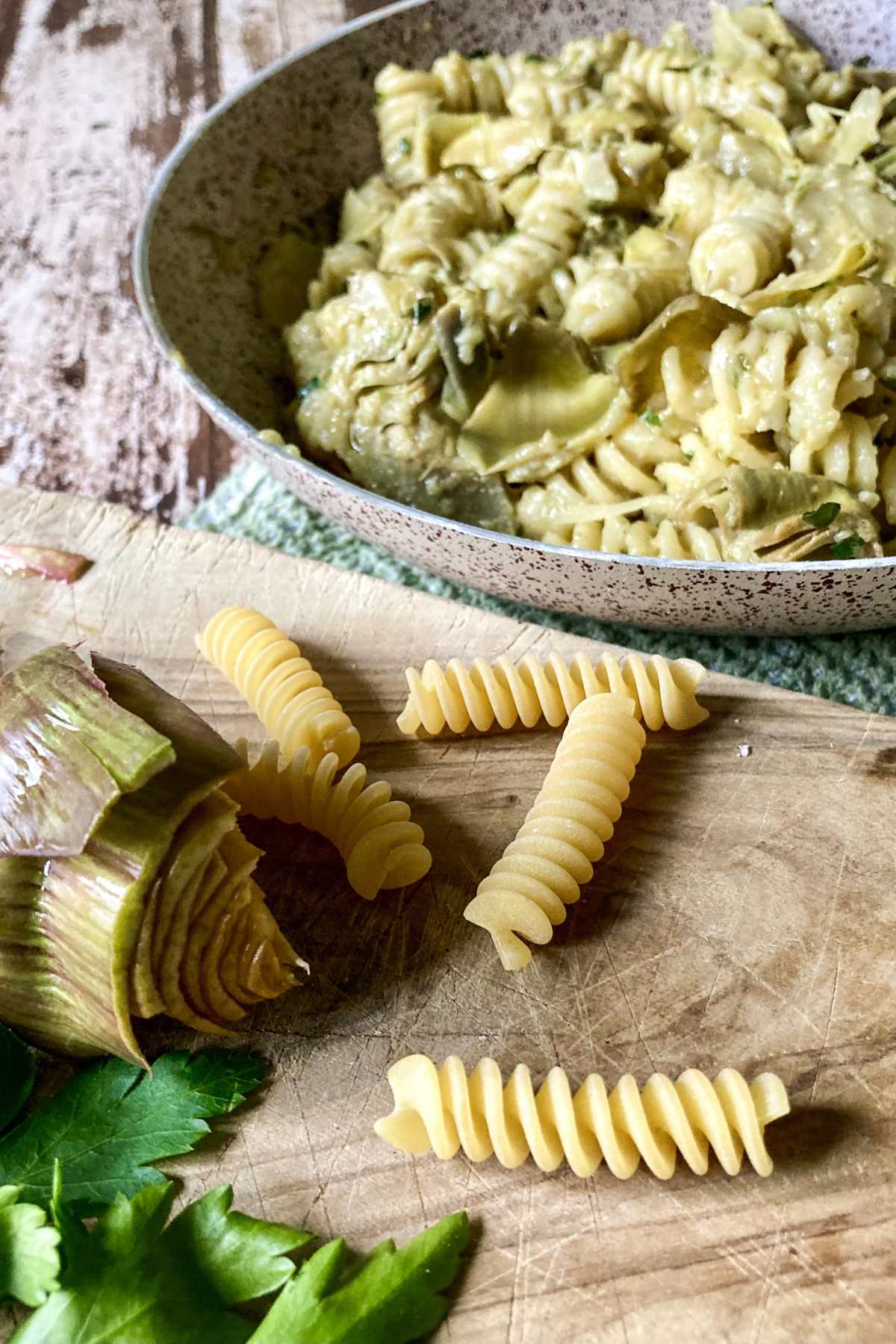
Different pasta shapes: Fusilli work very well because they hold the creamy artichoke sauce. You can also use penne, rigatoni, farfalle, mezze maniche, spaghetti or fettuccine.
FAQ
Yes, you can use canned artichoke hearts if fresh artichokes are not available. Drain them well, rinse them if needed, and add them to the pan only for a few minutes because they are already tender. For the best flavor, choose plain artichoke hearts packed in water, not marinated ones.
Yes. Frozen artichoke hearts are the best alternative to fresh artichokes. Let them thaw slightly, pat them dry, then cook them in the pan with garlic and extra virgin olive oil. They may need a little less cooking time than fresh artichokes.
The creaminess comes from the artichokes themselves, grated cheese and starchy pasta water. Blend part of the cooked artichokes, then mix this cream with the pasta, Parmigiano, Pecorino and a little cooking water. This creates a smooth sauce without adding heavy cream.
Fusilli are perfect because they hold the creamy artichoke sauce very well. You can also use penne, rigatoni, mezze maniche, farfalle, spaghetti or fettuccine. Short pasta shapes are especially good if you want a thicker, creamier result.
More Italian Artichoke Recipes
- Paccheri with Artichoke Carbonara
- Italian Stuffed Artichokes
- Italian Artichoke Casserole
- Artichoke Lasagna Recipe
- Artichoke Risotto Recipe
- Calamari with Artichokes
Recipe Card
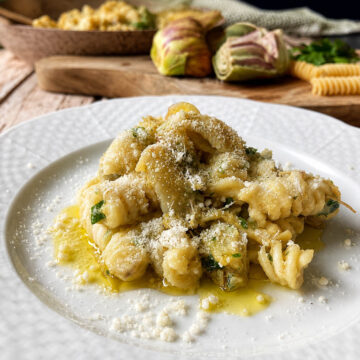
Creamy Artichoke Pasta with Fresh Artichoke Hearts

Ingredients
- 350 g fusilli or another pasta shape such as farfalle, penne, rigatoni or spaghetti - 12 oz
- 5 medium fresh artichokes, cleaned to use the hearts and tender stems - or 400 g (14 oz) frozen artichoke hearts, thawed and patted dry
- 2 garlic cloves
- 2 tablespoons fresh chopped mint
- 2 tablespoons fresh chopped parsley
- 30 g Pecorino Romano - ⅓ cup
- 30 g Parmigiano Reggiano - ⅓ cup
- ½ lemon - for soaking the cleaned artichokes
- freshly ground black pepper - to taste
- fine salt - to taste
- 6 tablespoons extra virgin olive oil
Instructions
- If using fresh artichokes, clean them by removing the tough outer leaves and tips, then cut them into wedges. Use the tender hearts and the soft inner part of the stems. Place them in a bowl of cold water with lemon juice to prevent them from turning dark.If using frozen artichoke hearts, let them thaw slightly and pat them dry with paper towels. You can add them directly to the pan.
- In a large non-stick pan, heat the extra virgin olive oil with the garlic cloves.I left the garlic cloves whole so I can remove them before serving. If you prefer a stronger flavor, you can chop them finely.Add the artichokes to the pan and cook over high heat for a couple of minutes, stirring often.
- Lower the heat, then add two tablespoons of the lemon water used for the fresh artichokes. If using frozen artichoke hearts, use plain water instead.Season with a pinch of fine salt and freshly ground black pepper. Cover with a lid and cook over medium heat for about 10 minutes, or until the artichokes are tender.
- Remove the garlic cloves. Taste and adjust the salt if necessary.The artichokes should be soft but still in pieces, not completely mashed. Turn off the heat, add the chopped parsley and mint, and set aside.
- Take about one third of the cooked artichokes and blend them until creamy. Set this artichoke cream aside.
- Bring a large pot of salted water to a boil and cook the pasta.About halfway through the cooking time, remove two ladles of pasta cooking water and set them aside.
- Drain the pasta a few minutes before it's fully cooked. Transfer it directly to the pan with the artichokes.Add a little pasta cooking water and finish cooking the pasta in the pan over high heat, stirring often.Note: check the cooking time on the pasta package. If the pasta cooks in 10 minutes, cook it for about 6 minutes in boiling water and finish it for about 4 minutes in the pan with the artichokes.
- Turn off the heat and add the blended artichoke cream. Stir well, then add the grated Parmigiano Reggiano and Pecorino Romano.
- Add a little more pasta cooking water, just enough to make the sauce soft and creamy. Mix very well until the pasta is evenly coated.Serve the creamy artichoke pasta hot, freshly made. You can finish each plate with chopped parsley, a drizzle of extra virgin olive oil and a few thin slivers of Parmigiano Reggiano.
Adele says
OK - I have NEVER come across any other site - that, before evening opening it, I get my grocery list so I will be be sure that I have all the ingredients necessary - for WHATEVER recipe you are providing. Rosemary - I am laughing... You are absolutely - ABSOLUTELY amazing... I know that I speak for LEGIONS when i say that you are incredibly talented and very generous with your time, your experience and your good taste.. You are sincerely appreciated! Every single one of your recipes are wonderful!! Thank you so much!!
Silvana Nava says
Thank you so much for your kind words! I'm really happy you enjoy our recipes and the way they’re presented.
We like to share them the way we usually do in Italy — with the full list of ingredients right at the beginning, so you can get everything ready before you start cooking. Then, at the end, we also include the recipe card, which is more common on foreign food blogs.
Personally, when I look for a recipe myself, I always prefer sites that show the full ingredient list (with weights!) right away, followed by the step-by-step photos. I don’t like to waste time — it must be my Milanese side, we’re always in a hurry! 😀