
Focaccia Genovese, known in the local dialect as a fügassa, is one of the most iconic specialties of Ligurian cuisine. In Genoa, focaccia is enjoyed at any time of day: for breakfast dipped in a cappuccino, as a midday snack, or simply on its own, warm and fragrant, straight from the bakery.
Its importance is such that authentic focaccia genovese is recognized as a Slow Food Presidium, a symbol of craftsmanship and respect for time-honored methods. Soft yet slightly crisp, glossy on the surface and fragrant with olive oil, this focaccia represents a perfect balance of simplicity and technique.
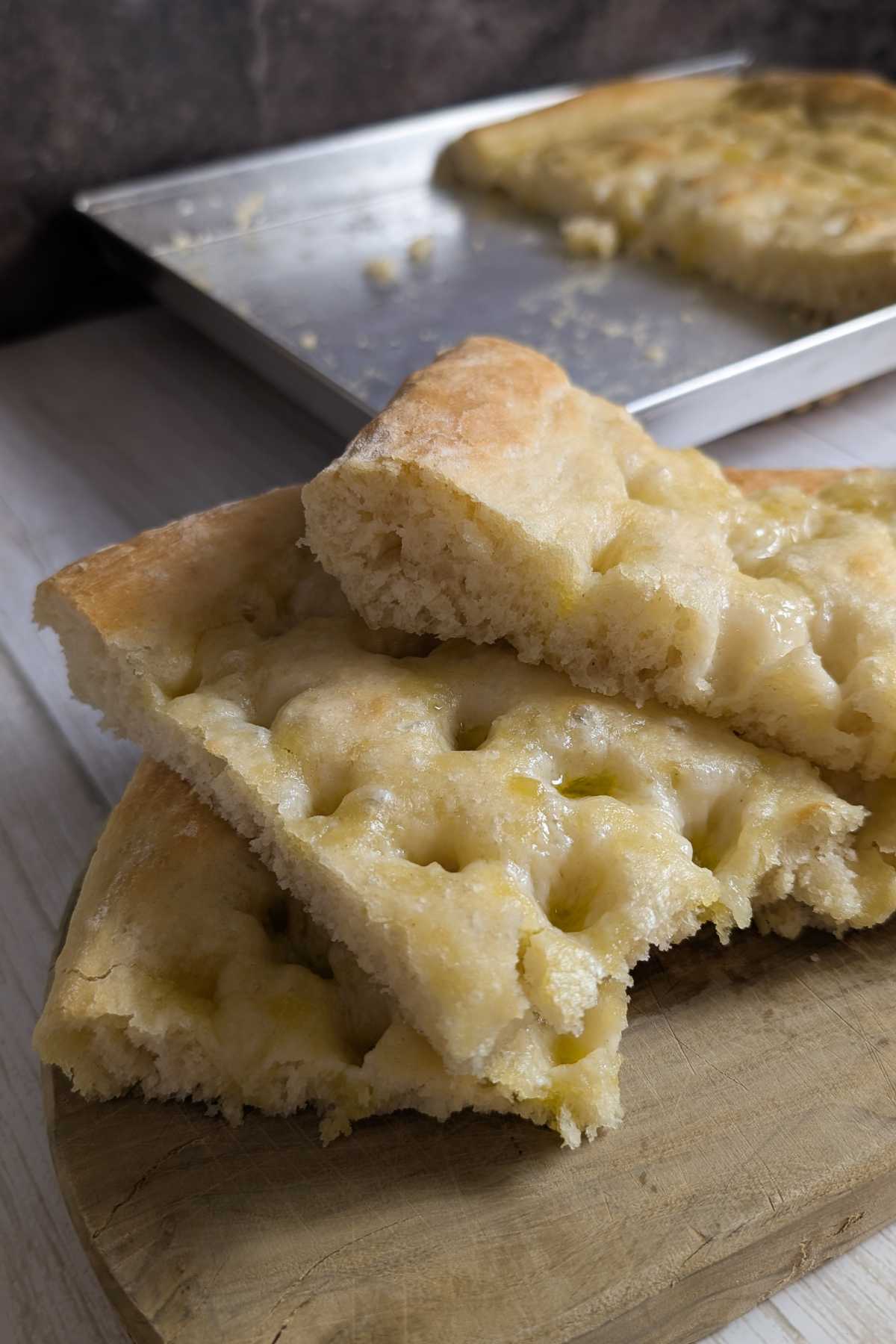
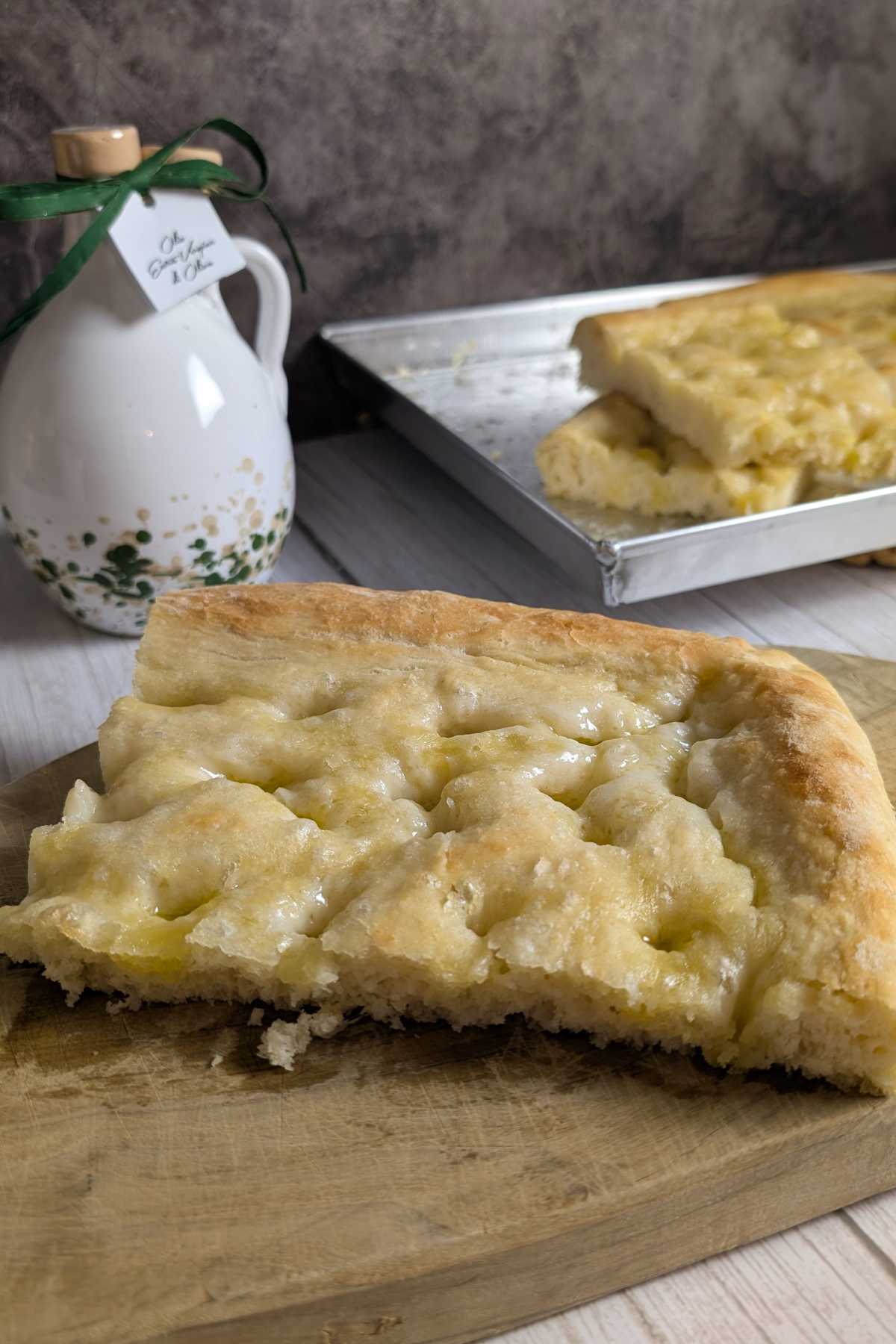
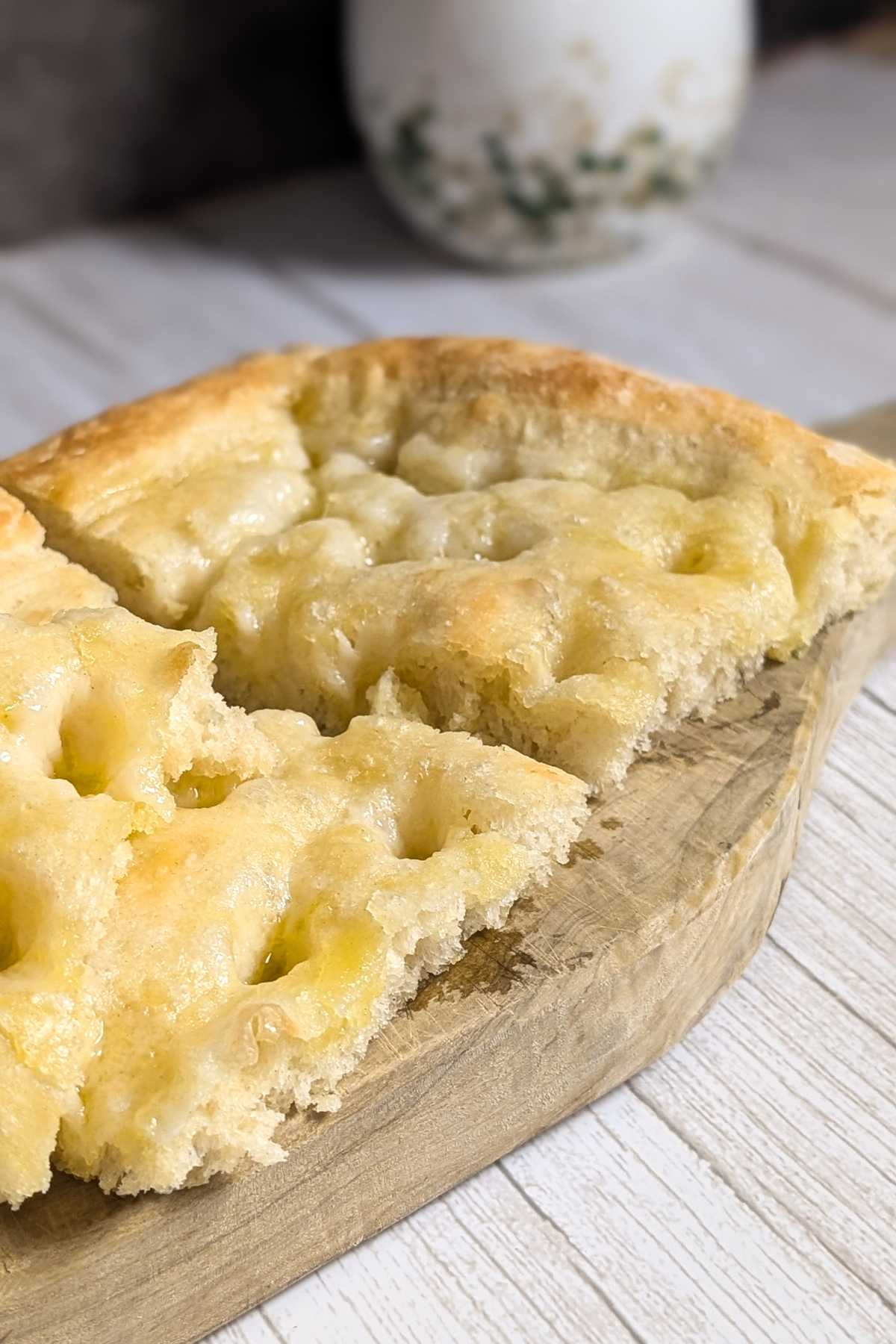
It is often said that the true flavor and aroma of focaccia genovese can only be experienced in its place of origin. While this may be true to some extent, it is absolutely possible to make an excellent version at home by respecting a few essential rules. Traditional focaccia genovese has a specific thickness of about two centimeters, a light and airy crumb, and a surface dotted with characteristic dimples filled with a delicate olive oil brine. When made correctly, it is never dry, never greasy, and never chewy.
This focaccia genovese recipe is inspired by traditional Ligurian methods, adapted for home baking without sacrificing authenticity. While the official Slow Food guidelines call for very long fermentation times, my version uses a slightly faster process that still delivers outstanding results.
By following my method, you will achieve all the defining characteristics of real focaccia genovese: the classic thickness, a balanced contrast between crispness and softness, a tender crumb, and a beautifully shiny surface.
Jump to:
Ingredients
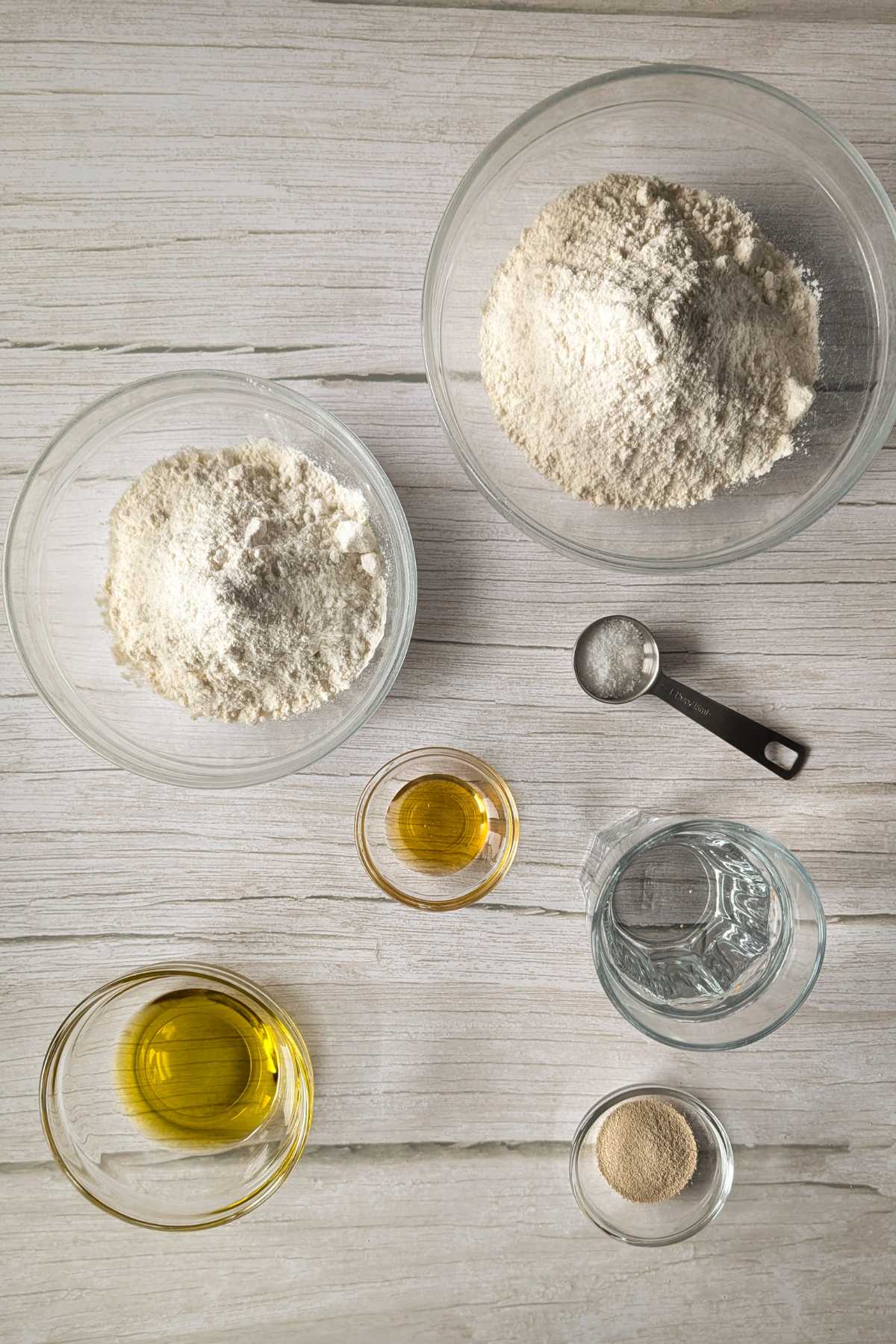
Prep Time: 30 Min | Cook Time: 15 Min | Rising Time: 4 Hours 30 Mins | Servings: 4
Ingredients for 4 people (1 baking sheet, 12x16 inches - 30x40 cm)
FOR THE DOUGH
- 200 g (1⅔ cups) 00 flour
- 300 g (2½ cups) manitoba flour or bread flour
- 300 ml (1¼ cups) water, at room temperature
- 10 g (1¾ teaspoons) fine salt
- 10 g (1½ teaspoons) honey
- 7 g (2¼ teaspoons or 0.24 oz) active dry yeast
- 25 g (2 tablespoons) extra virgin olive oil
FOR THE TOPPING (BRINE)
- 100 ml (about ½ cup) water
- 50 ml (3 tablespoons + 1 teaspoon) extra virgin olive oil
- 2 generous pinches (about ¼ teaspoon) fine salt
Instructions
Make the Dough
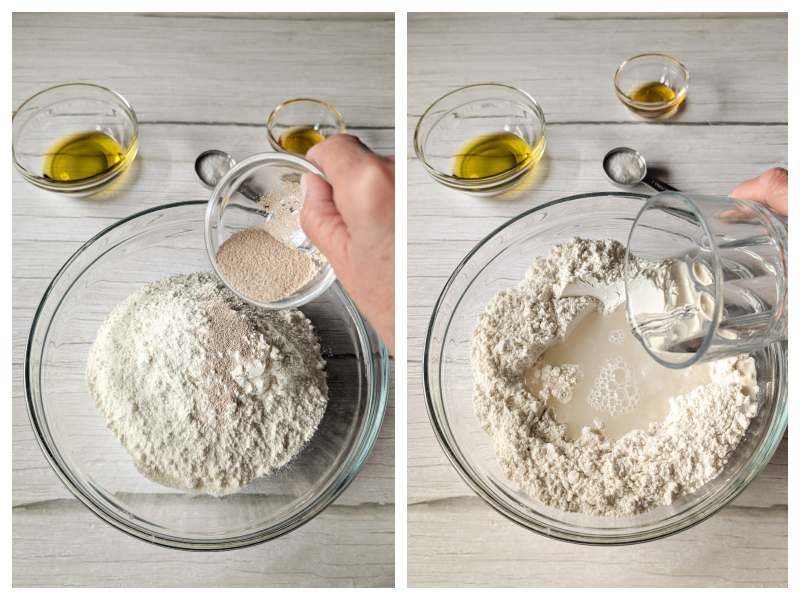
Step 1) - Place the manitoba flour (or bread flour), 00 flour, and yeast in a large mixing bowl and stir to combine.
Make a well in the center and pour in the room-temperature water. Mix with a spoon until the flour begins to absorb the water and a rough dough forms.
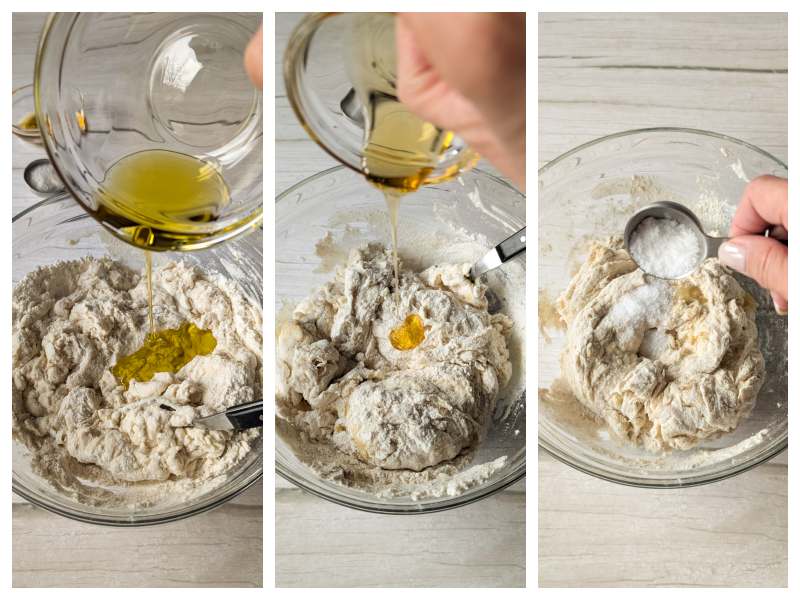
Step 2) - Add the extra virgin olive oil and the honey. Continue mixing until incorporated, then add the salt. Mix again until the dough comes together into a cohesive mass.
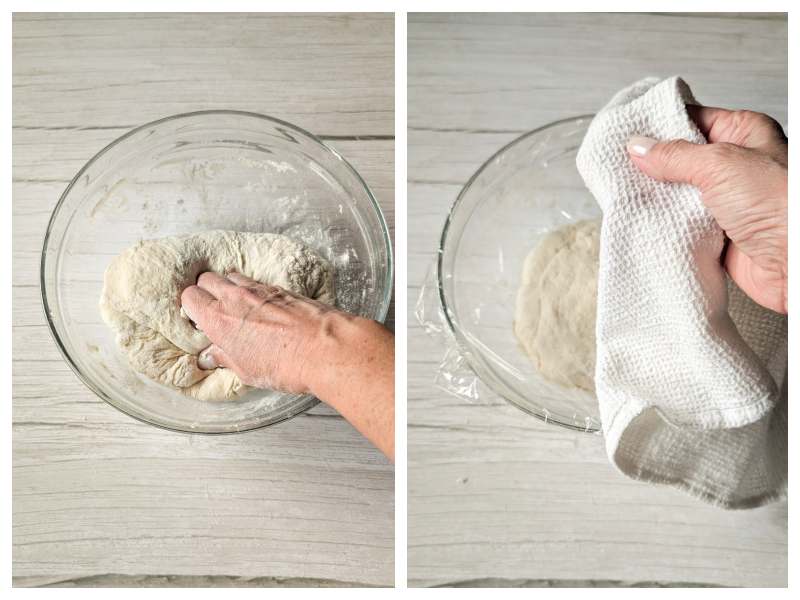
Step 3) - Knead by hand with energy for about 5 minutes. The dough should become smooth, elastic, and uniform. It will be soft but should hold its shape.
Cover tightly with plastic wrap, then cover with a kitchen towel. Let it rest at room temperature for about 30 minutes. This resting phase helps relax the gluten and makes the dough easier to work with.
Make the Folds and Let Rise
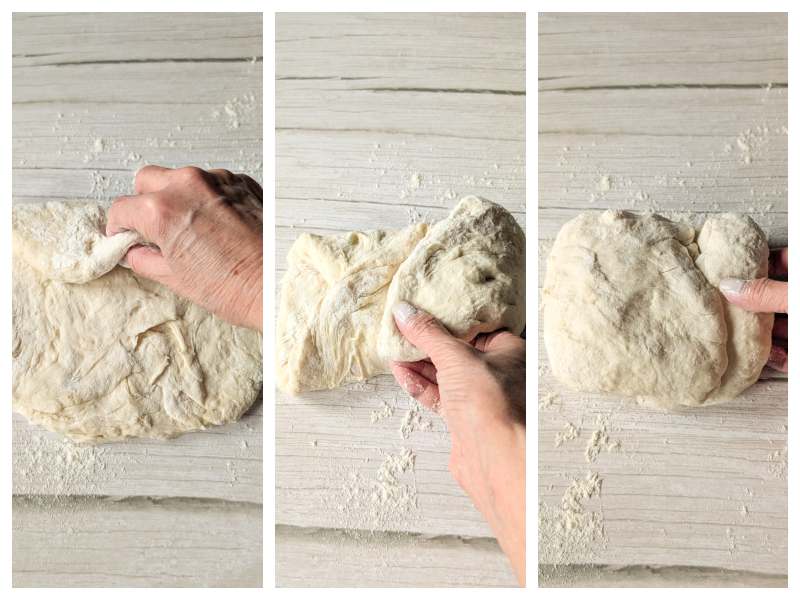
Step 4) - After resting, turn the dough out onto the work surface and perform a set of folds. Gently flatten it into a rectangle with your hands, then fold the four sides toward the center.
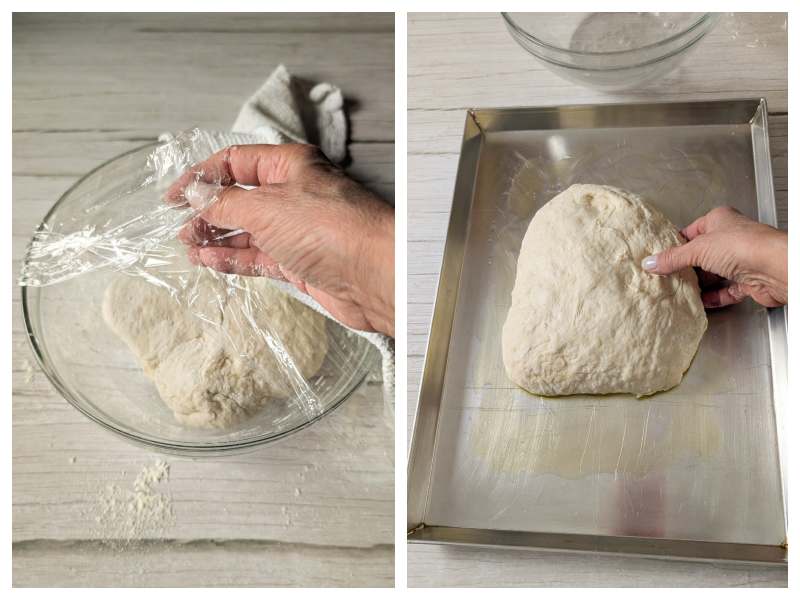
Step 5) - Turn the dough seam-side down, shape it into a ball, and return it to the bowl. Cover again and let rise at room temperature for 1 hour.
Grease a 30x40 cm (12x16 inch) baking pan with 1 to 2 tablespoons of olive oil. Place the dough in the pan.
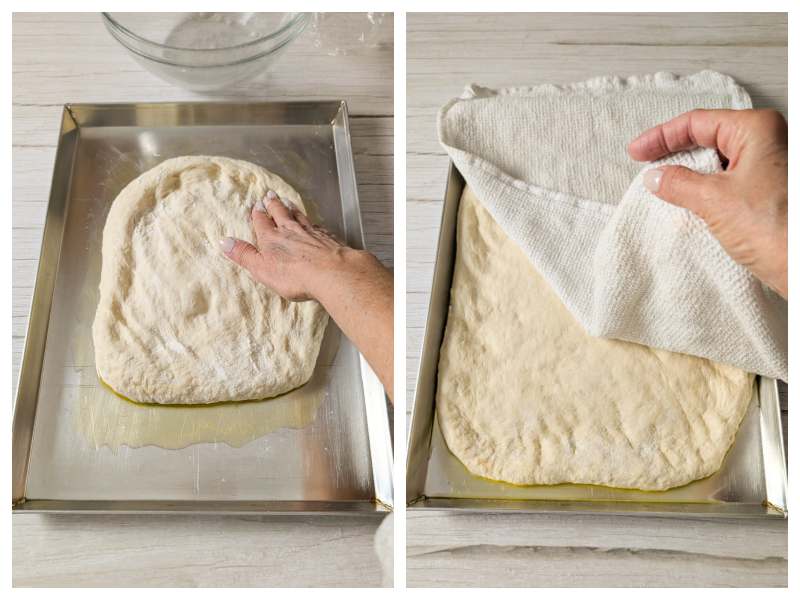
Step 6) - Gently stretch it with your hands, without forcing it, until it partially covers the surface. Cover with a kitchen towel and let rest at room temperature for another hour.
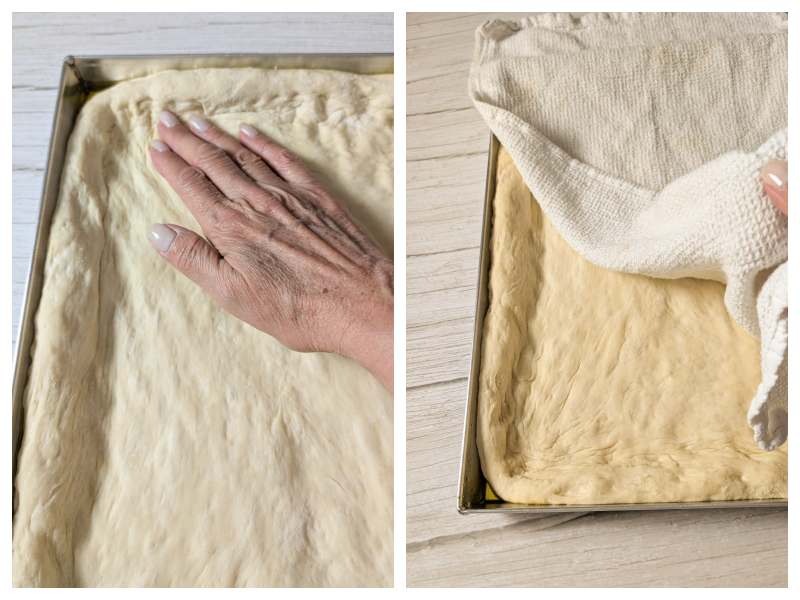
Step 7) - Lightly dust the dough with a small amount of flour. Using your fingertips, gently press and stretch the dough to fill the entire pan, starting from the edges and working inward to form a slight raised border around the perimeter. This edge is important because it helps contain the brine later. Smooth the surface gently with the palms of your hands. Cover and let rest for 1 more hour.
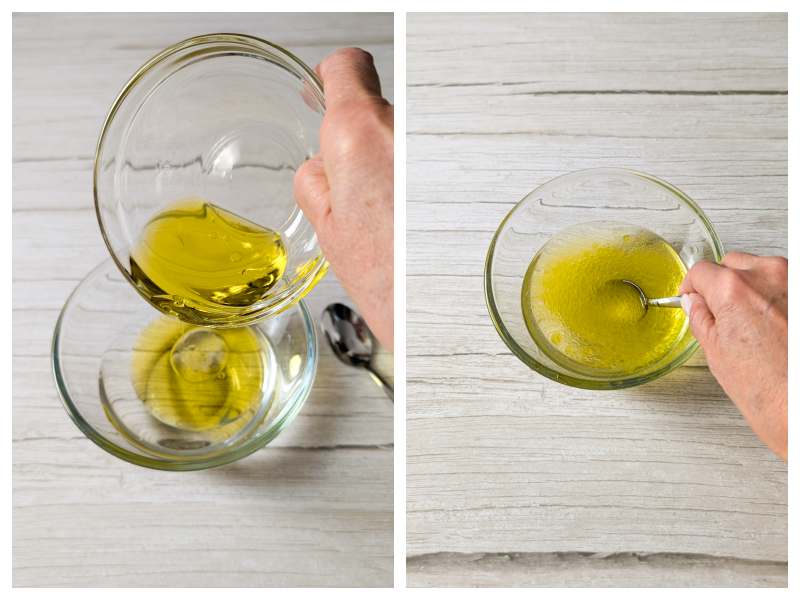
Step 8) - Prepare the brine by mixing the water, olive oil, and fine salt in a small bowl, stirring until the salt is completely dissolved.
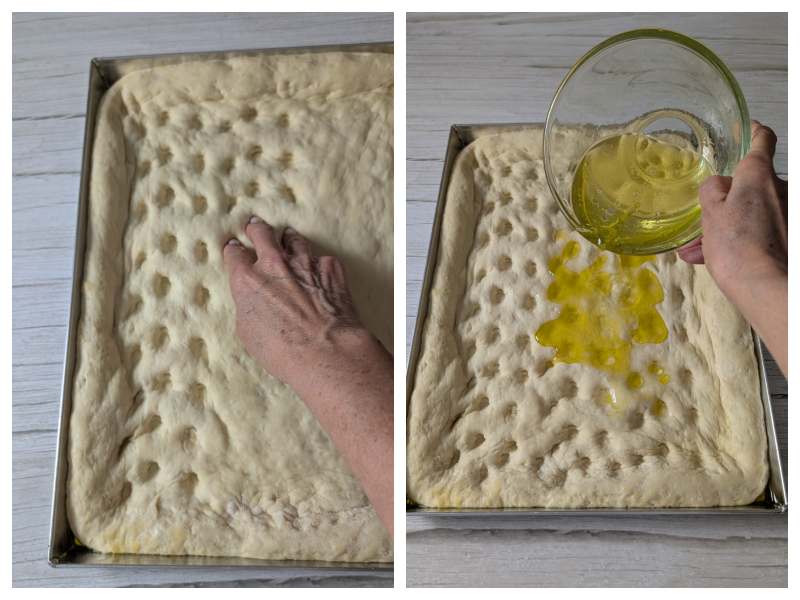
Step 9) - Uncover the dough and create the classic focaccia dimples by pressing your fingertips firmly into the dough. Keep your fingers slightly angled rather than straight down.
Pour the brine into the center of the focaccia, then gently spread it with your hand so it flows into all the dimples. Let the focaccia rise uncovered for 40 to 45 minutes.
Bake and Serve
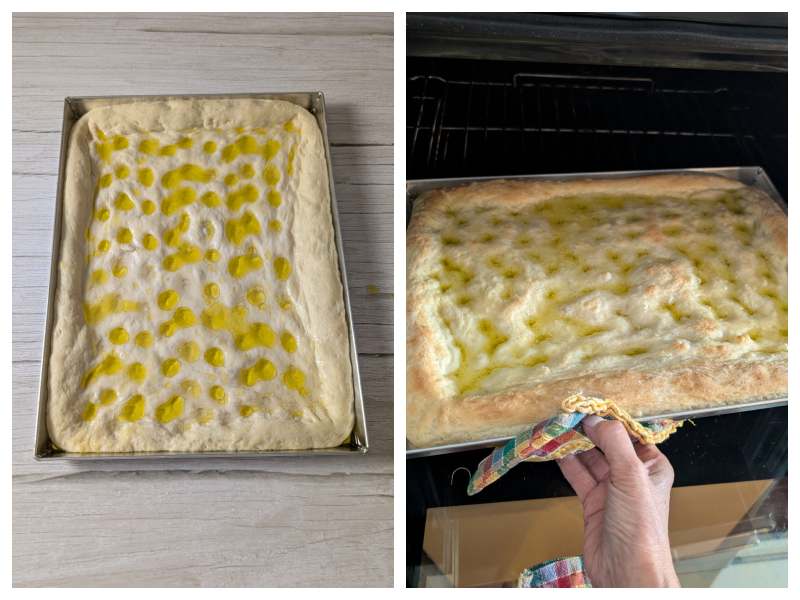
Step 10) - Bake in a static oven preheated to 230°C (450°F) for 15 minutes, until the surface is golden and glossy. Avoid overbaking, as this can dry out the focaccia. Remove from the oven, let cool for a few minutes, then slice and serve warm or at room temperature.
Storage
Focaccia genovese is best enjoyed fresh, ideally the same day it is baked, when the surface is slightly crisp and the inside remains soft and airy. If you need to store it, let the focaccia cool completely, then wrap it tightly in plastic wrap or place it in an airtight container. It can be kept at room temperature for up to 24 hours.
To refresh focaccia that has lost some softness, warm it in a preheated oven at 350°F (180°C) for about 5 to 7 minutes. This helps restore its fragrance and texture without drying it out. Avoid using the microwave, as it tends to make focaccia rubbery.
Focaccia genovese can also be frozen. Once completely cooled, cut it into portions, wrap each piece well in plastic wrap, and place them in a freezer-safe bag or container. Freeze for up to 1 month. To serve, thaw at room temperature and reheat briefly in the oven until warm.
Tips for Perfect Focaccia Genovese
- For the best result, use high-quality extra virgin olive oil, as it is one of the key flavors of authentic focaccia genovese.
- Do not be tempted to reduce the amount of oil or brine: both are essential to achieve the classic soft crumb, golden surface, and rich aroma.
- The dough should be very soft throughout the process, so avoid adding extra flour while kneading or stretching, as this would make the focaccia dense and dry.
- Respect the rising times and work the dough gently, especially during stretching. If the dough resists, let it relax for a few minutes before continuing.
- Creating a slight raised edge around the pan is important, since it helps keep the brine on the surface and prevents it from leaking underneath.
- Finally, bake the focaccia on the lower-middle rack of the oven to ensure a lightly crisp bottom without overbaking the top.
More Italian Focaccia Recipes
- Focaccia Pugliese - A soft and fluffy focaccia from Southern Italy, topped with cherry tomatoes and enriched with extra virgin olive oil. Juicy, fragrant, and perfect as a main dish or snack.
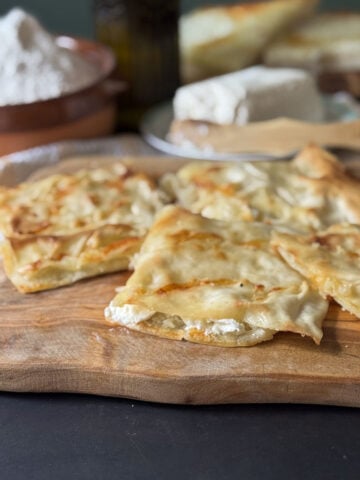
- Focaccia di Recco - A unique Ligurian specialty made with ultra-thin layers of dough filled with creamy melted cheese. No yeast, no fluffiness, just crisp layers and an irresistible cheesy filling.
- Schiacciata con l'Uva - A traditional Tuscan grape flatbread made during harvest season, lightly sweet and studded with fresh grapes. Soft inside, slightly crisp outside, and perfect for breakfast or dessert.
Recipe Card
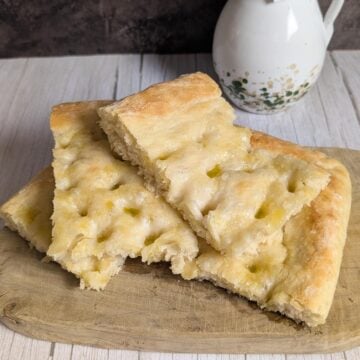
Focaccia Genovese Recipe (Authentic Italian Ligurian Focaccia)

Ingredients
FOR THE DOUGH
- 200 g 00 flour - 1⅔ cups
- 300 g manitoba flour or bread flour - 2½ cups
- 300 ml water - 1¼ cups , at room temperature
- 10 g fine salt - 1¾ teaspoons
- 10 g honey - 1½ teaspoons
- 7 g active dry yeast - 2¼ teaspoons or 0.24 oz
- 25 g extra virgin olive oil - 2 tablespoons
FOR THE TOPPING (BRINE)
- 100 ml water - about ½ cup
- 50 ml extra virgin olive oil - 3 tablespoons + 1 teaspoon
- 2 pinches fine salt - about ¼ teaspoon
Instructions
Make the Dough
- Place the manitoba flour (or bread flour), 00 flour, and yeast in a large mixing bowl and stir to combine.
- Make a well in the center and pour in the room-temperature water. Mix with a spoon until the flour begins to absorb the water and a rough dough forms.
- Add the extra virgin olive oil and the honey. Continue mixing until incorporated, then add the salt. Mix again until the dough comes together into a cohesive mass.
- Knead by hand with energy for about 5 minutes. The dough should become smooth, elastic, and uniform. It will be soft but should hold its shape.
- Cover tightly with plastic wrap, then cover with a kitchen towel. Let it rest at room temperature for about 30 minutes. This resting phase helps relax the gluten and makes the dough easier to work with.
Make the Folds and Let Rise
- After resting, turn the dough out onto the work surface and perform a set of folds. Gently flatten it into a rectangle with your hands, then fold the four sides toward the center.
- Turn the dough seam-side down, shape it into a ball, and return it to the bowl. Cover again and let rise at room temperature for 1 hour.
- Grease a 30x40 cm (12x16 inch) baking pan with 1 to 2 tablespoons of olive oil. Place the dough in the pan.
- Gently stretch it with your hands, without forcing it, until it partially covers the surface. Cover with a kitchen towel and let rest at room temperature for another hour.
- Lightly dust the dough with a small amount of flour. Using your fingertips, gently press and stretch the dough to fill the entire pan, starting from the edges and working inward to form a slight raised border around the perimeter. This edge is important because it helps contain the brine later. Smooth the surface gently with the palms of your hands. Cover and let rest for 1 more hour.
- Prepare the brine by mixing the water, olive oil, and fine salt in a small bowl, stirring until the salt is completely dissolved.
- Uncover the dough and create the classic focaccia dimples by pressing your fingertips firmly into the dough. Keep your fingers slightly angled rather than straight down.
- Pour the brine into the center of the focaccia, then gently spread it with your hand so it flows into all the dimples. Let the focaccia rise uncovered for 40 to 45 minutes.
Bake and Serve
- Bake in a static oven preheated to 230°C (450°F) for 15 minutes, until the surface is golden and glossy. Avoid overbaking, as this can dry out the focaccia. Remove from the oven, let cool for a few minutes, then slice and serve warm or at room temperature.


Leave a Reply