
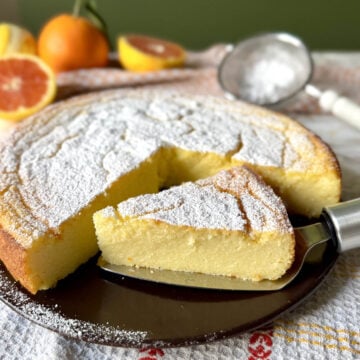
Migliaccio Napoletano is a traditional Italian ricotta cake from Naples, known for its soft, creamy texture and delicate citrus aroma. Made with semolina cooked in milk and enriched with ricotta cheese, eggs and fragrant zest, it is a simple yet incredibly refined dessert.
This cake has very ancient origins and belongs to the Neapolitan peasant tradition. It was originally prepared with millet, which explains its name, but today semolina gives it its signature smooth and velvety consistency.
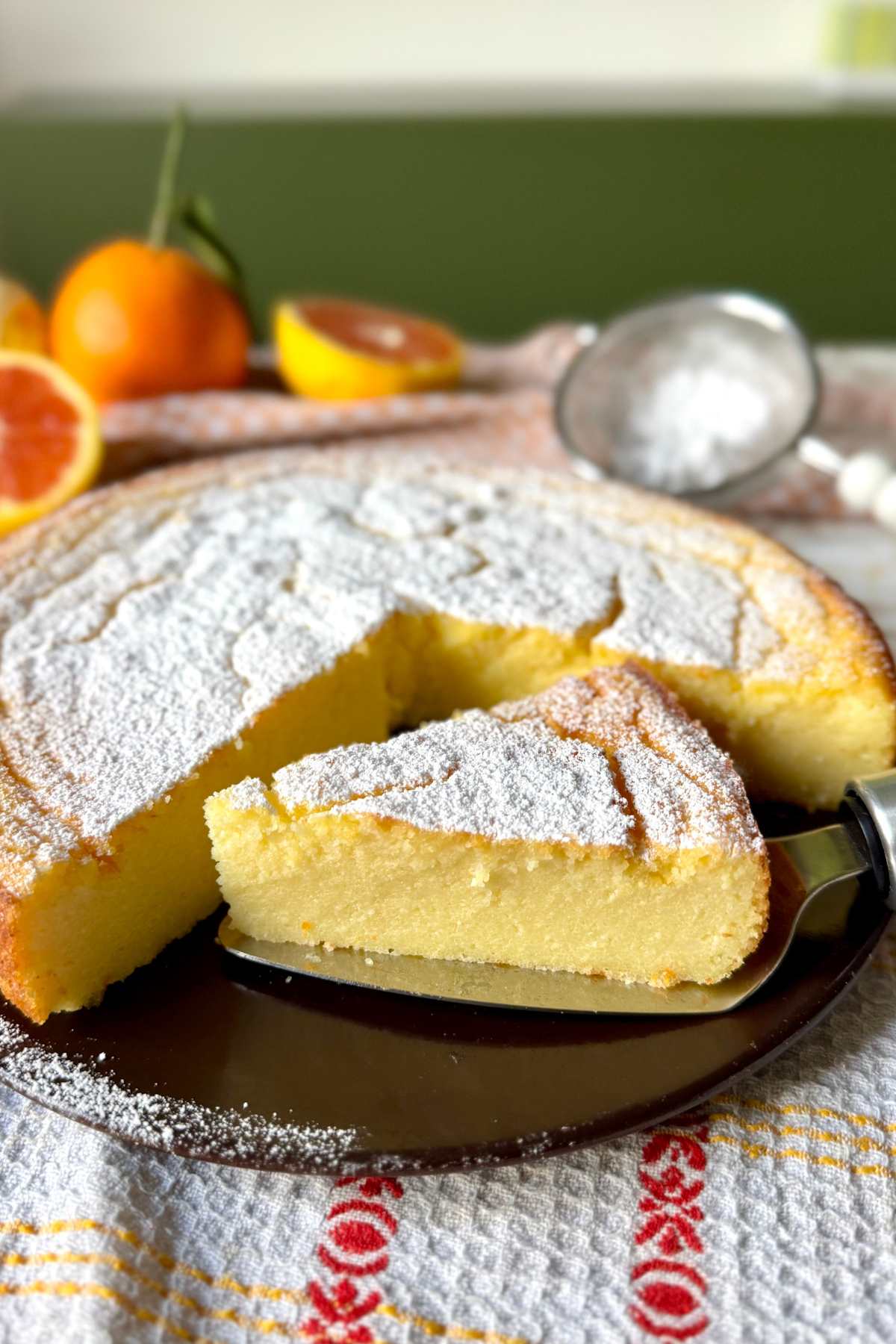
The preparation is surprisingly easy. First, semolina is gently cooked with milk, butter, lemon and orange zest and a hint of cinnamon until thick and fragrant. Once cooled slightly, it's combined with ricotta, sugar and eggs to create a rich, creamy batter.
Traditionally prepared during Carnival in Naples, migliaccio is one of the few festive desserts that is baked rather than fried. Light, nourishing and naturally gluten-rich from semolina, it's perfect for serving all year round.
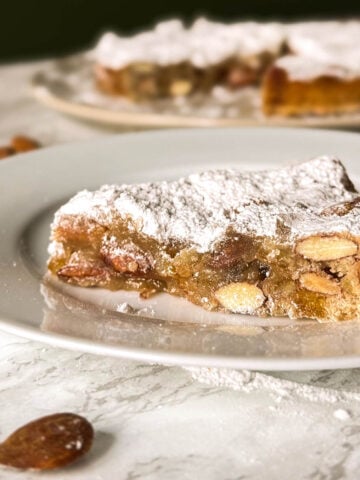
A dusting of powdered sugar is all it needs to highlight its delicate flavor. After one slice, you will understand why this Migliaccio Napoletano recipe has been loved for generations.
Jump to:
Ingredients
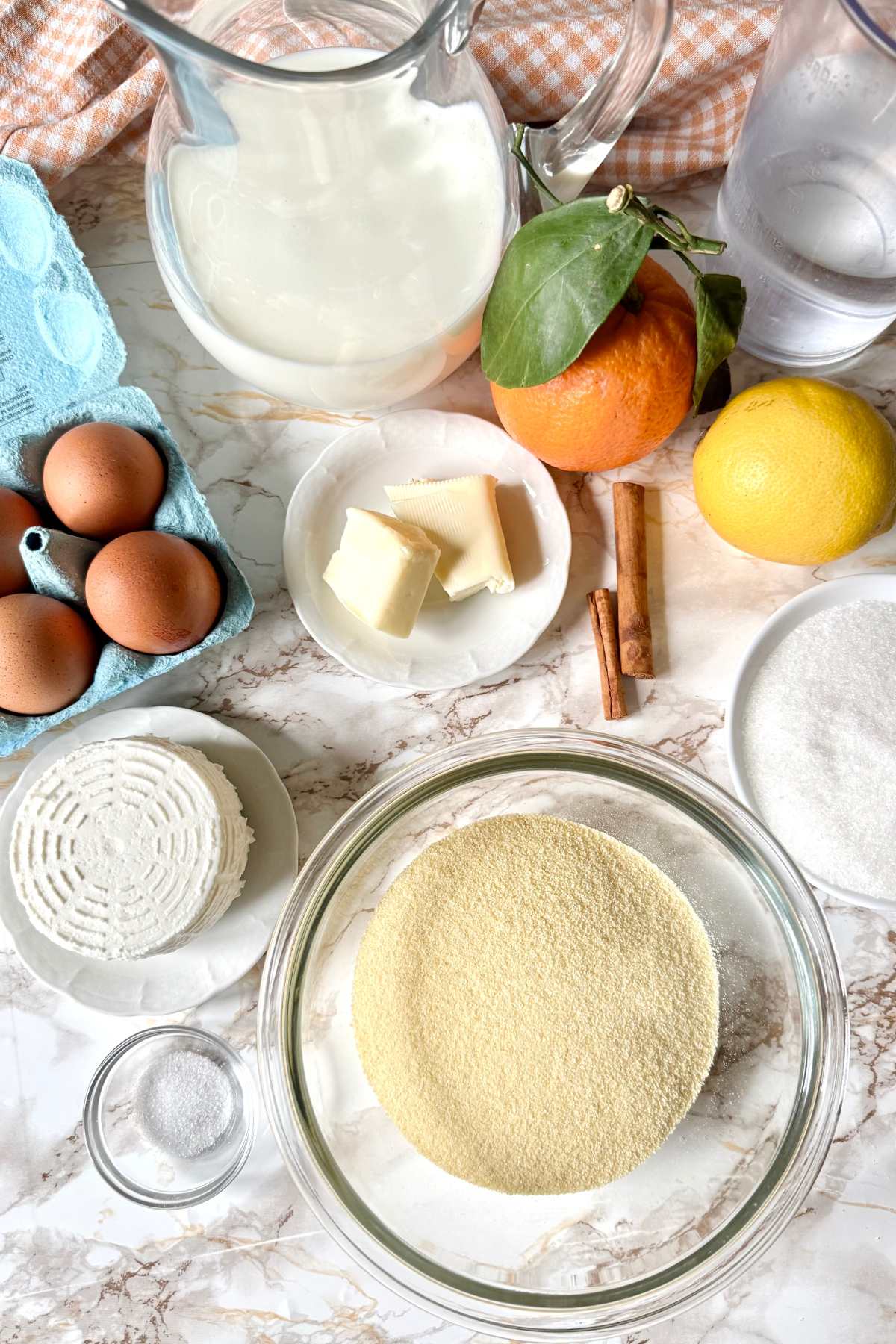
Prep Time: 20 Min | Cook Time: 1 Hour | Servings: 8
Doses for a 9 inch (24 cm) springform pan
- 180 g (about 1 cup) fine semolina
- 4 medium eggs
- 250 g (1 ¼ cups) granulated sugar
- 250 g (1 cup) ricotta cheese, well drained
- 500 ml (2 cups) whole milk
- 400 ml (1 ⅔ cups) water
- 1 medium orange
- 1 medium lemon
- 1 cinnamon stick
- 50 g (3 ½ tablespoons) butter
- 1 pinch fine salt
- Powdered sugar, for decoration
Kitchen Tools and Equipment
To make this migliaccio recipe, you only need basic kitchen tools:
- Large saucepan – to cook the semolina with milk and water.
- Vegetable peeler and a fine grater – to zest the orange and lemon without including the bitter white pith.
- Hand whisk – to stir the semolina as it cooks and prevent lumps.
- Large mixing bowl – to combine all the ingredients.
- Electric hand mixer or stand mixer – to beat the eggs and sugar until light and fluffy.
- 9 inch (24 cm) springform pan – makes it easier to remove the cake after baking.
- Fine sieve – to dust the top evenly with powdered sugar before serving.
Instructions
How to Prepare the Semolina Base
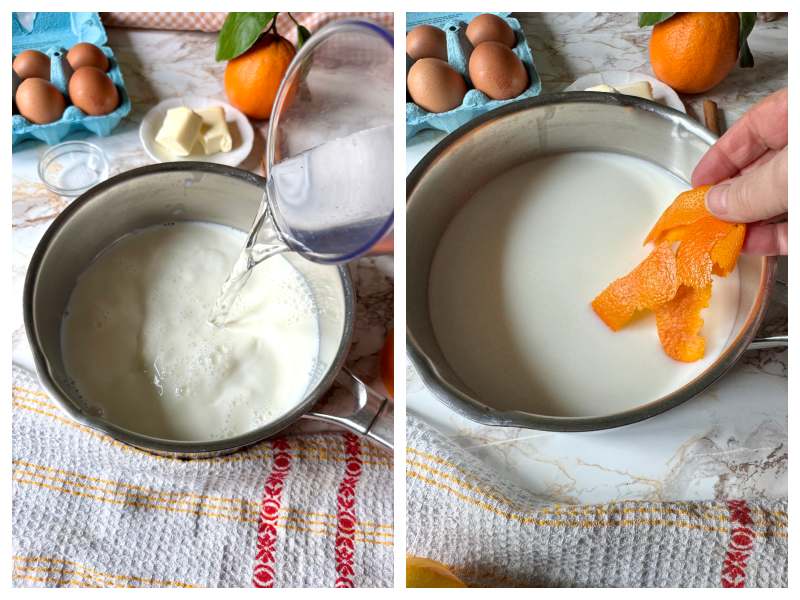
Step 1) – To make Migliaccio Napoletano recipe, first pour the milk and water into a large saucepan.
Using a vegetable peeler, remove the peel from half an orange and half a lemon, taking care to peel only the colored outer layer and not the bitter white pith. Add the citrus peel to the milk mixture.
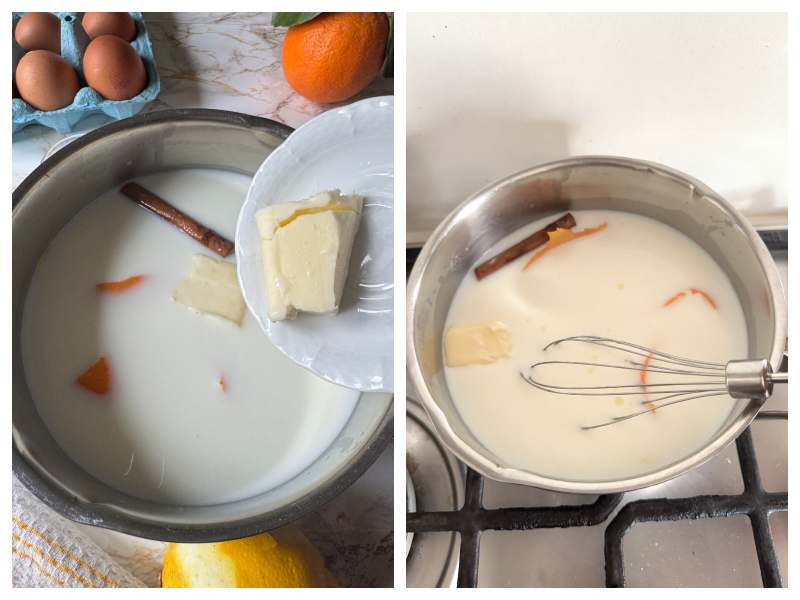
Step 2) – Add the cinnamon stick, butter, and a pinch of salt. Place the saucepan over medium heat. As the milk warms, stir occasionally so the butter melts completely. Heat until the mixture is just about to come to a gentle boil.
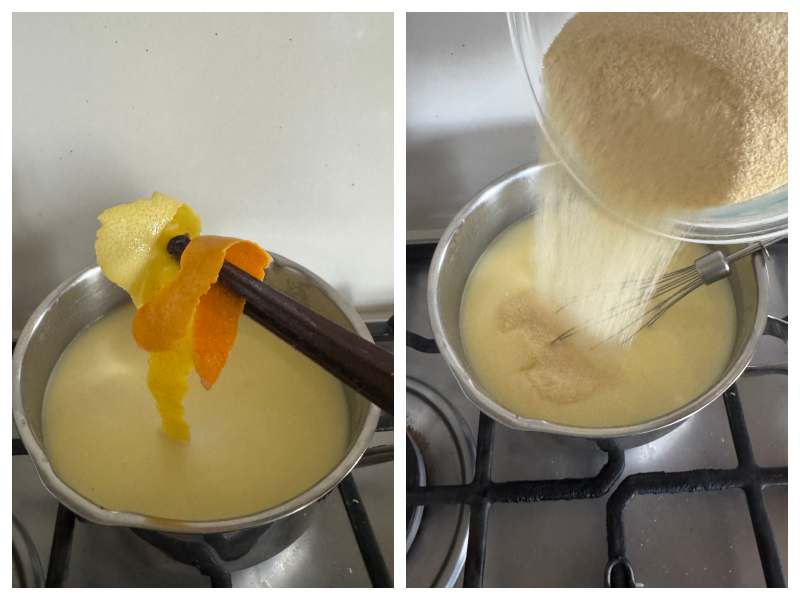
Step 3) – Remove and discard the citrus peel and cinnamon stick. Gradually sprinkle in the semolina, whisking constantly and vigorously to prevent lumps from forming.
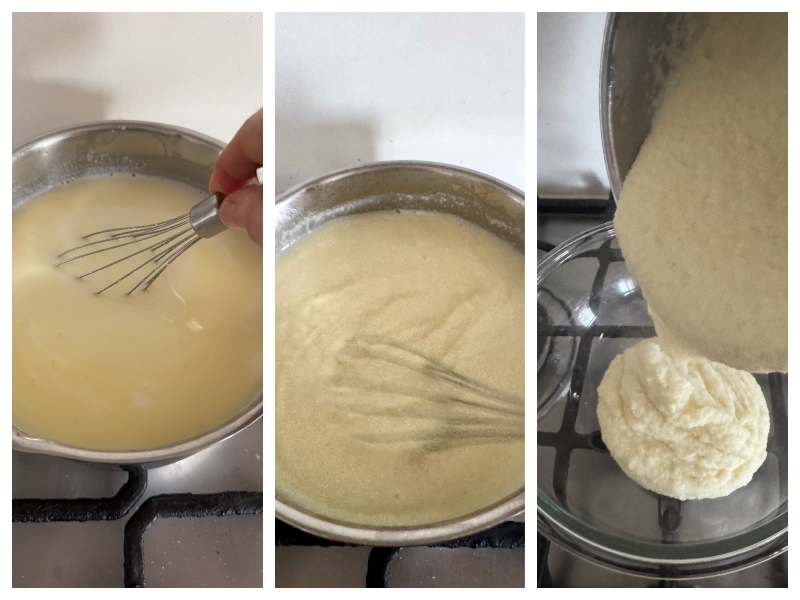
Step 4) – Continue stirring until the mixture thickens into a smooth, dense cream, about 3 to 4 minutes. Turn off the heat, transfer the semolina cream to a bowl, and let it cool at room temperature.
How to Make the Ricotta Mixture
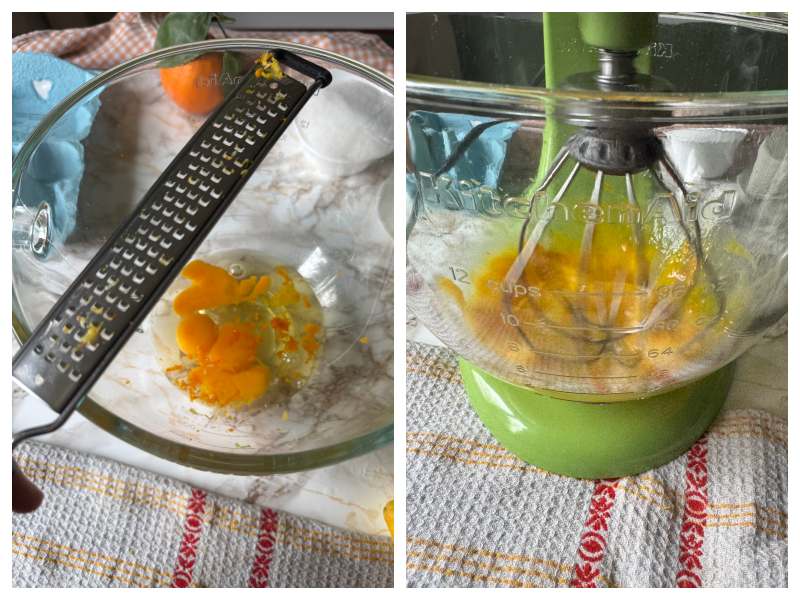
Step 5) – While the semolina is cooling, crack the eggs into a separate large bowl. Finely grate the remaining zest from the other half of the orange and lemon and add it to the eggs.
Using an electric mixer, begin beating the eggs until slightly frothy.
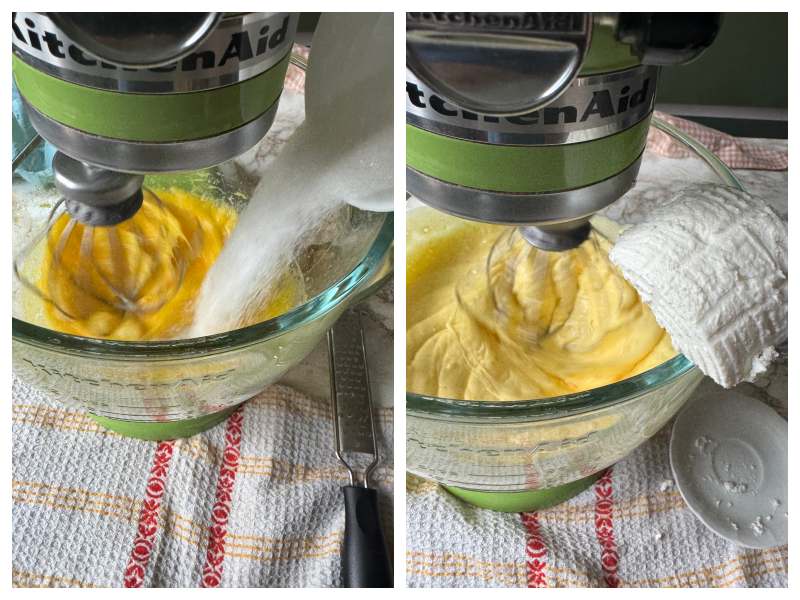
Step 6) – Add the sugar and continue mixing. Then add the ricotta cheese and beat at medium speed until the mixture is smooth and well combined.
How to Assemble and Bake Migliaccio
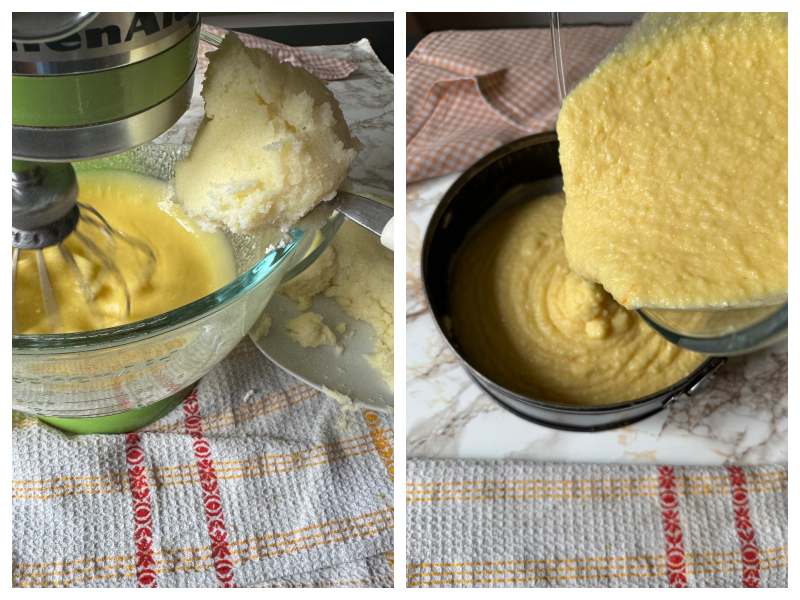
Step 7) – Reduce the mixer speed to low and add the cooled semolina cream a little at a time, mixing continuously until fully incorporated.
The batter is now ready. Pour it into a 9-inch (24 cm) springform pan that has been buttered and lined with parchment paper.
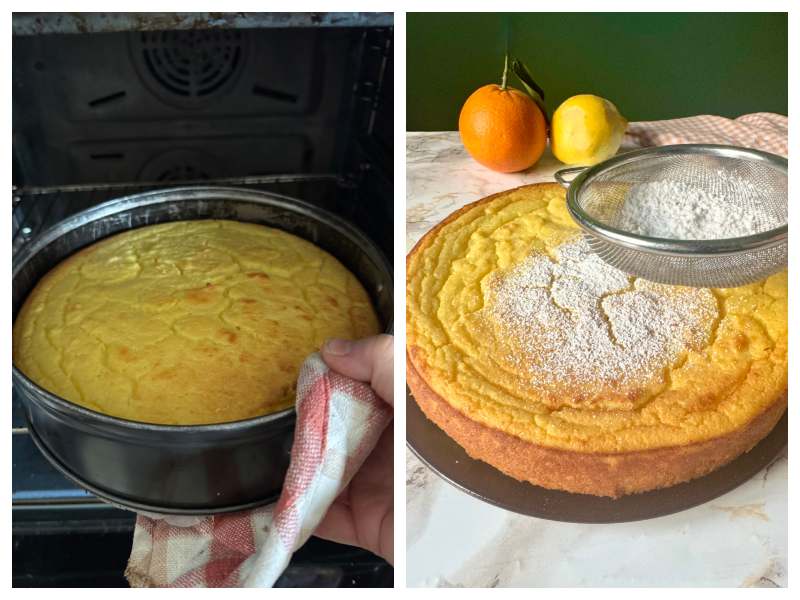
Step 8) – Bake in a preheated convection oven at 165°C (330°F) for about 60 minutes. If using a conventional static oven, bake at 175°C (350°F) for the same amount of time. During the last 10 minutes of baking, increase the temperature to 185°C (365°F) to help the surface develop a light golden color.
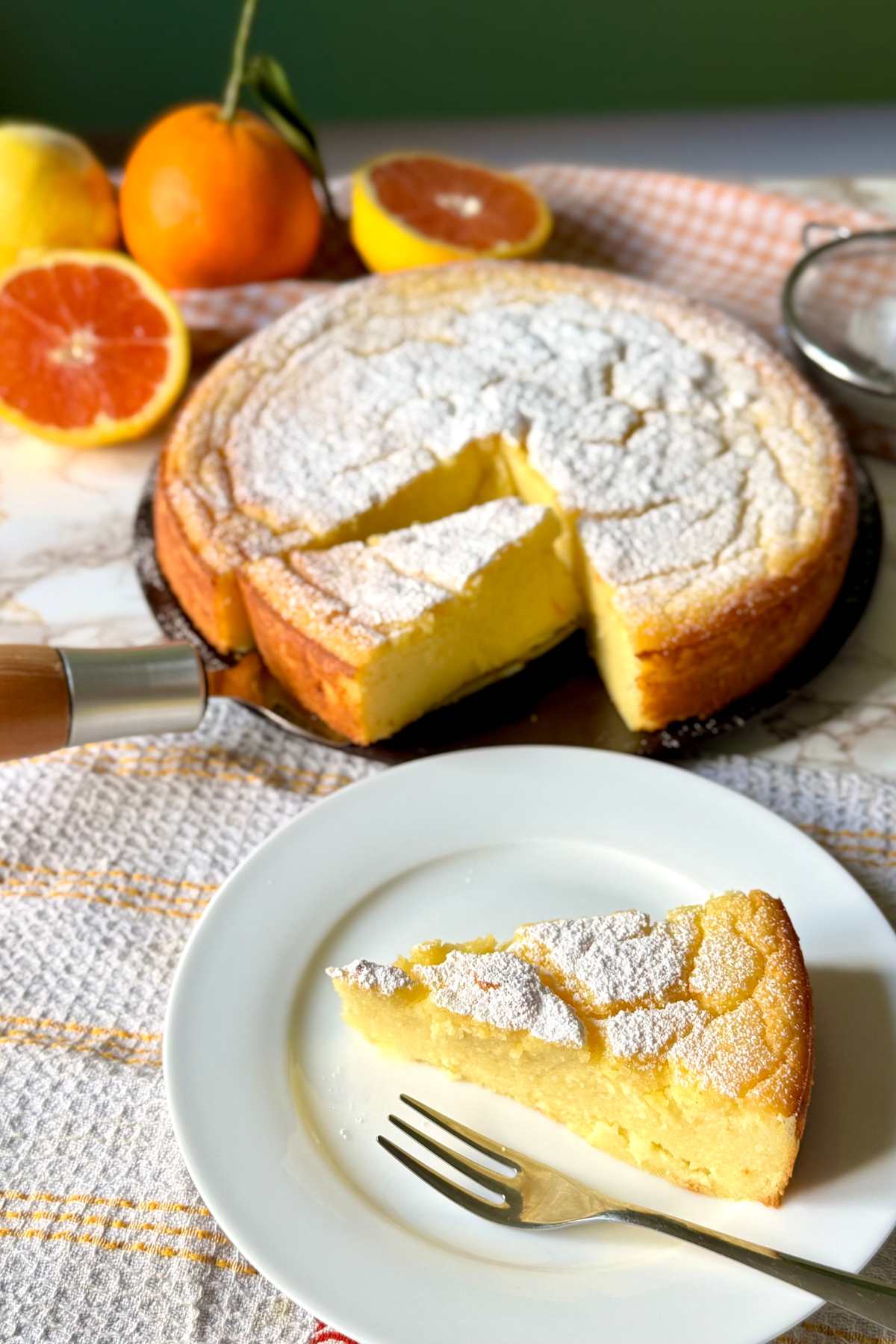
Once baked, turn off the oven and let the cake rest inside for about 10 minutes with the door slightly open. Remove from the oven and allow it to cool completely. When fully cooled, carefully remove the Neapolitan migliaccio from the pan and finish with a generous dusting of powdered sugar before serving.
Storage
Store Migliaccio Napoletano in the refrigerator, either in an airtight container or covered with a cake dome. It will keep well for 3 to 4 days.
For the best texture, remove it from the refrigerator about 30 minutes before serving. This allows the cake to soften slightly and regain its creamy consistency. Avoid leaving it at room temperature for more than a few hours.
Freezing is not recommended. After thawing, the texture tends to become crumbly and less creamy.
Make Ahead
Migliaccio tastes even better after a few hours of rest, when the flavors have had time to blend and the texture becomes even more compact and creamy.
You can easily prepare it the day before serving and store it in the refrigerator. Before serving, let it sit at room temperature for about 30 minutes so it can soften slightly and regain its full flavor.
Variations
You can enrich this migliaccio recipe with 80 g (about ½ cup) of chocolate chips for a more indulgent, though less traditional, version.
Adding 60 g (about ⅓ cup) of finely chopped candied citron or candied orange peel will intensify the citrus flavor and give the cake a more festive character.
In Naples, migliaccio is sometimes flavored in other ways as well. A little vanilla extract, the seeds of a vanilla pod, or a splash of orange blossom water are all popular additions.
If you would like to add a subtle alcoholic note, stir in a tablespoon of Limoncello or another citrus liqueur into the batter before baking.
Tips
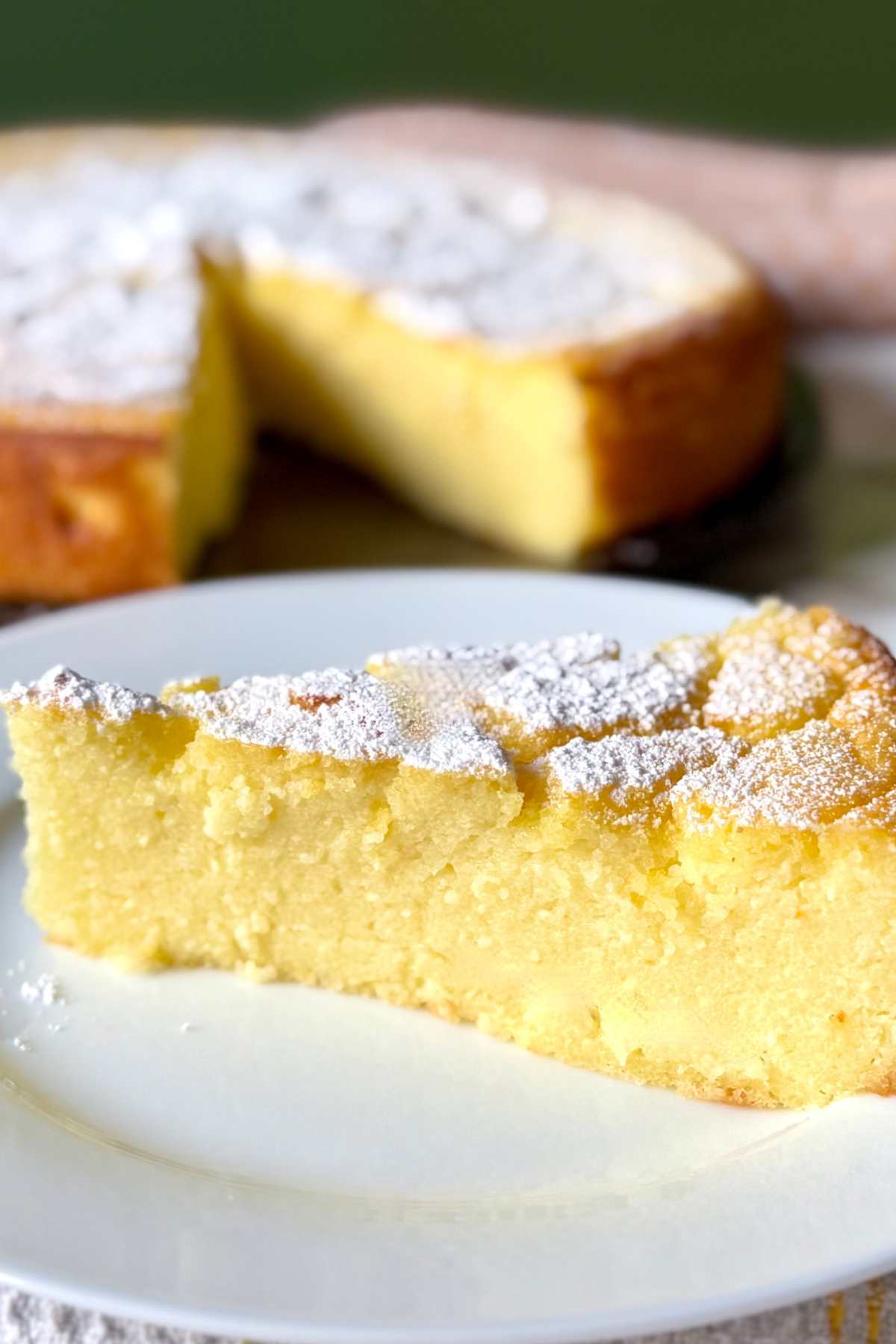
CHOOSE THE RIGHT SEMOLINA - There are different types of semolina available. For the best results, use fine semolina. It gives the cake a smooth, creamy and compact texture. Medium or coarse semolina will make the migliaccio more grainy and slightly less refined in texture. Some people may enjoy that consistency, but the traditional result is soft and velvety.
DRAIN THE RICOTTA WELL - If the migliaccio sinks in the center, the ricotta is often the reason. It may be too moist. Always drain the ricotta thoroughly before using it. For the best flavor and texture, choose fresh, well-drained cow’s milk ricotta. Ricotta that is too wet or too strong in flavor, such as buffalo or sheep’s milk ricotta, can change both the structure and the delicate taste of the cake.
LET THE SEMOLINA COOL COMPLETELY - Make sure the semolina cream has cooled completely before adding it to the egg and ricotta mixture. If it is still warm, the heat can create excess moisture and may cause the center of the cake to sink during baking.
Origins and History
Why is a dessert that today smells of citrus and ricotta called “Migliaccio”, when there is no trace of millet in it?
Migliaccio is one of the oldest traditional desserts of Campania. Its origins date back to the Middle Ages, when Carnival marked an important seasonal turning point: a time to consume winter provisions and celebrate abundance before Lent.
The name comes from the Latin miliaccium, meaning “millet bread.” Millet, now almost forgotten, was once widely used because it was hardy, inexpensive, and well suited to subsistence farming.
Some early versions of migliaccio even included pig’s blood, a common and highly nutritious ingredient in rural cooking, closely tied to the ritual of winter slaughter. For centuries, it carried strong symbolic meaning and even raised suspicion from the Church, which associated it with pagan practices.
Over time, the recipe evolved. Millet was replaced by durum wheat semolina, blood disappeared, and the dessert became sweeter. Sugar, citrus zest, flavorings, and eventually ricotta, now essential to its creamy texture, became permanent ingredients.
Today, migliaccio reflects this long transformation. The millet may be gone, but the history remains, returning each year to Neapolitan tables as part of a living tradition.
Migliaccio Recipe: FAQs
Migliaccio is a traditional Neapolitan dessert made with semolina, milk, ricotta cheese, eggs and citrus zest. It has a soft, creamy texture and is traditionally prepared during Carnival in Naples. Today it is often described as an Italian semolina and ricotta cake.
No. Migliaccio is made with semolina, which comes from durum wheat and contains gluten. It is not suitable for a gluten-free diet.
It is best to use fine semolina, the same type used for gnocchi alla romana. Coarse semolina will result in a more grainy texture and a less smooth, creamy cake.
This usually happens if the ricotta was too moist or if the semolina mixture was still warm when added to the batter. Make sure to drain the ricotta well and allow the semolina cream to cool completely before mixing everything together.
More Traditional Italian Desserts
If you love traditional Italian sweets, here are a few more authentic Italian recipes:
- Pastiera Napoletana – The iconic Italian Easter grain pie fro Naples, traditionally prepared for Easter and flavored with orange blossom water.
- Neapolitan pastries like zeppole di San Giuseppe – Soft choux pastries filled with crema pasticcera and topped with a cherry, one of the most beloved desserts from Naples.
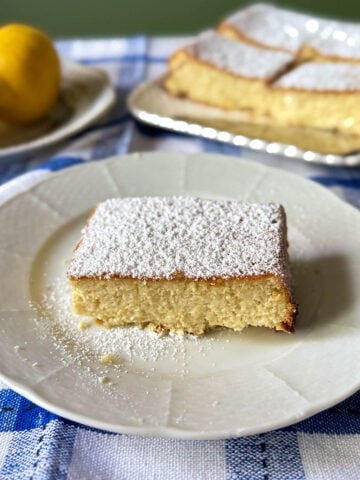
- Pear Ricotta Cake – A moist and delicate Italian ricotta cake with fresh pears, perfect for any season.
- Tortelli di Carnevale – Light and airy fried pastries typical of Carnival, dusted generously with powdered sugar.
Recipe Card
Migliaccio Napoletano Recipe (Italian Semolina Ricotta Cake)

Ingredients
- 180 g fine semolina - about 1 cup
- 4 medium eggs
- 250 g granulated sugar - 1 ¼ cups
- 250 g ricotta - 1 cup, well drained
- 500 ml whole milk - 2 cups
- 400 ml water - 1 ⅔ cups
- 1 medium orange
- 1 medium lemon
- 1 stick cinnamon
- 50 g unsalted butter - 3 ½ tablespoons
- 1 pinch fine salt
- powdered sugar - for decoration
Instructions
How to Prepare the Semolina Base
- Pour the milk and water into a large saucepan.
- Using a vegetable peeler, remove the peel from half an orange and half a lemon, taking care to peel only the colored outer layer and not the bitter white pith. Add the citrus peel to the milk mixture.
- Add the cinnamon stick, butter, and a pinch of salt. Place the saucepan over medium heat. As the milk warms, stir occasionally so the butter melts completely. Heat until the mixture is just about to come to a gentle boil.
- Remove and discard the citrus peel and cinnamon stick. Gradually sprinkle in the semolina, whisking constantly and vigorously to prevent lumps from forming.
- Continue stirring until the mixture thickens into a smooth, dense cream, about 3 to 4 minutes. Turn off the heat, transfer the semolina cream to a bowl, and let it cool at room temperature.
How to Make the Ricotta Mixture
- While the semolina is cooling, crack the eggs into a separate large bowl. Finely grate the remaining zest from the other half of the orange and lemon and add it to the eggs.
- Using an electric mixer, begin beating the eggs until slightly frothy.
- Add the sugar and continue mixing. Then add the ricotta cheese and beat at medium speed until the mixture is smooth and well combined.
How to Assemble and Bake Migliaccio
- Reduce the mixer speed to low and add the cooled semolina cream a little at a time, mixing continuously until fully incorporated.
- The batter is now ready. Pour it into a 9-inch (24 cm) springform pan that has been buttered and lined with parchment paper.
- Bake in a preheated convection oven at 165°C (330°F) for about 60 minutes. If using a conventional static oven, bake at 175°C (350°F) for the same amount of time. During the last 10 minutes of baking, increase the temperature to 185°C (365°F) to help the surface develop a light golden color.
- Once baked, turn off the oven and let the cake rest inside for about 10 minutes with the door slightly open. Remove from the oven and allow it to cool completely. When fully cooled, carefully remove the Neapolitan migliaccio from the pan and finish with a generous dusting of powdered sugar before serving.
Leave a Reply